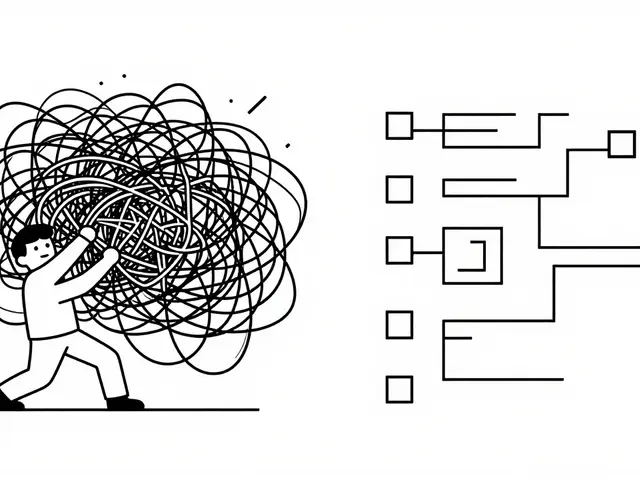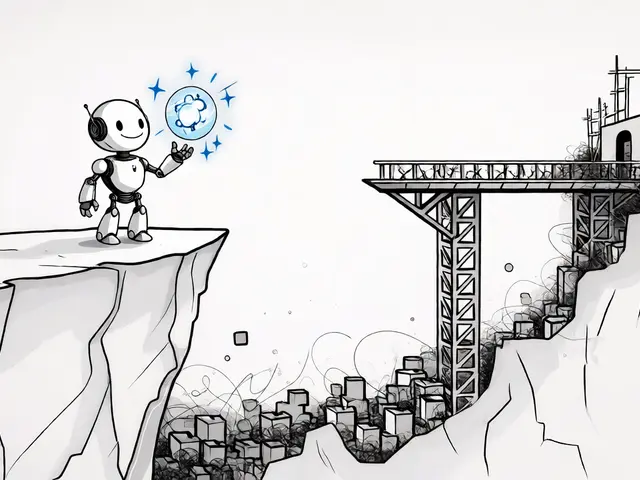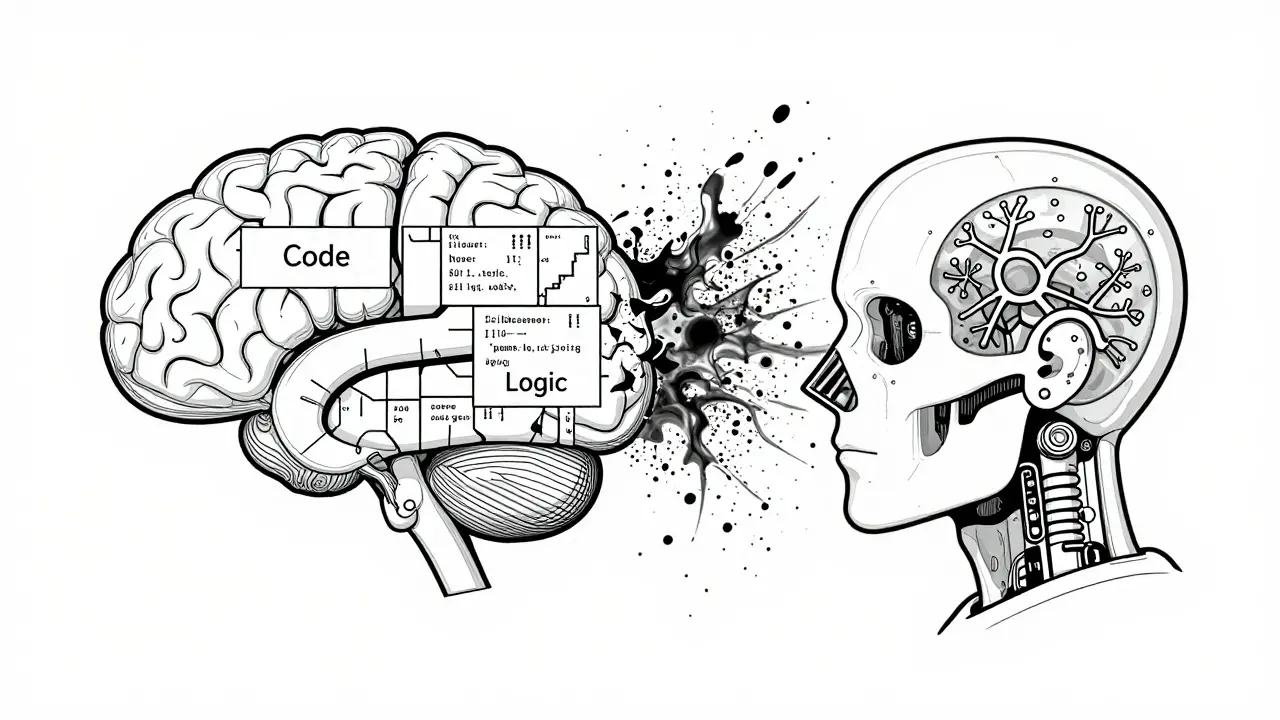
You train a generative AI model to write code. It works perfectly. Then you fine-tune it to generate poetry. Suddenly, the code generation breaks completely. The model has forgotten how to program because it learned to rhyme. This isn't just an inconvenience; it is a fundamental flaw in how current artificial intelligence systems learn.
This phenomenon is called catastrophic forgetting, which is a problem where neural networks rapidly lose previously learned information when trained on new data. First documented by McCloskey and Cohen in 1989, this issue remains one of the biggest barriers to creating truly adaptive AI. In 2026, as we push for more dynamic and evolving models, solving this is no longer optional-it is essential for practical deployment.
Why Standard Fine-Tuning Fails
When you update a standard neural network, you adjust its weights (the internal parameters that determine decision-making) to minimize error on the new task. The problem? Those same weights were crucial for the old task. By shifting them to fit the new data, you effectively erase the old knowledge.
Imagine trying to learn French while simultaneously unlearning English to make room. Humans don't do this. We integrate new languages into our existing cognitive framework. Current AI models, however, overwrite their past. Kartik Talamadupula, Director of AI Research at Symbl.ai, noted in March 2023 that this represents a significant problem for all machine learning systems, preventing them from growing smarter over time without constant retraining from scratch.
For generative AI specifically, this is critical. A customer service bot needs to learn about a new product launch without forgetting how to handle returns from last year. A medical diagnostic tool must incorporate new research findings without losing accuracy on established diseases. If the model forgets, the cost of retraining from zero becomes prohibitive.
The Core Strategies to Prevent Forgetting
Researchers have developed several approaches to mitigate catastrophic forgetting. Each has distinct trade-offs regarding memory usage, computational cost, and effectiveness. Here are the primary methods used in 2026:
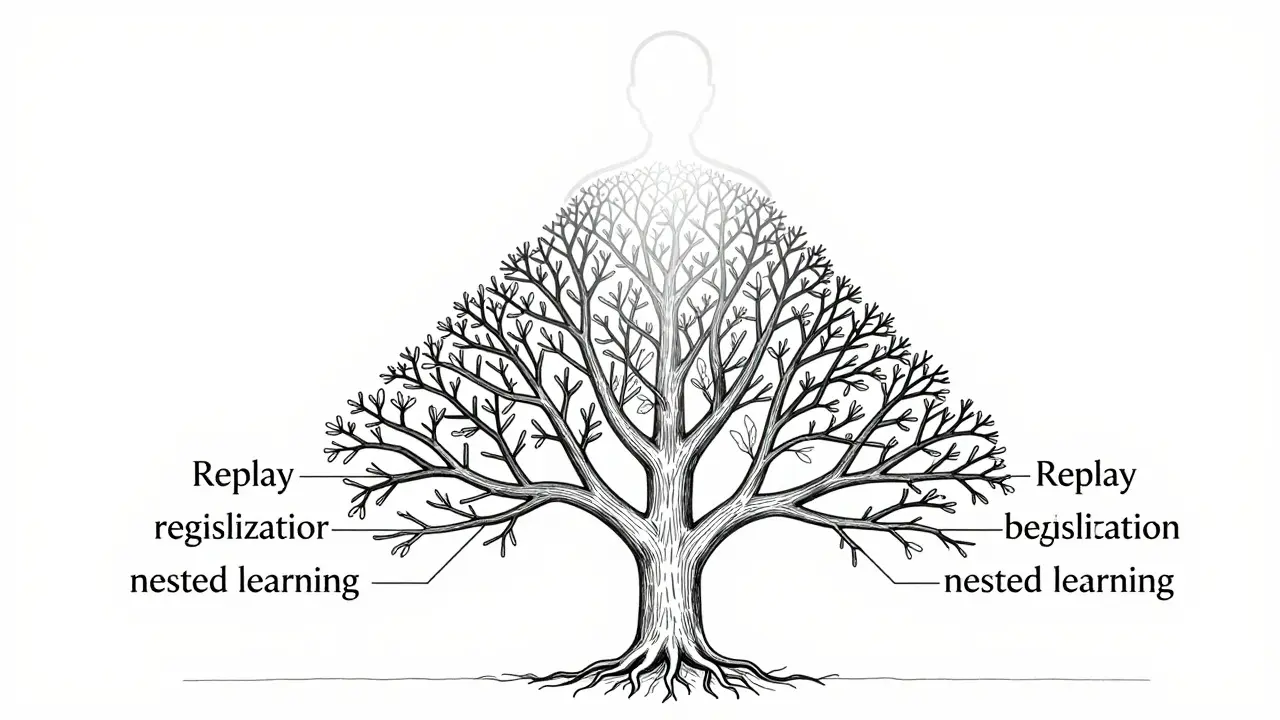
- Experience Replay: The model stores a subset of previous data in a "memory buffer" and periodically reviews it during new training. Think of it like a student reviewing old flashcards while studying for a new exam. Studies by Chaudhry et al. (2019) show this can improve accuracy on previous tasks by 15-25%.
- Parameter Regularization (e.g., EWC): Techniques like Elastic Weight Consolidation identify which weights are most important for previous tasks and penalize changes to those specific weights. Zenke et al. (2015) demonstrated a 30-40% reduction in forgetting using this method.
- Architectural Expansion: Instead of updating the entire network, the model adds new neurons or layers for new tasks, keeping old pathways intact. This minimizes interference but increases model size significantly.
- Generative Replay: Instead of storing raw data (which raises privacy concerns), the model trains a separate generator to create synthetic examples of past tasks. This mimics human dreaming processes.
Comparing Continual Learning Approaches
| Method | Memory Overhead | Retention Accuracy | Best Use Case |
|---|---|---|---|
| Experience Replay | High (stores real data) | 75-85% | Vision models with ample storage |
| Elastic Weight Consolidation (EWC) | Low (<5%) | 60-70% (drops after 10 tasks) | Sequential tasks with limited memory |
| Google Nested Learning | Medium (15% compute overhead) | 92% | Large Language Models (LLMs) |
| Wake-Sleep Consolidated Learning (WSCL) | None (no extra data storage) | 85-90% | Privacy-sensitive applications |
Emerging Solutions: Nested Learning and Beyond
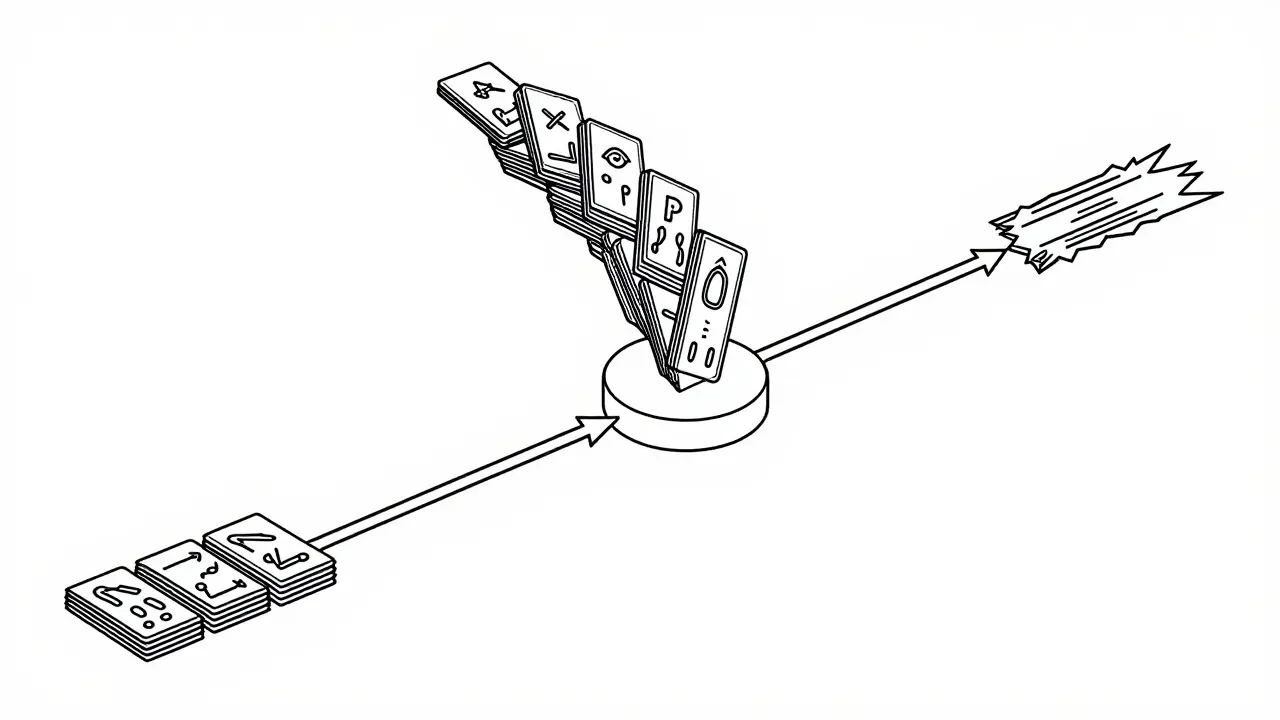
In February 2024, Google introduced Nested Learning, a hierarchical approach to parameter updates that isolates task-specific knowledge within different layers of the network. This paradigm reduces forgetting by 22% on average across language modeling tasks while maintaining 95% of performance gains from new data. Unlike traditional methods that treat the model as a single block, Nested Learning creates structured compartments for different skills.
Another promising avenue is Wake-Sleep Consolidated Learning (WSCL), pioneered by Concetto Spampinato at the University of Catania. Documented in 2023, WSCL mimics human sleep cycles. During the "wake" phase, the model learns new data. During the "sleep" phase, it replays and consolidates memories internally without external input. This improved knowledge transfer capabilities by 7-9% on visual classification benchmarks compared to standard continual learning approaches.
Practical Implementation Challenges
Implementing continual learning is not plug-and-play. Developers face steep learning curves, often requiring 40-60 hours of dedicated study to master basic implementations, according to a January 2026 GitHub survey. Key challenges include:
- Task Boundary Detection: In real-world streaming data, the system doesn't know when one task ends and another begins. Kaushik et al.'s unsupervised task inference approach achieved 89% accuracy in identifying these transitions, but it remains complex to tune.
- Memory Constraints: Experience replay requires storing up to 20% of total training data. For large language models with massive corpora, this is often impractical due to storage costs and privacy regulations.
- Computational Cost: Methods like WSCL increase training time by 30-40%. While they save memory, they demand more GPU hours.
Frameworks like PyTorch Continual Learning (Torch-CL) and Avalanche help streamline this process. Avalanche, with over 1,850 active GitHub users as of early 2026, provides robust tools for implementing these algorithms, though documentation quality varies between academic and industry implementations.
Market Trends and Regulatory Pressure
The demand for continual learning is driving market growth. Gartner projected the global continual learning market to reach $4.2 billion by 2027, up from $1.1 billion in 2023. Healthcare leads adoption (38% of enterprise implementations) because medical models must constantly integrate new clinical guidelines without losing historical diagnostic accuracy.
Regulatory bodies are also stepping in. The EU AI Act's January 2025 update requires high-risk AI applications to document mechanisms that mitigate knowledge loss during model updates. This legal requirement accelerates the shift from static models to continually learning systems, forcing companies to invest in robust retention strategies.
Future Outlook: Hybrid Approaches
No single method solves catastrophic forgetting entirely. The future lies in hybrid systems. A January 2026 review in the Journal of Machine Learning Research predicts that successful systems will integrate experience replay for immediate retention with synaptic consolidation for long-term preservation.
Rob Toews of Radical stated in a January 2026 podcast that solving continual learning may be the most critical step toward achieving Artificial General Intelligence (AGI). While current methods still fall short of human efficiency by orders of magnitude, the gap is closing. As models become more modular and hierarchical, we move closer to AI that learns like us-accumulating wisdom without erasing the past.
What is catastrophic forgetting in simple terms?
Catastrophic forgetting is when an AI model learns new information but completely loses its ability to perform tasks it knew before. It's like a student who studies for a math test and suddenly forgets how to read history texts because the brain cells (or neural weights) were overwritten.
How does experience replay prevent forgetting?
Experience replay works by storing a small sample of old data in a buffer. When the model learns new things, it occasionally reviews this old data alongside the new information. This reinforcement helps keep the old knowledge fresh, similar to how humans review notes before an exam.
Is Elastic Weight Consolidation (EWC) better than experience replay?
It depends on your constraints. EWC uses very little memory (under 5% overhead) but tends to lose effectiveness after about 10 sequential tasks. Experience replay retains higher accuracy (75-85%) but requires significant storage space to hold the replay buffer. Choose EWC for memory-limited devices and replay for high-accuracy vision tasks.
What is Google's Nested Learning?
Nested Learning is a hierarchical method announced by Google in 2024. It organizes model parameters into nested structures that isolate task-specific knowledge. This allows the model to learn new skills without disrupting older ones, reducing forgetting by 22% on average in language models.
Why is continual learning important for AGI?
Artificial General Intelligence (AGI) requires systems that can learn continuously throughout their existence, adapting to new environments without needing full resets. Since humans do not suffer from catastrophic forgetting, overcoming this limitation in AI is considered a necessary prerequisite for achieving human-like general intelligence.
Can I implement continual learning with PyTorch?
Yes. You can use libraries like Torch-CL or Avalanche, which provide pre-built modules for experience replay, regularization, and other continual learning strategies. These frameworks simplify the complex mathematics involved, allowing developers to focus on application logic rather than algorithm implementation.
 Artificial Intelligence