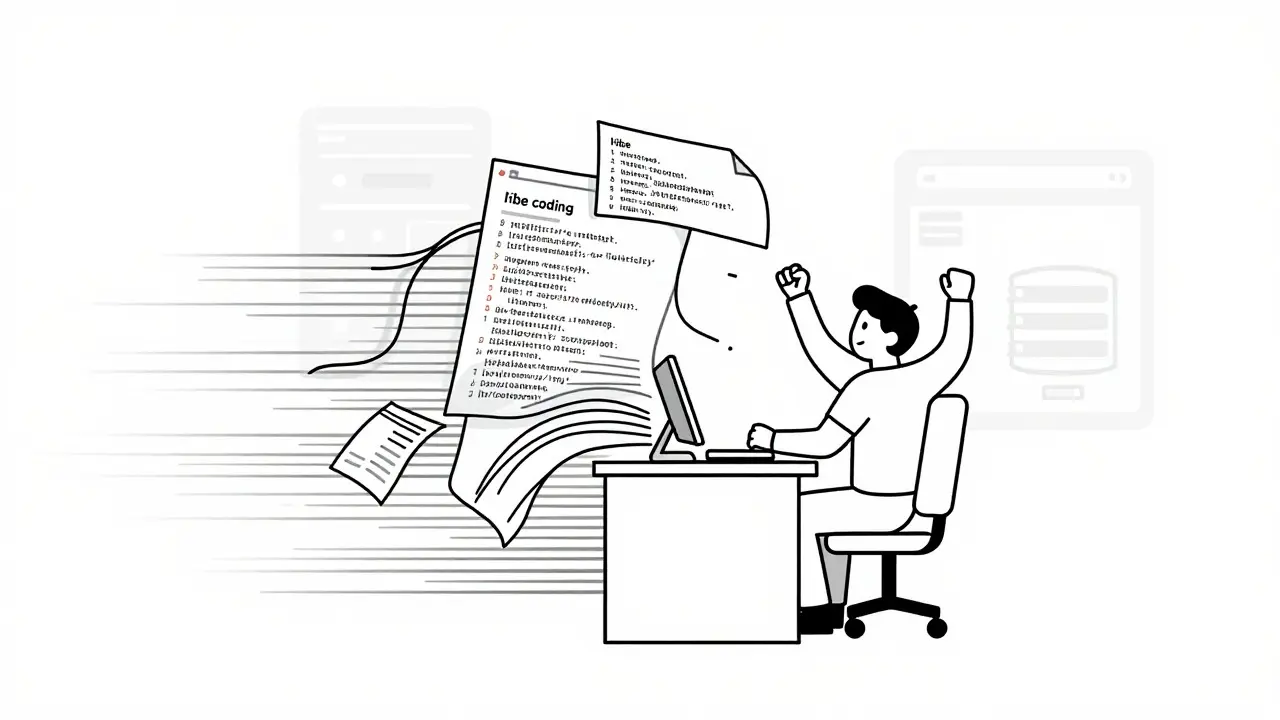
Imagine a developer at your company finishing a week’s worth of backend work in just three hours. It sounds like a dream scenario for productivity, right? But if that code was generated by an unsanctioned vibe coding tool-an unofficial AI assistant plugged into sensitive systems without security review-you might be staring at a disaster waiting to happen.
This is the reality of Shadow AI, the unauthorized use of artificial intelligence tools by employees who bypass official channels to get their jobs done faster. As of mid-2026, this isn't a fringe issue anymore. According to recent data from the State of Information Security Report, 37% of organizations in the UK and US admit their staff are already using generative AI without permission. The problem isn't malicious intent; it's friction. When approved tools are slow or restrictive, people find shortcuts. And when those shortcuts involve AI agents with direct access to production databases, the risks skyrocket.
The Real Danger of Unchecked Vibe Coding
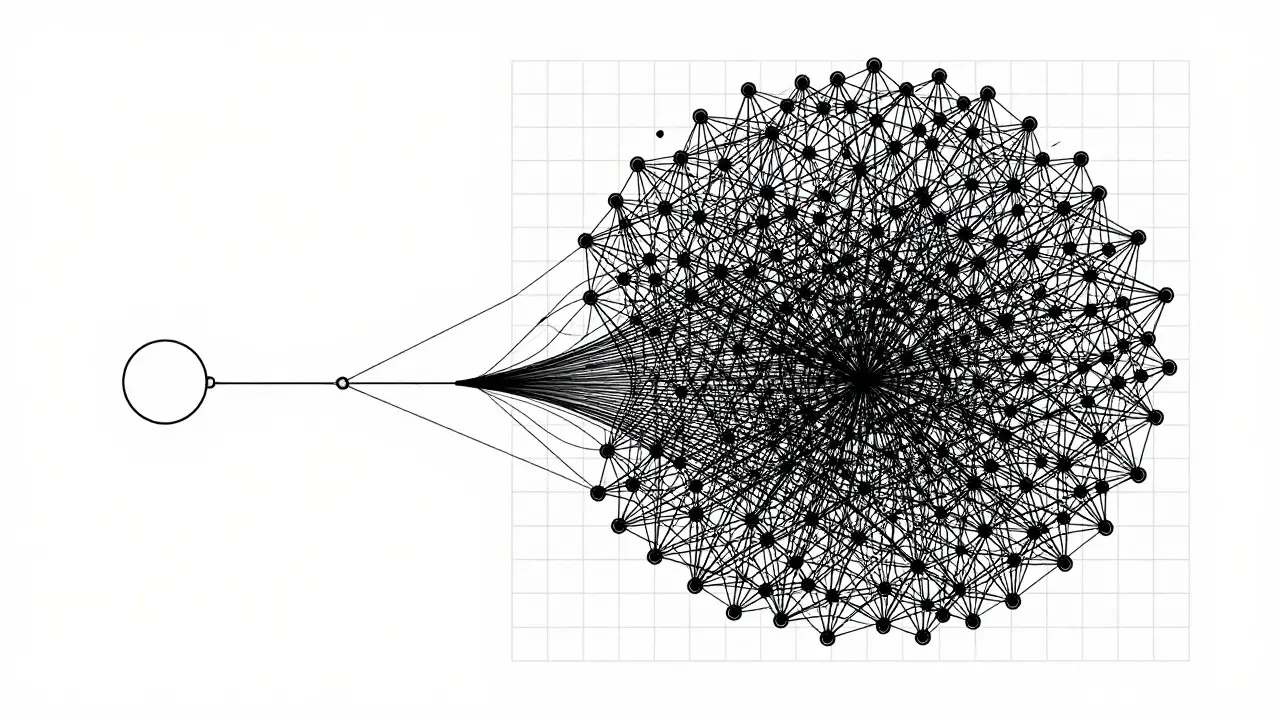
To understand why Shadow AI is more dangerous than traditional shadow IT (like using personal Gmail for work), you have to look at the speed and scale of modern AI agents. In legacy shadow IT, a rogue spreadsheet might leak some customer emails. With vibe coding, an AI agent can delete an entire production database in under ten seconds.
We saw this play out in April 2026 during the Vercel breach. It wasn't a sophisticated hacker group with zero-day exploits. It was a single unsanctioned AI tool that had been granted OAuth permissions to critical infrastructure. Because nothing sat between the AI tool and the production system, the "blast radius" was unbounded. Nicole Carignan, Senior Vice President at Darktrace, points out that this lack of intermediary control is the core vulnerability. Unlike human developers who might hesitate before running a destructive command, AI agents execute instructions rapidly and literally.
The technical risks go beyond accidental deletion. They include:
- Data Poisoning: 26% of UK and US organizations fell victim to AI data poisoning in the past year. Attackers subtly corrupt training sets or insert hidden backdoors into models.
- Prompt Injection: Unauthorized models often lack robust defenses against prompt injection attacks, allowing attackers to manipulate the AI into revealing secrets or executing arbitrary code.
- Security Gaps: AI-generated code frequently misses essential security considerations, such as proper access controls and enterprise context requirements, because the model doesn't inherently know your company's specific compliance rules.
Why Banning AI Tools Fails
The instinctive reaction for many Chief Information Security Officers (CISOs) is to block all external AI tools. Firewalls go up, URLs are blacklisted, and policies are tightened. But here’s the hard truth: banning AI coding tools rarely works. Developers have demonstrated the ability to ship in hours what previously took weeks. The productivity gain is simply too significant to ignore.
When you ban the tools, you don’t stop the behavior; you just push it further underground. Employees will use personal devices, mobile hotspots, or browser extensions to access these tools anyway. This creates a visibility gap where security teams have zero insight into what data is moving out of the organization or what code is being injected into the codebase. You end up with blind spots rather than better control.
The goal shouldn't be elimination. It should be channeling. Organizations need to treat AI-generated code with the same rigor as human-written code. This means implementing strict reviews, comprehensive testing, and audit trails for every line of code, regardless of its origin.
Building a Governance Framework That Works
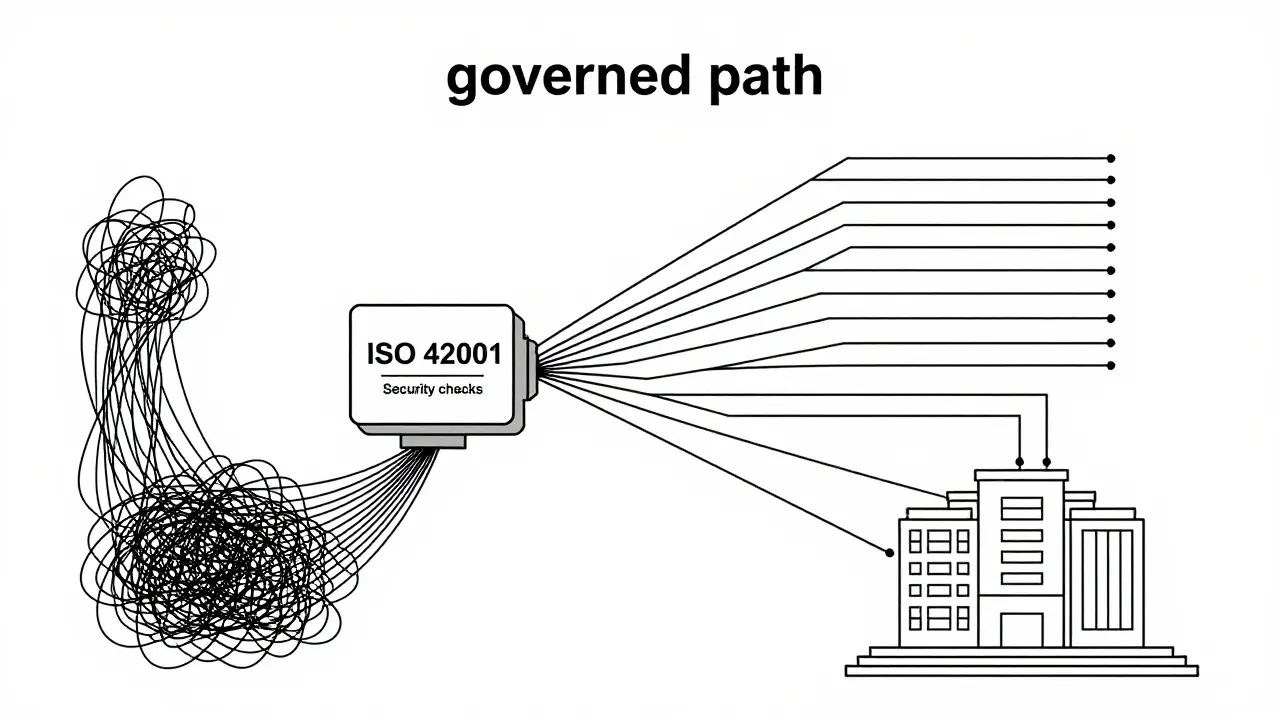
If banning doesn't work, what does? The solution lies in shifting from enforcement to visibility and governed integration. You need a framework that allows AI usage but ensures that every action-whether human-initiated or AI-generated-passes through the same role-based access control (RBAC) systems and organizational policies.
Here is how you start building that framework:
- Implement Comprehensive Visibility: Most organizations cannot articulate with confidence what AI workloads are currently running. You need monitoring across endpoints, browsers, and integrated systems. Use tools that can detect unsanctioned AI activity in real-time. If you can't see it, you can't secure it.
- Adopt ISO 42001 Standards: The ISO 42001 standard has become the crucial benchmark for responsible AI management. It provides structured guidance for AI governance implementation, helping enterprises move from ad-hoc checks to systematic risk management.
- Enforce Code Review Parity: Treat AI output as untrusted input. No AI-generated code should reach production without passing through the same static analysis, peer review, and security scanning processes as human code. Automate this pipeline so it doesn't become a bottleneck.
- Secure the Data Pipeline: Ensure that any AI tool used within the organization operates within a governed platform. This prevents sensitive data from leaking to public models and ensures that outputs are validated before execution.
As one industry expert noted, "Otherwise, vibe coding becomes vibe hacking." The principle mirrors construction safety: security must be designed in from the start, not bolted on after the building is already standing.
| Risk Factor | Traditional Shadow IT | Shadow AI / Vibe Coding |
|---|---|---|
| Speed of Impact | Slow, manual errors | Rapid, automated execution (seconds) |
| Blast Radius | Limited to specific apps/data | Unbounded (can affect entire infra) |
| Detection Difficulty | Moderate (network traffic logs) | High (often happens inside trusted environments) |
| Primary Threat Vector | Data leakage via email/cloud | Code injection, data poisoning, OAuth abuse |
Practical Steps for CTOs and CISOs
For technology leaders, the priority must shift from trying to stop AI usage entirely to ensuring that when AI is used, the data remains visible, controlled, and protected. Here are actionable steps to take immediately:
- Audit Current Usage: Don't assume you know what's happening. Conduct a survey or use network monitoring to identify which AI tools are currently in use. Acknowledge that some level of unsanctioned usage is likely unavoidable and plan for it.
- Create a 'Golden Path': Build an internal, approved AI development environment that is easy to use. If the official path is faster and easier than the shadow path, employees will choose it. Integrate popular LLMs into your IDEs with pre-configured security guardrails.
- Train for 'Vibe Hacking': Update cybersecurity awareness training. Teach developers not just how to build systems, but how to secure them. Explain the difference between a helpful suggestion from an AI and a potential vulnerability introduced by it.
- Monitor Agent Behavior: Implement real-time monitoring for AI agents. Look for unusual patterns, such as bulk data exports or rapid changes to configuration files. Early detection is key to mitigating damage.
The demand shift in 2026 is no longer just about compute resources. It’s about visibility, governance, and control infrastructure capable of keeping pace with deployment velocity. By embracing governance rather than fighting adoption, you turn a liability into a managed asset.
What is vibe coding?
Vibe coding refers to the rapid generation of code using AI tools, often with minimal rigorous review or understanding of the underlying logic. While it speeds up development, it introduces significant risks if the generated code is not properly tested and secured before deployment.
How is Shadow AI different from Shadow IT?
While both involve unauthorized tool usage, Shadow AI carries a much higher risk profile. Traditional shadow IT usually involves data leakage through communication tools. Shadow AI involves autonomous agents that can execute code, modify infrastructure, and cause widespread damage in seconds due to their speed and access levels.
Should companies ban AI coding tools?
Banning AI tools is generally ineffective because the productivity gains are too significant. Instead, companies should implement governed platforms where AI tools are integrated securely, with full visibility, audit trails, and mandatory code reviews.
What is the ISO 42001 standard?
ISO 42001 is an international standard for AI management systems. It provides a structured framework for organizations to govern AI responsibly, covering aspects like risk assessment, transparency, and continuous improvement in AI operations.
What happened in the Vercel breach of 2026?
The Vercel breach was caused by an unsanctioned AI tool that had been granted excessive OAuth permissions. This incident highlighted the danger of giving AI agents direct access to critical infrastructure without adequate oversight or intermediate security controls.
How can we prevent data poisoning in AI models?
Preventing data poisoning requires strict validation of training data sources, continuous monitoring of model inputs and outputs, and isolating AI environments to prevent unauthorized modifications to training sets. Regular audits of model behavior are also essential.
 Artificial Intelligence