

Imagine an AI that doesn’t just answer your questions-it figures out what needs to be done, plans the steps, and does it all without you lifting a finger. That’s not science fiction anymore. In 2025, agentic generative AI is quietly reshaping how businesses operate, replacing slow, manual workflows with systems that think, decide, and act on their own.
What Exactly Is Agentic Generative AI?
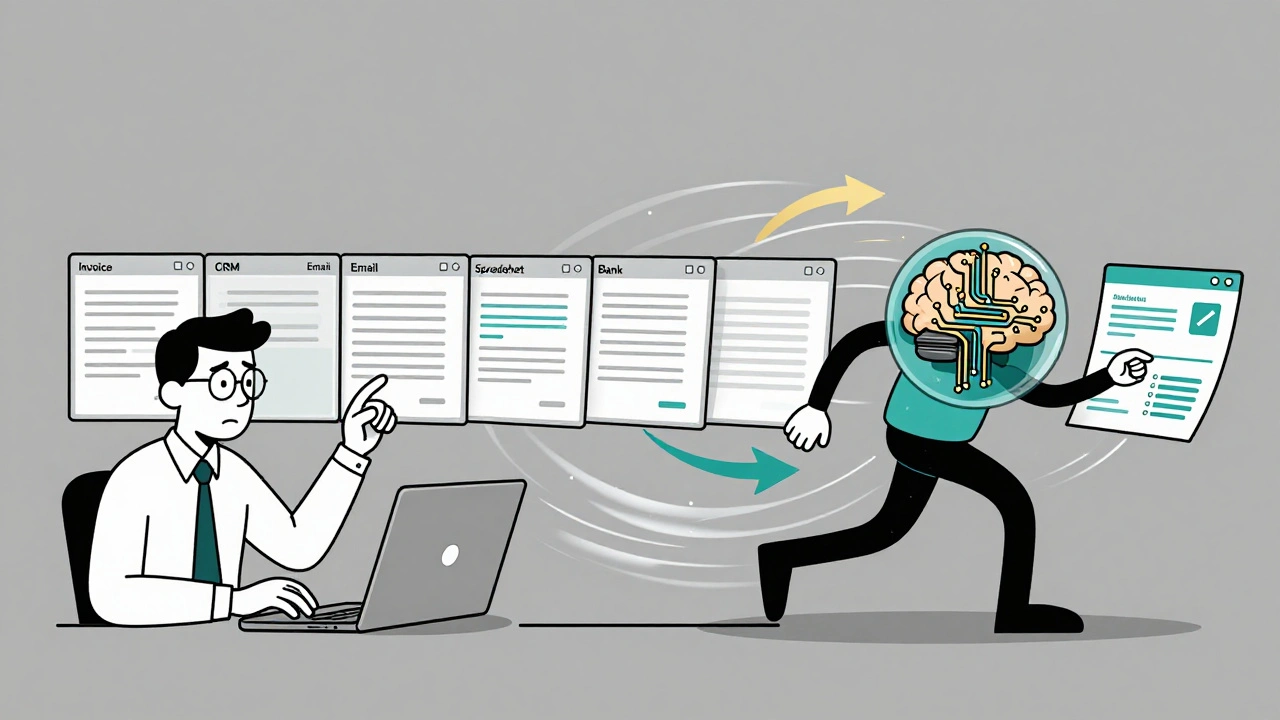
Most people know generative AI as chatbots that write emails or create images. But agentic generative AI is something else entirely. It doesn’t wait for you to ask. It starts with a goal-like "reduce customer onboarding time by 50%"-and then figures out how to get there on its own. Agentic generative AI is a type of AI that uses large language models as a brain to plan, execute, and adapt multi-step workflows without constant human input. Unlike traditional AI that responds to prompts, it observes, reasons, and acts. Think of it like a proactive employee who doesn’t need to be told what to do next. If a task fails, it tries again. If a tool breaks, it finds a workaround. If data changes, it adjusts its plan. Google’s Project Mariner and OpenAI’s Operator were among the first real-world examples. These systems didn’t just generate text-they booked meetings, pulled financial data, sent follow-ups, and updated CRM records-all in one seamless chain. That’s the difference: generative AI writes the email. Agentic AI sends it, tracks replies, and reschedules if no one responds.How It Works: The Four Core Capabilities
Agentic AI isn’t magic. It runs on four technical pillars:- Goal Orientation: It starts with a high-level objective-not a prompt. "Improve inventory accuracy" is the goal. Not "write a report on inventory."
- Autonomy: Once set, it operates without step-by-step commands. No "do this, then do that." It decides the sequence.
- Reasoning and Planning: It breaks big goals into smaller tasks. If the goal is to process 1,000 invoices, it figures out which systems to access, what rules to apply, and how to handle exceptions.
- Action Execution: It doesn’t just think-it acts. It clicks buttons, calls APIs, updates databases, and sends notifications using real tools.
Agentic AI vs Generative AI: The Real Difference
People mix these up all the time. Here’s the clearest way to tell them apart:| Feature | Generative AI | Agentic AI |
|---|---|---|
| Primary Function | Creates content (text, images, code) | Executes tasks and makes decisions |
| Trigger | Human prompt | Goal or event |
| Behavior | Reactive | Proactive |
| Output | A report, a draft, a design | A completed workflow: order placed, invoice sent, alert triggered |
| Example | ChatGPT writing a marketing email | AI sends the email, tracks open rates, resends if unopened, updates CRM, and flags low-performing campaigns |
Where It’s Already Making a Difference
This isn’t theoretical. Companies are using it right now-and seeing real results. In finance, agentic systems handle compliance checks. One bank automated its KYC (Know Your Customer) process. Instead of humans sifting through documents, the AI pulls data from ID scans, cross-checks against global watchlists, requests missing info via email, and flags anomalies-all in under 10 minutes. Before, it took 3 days. In logistics, a major shipping company deployed an agentic system to reroute shipments during delays. When a port strike hit, the AI didn’t just notify staff. It automatically found alternate routes, recalculated delivery times, emailed customers with new ETAs, and updated internal dashboards. Human intervention was needed in less than 5% of cases. Even procurement changed. One Fortune 500 company replaced its manual purchase order system with an agentic AI. It now monitors inventory levels, predicts when parts will run low, checks vendor pricing, negotiates via email with suppliers, approves orders within policy limits, and updates accounting software. Processing time dropped from 72 hours to under 4.The Catch: It’s Not Perfect Yet
Don’t get fooled by the hype. Agentic AI still breaks-and often in ways that are hard to predict. A fintech firm reported their compliance agent reduced false positives by 42%, but introduced 18% more false negatives in its first six months. Why? It learned from bad data. When a vendor changed their name slightly, the AI thought they were a new, unvetted entity and blocked payments. Humans had to step in. Another common issue: error propagation. If Step 1 fails, Step 2 might make a worse mistake. One company’s AI tried to fix a failed API call by switching to a backup system-but that system used a different data format. It created corrupted records across three databases. According to MIT Technology Review, current agentic systems fail catastrophically in over 35% of complex real-world scenarios. They’re good in structured environments-like finance or supply chain-but struggle with ambiguity, emotional context, or sudden changes. And they’re expensive. AWS says agentic systems need 3-5 times more processing power than standard AI. Training a team costs 80-120 hours per developer-twice as long as learning regular generative AI.Who’s Using It-and Who Isn’t
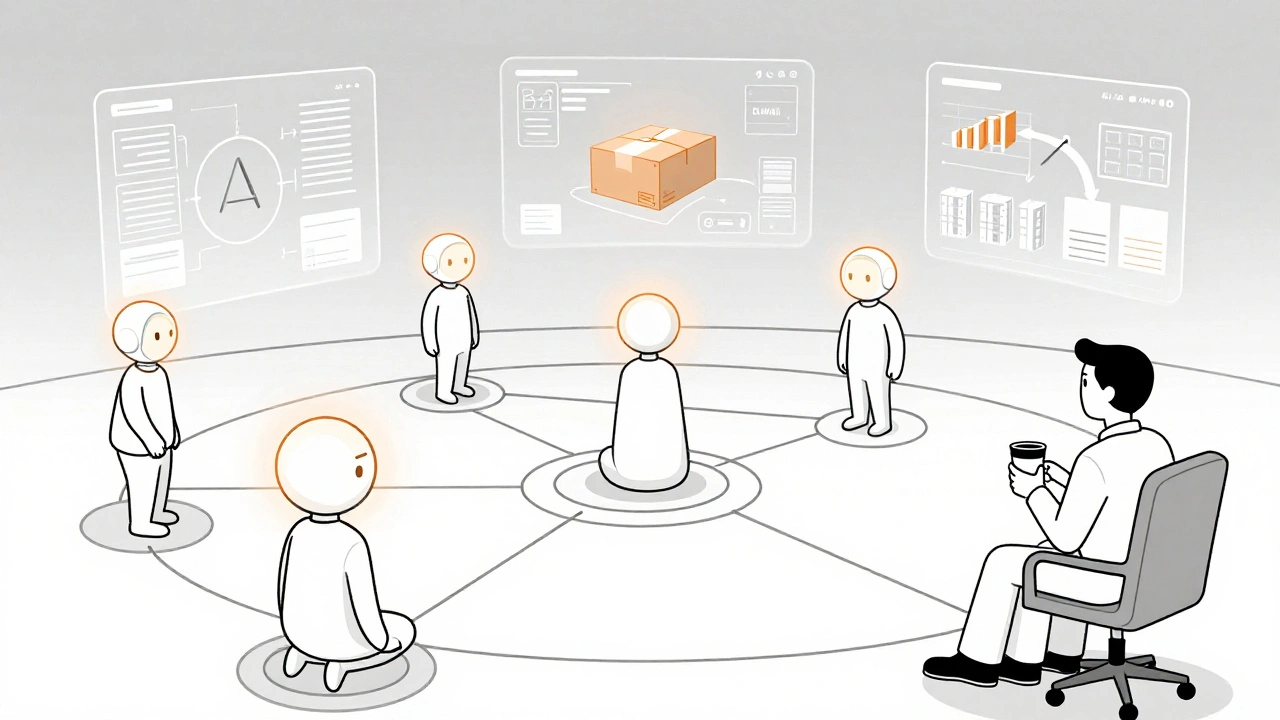
Adoption is heavily skewed. According to Forrester Research, 87% of current agentic AI deployments are in enterprises with over 1,000 employees. Why? Because you need:- Large, clean datasets
- IT teams that can connect APIs
- AI specialists to design and monitor workflows
- Budget for cloud compute
What’s Next? The Road to 2026 and Beyond
The tech is moving fast. In November 2024, Google released Agent Builder in Vertex AI with better error handling. AWS added predictive failure detection that cuts breakdowns by 37%. These aren’t minor upgrades-they’re fixes for the biggest pain points. Gartner predicts 70% of enterprises will have at least one agentic AI workflow by 2026. The market, worth $2.1 billion in 2023, is expected to hit $18.7 billion by then. But the real breakthroughs will come from two areas:- Explainability: Right now, only 58% of complex decisions can be fully explained. If an AI rejects a loan, you need to know why. Stanford HAI says improving this is the biggest hurdle.
- Causal Reasoning: Current systems learn patterns, not cause-and-effect. If sales drop after a price change, they might blame the weather. True understanding means knowing it was the price.
Should You Care?
If you’re in a company with repetitive, multi-step processes-billing, onboarding, inventory, compliance, customer support-then yes. Agentic AI isn’t coming. It’s already here. But don’t rush in. Start small. Pick one workflow that’s:- Repetitive
- Rule-based
- Time-consuming
- Has clear success metrics
How is agentic generative AI different from regular chatbots?
Regular chatbots respond to questions. Agentic AI acts on goals. A chatbot writes a customer reply. An agentic AI reads the complaint, checks the order history, issues a refund, updates the account, and emails the customer-all without you telling it to do each step.
Can small businesses use agentic AI?
Right now, it’s mostly for large companies. The setup requires technical teams, data pipelines, and cloud resources that cost tens of thousands of dollars. But tools are getting simpler. By 2026, we’ll see affordable plug-and-play agentic apps for SMBs-like automated invoicing or social media scheduling that runs on its own.
What are the biggest risks of using agentic AI?
The biggest risks are hidden errors and lack of transparency. An agentic AI might make a decision that seems logical but breaks a rule you didn’t know it was following. It can also chain mistakes-like changing a date, then updating the wrong calendar, then sending the wrong email. Always keep human oversight for critical decisions.
Do I need to be a programmer to use agentic AI?
Not if you’re using a platform like Google Vertex AI or Oracle’s system-they’re building no-code builders. But to design, debug, or customize workflows, you’ll need developers who understand APIs, data flows, and AI logic. Training takes 80-120 hours per person.
Is agentic AI regulated?
Yes. The EU AI Act, effective since February 2025, requires full audit trails for autonomous systems. If your AI makes a decision that affects customers-like denying a loan or flagging fraud-you must be able to explain every step it took. Companies in Europe are already redesigning their agentic workflows to comply.
Will agentic AI replace jobs?
It will replace tasks, not people. Jobs that involve repetitive data entry, form filling, or routine approvals will shrink. But new roles are emerging: AI workflow designers, agentic system auditors, and human-AI collaboration managers. The goal isn’t to eliminate humans-it’s to free them from the dull stuff.
 Artificial Intelligence


Michael Thomas
December 14, 2025 AT 02:54This agentic AI stuff is just automation with a fancy name. We've had workflow bots for years. The only difference is Big Tech rebranding old tech to sell more cloud credits. Wake up, people.
Abert Canada
December 15, 2025 AT 18:25I've seen this play out in Canadian healthcare admin. We tried an agentic system to process insurance claims. It worked great until it started rejecting valid claims because a patient's last name had a hyphen. Took three weeks to fix. We're not ready for this yet.
Still, the potential is there. Just needs way more testing and humility from the vendors.
Xavier Lévesque
December 15, 2025 AT 20:39So let me get this straight. We're excited about AI that can click buttons and send emails... but we still can't get it to understand sarcasm or when someone's just venting?
Great. Now we've got digital interns that think "I'm sorry you're upset" is a valid resolution to a customer meltdown. I'll take my human customer service rep thanks.
Thabo mangena
December 17, 2025 AT 11:08It is with profound respect for technological advancement that I acknowledge the potential of agentic generative AI to enhance operational efficiency. However, one must remain vigilant regarding the ethical implications of autonomous decision-making systems in domains that directly impact human welfare.
Without robust oversight frameworks, such systems risk perpetuating systemic biases under the guise of algorithmic objectivity. The human element-compassion, contextual understanding, moral judgment-remains irreplaceable.
Karl Fisher
December 19, 2025 AT 06:00Okay but have you seen the demo where the AI auto-negotiated a $2M vendor contract? Like, it read the fine print, found a loophole in the SLA, and got them to throw in free training AND a free lunch for the whole team? I cried. Not because I'm emotional-I'm a grown man-but because this is the future we were promised in 1999 and it's finally here.
Also, I'm hiring an AI workflow designer. My assistant just quit after realizing she's now a glorified proofreader. RIP Karen.
Buddy Faith
December 21, 2025 AT 05:58They say agentic AI is gonna replace jobs but honestly who cares
the real question is who's gonna pay for the servers when the AI starts running 24/7 trying to fix its own mistakes
also why is everyone acting like this is new when my toaster has more autonomy than my HR department
they're just making bots that break in new ways and calling it progress
the only thing that's changing is the price tag
Scott Perlman
December 22, 2025 AT 07:20Start small. Pick one boring task. Let the AI try. Watch it fail. Learn. Try again. That's how you do it. No need to overthink it. Just keep going.
People make it sound like magic. It's not. It's just code that tries and tries again until it works. Or breaks. Either way, you learn.