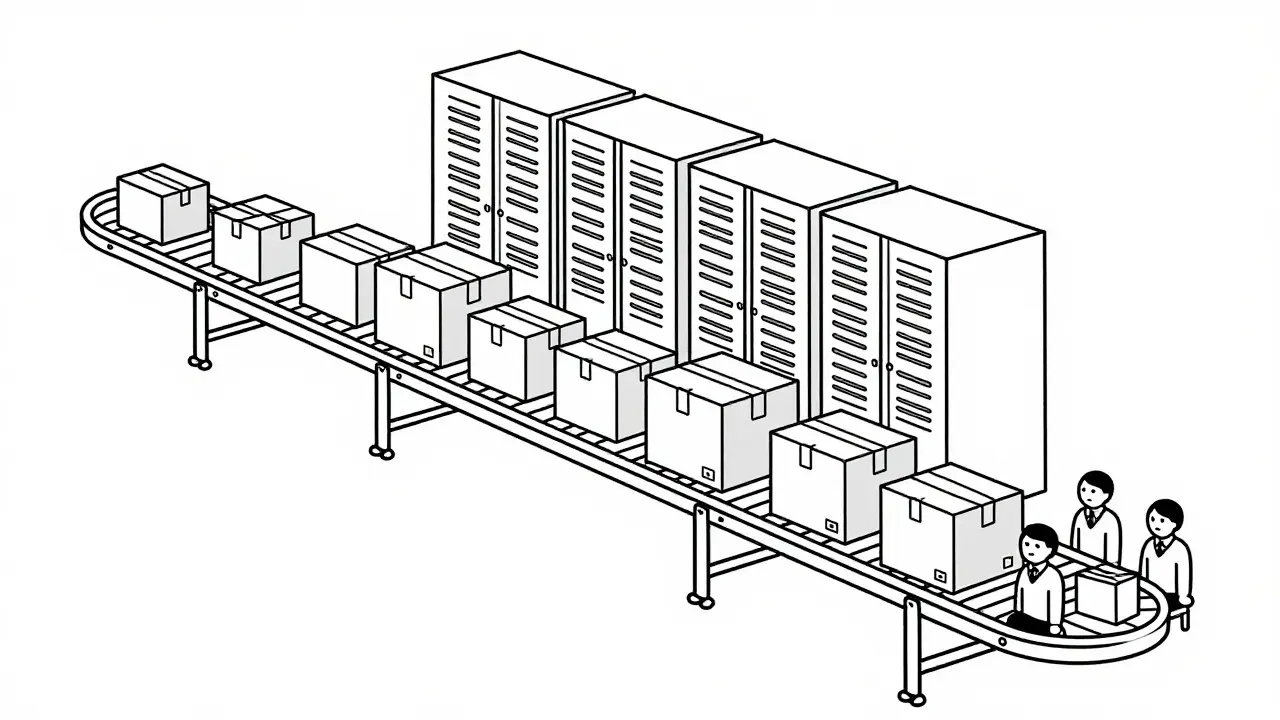
Running Large Language Models (LLMs) in production is expensive. You are paying for idle GPU time, cold starts, and inefficient resource allocation while your users wait for responses that miss their service-level objectives (SLOs). Traditional scheduling methods like Round Robin or First-Come-First-Served treat every request the same way, ignoring the fact that some queries need speed while others can tolerate delay if it saves money. This mismatch leads to bloated infrastructure bills and frustrated customers.
Cost-Aware Scheduling is a specialized approach to managing LLM inference workloads that simultaneously optimizes for operational cost efficiency and strict service-level objective compliance. It moves beyond simple load balancing by analyzing request characteristics-such as input length, expected output size, and urgency-to make intelligent placement decisions across heterogeneous hardware. By adopting these strategies, you can reduce latency by up to 31.6% and cut costs significantly without sacrificing performance.
The Core Problem with Traditional LLM Scheduling
Most teams start with basic scheduling policies because they are easy to implement. However, LLM workloads are not static. They are dynamic, heterogeneous, and often multi-tenant. When you deploy an LLM serverless environment, you face unique challenges that traditional schedulers ignore:
- Cold Start Latency: Spinning up a new container or instance takes time. If your scheduler doesn't account for this, your first user pays the price.
- GPU Memory Fragmentation: Different models require different memory footprints. Poor packing leads to wasted VRAM that could have served another request.
- Inter-Tenant Contention: In shared environments, one noisy neighbor can degrade performance for everyone else.
- Tail Latency Variability: The 99th percentile response time often suffers more than the average, causing unpredictable user experiences.
Traditional systems optimize for one metric at a time. They might minimize average latency but fail to meet specific SLOs for critical requests. Or they might save money by using cheaper instances but miss deadlines entirely. Cost-aware scheduling solves this by treating cost and performance as joint variables in a single optimization problem.
Key Frameworks and Methodologies
Several advanced frameworks have emerged to address these complexities. Understanding their differences helps you choose the right tool for your infrastructure.
DeepServe++: Elastic Serverless Scheduling
DeepServe++ is a framework that formulates joint SLO-cost optimization as a contextual bandit problem, specifically designed for elastic scheduling in serverless, multi-tenant environments. It explicitly handles the difficulties of deploying LLM inference by addressing cold start latency and GPU memory fragmentation. By using a contextual bandit approach, DeepServe++ learns from past decisions to improve future scheduling choices, making it highly effective for dynamic workloads where request patterns change rapidly.
SLO-Aware Scheduling with Simulated Annealing
Another powerful approach uses simulated annealing to decide request priority sequences. This method considers each request's SLO, input length, and possible output length. The process works in four steps:
- Predict request latencies and distribute them to instances in a round-robin fashion.
- Establish a priority sequence using a priority mapping algorithm based on SLO constraints.
- Enqueue requests into instance-specific queues.
- Schedule execution on LLM instances based on the calculated priority.
This scheduler maintains an incredibly low overhead of only 1 millisecond, which is crucial for real-time inference. It improves SLO attainment by up to 5 times compared to state-of-the-art frameworks like vLLM and LMDeploy.
CATP-LLM: Cost-Aware Tool Planning
For applications that use tools (like code interpreters or web searchers), CATP-LLM is a framework that empowers LLMs for cost-aware tool planning using offline reinforcement learning to optimize the performance-cost trade-off. It introduces a tool planning language that allows LLMs to generate non-sequential plans with multiple branches. This enables efficient concurrent tool execution, reducing overall wait times and costs. CATP-LLM uses a context augmentation scheme to integrate tool cost information directly into the LLM's input, guiding it to make smarter decisions.
| Framework | Primary Use Case | Optimization Technique | Key Benefit |
|---|---|---|---|
| DeepServe++ | Serverless/Multi-tenant | Contextual Bandits | Handles cold starts & memory fragmentation |
| SLO-Aware Scheduler | High-priority inference | Simulated Annealing | 5x SLO attainment improvement |
| CATP-LLM | Tool-use agents | Offline Reinforcement Learning | 24.7%-45.8% lower costs |
| vLLM / LMDeploy | General purpose | Continuous Batching | High throughput baseline |
Performance Metrics and Real-World Impact
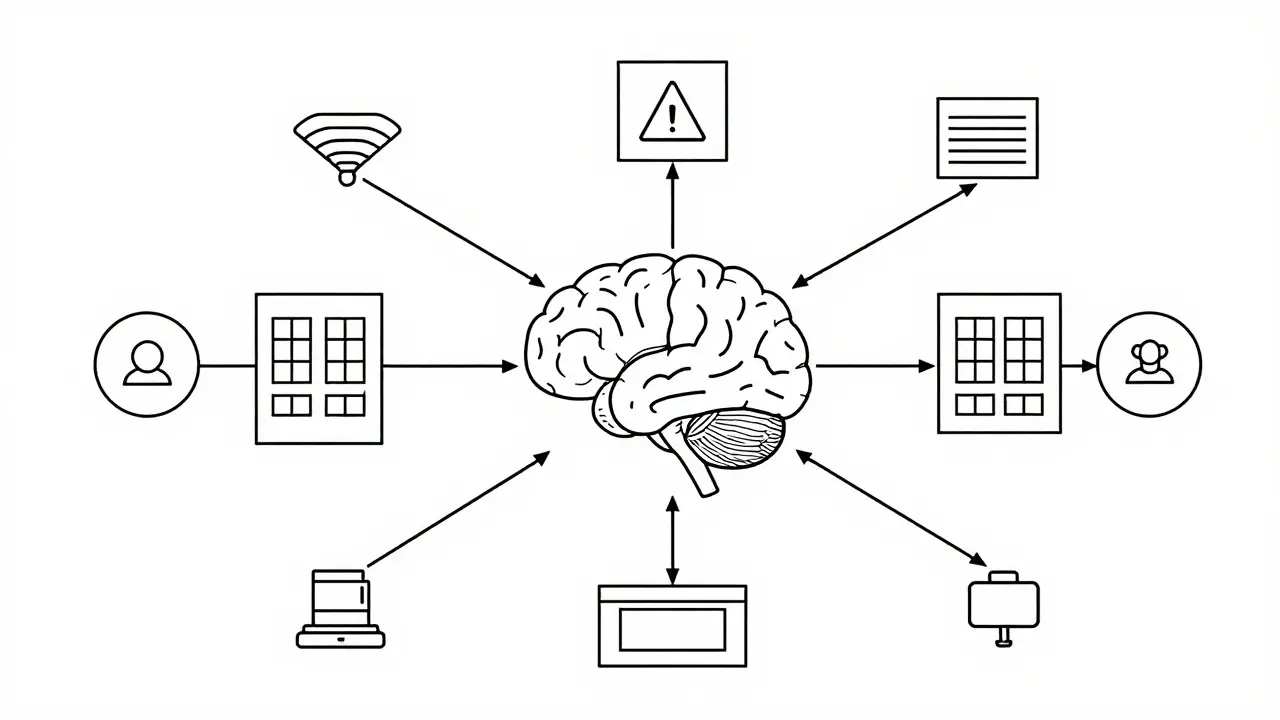
The numbers speak for themselves. Recent research demonstrates substantial improvements over existing approaches when using cost-aware scheduling.
The SLO-aware scheduler reduces average latency by 31.6% on datasets like Python-Code-23k-ShareGPT and ShareGPT_Vicuna_unfiltered. More importantly, it improves SLO attainment by up to 5 times compared to current state-of-the-art frameworks. This means fewer failed requests and happier users.
CATP-LLM shows even more dramatic cost savings. When evaluated against GPT-4, it achieves 28.2%-30.2% higher plan performance and 24.7%-45.8% lower costs. Remarkably, it achieves these results even when using smaller backbone models like Llama2-7B. This indicates that smart scheduling can compensate for model scale differences, allowing you to run cheaper models without sacrificing quality.
Technical Implementation Strategies
Implementing cost-aware scheduling requires sophisticated feature engineering and decision-making algorithms. Here are the key technical components you need to understand:
Priority Mapping Algorithms
These algorithms prioritize each request based on its SLO, input length, and expected output length. The goal is to achieve the highest SLO attainment with the lowest possible average latency. By looking ahead at the expected workload, the scheduler can batch similar requests together or isolate high-priority ones.
Cost-Aware Feature Engineering
Effective scheduling relies on rich feature sets. Importance vectors gradually increase the importance of cost features based on their distance to the current size level. Multi-head self-attention modules are used for feature fusion to produce cost-aware feature sets. This allows the system to weigh different factors dynamically rather than using static rules.
Reinforcement Learning Integration
Offline reinforcement learning algorithms guide LLMs using dedicated reward models. These models minimize plan execution costs while maximizing plan performance. Reward shaping explicitly prioritizes SLA satisfaction while minimizing CPU cost, with normalized cost values scaled between 0-1 to penalize expensive decisions. This creates a feedback loop where the scheduler gets better over time.
Choosing the Right Approach for Your Stack
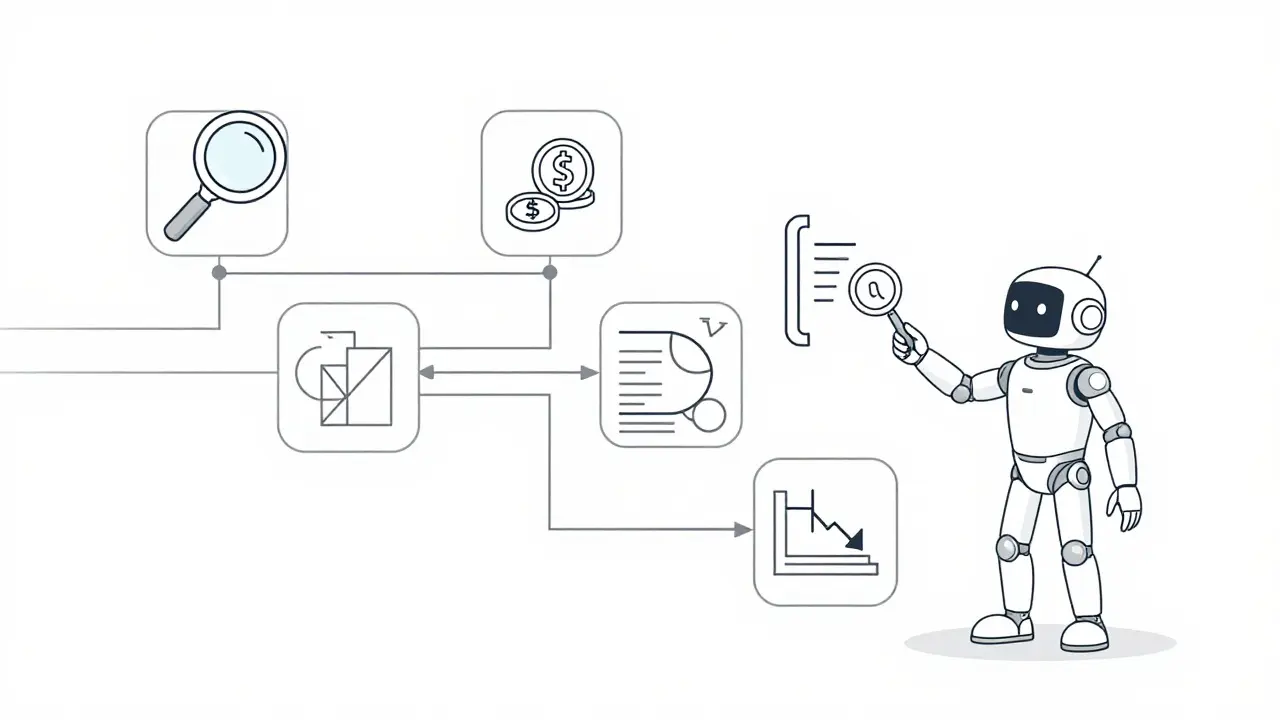
Not every solution fits every scenario. Consider your specific deployment environment:
- Serverless Environments: Use DeepServe++ to handle the unpredictability of cold starts and tenant isolation.
- High-Priority Applications: Implement the SLO-aware scheduler with simulated annealing if missing deadlines is costly.
- Agent-Based Systems: Adopt CATP-LLM if your LLMs frequently call external tools or APIs.
- Multi-Cloud Deployments: Look into dynamic workflow scheduling schemes based on Proximal Policy Optimization (PPO) to balance loads across providers.
Traditional policies like Round Robin (RR) and First-Come-First-Served (FCFS) should be replaced with cutting-edge approaches like Deep Q-Networks (DQN) or Advantage Actor-Critic (A2C) scheduling policies. These modern approaches provide the flexibility needed to handle complex, real-world workloads.
Future Directions and Best Practices
The field of cost-aware scheduling is maturing rapidly. Platforms like OpenCATP are emerging to systematically evaluate LLM performance in cost-aware scenarios. As you plan your infrastructure, keep these trends in mind:
- Holistic Optimization: Future systems will integrate SLO compliance, cost efficiency, latency reduction, and resource utilization into unified frameworks.
- Interference Awareness: Better understanding of resource interactions will lead to more nuanced scheduling decisions.
- Low Overhead: Maintain scheduling overhead under 1 millisecond to ensure real-time responsiveness.
- Model Agnosticism: Design schedulers that work effectively across different model sizes and architectures.
By adopting cost-aware scheduling now, you position your organization to benefit from these advancements early. The combination of academic rigor and practical considerations makes this a reliable strategy for long-term success.
What is cost-aware scheduling for LLMs?
Cost-aware scheduling is a method for managing LLM inference workloads that optimizes both operational costs and service-level objectives (SLOs). It analyzes request characteristics like input length and urgency to make intelligent placement decisions across hardware resources.
How does DeepServe++ differ from traditional schedulers?
DeepServe++ uses contextual bandits to solve joint SLO-cost optimization problems in serverless environments. Unlike traditional schedulers, it explicitly addresses cold start latency and GPU memory fragmentation, leading to better resource utilization.
Can cost-aware scheduling reduce latency?
Yes. Research shows that SLO-aware schedulers can reduce average latency by up to 31.6% while improving SLO attainment by 5 times compared to frameworks like vLLM and LMDeploy.
What is CATP-LLM and how does it save money?
CATP-LLM is a framework for cost-aware tool planning that uses offline reinforcement learning. It generates non-sequential plans for concurrent tool execution, resulting in 24.7%-45.8% lower costs compared to standard approaches like GPT-4.
Is cost-aware scheduling suitable for small models?
Absolutely. Studies show that cost-aware optimization can compensate for model scale differences. CATP-LLM achieved superior results using Llama2-7B, proving that smart scheduling matters as much as model size.
What are the main challenges in LLM scheduling?
Key challenges include cold start latency, GPU memory fragmentation, inter-tenant resource contention, and unpredictable tail latency. Traditional schedulers fail to address these jointly, leading to inefficiencies.
How much overhead does advanced scheduling add?
Advanced schedulers like those using simulated annealing maintain very low overhead, often around 1 millisecond. This ensures that the benefits of optimization outweigh the computational cost of scheduling decisions.
Should I replace Round Robin scheduling?
If you are running dynamic, heterogeneous LLM workloads, yes. Round Robin ignores request priorities and costs. Modern approaches like DQN or A2C policies offer significant improvements in SLA fulfillment and cost efficiency.
 Artificial Intelligence