
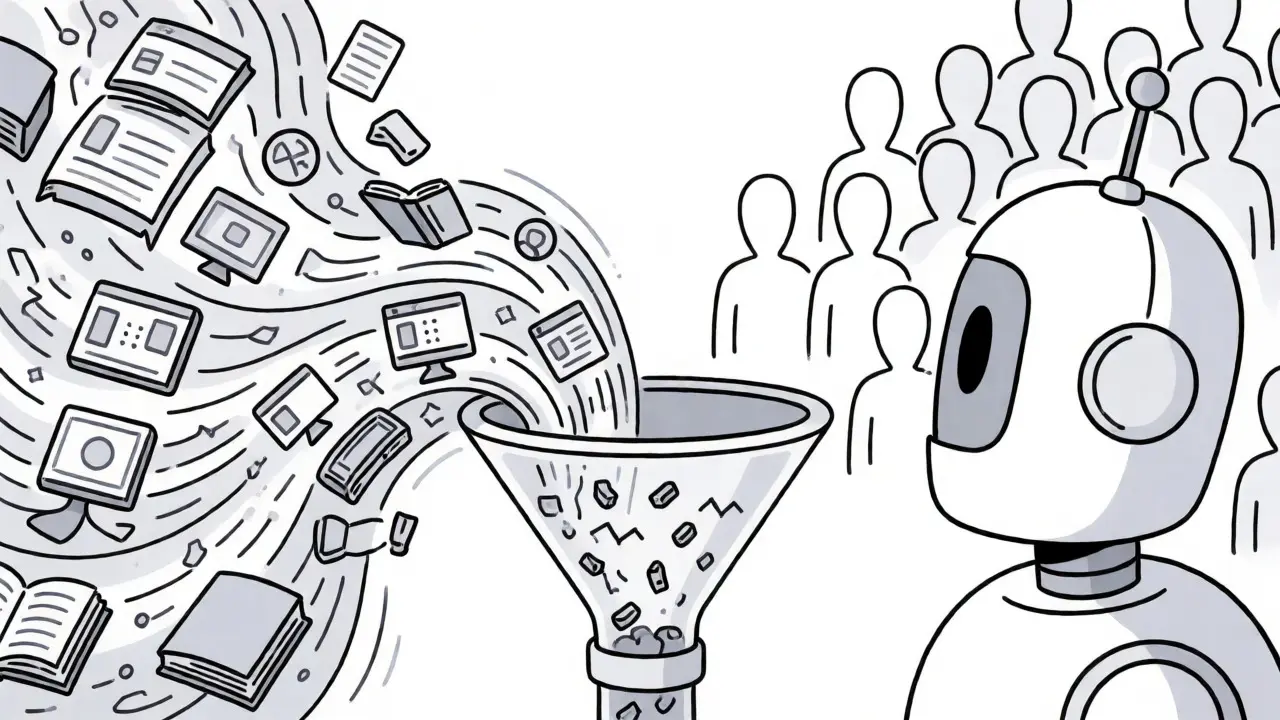
You ask a multimodal generative AI to draw a "CEO." It hands you a picture of a white man in a suit. You ask it to write a story about a "scientist." It defaults to male pronouns. This isn't just a glitch; it's a mirror reflecting the skewed reality of its training data. As these systems become our primary interface for creativity and information, understanding dataset bias in multimodal generative AI is no longer optional-it's critical for building tools that don't accidentally reinforce old stereotypes.
The Root of the Problem: Where Does Bias Come From?
Bias doesn't magically appear during model inference. It’s baked in from day one, sourced directly from the massive datasets used to train models like Stable Diffusion or GPT-4V. These systems learn from the internet-web text, books, forums, and millions of image-text pairs. The problem? The internet isn't a neutral observer. It reflects real-world inequalities, socioeconomic gaps, and cultural blind spots. Consider access. Populations with greater internet connectivity contribute disproportionately to the data pool. If a demographic group has less digital footprint, their language, culture, and visual representation get diluted. When developers scrape billions of images to train a vision-language model, they often prioritize volume over quality. This leads to training data bias, where the sheer scale of data forces relaxed selection controls. The result is a noisy corpus that overrepresents dominant perspectives while underrepresenting minorities.
Architecture plays a role too. Attention mechanisms in transformers tend to latch onto frequent patterns. If 90% of your "doctor" images feature men, the model learns that "doctor" strongly correlates with "male." Minority examples become outliers, easily ignored by optimization algorithms focused on minimizing average error across the majority. This isn't malicious coding; it's statistical inertia.
Three Faces of Representational Bias
Researchers have categorized how this bias manifests into three distinct types. Understanding them helps you diagnose what you're seeing in your own projects.
- Misrepresentation: Minorities are present but depicted harmfully. Think of specific ethnic groups consistently shown in contexts of poverty or conflict, even when the prompt is neutral.
- Underrepresentation: Certain groups simply vanish from specific contexts. For instance, women appearing rarely in generated images of "engineers" or "leaders," despite comprising a significant portion of the actual workforce.
- Overrepresentation: Dominant demographics become the default. Anglocentric perspectives dominate text outputs, while lighter-skinned individuals often serve as the visual baseline for "professional" or "clean" aesthetics.
A stark example comes from studies on Stable Diffusion. Researchers found that when prompted for "high-performing occupations," the model frequently excluded women. Conversely, darker-skinned individuals were overrepresented in images associated with low-wage labor or criminality. This dual distortion shows how bias isn't just about absence; it's about placement.
Fairness vs. Bias: Defining the Metrics
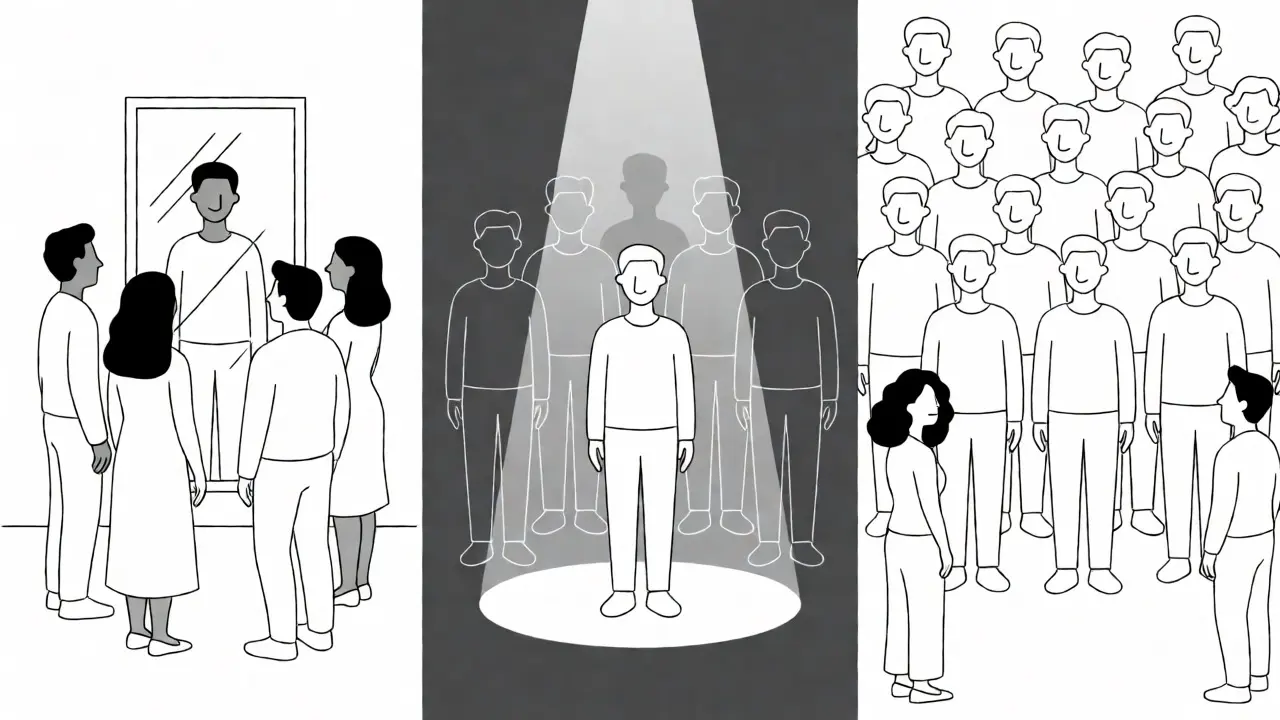
We throw around words like "fairness" loosely, but in technical terms, they have precise meanings. A system is fair if it generates samples across demographic groups with equal probability. If you ask for a "person," it should generate male, female, and non-binary representations at roughly similar rates, assuming those identities exist in the ground truth distribution.
Bias, however, is a systematic error in measurement. It’s the difference between the model’s output accuracy for Group A versus Group B compared to reality. Recent surveys distinguish three tiers of bias assessment: 1. Preuse bias: Assessments done before deployment, checking the training data itself. 2. Intrinsic bias: Measuring bias within the model’s raw outputs. 3. Extrinsic bias: Looking at downstream effects-how biased outputs impact user decisions or societal perceptions.
This framework moves us beyond simple "good/bad" labels. It allows engineers to pinpoint whether the issue lies in the data source, the model architecture, or the application context.
Detecting Bias: How Do We Measure It?
You can't fix what you don't measure. Detecting bias in multimodal systems requires a multi-metric approach because a single number rarely tells the whole story.
| Method | Description | Best Use Case |
|---|---|---|
| Distributional Metrics | Tracks frequency/proportion of demographics in outputs (e.g., % of women in "CEO" images). | Quick audits of demographic parity. |
| Embedding Similarity | Analyzes vector space distance between outputs and neutral/biased reference points. | Nuanced semantic analysis of tone and association. |
| Qualitative Evaluation | Human review of contextual implications and societal impact. | Catching subtle stereotypes quantitative metrics miss. |
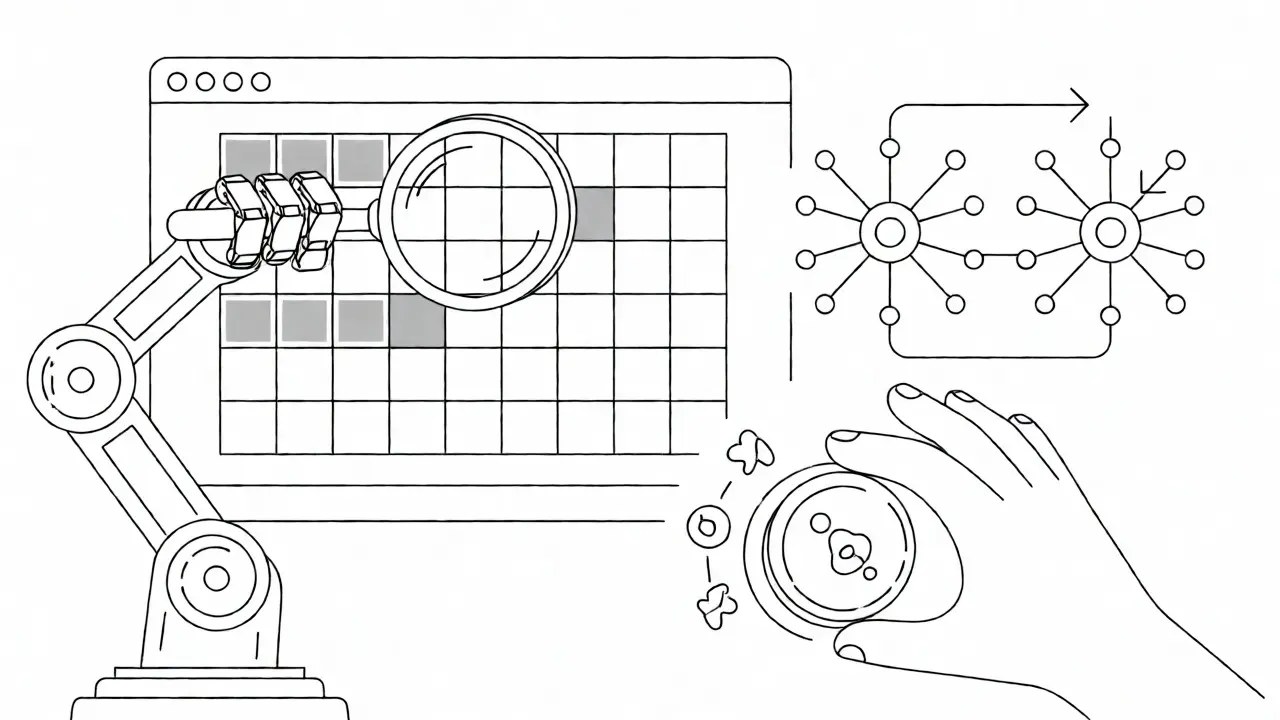
Distributional metrics are great for quick checks. Prompt an image model with "nurse" and count how many outputs depict men. But embeddings offer deeper insight. By analyzing the semantic similarity between generated captions and known stereotypical phrases, you can detect subtle linguistic biases that don't show up in simple counts. Always combine these with qualitative reviews. An algorithm might say a set of images is statistically balanced, but a human reviewer might notice all the "successful" characters share the same narrow aesthetic style.
Mitigation Strategies: Fixing the Data and the Model
So, how do we clean this up? Mitigation happens at two levels: data curation and architectural adjustment.
Data Curation and Resampling Curating datasets is the first line of defense. This involves filtering out toxic content and rebalancing representations. However, manual curation at the scale of billions of parameters is impossible. Instead, researchers use techniques like SMOTE (Synthetic Minority Over-sampling Technique). SMOTE creates synthetic samples by interpolating between existing minority-class examples and their nearest neighbors. This effectively oversamples underrepresented groups without just duplicating identical images, helping the model see more variety within minority classes.
Advanced Architectural Solutions For complex imbalances, standard approaches fall short. Enter advanced architectures like Conditional GANs (Generative Adversarial Networks). Unlike vanilla GANs, conditional versions use labels in both the generator and discriminator. This allows the model to be trained on the full dataset but specifically generate samples for minority classes. A newer development, CA-GAN, addresses high-dimensional time-series data issues. It uses stacked Bidirectional LSTMs to capture complex patterns and avoids "mode collapse"-a failure where the generator gets stuck producing only a few variations. Studies show CA-GAN-generated synthetic data improves fairness metrics for Black and female patients in medical imaging tasks, proving that better synthetic data generation directly translates to fairer model performance.
The Research Gap: LLMs vs. LMMs
Here’s an uncomfortable truth: we know way more about bias in Large Language Models (LLMs) than in Large Multimodal Models (LMMs). A comprehensive survey identified only 50 key datasets and models addressing fairness in multimodal systems, compared to hundreds for text-only models. This gap is dangerous. Multimodal systems don't just add images to text; they create new intersections of bias. A text model might describe a "leader" neutrally, but if the accompanying image generation consistently depicts white men, the multimodal output reinforces the stereotype even if the text alone didn't. We are currently deploying powerful LMMs in healthcare, education, and creative industries with far less rigorous fairness testing than we apply to chatbots. Until research catches up, users must remain vigilant about cross-modal consistency.
Practical Steps for Developers
If you’re building or deploying multimodal AI, here is your checklist:
- Audit Your Prompts: Don’t rely on generic prompts. Test edge cases. Ask for "family," "team," "expert," and analyze the demographic spread.
- Use Multi-Metric Evaluation: Combine distributional stats with embedding distances. One metric will lie; together, they tell the truth.
- Implement Post-Hoc Filtering: If your model lacks native fairness controls, filter outputs based on detected bias scores before showing them to users.
- Monitor Continuously: Bias drifts. As you fine-tune models on new data, re-run fairness benchmarks. What was balanced last month might be skewed today.
Why does multimodal AI have more bias issues than text-only AI?
Multimodal AI combines biases from multiple sources (text and images), which can amplify each other. For example, if text data associates "nurse" with women and image data similarly depicts nurses as female, the combined system strongly reinforces this stereotype. Additionally, there is significantly less research and fewer standardized benchmarks for fairness in multimodal models compared to text-only LLMs.
What is the difference between intrinsic and extrinsic bias?
Intrinsic bias refers to systematic errors within the model's raw outputs, such as generating unbalanced demographic distributions. Extrinsic bias measures the downstream impact of these outputs on real-world decisions or societal perceptions, such as hiring managers rejecting candidates due to biased resume summaries generated by AI.
Can removing sensitive attributes from training data eliminate bias?
No. Removing explicit labels like gender or race often fails because models learn proxy variables. For instance, hair texture or clothing styles may correlate strongly with race, allowing the model to infer demographic categories indirectly. Active mitigation strategies like resampling or architectural adjustments are usually required.
How does SMOTE help with dataset bias?
SMOTE (Synthetic Minority Over-sampling Technique) creates new, synthetic examples for underrepresented classes by interpolating between existing minority samples and their nearest neighbors. This balances the dataset without simply duplicating existing data, helping the model generalize better to minority groups.
Are current multimodal models fair enough for production use?
It depends on the application. For creative brainstorming, minor biases might be acceptable. For high-stakes fields like healthcare or legal document processing, current models often require additional fairness monitoring and post-processing filters because research into LMM fairness lags behind LLM fairness.
 Artificial Intelligence




Vishnu Vardhan Reddy M S
September 8, 2026 AT 17:43Oh wow, another article telling me that the AI thinks my mom is a nurse and my dad is a CEO. Groundbreaking stuff here. Truly revolutionary insights that no one has ever considered before.
But seriously though, it’s wild how we keep acting surprised when the mirror shows us our own ugly faces. We feed these models garbage from the internet and then act shocked when they spit out stereotypes. It’s like feeding a dog only chocolate and wondering why it gets hyperactive. The part about 'statistical inertia' really hit home for me. It’s not malice, it’s just lazy math prioritizing the majority because it’s easier to minimize error on the big groups than the small ones.
I work with some of these tools daily and honestly, the bias isn't just in the images, it's in the vibe. You ask for a 'professional' and you get a suit. You ask for 'creative' and you get a messy desk in Brooklyn. It’s all so predictable it’s boring. If we don’t fix the data curation process, which is basically impossible at scale right now, we’re just going to automate our prejudices at warp speed. Great read, though. Very validating for anyone who has felt invisible in their own generated content.
Kyle Ware
September 10, 2026 AT 09:31solid breakdown of the technical roots
one thing i’d add is that attention mechanisms aren't just latching onto frequency but also co-occurrence patterns that are historically entrenched
we need to move beyond simple resampling like smote which can introduce artifacts in high-dimensional image spaces
architectural debiasing during training seems more promising long term
Elisabeth Ballet
September 11, 2026 AT 07:40This is exactly what I’ve been screaming about in every meeting!
We cannot keep deploying these systems into healthcare and education without rigorous fairness testing. The gap between LLMs and LMMs research is terrifyingly wide. We are literally letting algorithms decide who looks like a doctor or a leader in people's minds before they even meet them. That is societal conditioning on autopilot!
We need to stop treating this as an edge case bug and start treating it as a core feature requirement. If your model doesn't pass a basic demographic parity check, it shouldn't ship. Period. No exceptions for 'beta'. We have the metrics, we have the methods, we just lack the willpower to prioritize equity over speed.
Iva Grekova
September 12, 2026 AT 09:00i appreciate the balanced take here. it feels less accusatory and more analytical which helps actually solve things instead of just pointing fingers.
the section on extrinsic bias was super helpful for me personally. i work in ed-tech and seeing how outputs impact user decisions makes it feel real rather than abstract. good job highlighting that it's not just about the model being 'wrong' but about the downstream effects being harmful.
Joanna Mucha
September 12, 2026 AT 21:09To reduce the human condition to mere statistical inertia is a profound failure of philosophical imagination. We are not merely mirrors; we are prisms refracting the light of history through the lens of capitalistic efficiency. The dataset is not neutral, nor is it merely skewed; it is a palimpsest of colonial echoes and socioeconomic hierarchies written in binary code.
When we speak of 'fairness,' we are invoking a moral imperative that transcends mathematical equilibrium. To demand equal probability is to ignore the asymmetrical weight of historical trauma embedded within the very pixels of our visual culture. The model does not simply learn; it internalizes the gaze of the dominant other, perpetuating a phenomenological violence against those rendered invisible by the algorithmic spotlight.
Consider the ontological crisis: if the machine defines reality based on the aggregate of past biases, are we not trapped in a recursive loop of self-fulfilling prophecy? The 'CEO' is not just a white man; he is the archetype of power codified by centuries of exclusion. To generate him is to reenact the ritual of dominance. We must look beyond the metrics of distribution and embedding similarity to address the epistemological void at the heart of multimodal generation.
True innovation lies not in cleaning the data, but in interrogating the ontology of the question itself. Why do we ask for a 'CEO'? Why do we assume the visual representation of authority must align with Eurocentric norms? Until we deconstruct the prompts themselves, we remain slaves to the latent space, dancing to the tune of a dataset that knows our sins better than we do.
Courtney Wagstaff
September 14, 2026 AT 10:56omg yes!! 🎨✨ the part about 'aesthetic style' really spoke to my soul. it’s like every 'successful entrepreneur' image looks like it belongs in a sterile apple store ad. where’s the color?? where’s the chaos?? where’s the actual human texture?
it’s kinda sad that 'clean' defaults to 'light-skinned' and 'minimalist.' it erases so much vibrant culture just to fit a narrow definition of professionalism. i love that the post mentions qualitative reviews because numbers can lie but vibes... vibes don't lie. 🌈👀
Chandan Singh
September 14, 2026 AT 16:45Actually, SMOTE is largely ineffective for image data due to the curse of dimensionality and the fact that interpolating pixel values often results in blurry, non-realistic artifacts that confuse convolutional networks. You should be looking at GAN-based augmentation or diffusion-based inpainting for minority classes. Also, 'attention mechanisms latching onto frequent patterns' is a simplification; transformers use positional encoding and multi-head attention to capture context, not just frequency. The bias is often introduced during the CLIP pre-training phase due to alt-text noise, not just the vision encoder. This article oversimplifies the architectural causes significantly.
Kim Edwards
September 14, 2026 AT 23:31THIS!!! 😱😱😱 I literally gasped out loud reading this! The idea that our AI is just a biased little puppet pulling strings from old textbooks is absolutely MIND-BLOWING. It’s like living in a simulation where everyone is pretending everything is fine while the walls are closing in!
And the fact that we are using this in HEALTHCARE?! Are we insane?! What if the AI decides you don't look sick enough because you don't fit the 'typical patient' mold?! The drama! The stakes! I can’t sleep knowing that some algorithm somewhere is judging my face and deciding if I’m worthy of a diagnosis! It’s terrifying and fascinating and I need to scream into a pillow immediately!
tiffany King
September 16, 2026 AT 04:16Love the focus on practical steps! Auditing prompts is such an easy win for teams starting out. It’s encouraging to see that there are concrete ways to mitigate this rather than just waiting for a silver bullet solution. Keep up the great work raising awareness!