You know the feeling. You’ve just finished a complex patient consultation, you’re mentally drained, and then you stare at the blank screen of your Electronic Health Record (EHR). It’s 7 PM, but you still have three hours of charting to do before you can go home. This isn’t just an annoyance; it’s a crisis. Administrative tasks consume up to 50% of a physician’s day, according to recent surveys from the American Hospital Association. That is half of your professional life spent typing instead of treating.
Enter generative AI. Unlike the predictive models of the past that just flagged risks, generative AI actually writes, drafts, and plans. By late 2026, this technology has moved from experimental pilots to essential infrastructure. We aren't talking about sci-fi robots performing surgery. We are talking about software that listens to your conversation with a patient and instantly drafts a clinical note, checks insurance requirements for prior authorizations, and suggests evidence-based care plans. But does it work? And more importantly, does it save time or create new headaches?
The Documentation Revolution: From Dictation to Drafting
The most mature application of generative AI in healthcare right now is clinical documentation. If you used voice recognition ten years ago, you likely remember the frustration of correcting "myocardial infarction" into "my heart attack" repeatedly. Modern solutions like Abridge and Ambience Healthcare are different. They don't just transcribe; they synthesize.
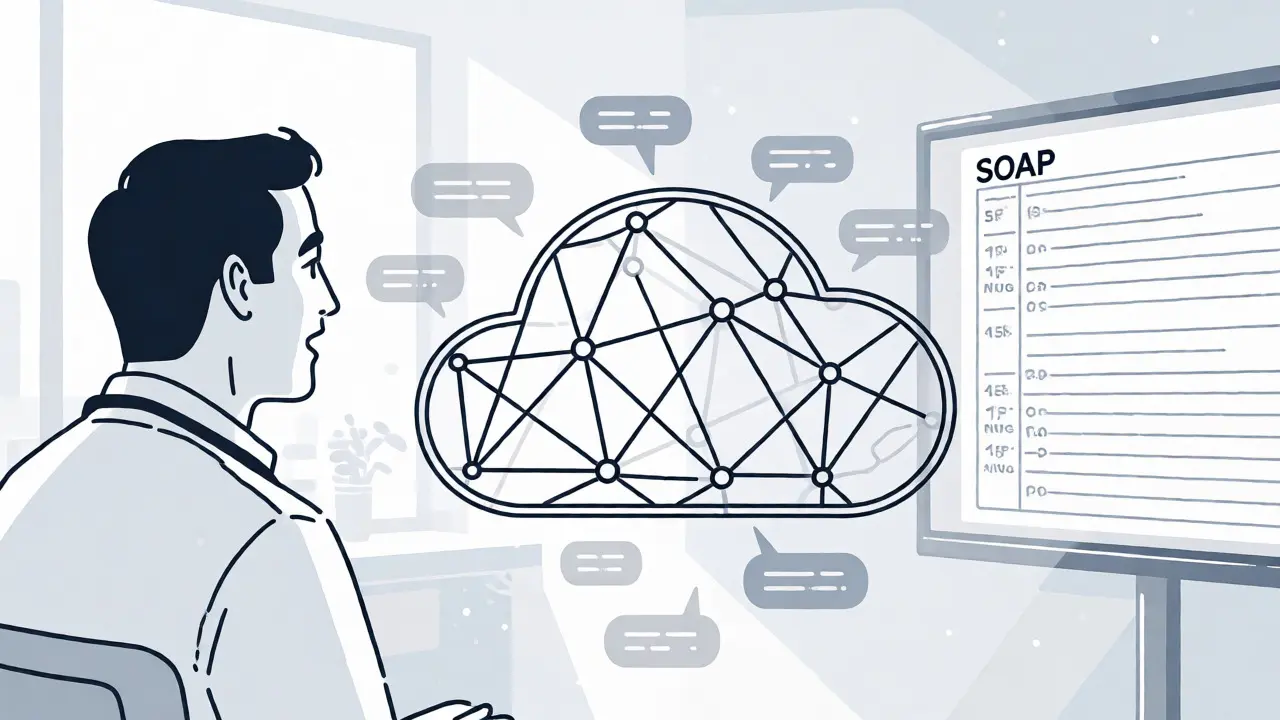
These tools use specialized Large Language Models (LLMs) fine-tuned on millions of medical records. When you speak naturally with a patient, the AI captures the dialogue, filters out small talk, and structures the relevant clinical data into SOAP notes (Subjective, Objective, Assessment, Plan). The results are staggering. At Mass General Brigham, where Ambience was rolled out to over 12,000 clinicians, 89% of physicians reported reduced burnout symptoms. Another study showed that Alpine Physician Partners cut their daily charting time by 74%. Imagine getting two extra hours back every single day.
| Feature | Abridge | Ambience Healthcare | Nuance DAX Copilot |
|---|---|---|---|
| Primary Focus | Real-time conversational drafting | Specialty-specific context awareness | Integrated EHR workflow |
| Accuracy Rate | ~95% for common conditions | High for niche specialties | 98.5% transcription accuracy |
| EHR Integration | Epic, Cerner, Meditech | Deep Epic integration | Native Microsoft/Nuance stack |
| Time Savings | Up to 2.1 hours/day | 74% reduction in charting time | Moderate reduction |
However, accuracy isn't uniform. While these systems hit 95%+ accuracy for routine visits, performance drops to around 82% for rare diseases or highly complex multi-system cases. This means you cannot blindly trust the output. The golden rule remains: human-in-the-loop validation. Every note needs your review and signature. The AMA’s 2025 policy framework mandates this explicitly-AI drafts, doctors decide.
Cracking the Code on Prior Authorizations
If documentation is the mountain, prior authorization (PA) is the quicksand. For decades, getting insurance approval for a procedure or medication meant filling out endless forms, waiting weeks for a decision, and often getting denied for reasons that made no sense. Generative AI is attacking this administrative nightmare with brute force efficiency.
Tools like those from Olive AI and newer entrants integrate directly with payer portals. Instead of a staff member manually checking coverage criteria, the AI scans the patient's chart, identifies the required clinical evidence, and auto-populates the PA request. It even predicts denial likelihood based on historical data.
The impact is measurable. A 2025 Johns Hopkins case study using Olive AI’s platform saw a 41% reduction in authorization denial rates. Similarly, Highmark Health partnered with Abridge to process routine authorizations in real-time, achieving a 63% faster approval rate. Currently, about 85% of routine PAs can be processed without human intervention. This doesn't eliminate the need for peer-to-peer reviews for complex cases, but it clears the low-hanging fruit so your billing team can focus on the hard fights.
Care Planning: Beyond the Template
Care planning has traditionally been a copy-paste affair. Providers pull from static templates that rarely reflect the unique nuances of a specific patient. Generative AI changes this by synthesizing data from labs, imaging, genomics, and social determinants of health to draft personalized treatment recommendations.
Nabla and similar platforms analyze the full patient context to suggest interventions that align with current guidelines. In trials, Nabla achieved 89% clinical accuracy in generating these recommendations, compared to 76% for legacy clinical decision support systems. This isn't just about convenience; it's about safety. By cross-referencing the latest research instantly, AI helps reduce diagnostic errors, which the World Economic Forum predicts could drop by 28% by 2027.
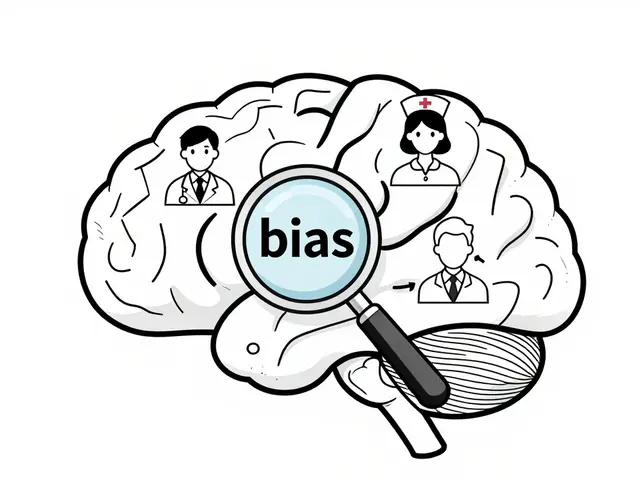
But here is the catch: bias. AI models learn from historical data, and if that data underrepresents certain populations, the recommendations might not fit everyone equally well. Studies show accuracy can drop 12-15 percentage points for underserved groups. As a provider, you must remain vigilant. Use the AI as a brainstorming partner, not an oracle. Always consider the patient's specific social context, which AI may still struggle to fully grasp.
Implementation Reality Check
So, you're sold on the benefits. What does rolling this out actually look like? It’s not plug-and-play. Successful implementation typically takes 8 to 12 weeks from contract signing to full deployment. Why so long? Because changing workflow habits is harder than installing software.
Accenture’s benchmarks suggest dedicating 1.5 full-time equivalents per 100 clinicians just for change management. Physicians need about 15-20 hours of training to feel comfortable, while nurses need less. The biggest pitfall? Poor EHR integration. A KLAS report highlighted a midwestern health system that abandoned its AI tool after six months because 47% of generated notes required heavy editing due to clunky interface issues. To avoid this, secure physician champions early. Hospitals with dedicated physician AI leads see adoption rates of 83%, versus 54% for those without.
- Start Small: Pilot with one specialty group before going system-wide.
- Check Integration: Ensure the tool supports HL7 FHIR standards for seamless data exchange with Epic, Cerner, or Meditech.
- Monitor Hallucinations: Track how often the AI invents facts. Current rates hover between 5-7%, which is unacceptable for autonomous use but manageable with review.
- Plan for Costs: Expect $1,200-$2,500 per provider annually for documentation tools, plus significant implementation fees ($50k-$250k for enterprise).
The Future Is Hybrid
We are moving toward intelligent agents that automate entire episodes of care, from intake to discharge. But let’s be clear: AI won't replace doctors. It will replace the part of being a doctor that feels like being a clerk. The goal isn't to remove the human element; it's to return it to the center of the room. When you spend less time typing and more time looking your patient in the eye, outcomes improve. Trust builds. Burnout fades.
The market is exploding, with clinical documentation alone projected to hit $4.2 billion by 2026. Startups are capturing 85% of spending, pushing incumbents like Microsoft and Google to adapt fast. For providers, the choice is no longer whether to adopt AI, but how quickly you can integrate it without losing your mind-or your patients' trust.
Is generative AI accurate enough for clinical documentation?
For common conditions, accuracy is high, often exceeding 95%. However, for rare diseases or complex multi-system cases, accuracy can drop to around 82%. Additionally, hallucination rates (where the AI invents details) remain between 5-7%. Therefore, mandatory human review and sign-off are required for all AI-generated notes.
How much time can providers actually save?
Studies vary, but consistent reports indicate savings of 1 to 2.1 hours per day per clinician. Some practices, like Alpine Physician Partners, reported a 74% reduction in charting time. This time is typically reclaimed for patient interaction or personal rest, directly addressing burnout.
What are the main risks of using AI for prior authorizations?
The primary risk is incorrect submission data leading to denials, though AI often reduces denial rates by predicting payer criteria accurately. Another concern is over-reliance; if staff stop understanding the underlying logic, they may struggle when manual appeals are necessary. Regular audits of AI-submitted PAs are recommended.
Do I need special hardware to run these AI tools?
No. Most modern generative AI healthcare applications run on cloud infrastructure. They require standard internet connectivity and integration capabilities with your existing EHR (like Epic or Cerner). No specialized servers or GPUs are needed on-site for the provider.
How does AI handle patient privacy and HIPAA compliance?
Reputable vendors use HIPAA-compliant cloud environments with strict data encryption. The OCR (Office for Civil Rights) issued guidance in 2025 requiring transparency about AI use. Data is generally not used to train public models without explicit consent, and access is logged for audit trails.
 Artificial Intelligence