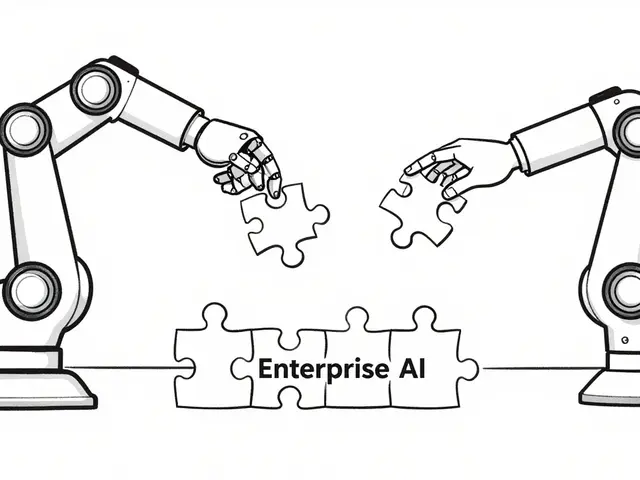
Remember the last time you called a support line and spent twenty minutes listening to hold music? Or worse, when you finally reached a human only to be transferred three times because no one had your case history handy? That frustration is exactly why Generative AI is a transformative technology in customer service operations that uses large language models to understand context and generate human-like responses changing everything. It’s not just about replacing humans with robots; it’s about making the entire support ecosystem faster, smarter, and actually helpful.
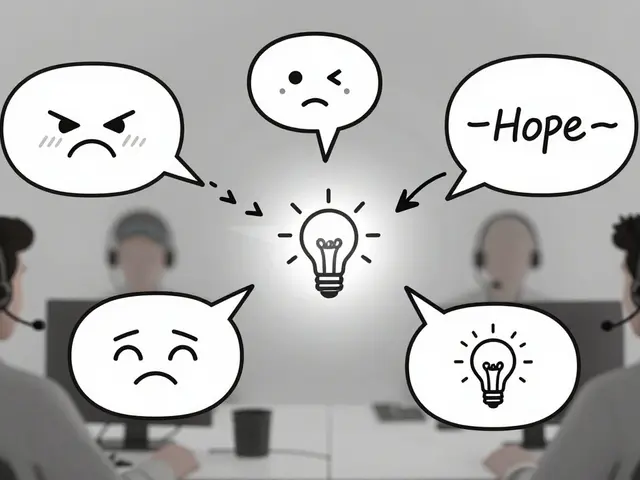
We are moving past the era of rigid, rule-based bots that gave you canned answers like 'Press 1 for Sales.' Today's tools use advanced Large Language Models (LLMs) to read between the lines, detect emotion, and offer personalized solutions in real time. According to recent research by IBM, 62% of executives globally believe this technology will fundamentally disrupt how companies design customer experiences. The goal isn't just efficiency-it's personalization at scale.
From Scripted Bots to Context-Aware Conversations
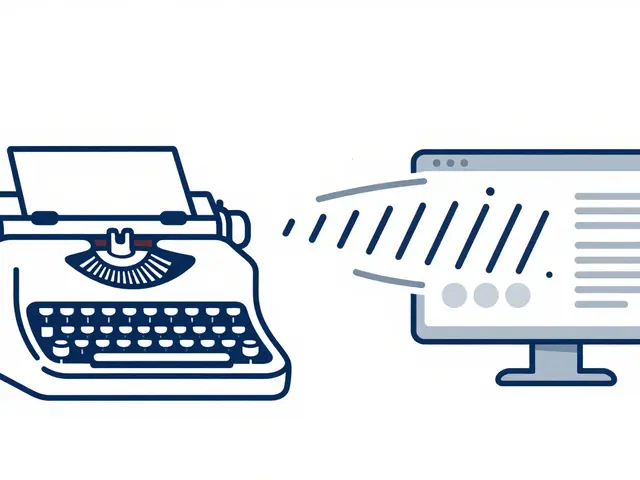
The biggest leap forward in customer service is the shift from static scripts to dynamic conversation. Traditional chatbots relied on decision trees. If you didn't pick the right option, you were stuck. Generative AI, however, understands intent. It can handle multi-turn conversations where the topic shifts naturally, much like talking to a knowledgeable colleague.
Platforms like Google Cloud Vertex AI Conversation is a customizable platform for building conversational AI agents with out-of-the-box generative capabilities and Dialogflow CX allow businesses to deploy these smart agents quickly. What makes them powerful is their ability to pull from trusted knowledge sources instantly. Instead of guessing, the AI retrieves accurate information based on the specific customer's history and current query.
This capability means customers get answers 24/7 without waiting for business hours. Whether it's tracking an order, scheduling an appointment, or troubleshooting a technical glitch, the virtual agent handles the routine stuff so human agents can focus on complex, emotionally sensitive cases. Gartner research indicates that these AI-powered chatbots can deflect up to 30% of repetitive support tickets, significantly cutting operational costs while improving availability.
Empowering Human Agents with Real-Time Assistance
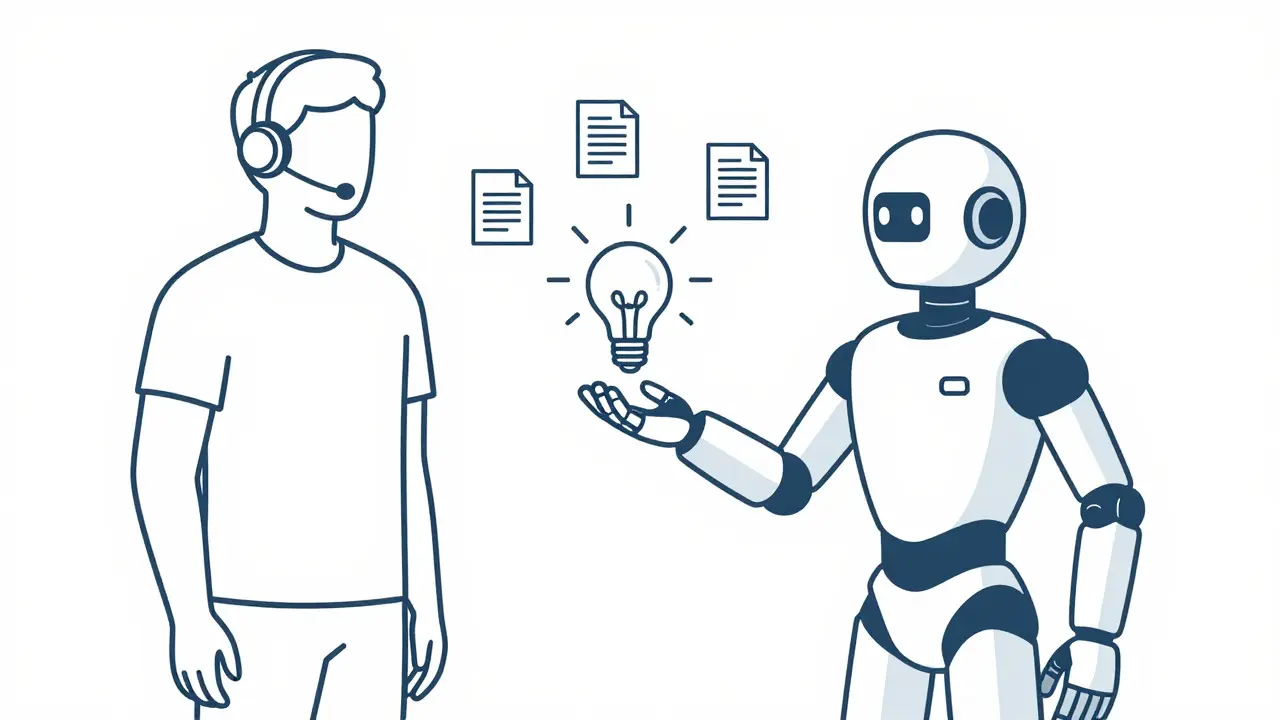
There's a common fear that AI will replace human workers. In reality, the most successful implementations treat AI as a copilot, not a replacement. This is where tools like Google Cloud's Agent Assist come into play. Imagine a support agent on a call. They don't need to take notes or frantically search through PDFs for answers. An internal bot listens to the conversation and presents real-time suggestions, relevant knowledge-base articles, and even compliance reminders directly on their screen.
This setup dramatically improves performance metrics. A study from Harvard Business School found that agents using generative AI assistance responded to chat inquiries approximately 20% faster than those working manually. This boost was especially noticeable for newer employees who benefited from the real-time guidance. By reducing the cognitive load on agents, they can focus entirely on the customer, leading to higher quality interactions.
Furthermore, features like live transcription with Personally Identifiable Information (PII) reduction mean agents aren't distracted by manual note-taking. When the call ends, the system automatically generates a structured summary. This saves significant handling time and ensures that if the customer calls back later, the next agent has full context immediately.
Knowledge Automation: Keeping Information Fresh
One of the biggest pain points in customer service is outdated documentation. Support teams often struggle with knowledge bases that are incomplete or obsolete. Generative AI solves this through knowledge automation. Systems can now analyze thousands of past interactions to identify gaps in existing documentation and suggest new articles or updates.
For example, if customers frequently ask about a new feature that isn't covered in the help center, the AI flags this trend. Non-technical staff can then use natural language prompts to create new workflows or update content without needing coding skills. Google Cloud's Playbook feature exemplifies this, allowing teams to describe tasks in plain English and automatically generate executable workflows. This reduces deployment time from weeks to days, ensuring that support materials are always aligned with the latest product changes.
This continuous learning loop creates a self-improving system. As agents provide feedback on AI suggestions, the model refines its accuracy through Reinforcement Learning from Human Feedback (RLHF). The result is a knowledge base that grows smarter over time, reducing the average handle time for every subsequent interaction.
| Feature | Traditional Rule-Based Bots | Generative AI Agents |
|---|---|---|
| Response Type | Predefined scripts and decision trees | Context-aware, dynamic generation |
| Understanding | Keyword matching | Natural Language Understanding (NLU) & Sentiment Analysis |
| Agent Role | Replacement for simple queries | Copilot providing real-time suggestions |
| Setup Time | Weeks to months for complex flows | Days to hours with no-code tools |
| Learning Capability | Static unless manually updated | Continuous improvement via RLHF |
Tangible Benefits: Speed, Cost, and Satisfaction
Why are enterprises investing heavily in this technology? The numbers speak for themselves. First, there's the impact on Customer Satisfaction (CSAT) and Net Promoter Score (NPS). Customers expect instant, accurate answers. When AI delivers personalized responses that acknowledge their specific situation, trust increases. Balto, a leading conversation AI platform, reports that real-time coaching leads to measurable improvements in Quality Assurance (QA) scores and First-Call Resolution (FCR).
Second, operational costs drop significantly. Automating after-call work-such as summarizing interactions and updating CRM records-frees up agent time. AWS notes that integrating generative AI with contact centers allows for hyper-personalized workflows that reduce wait times across phone, web, and messaging channels. By deflecting routine tickets and speeding up complex ones, companies can maintain high service levels without exponentially increasing headcount.
Third, consistency improves. Every customer receives brand-aligned, accurate information regardless of which agent handles their case. This uniformity is crucial for maintaining credibility, especially in regulated industries like finance and healthcare where compliance is non-negotiable.
Future Trends: Multilingual Support and Multimodal Interactions
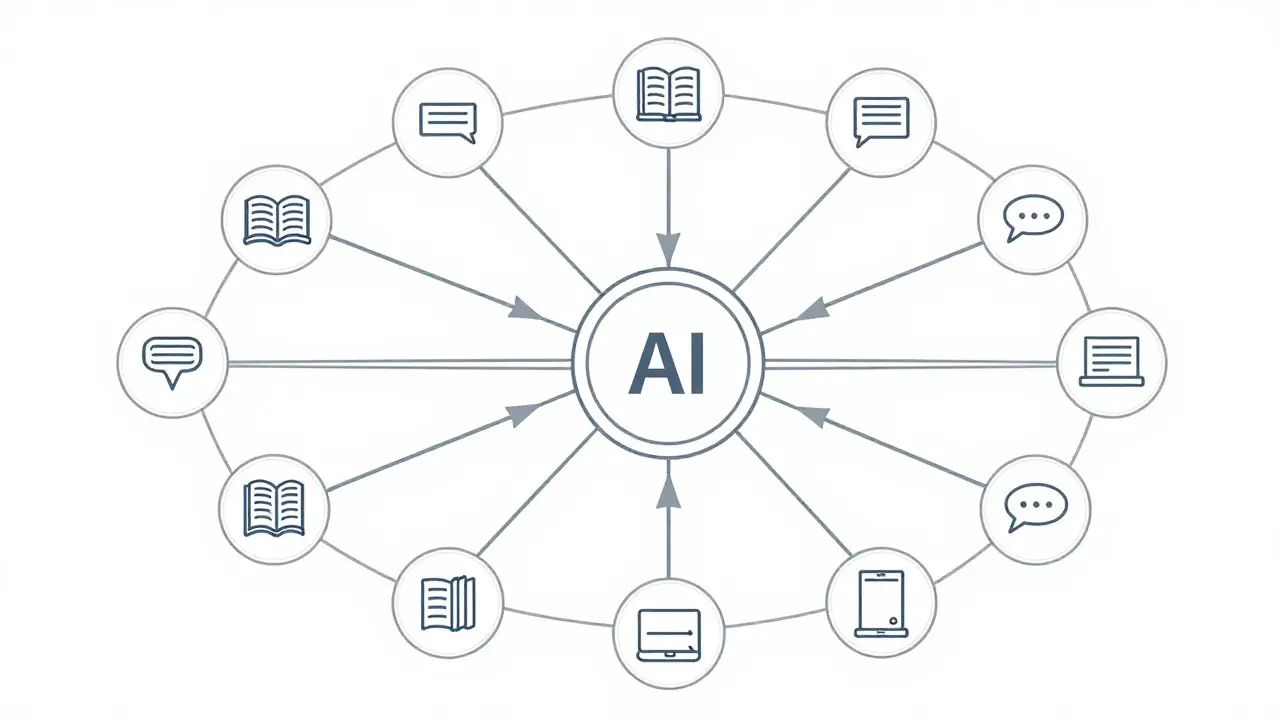
The evolution of generative AI in customer service is far from over. We're seeing rapid advancements in multimodal interactions. For instance, Google Cloud's Call Companion feature allows voicebot users to interact visually during a call. Customers can type in addresses or click menu options on their phone screen while listening to voice guidance. This hybrid approach speeds up resolution for complex issues that are hard to articulate verbally.
Another major development is real-time translation. Upcoming features promise seamless AI-powered translation, enabling agents and customers to converse in different languages simultaneously. This breaks down global barriers, allowing companies to offer native-level support in multiple regions without hiring separate linguistic teams for each market.
As these technologies mature, we'll likely see deeper integration with business intelligence systems. AI won't just solve problems; it will predict them. By analyzing sentiment trends and interaction patterns, companies can proactively reach out to customers before issues escalate, shifting from reactive support to proactive relationship management.
Implementing Generative AI Successfully
Adopting generative AI requires more than just buying software. It demands a strategic approach to data and culture. Start by auditing your current knowledge base. Clean, structured data is essential for accurate AI responses. Then, focus on change management. Train your agents to view AI as a tool that enhances their expertise rather than threatens their jobs. Highlight success stories where AI helped resolve difficult cases faster.
Choose platforms that offer robust security and compliance features, especially if you handle sensitive data. Look for solutions that provide transparency in how decisions are made and allow for human oversight. Finally, measure what matters. Track metrics like Average Handle Time (AHT), First-Call Resolution (FCR), and CSAT to validate the ROI of your investment. With the right strategy, generative AI becomes the backbone of a modern, efficient, and empathetic customer service operation.
Does Generative AI replace human customer service agents?
No, it primarily augments them. While AI handles routine queries and administrative tasks, human agents remain essential for complex, nuanced, and emotionally sensitive interactions. AI acts as a copilot, providing real-time suggestions and summaries to make agents more efficient and effective.
How does Generative AI improve First-Call Resolution (FCR)?
By giving agents instant access to comprehensive knowledge-base information and real-time response suggestions during the conversation. This reduces the need for transfers or follow-up calls because the agent has all the necessary context and answers available immediately.
What is the role of Reinforcement Learning from Human Feedback (RLHF) in customer service AI?
RLHF is a training method where human agents rate or correct AI responses. This feedback loop helps the AI model learn which answers are most accurate and helpful, continuously improving its performance and relevance over time.
Can Generative AI handle multilingual support?
Yes. Advanced generative AI models can translate and respond in multiple languages in real time. Some platforms are introducing features that allow seamless conversation between agents and customers speaking different languages without manual interpretation.
How long does it take to implement a Generative AI customer service solution?
With modern no-code or low-code platforms like Google Cloud's Playbook, deployment can take days or hours instead of weeks or months. However, full integration with existing CRM systems and thorough testing may extend the timeline depending on complexity.
 Artificial Intelligence