
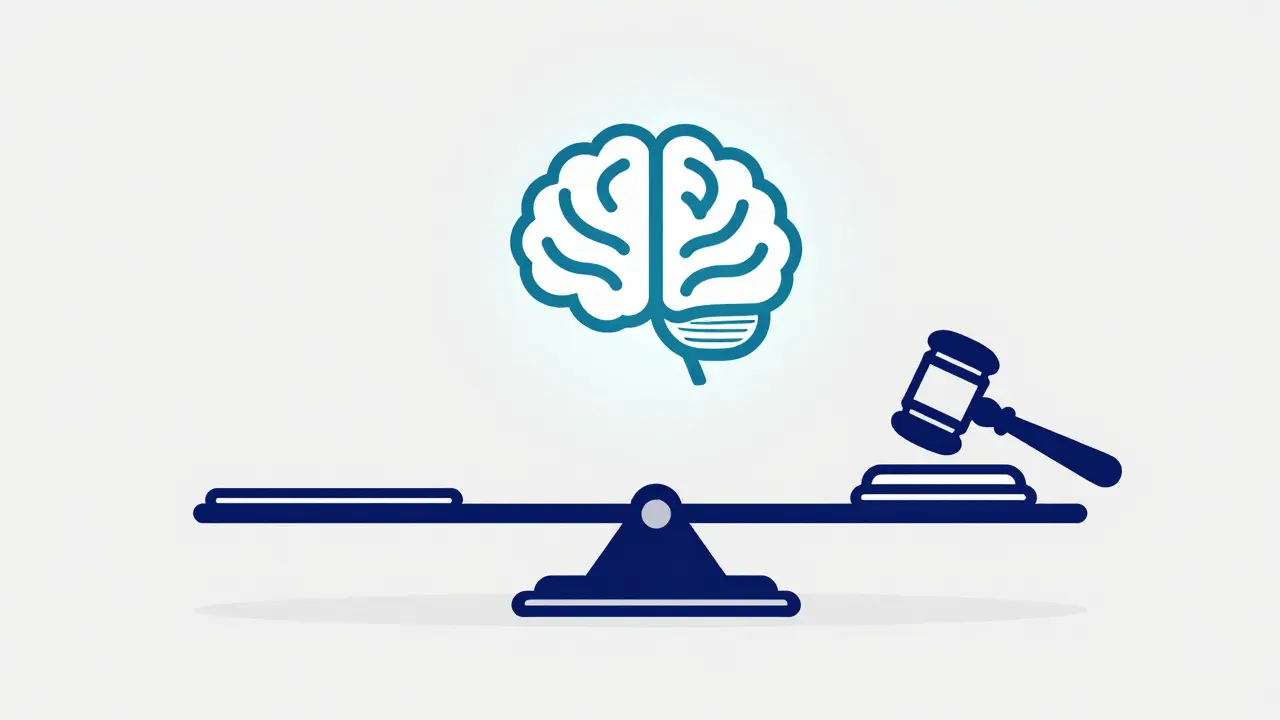
If you're running a business in Colorado that uses AI to make big decisions, the clock has officially run out. As of February 1, 2026, Colorado SB24-205 is the Consumer Protections for Artificial Intelligence Act, a first-of-its-kind state law designed to stop algorithmic discrimination. This isn't just a set of suggestions; it's a mandatory governance framework with real teeth. Whether you built the software or you're just using it to hire employees or screen tenants, you now have specific legal obligations to prove your AI isn't biased.
Who actually needs to worry about this?
Not every chatbot or image generator falls under this law. The focus here is on High-Risk AI Systems. The law defines these as tools that make or heavily influence "consequential decisions." If your AI determines whether someone gets a loan, a job, a house, or healthcare, you're in the high-risk category. Specifically, the law targets decisions in these areas:
- Employment: Hiring, promotions, or job opportunities.
- Education: Admissions or enrollment.
- Housing: Eligibility or lease terms.
- Healthcare & Insurance: Coverage, pricing, or access to services.
- Financial Services: Lending and credit decisions.
- Government & Legal: Essential public services and legal aid.
If your AI tool touches any of these, you need to determine if you are a Developer (the company that built or significantly modified the tool) or a Deployer (the company using the tool in a real-world environment). Both roles have different, but overlapping, responsibilities.
The Heavy Lift: AI Impact Assessments
The centerpiece of compliance is the impact assessment. This isn't a one-and-done checklist; it's a repeatable evaluation of how your system behaves. Deployers must conduct an initial assessment within 90 days of the law's effective date and repeat it at least every year. You also have to run a new one within 90 days of any "intentional and substantial modification" to the system.
A valid assessment needs to cover several concrete bases. You can't just say "the AI is fair." You need to document:
- Purpose and Use: Exactly what the system is supposed to do and the benefits it provides.
- Bias Analysis: A detailed look at whether the system poses a risk of algorithmic discrimination and the specific steps you've taken to stop it.
- Data Inputs/Outputs: What categories of data are going in, and what is coming out?
- Performance Metrics: How are you measuring success and what are the known limitations of the tool?
- Transparency: How are you telling consumers that an AI is making the decision?
- Monitoring Plan: Your strategy for tracking issues after the tool is live.
For those overwhelmed by the paperwork, some firms are turning to tools like VerifyWise, which offers preset templates specifically for SB24-205, covering the 13 protected classes including race, sex, and disability.

Building a Risk Management Program
Having an assessment is great, but Colorado wants to see a full Risk Management Policy. The law requires that your program aligns with recognized professional standards. You shouldn't be guessing here; the state explicitly points toward frameworks like the NIST AI RMF (National Institute of Standards and Technology AI Risk Management Framework) or ISO/IEC 42001.
Following these standards means your governance is predictable and evidence-based. A strong program doesn't just identify risks-it creates a repeatable process to mitigate them. If a regulator knocks on your door, you need to be able to show the documentation and evidence that your risk management is an active part of your operations, not just a PDF gathering digital dust in a folder.
| Requirement | Developer Obligations | Deployer Obligations |
|---|---|---|
| Impact Assessments | Provide documentation to enable assessments | Conduct and maintain assessments (Annual/Modified) |
| Risk Management | Implement a policy for the high-risk system | Implement a program aligned with NIST/ISO |
| Transparency | Publicly summarize high-risk systems developed | Notify consumers when AI makes a consequential decision |
| Consumer Rights | N/A | Offer human review of adverse decisions |
| Notification | Notify AG and users of discrimination risks (90 days) | N/A |
Special Rules for Generative AI
If you're using Generative AI (like LLMs) to help make these consequential decisions, you're subject to all the high-risk rules mentioned above, plus a few extra requirements. Generative AI isn't a "get out of jail free" card; in fact, it often adds complexity.
For GenAI tools, you must focus on three critical areas:
- Training Data Tracking: You need to keep a closer eye on the data used to train the model to ensure it doesn't bake in systemic biases.
- Content Detection: You must enable the detection of AI-generated content so users aren't deceived.
- Copyright Compliance: You have to ensure the tool respects copyright obligations during its generation process.
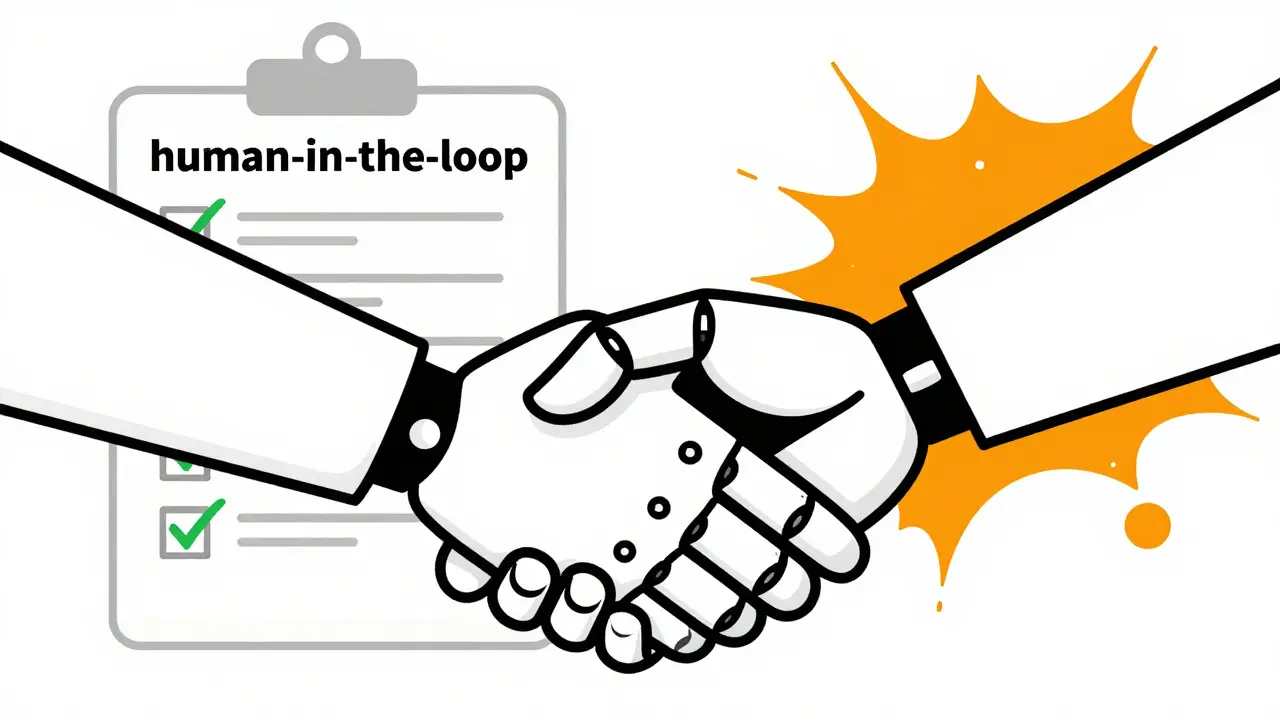
Imagine using a GenAI tool to summarize resumes for a high-paying role. Because this influences a "consequential decision" (employment), you can't just trust the model. You still need that annual impact assessment and a human-in-the-loop to review the final decision.
Transparency and the "Human in the Loop"
Colorado is big on the idea that people shouldn't be blindsided by an algorithm. If a high-risk system is a substantial factor in a decision about someone's life, you must notify them. This isn't a hidden disclaimer in the Terms of Service; it's a clear notice.
More importantly, if the AI says "no"-whether that's a rejected loan or a denied job application-the consumer has the right to a human review. Unless the review poses a genuine safety risk, a real person must be able to look at the decision and potentially overturn it. This safeguard prevents the "computer says no" scenario where an individual is trapped by a glitch or a biased data point with no path to appeal.
Practical Steps for Compliance
If you're just starting to get your house in order, don't panic, but do act. You have a 60-day cure period to fix issues, but the law is already active. Start by auditing your tools. Ask yourself: "Does this AI influence a decision that materially affects someone's legal or financial status?" If the answer is yes, you're dealing with a high-risk system.
Next, establish a record-keeping system. The law requires you to keep your impact assessments and documentation for three years. This creates a long-term audit trail. If you modified your AI in March 2026, your assessment for that change must be done by June 2026 and kept until 2029. Finally, map your existing internal policies to a recognized framework like NIST. If you already have a security policy, you're halfway there; you just need to expand it to include algorithmic fairness and bias mitigation.
What happens if I don't comply with SB24-205?
The Colorado Attorney General handles enforcement. While there is a 60-day cure period that allows businesses to fix mistakes without immediate penalty, failing to implement required risk management or impact assessments can lead to significant legal action and fines, especially if algorithmic discrimination is discovered.
Does this law apply to small businesses?
Yes. If a small business uses a high-risk AI system to make consequential decisions-such as using a third-party tool to screen job applicants-they are considered a "deployer" and must follow the impact assessment and notification rules, regardless of company size.
What is a "substantial modification" to an AI system?
A substantial modification is generally any change that alters how the AI reaches its decisions. This includes updating the training dataset, changing the model's weights, or modifying the prompts and logic that guide the output. Any such change triggers a new impact assessment requirement within 90 days.
Do I need a lawyer to complete an impact assessment?
While not strictly required, it is highly recommended. Impact assessments are legal documents that serve as evidence of "reasonable care." Having legal and technical experts collaborate ensures that you've identified all foreseeable risks of discrimination and documented your mitigation steps correctly.
Is this law only for AI developed in Colorado?
No. The law applies to any high-risk AI system operating in Colorado. If you are a company based in California or New York but you use AI to screen candidates for a job located in Denver, you must comply with SB24-205.
 Artificial Intelligence



TIARA SUKMA UTAMA
April 17, 2026 AT 19:26Sounds like a total nightmare for small biz owners.
Jasmine Oey
April 17, 2026 AT 21:53Omg finally! ✨ It's literally basic human decency to make sure these bots aren't just recycling old bigotery. Like, some of you act like this is a huge burden but honestly, if you're too lazy to check for bias, you probably shouldn't be running a company lol. Its just so tragic that we even need a law for this in 2026... like, read a book on ethics? 💅 Totally basic stuff but here we are. Its about time the governemnt stepped in to save us from the absolute chaos of corporate greed!
Marissa Martin
April 18, 2026 AT 16:51I suppose it's better than doing nothing, though I worry the companies will just find loopholes in the NIST framework to keep doing whatever they want while pretending to be compliant.
James Winter
April 19, 2026 AT 19:04Typical government overreach. More red tape to kill business. Canada does it better anyway. Just a waste of time.