You probably remember the frustration of trying to learn a complex concept from a dry textbook. The words were there, but the understanding wasn't. Fast forward to today, and Multimodal Generative AI is changing that dynamic entirely. It’s not just about reading text anymore; it’s about seeing, hearing, and interacting with information simultaneously. If you are an educator or a student wondering how this tech actually works in practice, you’re in the right place. We aren’t talking about sci-fi fantasies here. As of late 2024, the education sector has exploded with over 300 GenAI-powered tools, and multimodal instruction is leading the charge.
What Exactly Is Multimodal AI in Learning?
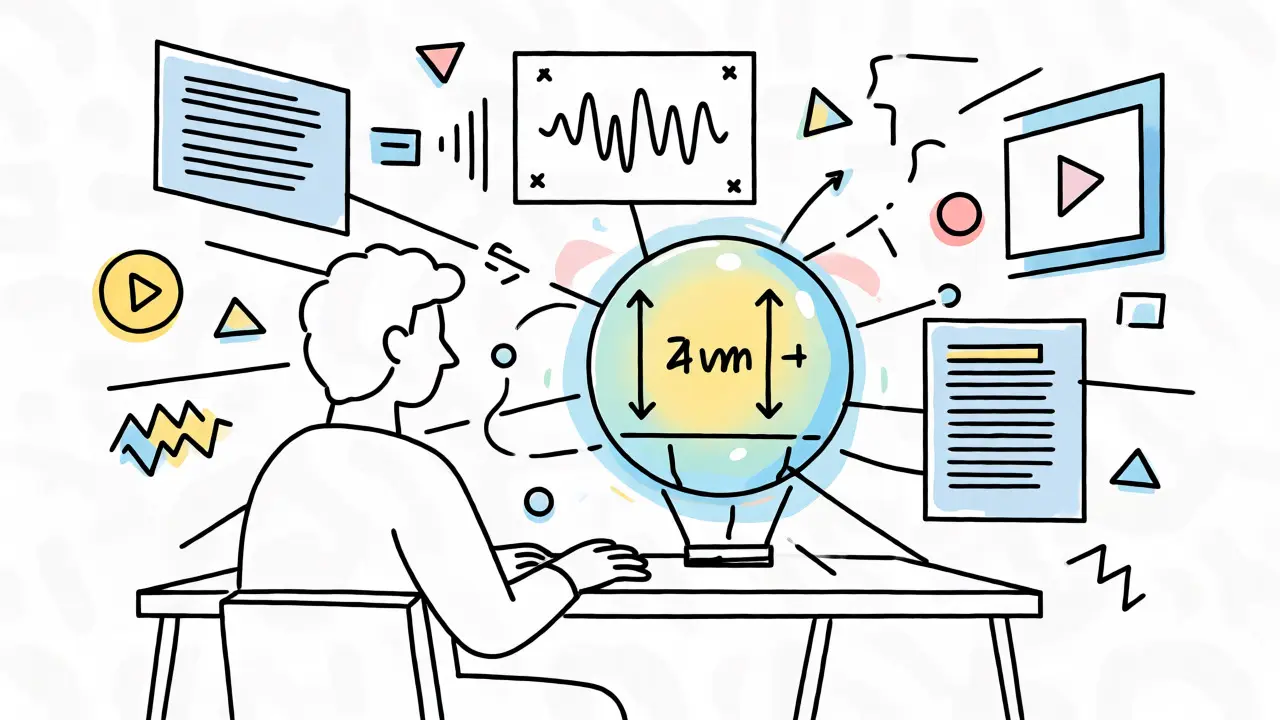
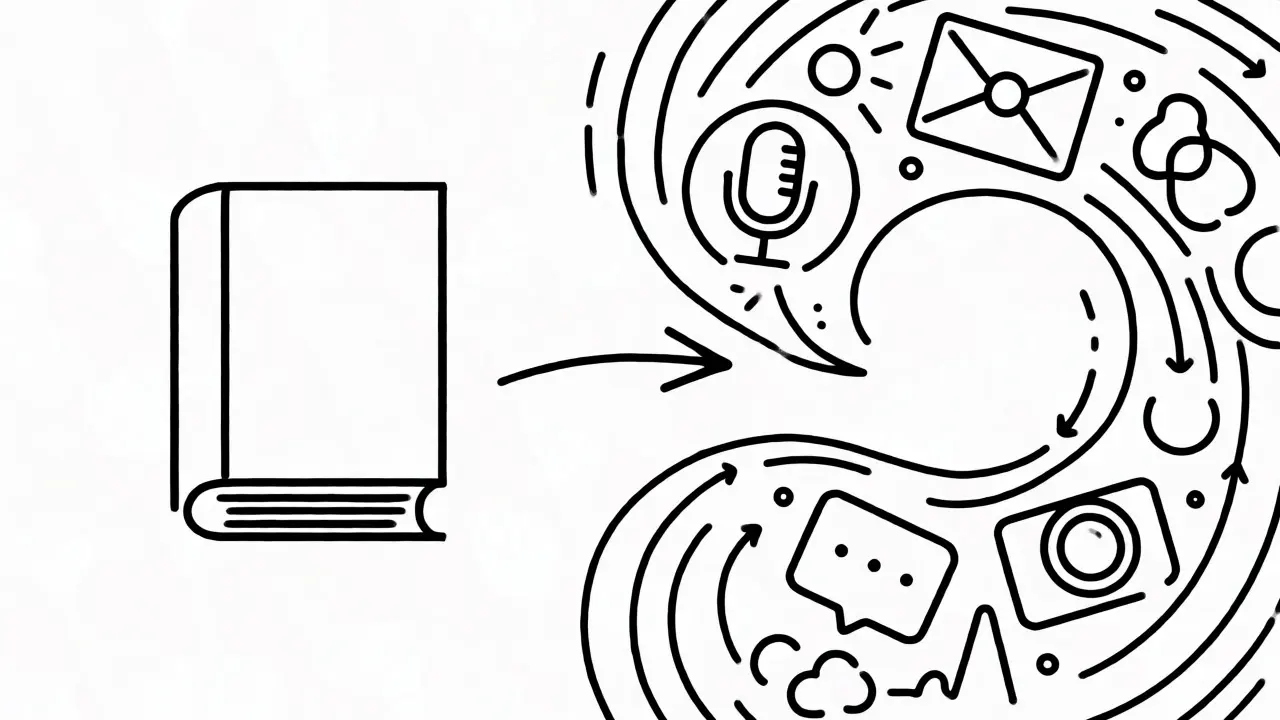
Let’s strip away the jargon. Standard generative AI usually deals with one thing at a time-mostly text. You ask a question, it writes an answer. Multimodal AI processes and generates multiple forms of communication, including text, audio, video, images, and real-time screen sharing. In an educational context, this means the AI can look at your math problem on your screen, listen to you explain where you got stuck, and then generate a short video clip demonstrating the correct step. It mimics how humans naturally communicate. We don’t just speak; we gesture, draw diagrams, and show examples. Multimodal AI finally allows computers to keep up with that natural rhythm.
This shift matters because static content often fails diverse learners. A student who struggles with dense paragraphs might thrive when the same concept is presented as a podcast episode or an interactive simulation. According to research from Edtech Insiders, these systems now support over 60 distinct use cases, ranging from automated lesson planning to creating immersive historical narratives. The goal isn’t to replace teachers but to give them superpowers in customization. Imagine modifying a photosynthesis lesson for three different students in seconds-one gets a simple diagram, another gets a detailed scientific paper summary, and a third gets a 3D animation. That’s the promise of multimodal AI.
Interactive Lessons That Adapt to You
The days of "one-size-fits-all" lectures are fading. With multimodal tools, lessons become living documents. Consider a history class studying the Roman Empire. Instead of just reading about Caesar, students can interact with an AI-generated avatar of Caesar. They can ask him questions via voice, see his responses accompanied by visual maps of his campaigns, and even watch simulated reenactments of key battles. This level of immersion keeps engagement high because it taps into curiosity rather than just rote memorization.
Science classes benefit massively from this too. Chemistry labs used to be expensive and risky. Now, AI-driven simulations allow students to mix virtual chemicals and see immediate visual and auditory feedback on reactions. If a student makes a mistake, the AI doesn’t just say "wrong." It might show a slow-motion video of why the reaction failed or offer a voice-over explanation tailored to the student’s current comprehension level. These tools transform high-cost luxuries into standard classroom staples, democratizing access to high-quality experiential learning.
The Rise of the Always-On AI Tutor
Tutoring is expensive and hard to schedule. Multimodal AI solves both problems. An AI tutor is available 24/7, ready to help a student at 11 PM before a big exam. But unlike old chatbots that only handled text, modern tutors can share screens. This is a game-changer for subjects like coding or geometry. A student can share their code editor, point out the error visually, and talk through their logic. The AI sees what they see and hears what they say.
Research published on ArXiv highlights this specific interaction pattern. In studies involving programming novices, over 50% of students preferred using screen-sharing to convey their problems. When they did, 83% of those instances involved speaking to the AI while showing their work. Why? Because typing out a complex bug description is tedious and inaccurate. Showing it and saying, "I thought this loop would work here," is natural. The AI responds by highlighting the code, suggesting fixes, or generating a small demo to prove its point. This creates a feedback loop that feels surprisingly human.
How Teachers Are Using These Tools
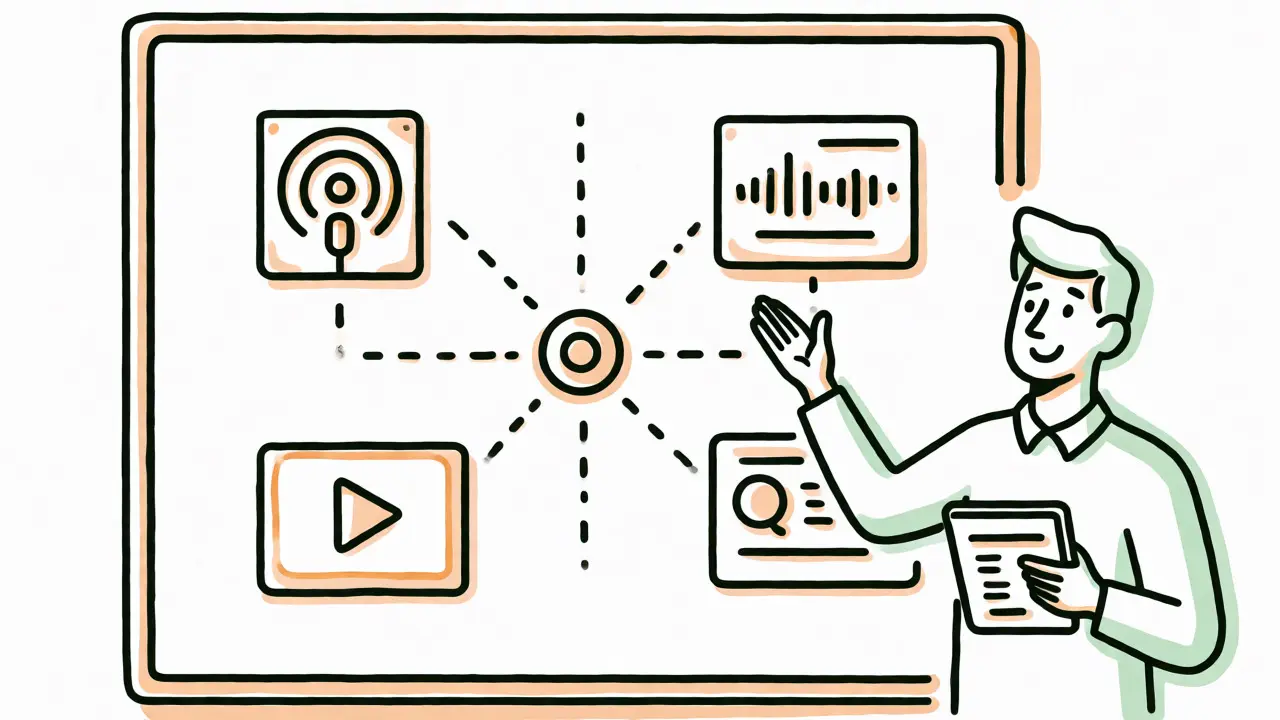
Teachers aren’t being replaced; they’re being upgraded. The role is shifting from content creator to precision customizer. Educators use multimodal AI to streamline curriculum development. Need a quiz based on last week’s lecture? Upload the transcript, and the AI generates multiple-choice questions, flashcards, and even a short review video. Need to adapt a lesson for English Language Learners? The AI can simplify the language, add visual aids, and provide audio translations instantly.
This efficiency frees up teacher time for what machines can’t do: building relationships and assessing emotional needs. When the AI handles the heavy lifting of content adaptation-ensuring spacing intervals, sequencing logic, and assessment integration remain intact-the teacher can focus on strategy. They can identify which students need extra encouragement or which concepts require deeper discussion. It’s a partnership where AI handles the scale, and humans handle the nuance.
| Feature | Traditional Digital Learning | Multimodal Generative AI |
|---|---|---|
| Input Modality | Text-heavy, limited interactivity | Voice, video, image, screen-share, text |
| Adaptability | Static content, fixed difficulty levels | Dynamic adjustments based on user response |
| Accessibility | Limited to text/screen readers | Audio lessons, visual sims, multi-language support |
| Feedback Loop | Delayed (graded tests) | Immediate (real-time correction/explanation) |
| Creation Effort | High manual effort for each variation | Automated generation of variants (podcasts, quizzes) |
Real-World Applications and Success Stories
Let’s look at concrete examples. Language learning apps have long used spaced repetition, but multimodal AI adds context. Instead of just showing a word card, the AI might play a short video clip of a native speaker using that word in a specific cultural context, followed by a prompt for the student to record their own pronunciation. The AI analyzes the audio and provides instant feedback on tone and speed.
In K-12 settings, teachers are using these tools to create culturally responsive content. If a class includes students from various backgrounds, the AI can generate case studies or story problems that reflect diverse experiences. For instance, a math problem about budgeting could feature currencies and markets relevant to different regions represented in the classroom. This subtle touch increases relevance and engagement, making students feel seen and valued.
Challenges and What to Watch Out For
It’s not all smooth sailing. There are hurdles. One major issue is accuracy. AI can hallucinate facts, especially in niche scientific fields. Teachers must verify generated content before putting it in front of students. Another challenge is the learning curve for students. Knowing when to type, when to speak, and when to share their screen takes practice. However, studies show students adapt quickly, finding that the efficiency gains outweigh the initial cognitive load.
Equity is another concern. While costs are dropping, reliable internet and devices are still prerequisites. Schools without robust infrastructure might struggle to leverage full multimodal capabilities. Additionally, there’s the risk of over-reliance. Students might stop thinking critically if the AI always gives the answer immediately. Good implementation requires prompting strategies that encourage students to try first, then ask the AI for hints rather than solutions.
The Future: Virtual Worlds and Seamless Integration
Where is this heading? Experts predict we’ll move beyond individual tools toward entire virtual worlds created on demand. Imagine asking an AI to build a explorable ecosystem to teach ecology. The AI generates the terrain, populates it with animals, simulates weather patterns, and lets students interact with the environment in real-time. This goes beyond traditional e-learning games by embedding learning science principles directly into the world’s mechanics.
We are also seeing a push for seamless modality switching. Future interfaces won’t force you to choose between voice or text. You’ll start a conversation by typing, switch to voice when hands are busy, and share your screen when needed-all without breaking flow. The technology is maturing from a novelty to a fundamental layer of educational infrastructure.
Can multimodal AI replace human teachers?
No, it augments them. Multimodal AI excels at content delivery, personalization, and routine tutoring tasks. However, human teachers are essential for emotional support, complex pedagogical strategy, mentorship, and fostering social skills. The best model is a partnership where AI handles scalability and data analysis, allowing teachers to focus on human connection and critical thinking facilitation.
Is multimodal AI accessible for students with disabilities?
Yes, it significantly improves accessibility. Students with visual impairments can receive audio descriptions of visual content. Those with dyslexia can convert text-heavy lessons into audio podcasts or visual summaries. The ability to switch modalities allows students to choose the format that best suits their specific learning needs and physical abilities, promoting inclusive education.
How accurate is AI-generated educational content?
Accuracy varies by domain and tool. General knowledge and well-documented topics are usually highly accurate. Niche or rapidly evolving fields may contain errors or "hallucinations." Best practices involve having educators review AI-generated materials before deployment and using AI as a drafting assistant rather than a final authority, especially for critical assessments.
Do students need special training to use these tools?
Minimal training is required. Most interfaces are intuitive, similar to social media apps. However, effective use involves meta-cognitive skills-knowing when to ask for clarification, how to frame questions, and when to switch input modes. Studies show students adapt quickly, often within a few sessions, finding the natural interaction patterns efficient.
What is the cost implication for schools adopting multimodal AI?
Costs are decreasing as competition grows. While premium platforms exist, many open-source and freemium models are available. The return on investment comes from reduced teacher workload, improved student outcomes, and the elimination of expensive specialized software licenses. Over time, the democratization of these tools makes high-quality interactive learning affordable for more institutions.
 Artificial Intelligence