
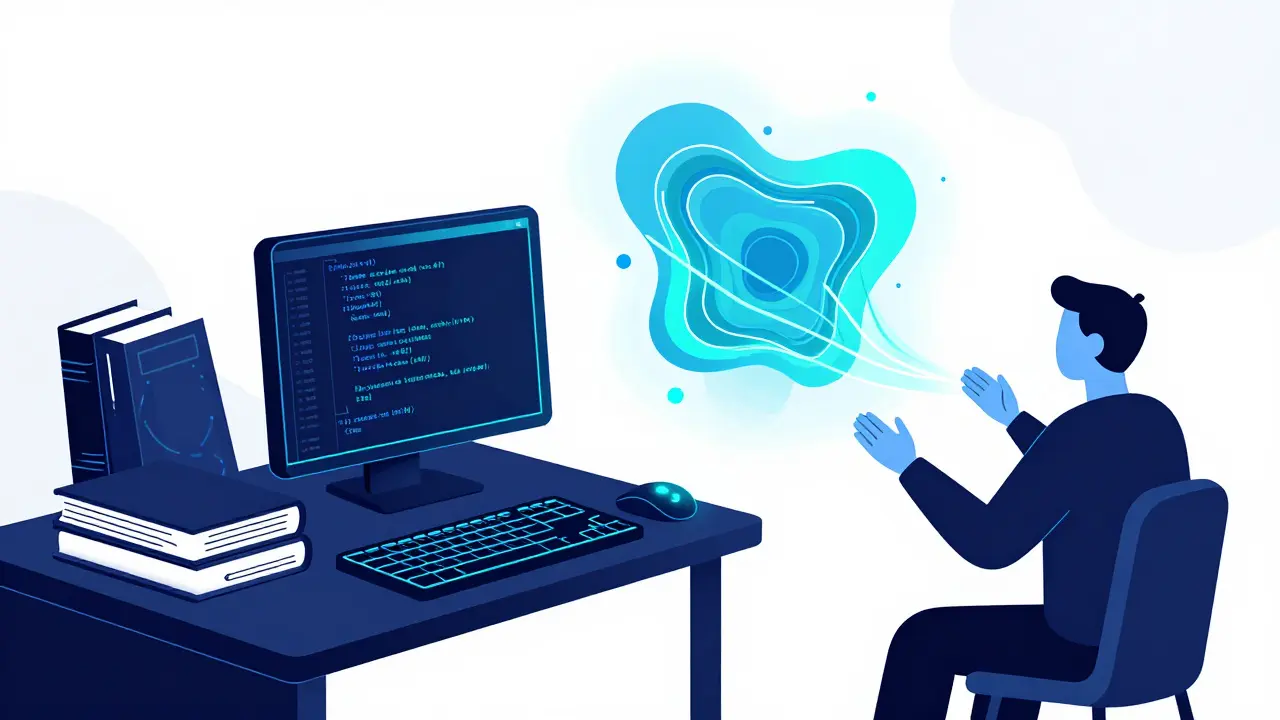
For the uninitiated, Vibe Coding is a paradigm of software development where the human acts more as a conductor or a product manager than a manual typist, using natural language and iterative feedback to guide AI agents in generating entire feature sets. It isn't just 'prompting'; it's a continuous loop of intention and refinement. If you're still clinging to the idea that 'real coding' requires manual typing, you're competing for a shrinking slice of the market.
The Shift from Syntax to Steering
For decades, the barrier to entry in tech was the language. You had to learn the quirks of Java or the idiosyncrasies of Python. Today, Large Language Models (LLMs) have essentially commoditized syntax. When tools like Cursor or Windsurf can generate a functioning API endpoint in three seconds, the employer no longer pays for the act of writing the code. They pay for the decision of what code should exist and why it should be structured that way.
Employers are now rewarding 'steering' skills. This means the ability to provide high-context instructions that prevent the AI from hallucinating or creating technical debt. If you can tell an AI agent, 'Build this user authentication flow, but ensure it follows the latest OAuth2 standards and integrates with our specific Redis caching layer without introducing latency,' you are ten times more valuable than someone who just asks it to 'make a login page.'
The New High-Value Skill Set
If the manual labor of coding is gone, what's left? The answer is a mix of systems thinking and extreme product empathy. Companies are looking for people who can bridge the gap between a vague business idea and a technical specification that an AI can execute perfectly.
- Architectural Intuition: You don't need to write the boilerplate, but you must know if the AI is suggesting a monolithic structure when a microservices approach is needed for scale.
- Rapid Prototyping: The ability to go from 'idea' to 'deployed MVP' in a few hours using tools like v0 by Vercel or Lovable.
- Verification and Auditing: The skill of reading AI-generated code not to write it, but to spot security holes or performance bottlenecks. This is 'code reviewing' as a primary job function.
- Domain Expertise: Knowing how a fintech app should actually handle ledger entries is now more important than knowing the specific syntax of the database query used to store them.
| Skill | Traditional Value (2020) | Vibe Coding Value (2026) |
|---|---|---|
| Syntax Mastery | Critical | Low/Moderate |
| Prompt Engineering | N/A | High |
| System Architecture | High | Critical |
| Product Vision | Moderate | Critical |
| Manual Debugging | High | Moderate (Audit-focused) |
The Rise of the 'Generalist Specialist'
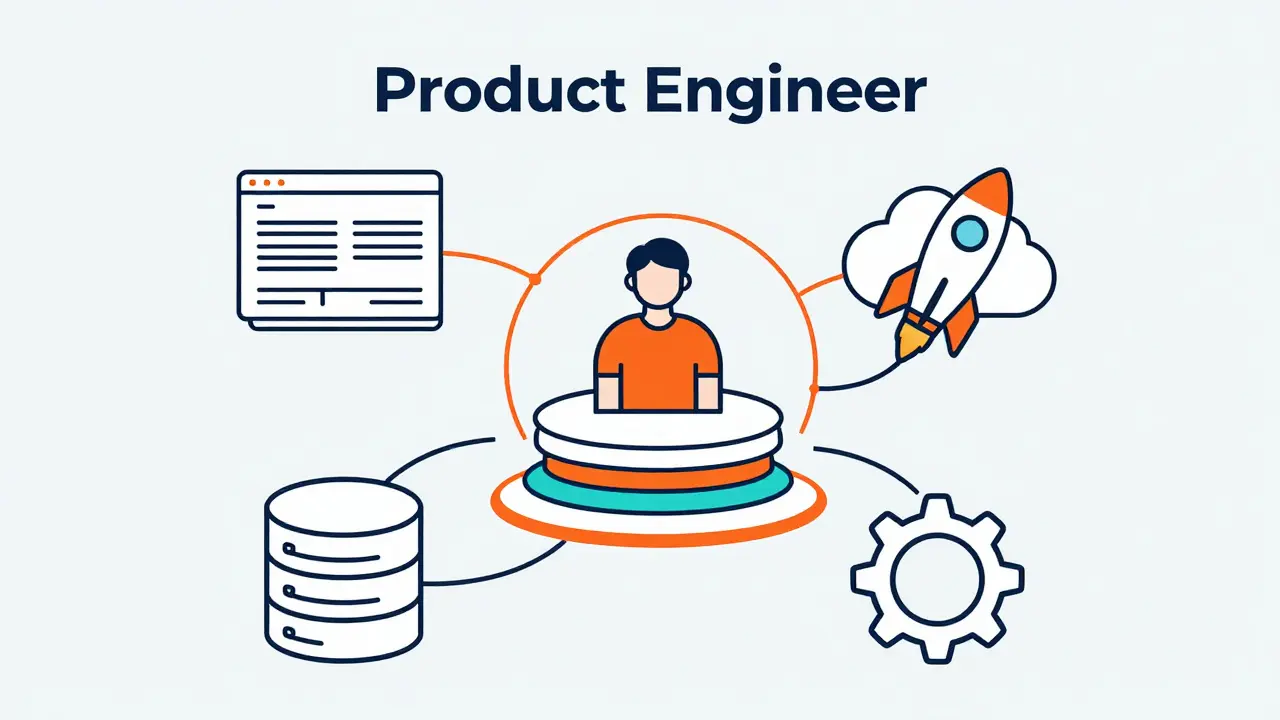
We're seeing the death of the hyper-specialized 'Frontend Developer' or 'Backend Developer.' Because AI Agents can handle the heavy lifting across the entire stack, employers are hiring 'Product Engineers.' These are people who can handle the UI, the database, and the deployment pipeline simultaneously.
Why? Because the friction of switching contexts has been removed. When you're vibe coding in Replit, you can iterate on a CSS shadow and a PostgreSQL schema in the same breath. The person who can own the entire feature from a user's complaint to a deployed fix is now the most rewarded person in the room. They aren't just developers; they are one-person product teams.
Avoiding the 'AI Dependency' Trap
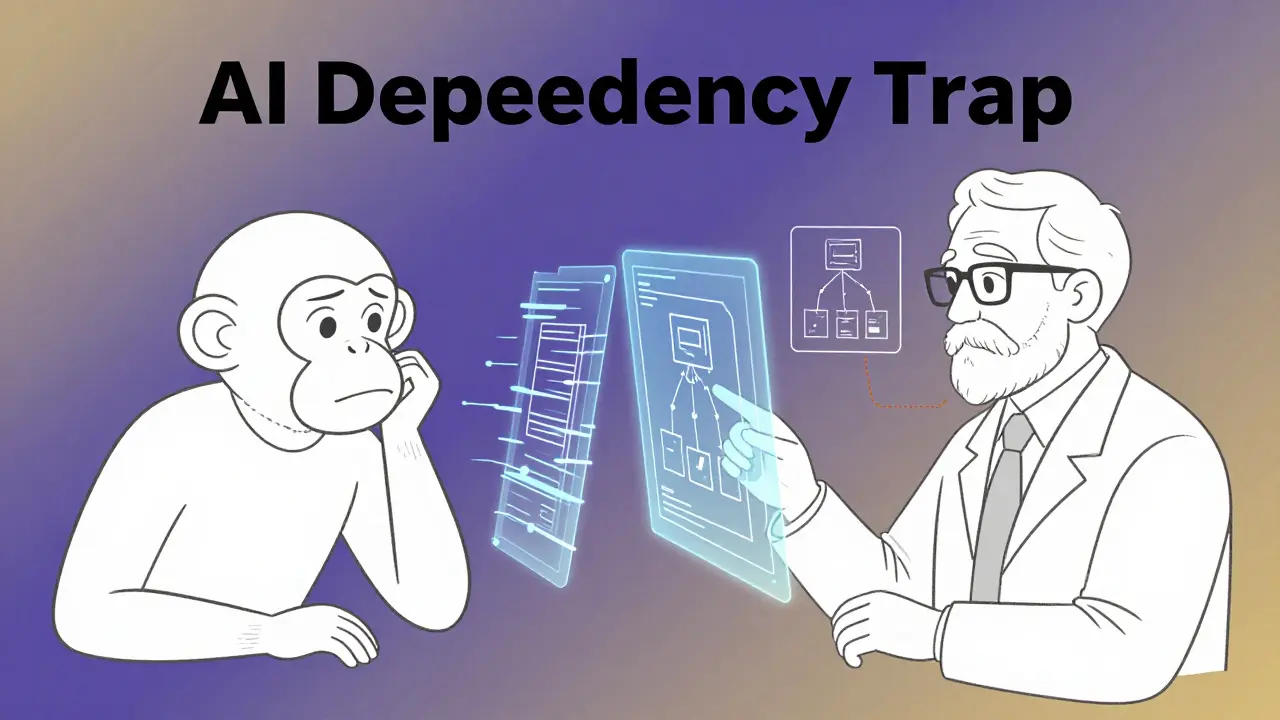
Here is where a lot of new developers are failing. There is a dangerous gap opening up between 'vibe coders' who understand the underlying principles and those who are just 'prompt monkeys.' The latter group is becoming an easy target for layoffs. Why? Because if the AI produces a bug that it can't solve through iteration, the prompt monkey is helpless.
Employers are starting to implement 'stress tests' in interviews. They might ask you to explain the time complexity of an algorithm the AI just wrote for you. If you can't explain why the AI chose a specific data structure, you're a liability. The most successful talent in this market uses AI to accelerate their output but maintains a deep, fundamental understanding of Computer Science principles to act as the final safety check.
How to Pivot Your Career for the Vibe Era
If you're a seasoned dev, don't panic-your deep knowledge is actually your greatest advantage. You know what 'good' looks like. The goal now is to layer AI orchestration on top of that expertise. Start by treating your AI tools not as autocomplete, but as a junior developer who is incredibly fast but occasionally delusional.
- Build in Public: Use tools like Cursor to build small, functional apps every week. Show the process, not just the result.
- Master the 'Context Window': Learn how to manage what information you feed the AI. Providing the right documentation and existing code patterns as context is the secret to high-quality outputs.
- Focus on UX/UI Psychology: Since the technical build is faster, the difference between a 'good' app and a 'great' app is now almost entirely about the user experience.
Is manual coding completely dead?
Not completely, but its role has shifted. Manual coding is now used for high-performance kernels, critical security modules, and the very AI tools we use. For 90% of business applications, manual coding is now a secondary skill used for auditing and fine-tuning rather than primary creation.
Do I still need a Computer Science degree?
A degree is less important for getting your foot in the door, but the knowledge within it-data structures, networking, and operating systems-is more important than ever. You need this foundation to verify that the AI isn't building a system that will crash under a moderate load.
What is the best tool to start 'vibe coding' with?
Cursor is currently the industry favorite because it integrates AI deeply into the IDE. For those more focused on rapid web deployment, v0 by Vercel is excellent for the UI phase, and Replit is great for an all-in-one cloud environment.
How has compensation changed for developers?
We're seeing a 'K-shaped' recovery in salaries. Mid-level 'syntax-only' devs are seeing stagnation or pay cuts. Meanwhile, 'Product Engineers' who can use AI to do the work of three people are commanding significantly higher premiums because they directly increase company velocity.
What happens if I don't learn these AI tools?
You risk becoming a 'legacy maintainer.' While there will always be a need for people to manage old systems, the high-growth, high-pay projects are moving almost exclusively to AI-augmented workflows. Staying manual in 2026 is like insisting on using a typewriter in the 90s.
 Artificial Intelligence

Eric Etienne
April 25, 2026 AT 08:19Typical mid-wit take calling it "vibe coding" like it's some new spiritual awakening. It's just abstraction, we've been doing this since assembly. Calling yourself a "conductor" is just a fancy way to say you're too lazy to actually understand how the memory is being leaked in the background while your AI agent writes a thousand lines of spaghetti code that "looks" right but fails the second you hit a real edge case. Most of these "product engineers" are just glorified prompt wrappers who'll be the first to go when the next bubble bursts because they have zero fundamental skills left.
sonny dirgantara
April 26, 2026 AT 18:40i just use cursor and its honestly pretty grate lol
Sandy Pan
April 28, 2026 AT 04:39The existential dread of this transition is palpable. We are witnessing the transmutation of the engineer from a creator of logic into a curator of probability. It is a tragedy in three acts: first we mastered the machine, then we taught the machine to mimic us, and now we simply whisper our desires into the void and hope the output aligns with our fragmented vision of a product. This isn't just a shift in a job market; it is the erosion of the tactile relationship between human thought and digital execution. We are becoming ghosts in our own machines, steering ships we no longer know how to build from scratch. The sheer audacity of calling this "vibe coding" masks the terrifying reality that we are outsourcing the very cognitive processes that define technical mastery. If the "vibe" is all that matters, then the truth of the code is no longer a requirement, only the illusion of functionality. We are trading the solid ground of deterministic logic for the shifting sands of stochastic parrots, and we're celebrating the speed of our own obsolescence. It's a dizzying descent into a world where the map is not only not the territory, but the map is being drawn by an entity that has never seen the land.
Kevin Hagerty
April 28, 2026 AT 20:12omg yeah cuz promptin is so hard lol. i can totally "steer" an ai to make a login page and suddenly im a critical asset to the company... keep huffing that copium while the actual devs are laughing at your "architectural intuition" which is basically just guessing based on a medium article
Amanda Ablan
April 29, 2026 AT 17:21I think it's helpful to remember that these tools can lower the barrier for people who have amazing ideas but struggle with the syntax. It's not about replacing the deep knowledge, but about making the path to production more inclusive for different types of thinkers.
Dylan Rodriquez
April 30, 2026 AT 10:09Actually, I see this as a beautiful opportunity for us to evolve! By shedding the tedious parts of coding, we can finally focus on the human-centric side of technology. Let's encourage the newcomers to keep their curiosity alive and not be afraid of the fundamentals, but also embrace the speed of these new tools. It's a bridge to a more creative era of engineering where the only limit is our imagination.
Yashwanth Gouravajjula
May 1, 2026 AT 14:13True shift in global talent dynamics.
Meredith Howard
May 2, 2026 AT 10:21the nuance regarding the context window is quite an important point as the quality of the output is directly proportional to the precision of the provided documentation and existing patterns