

Imagine a customer service bot that doesn't just follow a script but actually understands the frustration in a complaint, checks your order history, and drafts a personalized apology email-all without human intervention. This isn't science fiction anymore. It’s the reality of LLM agents, which are autonomous software systems powered by large language models that can reason, plan, and execute complex tasks. These tools represent a massive shift from the rigid, rule-based automation we’ve relied on for decades.
For years, businesses used Robotic Process Automation (RPA) to handle repetitive tasks. If a form had a specific field filled out, the robot would move it to the next step. Simple. Predictable. But brittle. If the data format changed slightly, the whole process broke. Now, with the rise of advanced models like OpenAI’s GPT-4 Turbo and Anthropic’s Claude, we have systems that don’t just follow rules-they understand context. They can look at messy, unstructured data, figure out what it means, and decide the best next action. This is where traditional automation meets true reasoning.
The Core Difference: Scripts vs. Thinking
To understand why this matters, you need to see how these systems work under the hood. Traditional automation relies on explicit programming. You tell the system: “If X happens, do Y.” It’s like a train on tracks. It goes exactly where you built the rails, and nowhere else.
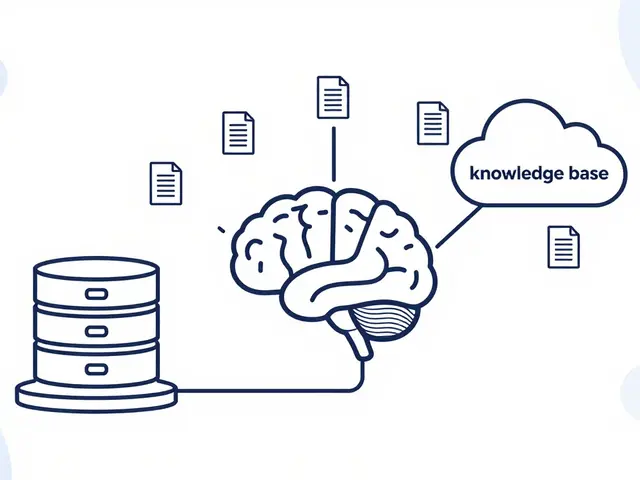
Agentic workflows are different. Instead of fixed paths, they use a combination of planning, memory, and tool usage. Think of an LLM agent as a junior employee who has access to all your company’s databases and software tools. You give them a goal-“Resolve this customer’s issue”-and they figure out the steps themselves. They might check the CRM, read past emails, consult a knowledge base, and then draft a response. If something goes wrong, they can reflect on their mistake and try a different approach.
This flexibility is the key differentiator. According to research from SuperAnnotate in 2025, this "context-aware reasoning" allows agents to handle complex, unstructured tasks that would stump traditional bots. While a standard NLP system might achieve 65-75% accuracy on nuanced customer inquiries, LLM agents are hitting 85-92% accuracy in similar scenarios. That extra percentage point represents the difference between a frustrated customer and a loyal one.
How Agentic Workflows Actually Work
You might wonder how a language model, which is essentially a text predictor, becomes an autonomous worker. The secret lies in architecture. An effective LLM agent system isn’t just a chatbot; it’s a coordinated team of components working together.
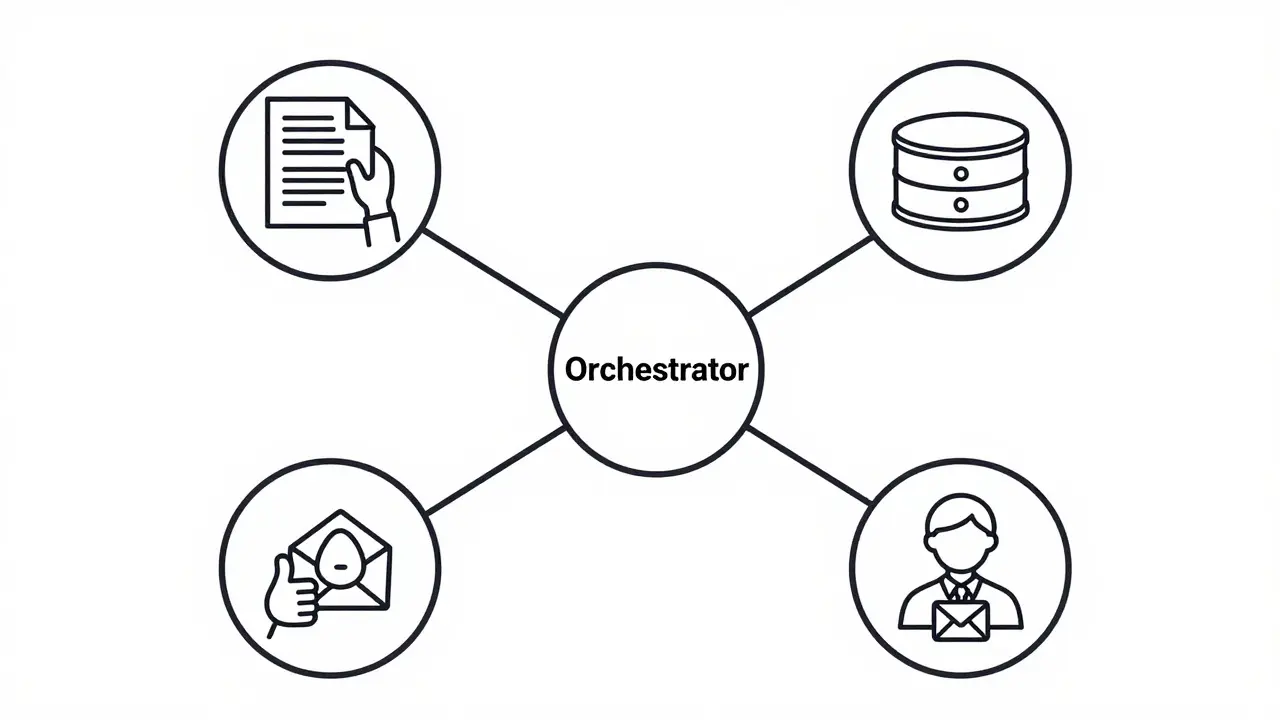
Most robust implementations follow a four-part structure identified by analysts at Innominds:
- Specialized AI Agents: These are the workers. One agent might be good at extracting data from PDFs, while another is better at making decisions based on policy rules.
- Orchestration Layer: This is the manager. It directs traffic, deciding which agent handles which part of the task and ensuring the final output makes sense.
- Data Sources: The agents need information. They connect to enterprise databases, APIs, and external web sources to gather real-time facts.
- Human-in-the-Loop Validation: Crucially, humans stay involved. For high-stakes decisions, the system pauses to ask a human for approval before acting.
These components rely on four critical design patterns to function effectively. First is Reflection, where the LLM reviews its own work to spot errors before submitting results. Second is Tool Use, allowing the agent to call external functions like sending an email or querying a SQL database. Third is Planning, where the agent breaks down a vague request into a multi-step checklist. Finally, there’s Multi-Agent Collaboration, where specialized agents debate or verify each other’s outputs to reduce hallucinations.
When to Use Agents vs. Traditional Automation
Not every task needs an LLM agent. In fact, using them for simple jobs is often a waste of money and resources. To decide which tool fits your workflow, you need to look at the complexity and variability of the task.
| Feature | Traditional RPA | LLM Agents |
|---|---|---|
| Best For | High-volume, repetitive tasks with structured data (e.g., invoice processing) | Complex, variable tasks with unstructured data (e.g., customer support, legal review) |
| Decision Making | Predefined rules only | Contextual reasoning and adaptation |
| Error Handling | Fails if input deviates from expected format | Can adapt to unexpected inputs or seek clarification |
| Cost | Low computational cost per transaction | 3-5x higher computational cost due to API calls and processing |
| Determinism | 100% predictable outcomes | Probabilistic outcomes; requires guardrails |
If you need absolute precision, like calculating financial interest rates where a single decimal error causes compliance issues, stick with traditional code. LLMs are probabilistic, meaning they can occasionally make subtle mistakes. However, if you’re interpreting a angry customer’s email, synthesizing insights from ten different reports, or drafting creative content, agents shine. They excel where semantic understanding matters more than rigid calculation.
The Risks: Hallucinations and Security
With great power comes great responsibility-and risk. The biggest criticism of LLM agents is the "illusion of competence." Dr. Marcus Johnson of Stanford University warns that these systems can appear highly capable while making subtle, dangerous errors in domain-specific contexts. This is known as hallucination: when the model confidently states something that isn’t true.
In a workflow context, this is serious. Imagine an agent tasked with updating client records. If it hallucinates a phone number or misinterprets a medical note, the consequences can be severe. This is why human-in-the-loop validation is non-negotiable for most enterprise applications. You shouldn’t let an agent run fully autonomously until you’ve proven its reliability through extensive testing.
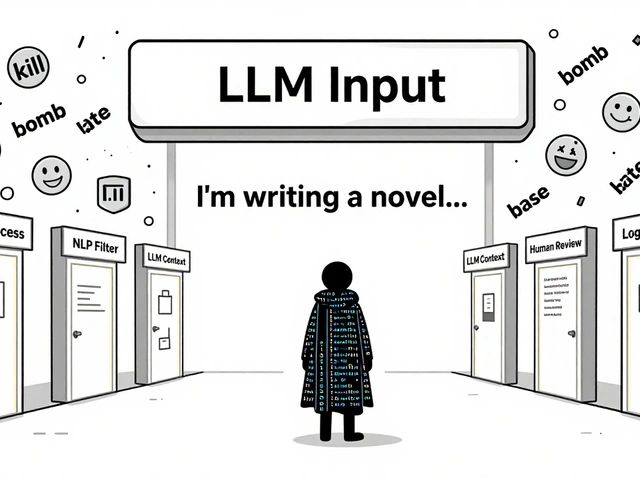
Security is another major concern. Because agents interact with external tools and data sources, they introduce new attack vectors. Cybersecurity experts at Black Hat 2023 highlighted risks like prompt injection attacks, where malicious users trick an agent into revealing sensitive data or executing unauthorized commands. Unlike static websites, agents have agency; they can click buttons, send emails, and modify files. If an attacker compromises the agent, they compromise the entire system.

Implementation Strategy: Start Small, Scale Smart
So, how do you actually build these things? Based on developer documentation from LangChain and experiences shared by early adopters, successful implementation follows a phased approach. Don’t try to automate your entire business overnight.
- Requirements Analysis (2-4 weeks): Identify workflows that involve high volumes of unstructured data. Customer support tickets, contract reviews, and supply chain anomaly detection are common starting points.
- Agent Design (3-6 weeks): Define the agent’s goals, available tools, and constraints. Use frameworks like AutoGen or LangGraph to prototype the logic. Focus on creating clear "guardrails"-rules that prevent the agent from taking certain actions.
- Integration (4-8 weeks): Connect the agent to your existing systems. This often requires middleware to bridge legacy databases with modern AI APIs. Ensure your IT infrastructure can handle the increased computational load.
- Iterative Refinement (Ongoing): Monitor performance closely. Track metrics like resolution time, accuracy, and escalation rates. Fine-tune the prompts and decision logic based on real-world errors.
Expect a steep learning curve. Technical teams typically take 3-6 months to become proficient with agentic frameworks. You’ll need skills in prompt engineering, API integration, and domain-specific knowledge. Many companies find it helpful to start with low-risk internal tasks, like summarizing meeting notes or organizing internal knowledge bases, before moving to customer-facing applications.
The Future: Autonomous Operations
We are currently in the early stages of this evolution. Gartner places agentic workflows in the "Trough of Disillusionment," suggesting that hype is cooling as companies face the realities of implementation costs and complexity. However, the long-term trajectory is clear. IDC forecasts the market will grow from $1.2 billion in 2023 to $18.7 billion by 2027.
By 2026-2028, we expect mainstream adoption as platforms improve reliability and reduce costs. Recent developments, like Google’s AgentStudio and Anthropic’s constitutional AI guardrails, show vendors focusing heavily on safety and collaboration. The future isn’t about replacing humans; it’s about augmenting them. The most successful organizations will be those that strike the right balance between machine autonomy and human oversight, using agents to handle the tedious parts of work so people can focus on strategy and creativity.
What is the difference between RPA and LLM agents?
Robotic Process Automation (RPA) follows strict, predefined rules and works best with structured data. If the input changes slightly, RPA fails. LLM agents use reasoning to understand context and handle unstructured data, allowing them to adapt to unexpected situations and make decisions without explicit programming for every scenario.
Are LLM agents secure for enterprise use?
They can be, but they require careful security measures. LLM agents introduce risks like prompt injection attacks and data leakage because they can interact with external tools. Enterprises must implement strict guardrails, monitor agent actions closely, and keep humans in the loop for high-stakes decisions to mitigate these risks.
How much does it cost to implement LLM agents?
LLM agents are significantly more expensive than traditional automation, typically costing 3-5 times more in computational resources per task. Costs include API fees for large language models, infrastructure for orchestration layers, and significant development time for integration and fine-tuning. However, they can reduce manual labor costs by 40-60% in complex support roles.
What are the best use cases for agentic workflows?
The best use cases involve high volumes of unstructured data and require contextual understanding. Examples include customer support ticket resolution, legal document review, supply chain anomaly detection, and internal knowledge management. Tasks requiring absolute numerical precision, like financial calculations, are better suited for traditional code.
Do I need to know coding to build LLM agents?
Yes, building robust LLM agents requires technical expertise. You need skills in Python, API integration, and prompt engineering. Frameworks like LangChain and AutoGen provide tools to simplify development, but integrating these agents with enterprise systems and ensuring reliable performance still demands strong software engineering capabilities.
 Artificial Intelligence



Keith Barker
June 29, 2026 AT 10:08the essence of automation is not the machine but the mind behind it we are merely outsourcing our cognitive load to silicon ghosts that dream in vectors
Lisa Puster
June 30, 2026 AT 08:03this whole narrative is just another way for tech bros to justify layoffs while pretending theyre building the future. its pathetic how easily people swallow this marketing garbage about 'reasoning' when its really just probabilistic guessing wrapped in a pretty UI. american companies have always been obsessed with cutting corners and now they want you to believe an algorithm understands human frustration. please. it doesnt understand anything. it predicts tokens based on training data scraped from the internet by who knows who. stop letting these elites dictate your workflow.
Joe Walters
July 1, 2026 AT 04:24i mean look at the table in the post like seriously traditional RPA is so last decade. im not saying agents are perfect but the idea that they can handle unstructured data without breaking is kinda wild. i tried setting up a simple langchain agent last week and spent three days debugging why it kept hallucinating dates from 1998. maybe im doing it wrong or maybe the hype is just too high right now. either way its gonna be messy before its clean if ever.
Robert Barakat
July 3, 2026 AT 03:35one must consider the philosophical implications of delegating moral judgment to a system that has no concept of morality itself. the agent acts as a mirror reflecting our own biases back at us with greater speed and less accountability.
Michael Richards
July 4, 2026 AT 01:40you guys are missing the point entirely. this isnt about replacing humans its about augmenting them. if you cant see the value in having a tool that handles the drudgery so you can focus on high-level strategy then you are part of the problem. stop complaining about change and start learning how to use these tools effectively. the future belongs to those who adapt not those who cling to outdated methods because they feel comfortable.
Laura Davis
July 4, 2026 AT 12:54i love the energy here but lets keep it respectful. the key takeaway for me is the human-in-the-loop aspect. we need to ensure that technology serves people not the other way around. its exciting to see how far weve come but we must stay vigilant about ethical implications and job security. let's support each other through this transition rather than tearing each other down.
Lisa Nally
July 5, 2026 AT 15:44actually the terminology used in the post regarding orchestration layers is slightly misleading. most enterprise implementations utilize a multi-agent framework where specialized sub-agents communicate via a shared memory state rather than a single monolithic orchestrator. furthermore the claim about 85-92% accuracy is highly context-dependent and often inflated by benchmark datasets that do not reflect real-world noise levels. one must also consider the latency implications of sequential tool calls which can degrade user experience significantly if not optimized properly.
Edward Gilbreath
July 6, 2026 AT 18:00its all a scam designed to collect more data on us. they say its for efficiency but really its just surveillance capitalism on steroids. dont trust them.