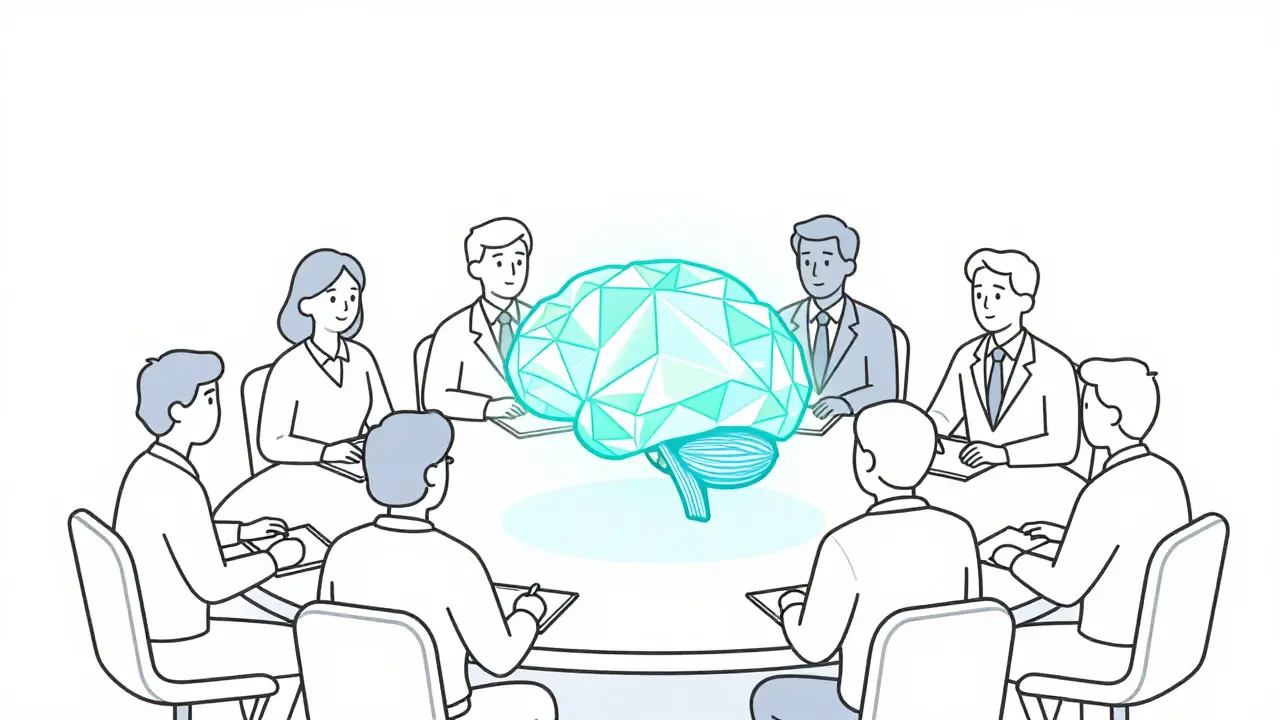
Imagine deploying a new customer support chatbot that accidentally insults 15% of your Spanish-speaking users because the training data was heavily skewed toward English accents. It’s not just a PR nightmare; it’s a measurable failure of ethical large language model oversight. As organizations rush to integrate Large Language Models (LLMs) into critical workflows, the gap between technical capability and social responsibility is widening. Stakeholder review processes are the bridge that connects these two worlds, ensuring that the people affected by an AI system have a voice in how it behaves.
This isn't about adding a checkbox to a compliance form. It’s about building a structured feedback loop where engineers, ethicists, legal teams, and end-users collaborate to catch bias before it becomes a lawsuit or a viral scandal. If you’re leading an AI initiative, understanding how to implement these reviews is no longer optional-it’s the difference between a trusted product and a liability.
Why Stakeholder Reviews Matter More Than Ever
The rise of generative AI has outpaced our ability to regulate it informally. Between 2020 and 2023, as LLM capabilities exploded, formal frameworks began to emerge from healthcare sectors where the stakes were life-and-death. Today, regulatory pressure is accelerating this shift. The EU AI Act, which came into force in August 2024, explicitly requires stakeholder engagement for high-risk AI systems. This means that if you’re operating in Europe or targeting global markets, informal “gut feeling” checks won’t cut it anymore.
The data supports the value of doing this properly. Organizations that implemented formal stakeholder review processes saw a 42% reduction in ethical incidents compared to those relying on internal technical audits alone. In one notable case within financial services, a stakeholder framework identified cultural insensitivity in loan approval explanations for 17% of the customer base, preventing a potential $2.3 million compliance violation. These aren't hypotheticals; they are preventable costs that arise when we ignore the human element of AI deployment.
Anatomy of an Effective Review Framework
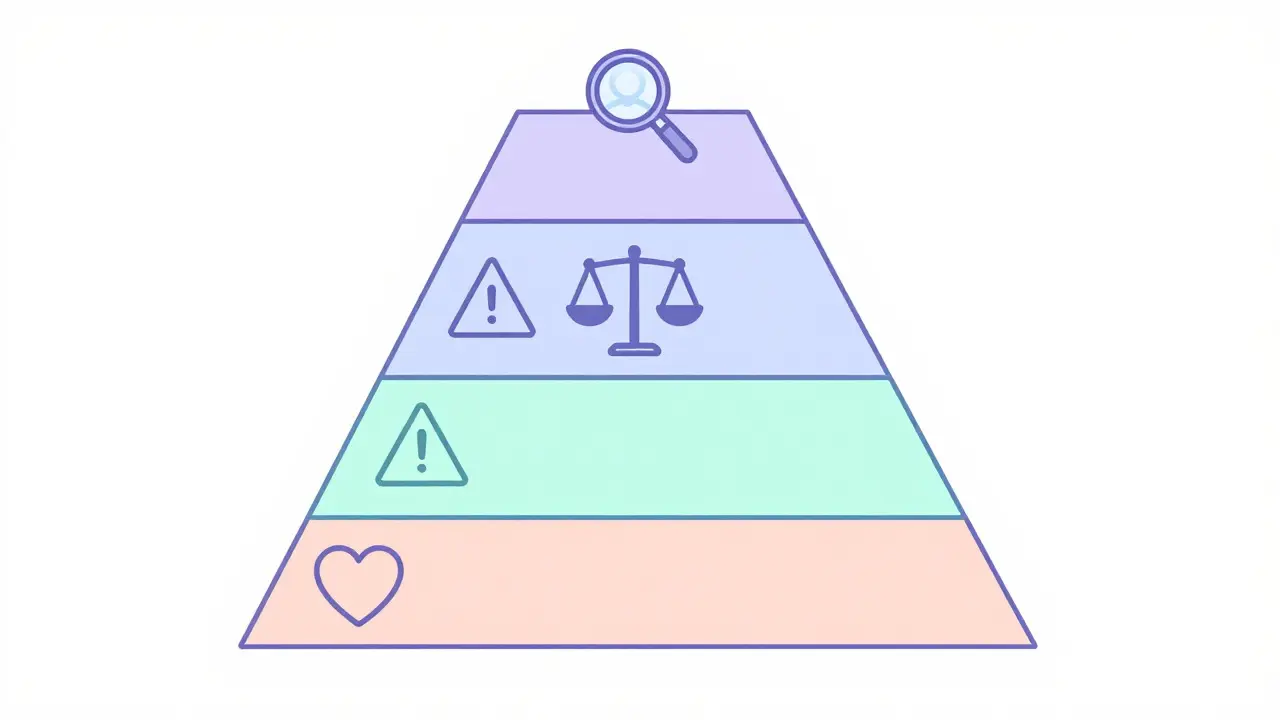
Not all review processes are created equal. While some companies treat it as a single meeting, effective frameworks are multi-phase and iterative. One prominent approach, detailed in recent academic literature, breaks the process down into four distinct stages:
- Stakeholder Identification: Systematically cataloging everyone affected. This goes beyond customers to include employees, regulators, and community groups. Some advanced models even use simulation techniques to represent the perspective of marginalized groups who might not be present in the room.
- Motivation Analysis: Understanding what each group values. A developer cares about speed; a patient cares about privacy; a regulator cares about accountability. Mapping these interests helps predict conflicts early.
- Risk Assessment: Evaluating best-case and worst-case scenarios. How does the model behave when it’s wrong? Who gets hurt first?
- Morality Evaluation: Judging the ethical implications based on the impacts identified in the previous steps.
Another robust method involves an eight-perspective evaluation covering transparency, robustness, alignment with human values, and even environmental impact. By measuring carbon emissions per inference alongside bias metrics, teams get a holistic view of the model’s footprint. The goal isn't perfection, but rather visibility-knowing exactly where the blind spots are.
Comparing Approaches: Healthcare vs. Business Models
Different industries face different risks, so their review processes reflect that. Here’s how three common frameworks stack up against each other:
| Framework Type | Primary Strength | Key Weakness | Typical Adoption Rate |
|---|---|---|---|
| Healthcare-Specific | Clinical validation and safety | Low applicability in commercial contexts | 68% |
| Business-Oriented | ROI focus and cost savings | Weaker technical robustness evaluation | 57% |
| General-Purpose (e.g., SKIG) | Flexibility and moral reasoning accuracy | Higher implementation complexity | 37% |
Healthcare frameworks excel at catching clinical errors, achieving high satisfaction among clinicians, but often feel clunky in a marketing or sales context. Business-oriented models are great for protecting the bottom line, saving an average of 23% in costs from prevented incidents, but they can miss subtle technical biases. General-purpose frameworks offer the most balance, allowing smaller models to achieve moral reasoning accuracy comparable to larger ones, but they require more setup time.
Implementation Realities: Time, Cost, and Pitfalls
Let’s be honest: implementing these processes is hard. It’s not plug-and-play. For medium-sized enterprises, expect to dedicate 3 to 5 full-time equivalent personnel to manage the review cycle. The initial integration typically takes 12 to 16 weeks. That’s a significant investment, but consider the alternative: a 22% increase in development cycles due to rushed fixes after launch, or worse, a reputational hit that takes years to recover.
A major pitfall is "bureaucratic theater." We’ve seen cases where companies held eight committee meetings just to approve minor prompt changes, delaying deployment by 11 weeks with minimal ethical improvement. To avoid this, keep the process agile. Successful implementations use dedicated collaboration platforms and limit review cycles to 45-60 days, ensuring that feedback remains relevant as the model evolves.
Resource constraints are also real. Small organizations often spend 18-22% of their AI budget on review processes, whereas large enterprises manage to keep it under 12%. If you’re a startup, look into open-source tools like the Partnership on AI's Stakeholder Engagement Toolkit, which has been downloaded over 12,000 times. It provides a solid starting point without the enterprise price tag.

Building Trust Through Transparency
Ultimately, the goal of stakeholder review is trust. When users know their voices matter, they engage more deeply with the technology. Data shows that stakeholder trust scores can jump from 4.2 to 7.8 on a 10-point scale after proper implementation. But trust is fragile. It requires continuous monitoring, not just a one-time audit.
Experts emphasize that effective processes must involve stakeholders in decision-making authority, not just advisory roles. If a community group flags a bias issue, do they have the power to pause deployment? If not, the review process is likely performative. True power-sharing leads to better products because it surfaces issues that technical teams simply cannot see from inside the codebase.
Frequently Asked Questions
How long does it take to implement a stakeholder review process?
For most organizations, full integration takes between 12 and 16 weeks. This includes mapping stakeholders, establishing communication channels, and developing assessment metrics. Teams typically need 8-12 weeks to become proficient in using the new framework effectively.
What is the minimum number of stakeholder groups needed?
The EU AI Act recommends a minimum of five distinct stakeholder groups for high-risk systems. However, the specific groups depend on your industry. For example, a healthcare app would need patients, doctors, insurers, and regulators, while a retail chatbot would need customers, store staff, and supply chain partners.
Can small businesses afford these processes?
Yes, but it requires prioritization. Small organizations should start with open-source toolkits and focus on the highest-risk features of their LLMs. Instead of reviewing every aspect, identify the top three potential harms and build lightweight review cycles around those specific areas.
How do you measure the success of a stakeholder review?
Success is measured by a combination of reduced ethical incidents, improved stakeholder trust scores, and faster identification of conflicts. A good benchmark is the time-to-identify ethical conflicts; effective frameworks reduce this from an average of 32.7 hours to 14.3 hours.
What is the biggest mistake companies make?
The biggest mistake is treating stakeholder review as a one-time event rather than a continuous process. Models change, user expectations evolve, and new biases emerge. Without adaptive review cycles every 45-60 days, the process quickly becomes outdated and ineffective.
 Artificial Intelligence