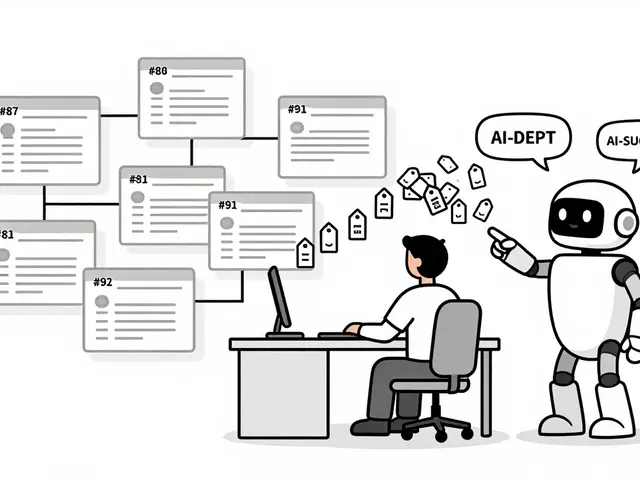
Imagine cutting your team size by 60% and still hitting the same-or better-output targets. It sounds like a fantasy from a management textbook written in 2015, but it’s the reality for companies mastering Team Size Compression, defined as the strategic reduction of headcount coupled with increased autonomy, tooling, and process efficiency to maintain or boost output. This isn’t about laying people off to save costs in a vacuum. It’s about stripping away the friction that slows down large groups.
We’ve all seen the "Brooks’ Law" effect in action: adding more people to a late software project makes it later. Communication overhead grows exponentially, not linearly. When you have ten people on a task, nine of them are often just talking about what the one person is doing. Team size compression flips this dynamic. By shrinking the core execution unit, you force clarity, speed, and ownership. The goal? To deliver more value with significantly fewer resources, leveraging technology and culture to bridge the gap.
The Physics of Small Teams
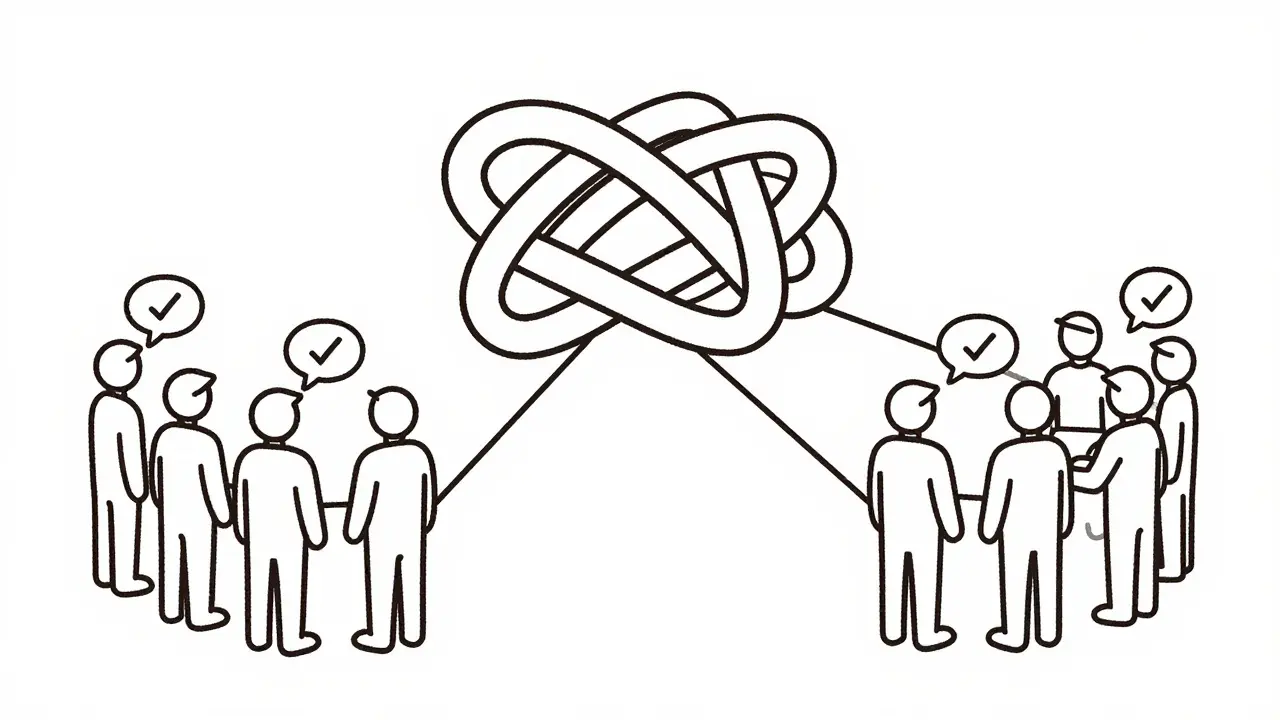
Why does smaller work better? It comes down to communication channels. In a team of four, there are six potential lines of communication. In a team of ten, there are 45. That’s not just a math problem; it’s a productivity killer. Every extra channel introduces noise, misinterpretation, and decision paralysis.
When you compress a team, you remove the need for constant synchronization. Large teams require stand-ups, status reports, Jira tickets, and alignment meetings. Small teams rely on shared context and direct feedback loops. A two-person pair can refactor a codebase in an afternoon because they talk directly. A twenty-person squad might spend that same afternoon debating the architecture in a conference room.
This concept mirrors findings in high-stakes environments. Research into cardiac resuscitation teams showed that smaller compressor teams (two people) exhibited higher individual exertion but maintained comparable performance quality to larger groups when properly trained. The key takeaway? Efficiency isn’t about having more bodies; it’s about optimizing the effort of the ones you have. In business, this translates to empowering individuals rather than diluting responsibility across a crowd.
How to Compress Without Collapsing
You can’t just fire 60% of your staff and expect magic to happen. Team size compression requires a complete overhaul of how work gets done. Here is the practical framework for making it work:
- Automate the Mundane: If a task doesn’t require human judgment, automate it. Use AI-driven tools for testing, documentation, and data entry. This frees up your compressed team to focus on high-value creative and strategic work.
- Eliminate Middle Management Layers: Managers exist to coordinate large groups. In small teams, coordination happens naturally. Replace hierarchical approval chains with peer reviews and transparent metrics.
- Increase Autonomy: Give small teams clear goals (OKRs) but let them decide how to achieve them. Micromanagement kills small teams faster than it hurts large ones because there’s no buffer between the manager and the doer.
- Invest in Tooling: Your compressed team needs better weapons. Provide premium access to collaboration platforms, cloud infrastructure, and development environments. Speed becomes your competitive advantage.
The shift is cultural. You move from a "command and control" model to a "trust and verify" model. Trust that your small team knows their job. Verify results through output, not hours logged.
The Role of Technology in Scaling Down
Technology is the lever that makes team size compression possible. Without it, you’re just understaffed. With it, you’re optimized. Consider the rise of low-code platforms, automated CI/CD pipelines, and AI assistants.
A developer who once spent 30% of their time writing boilerplate code can now generate it instantly. A marketer who used to manually segment email lists can now use AI to personalize campaigns at scale. These tools act as force multipliers. One person with the right stack can outperform a team of five using outdated methods.
This is where the "60% smaller" claim holds water. It’s not that humans have become superhuman; it’s that we’ve removed the technical debt and manual labor that previously required armies to manage. The remaining 40% of the team consists of high-agency individuals who leverage these tools to drive disproportionate impact.
Pitfalls to Avoid During Adoption
Adopting team size compression is risky if done poorly. Here are the common traps:
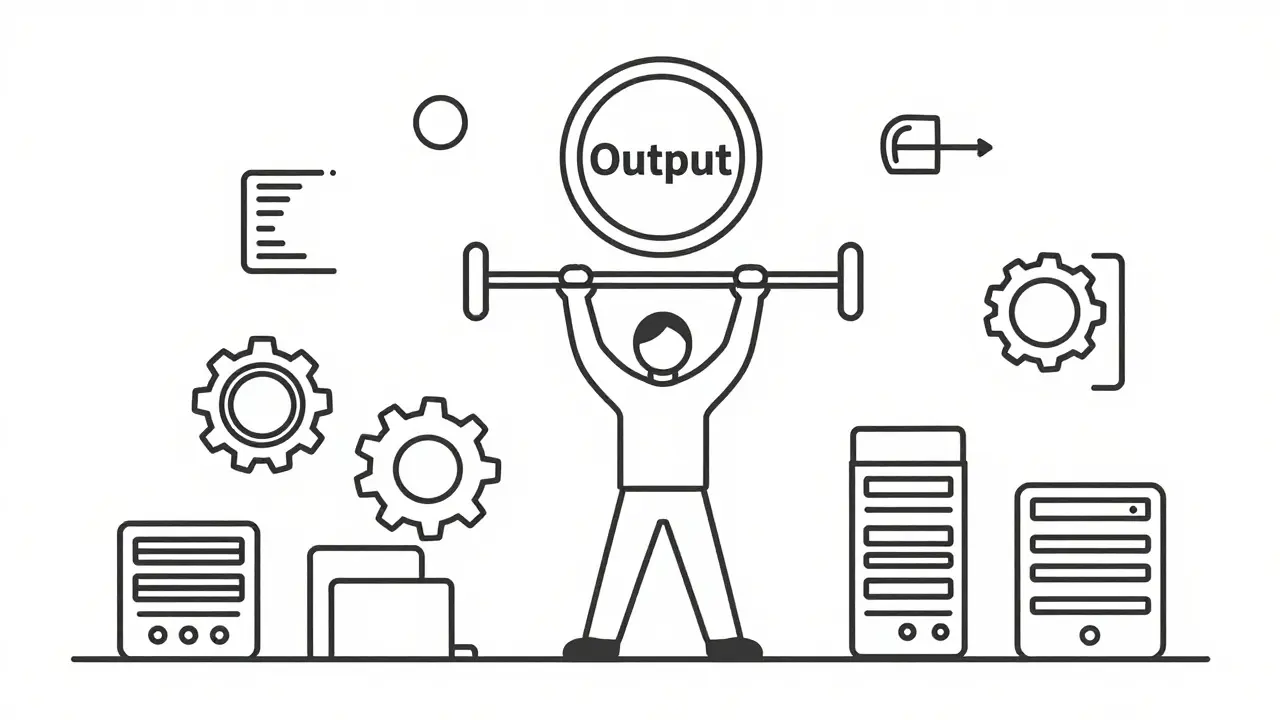
- Burnout: Smaller teams mean each person carries more weight. If you don’t monitor workload and mental health, you’ll lose your best talent. Ensure rotations and reasonable deadlines.
- Siloing: Small teams can become isolated. Maintain cross-team visibility through shared dashboards and occasional syncs to prevent duplicate efforts or conflicting strategies.
- Loss of Institutional Knowledge: When you shrink, you risk losing tacit knowledge. Document everything. Create a central knowledge base that new hires can access without needing a mentor to explain every detail.
- False Economy: Don’t cut support functions like HR, legal, or IT security unless they too can be streamlined. A compressed product team fails if the infrastructure behind them crumbles.
Success depends on balance. You want lean, not bare-bones. You want focused, not fractured.
Measuring Success: What Metrics Matter?
Traditional metrics like "hours worked" or "lines of code" are useless in a compressed team environment. They measure activity, not outcome. Instead, focus on value-based indicators:
| Metric | Why It Matters | Target |
|---|---|---|
| Cycle Time | Speed from idea to deployment | Decrease by 30-50% |
| Customer Satisfaction (CSAT) | Quality of output perceived by users | Maintain or Increase |
| Employee Net Promoter Score (eNPS) | Team morale and engagement | Stay above industry average |
| Revenue per Employee | Direct efficiency gain | Significant increase |
If cycle time drops and CSAT stays stable, you’re winning. If eNPS plummets, you’re burning out your team. Monitor these closely during the transition period.
Real-World Application: From Theory to Practice
Consider a mid-sized SaaS company moving from a waterfall model with 50 developers to an agile structure with five pods of eight people. Initially, chaos ensues. But within six months, the pods start shipping features twice as fast. Why? Because decisions are made locally. There’s no waiting for VP approval on minor UI changes. The compressed teams own their products end-to-end.
Another example: A marketing agency reduces its account management team by half but implements AI-driven reporting tools. The remaining managers spend less time compiling spreadsheets and more time strategizing with clients. Client retention improves because the conversations become deeper and more insightful, not just transactional.
These aren’t anomalies. They’re patterns emerging in organizations that prioritize agility over mass. The trend is accelerating as remote work and digital collaboration tools mature. The future belongs to those who can do more with less, not those who hoard headcount.
Next Steps for Leaders
If you’re considering team size compression, start small. Pick one pilot team. Give them the tools, autonomy, and trust. Measure their output against historical baselines. Iterate based on feedback. Scale only when you see sustainable improvements in both speed and satisfaction.
Remember, this isn’t a one-time fix. It’s a continuous discipline. As markets change, so must your structures. Keep pruning inefficiencies. Keep investing in your people’s capabilities. And always keep the customer’s value at the center of every decision.
Is team size compression the same as downsizing?
No. Downsizing is purely financial, often leading to reduced capacity and burnout. Team size compression is strategic, involving parallel investments in automation, tooling, and process improvement to maintain or increase output despite fewer heads.
What industries benefit most from this approach?
Knowledge-work industries like software development, digital marketing, design, and consulting benefit most. Roles reliant on creativity, problem-solving, and digital tools see the highest leverage from compression. Manufacturing or logistics may see limited gains due to physical constraints.
How do I prevent burnout in smaller teams?
Implement strict boundaries around working hours, enforce mandatory time off, and use workload balancing algorithms. Regularly check in on employee well-being through surveys and 1-on-1s. If output dips, it’s likely a sign of fatigue, not laziness.
Can this work for startups?
Absolutely. Startups are inherently compressed. The challenge is maintaining that efficiency as you grow. Many startups fail because they add headcount before automating processes. Staying lean longer gives you a significant runway advantage.
What tools are essential for team size compression?
Look for AI-assisted coding partners, automated QA testing suites, collaborative document platforms (like Notion or Confluence), and project management tools that visualize workflow bottlenecks. The right tech stack acts as your invisible workforce.
 Artificial Intelligence