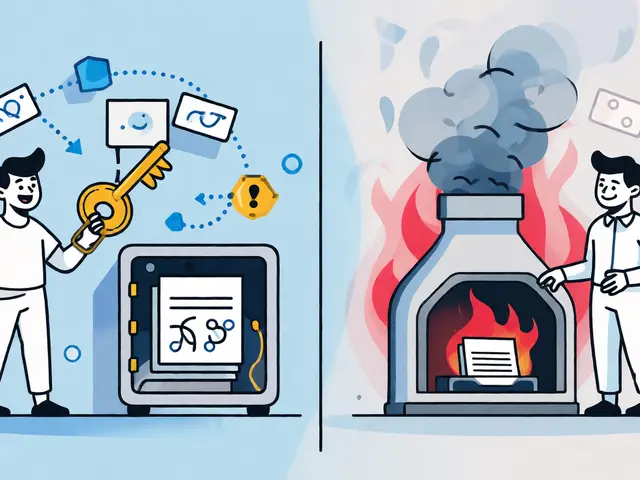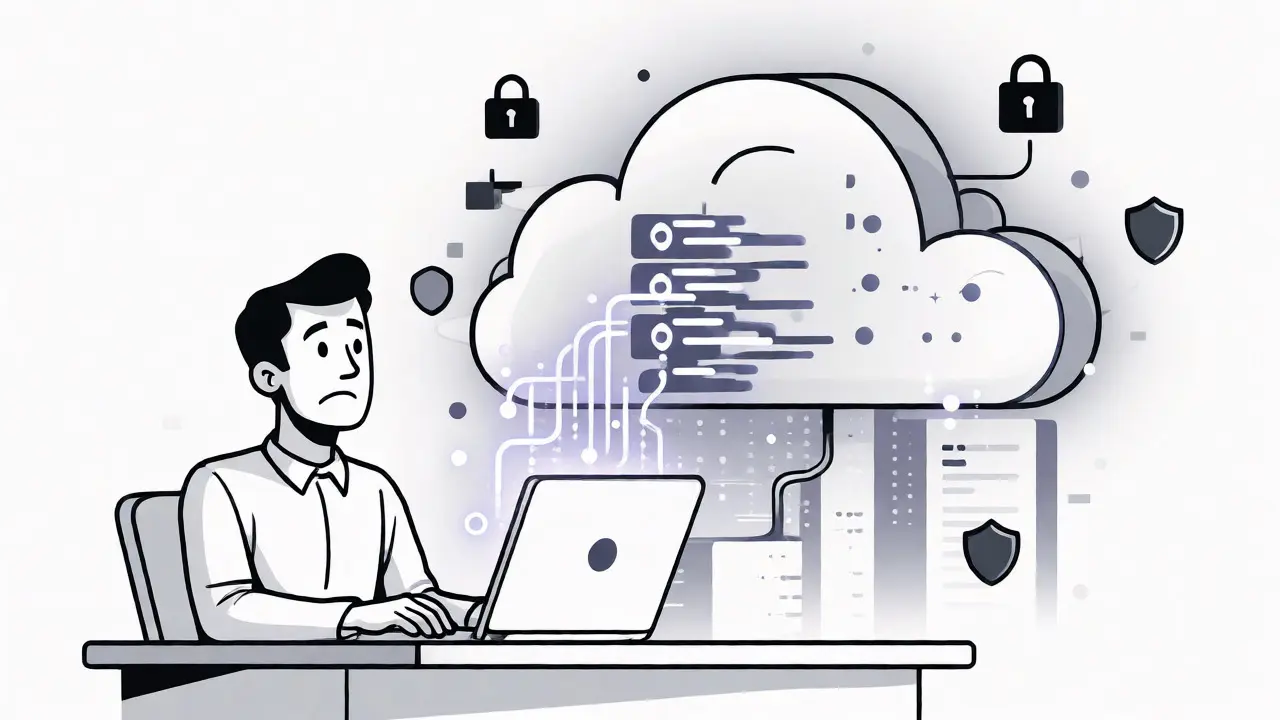
You just onboarded a new AI coding assistant. It’s fast, it writes clean boilerplate, and your developers love it. But did you ask where their prompts go? Does the vendor use your proprietary source code to train their next model? If that vendor gets breached tomorrow, does your IP leak with them? Traditional vendor assessments often miss these questions because they weren't built for generative AI.
As of late 2026, third-party risk scoring for AI coding vendors isn't just a compliance checkbox; it's a critical control point in your software supply chain. Unlike standard SaaS tools, AI coding assistants interact directly with your most sensitive asset: your codebase. This guide breaks down how to build a scoring framework that actually reflects the unique risks of AI-powered development tools, moving beyond generic SOC 2 checklists to address model governance, data leakage, and operational resilience.
Why Standard Vendor Scores Fail AI Tools
Most organizations still rely on legacy Third-Party Risk Management (TPRM) frameworks designed for cloud storage or HR platforms. These frameworks focus heavily on encryption at rest and access controls. While important, they don't capture the dynamic nature of Large Language Models (LLMs). When you evaluate an AI coding vendor, you are dealing with probabilistic outputs and opaque training processes.
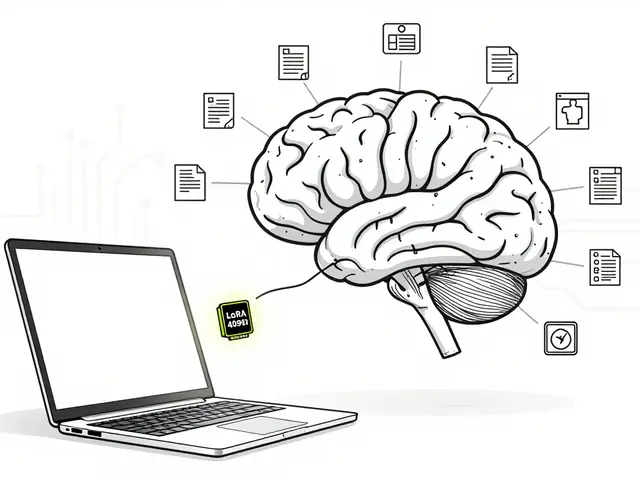
Consider the difference between a database provider and an AI code generator. The database stores what you give it. The AI generator creates new content based on patterns learned from billions of lines of code. If the vendor changes their underlying model without notice, your generated code quality might drop, or worse, introduce subtle bugs that static analysis misses. Standard risk scores rarely account for "model drift" or the lack of explainability in AI-generated suggestions. You need a score that weighs these AI-specific dimensions alongside traditional security controls.
The Five Pillars of AI Coding Vendor Risk
To create a meaningful score, you must decompose risk into specific, measurable categories. A composite score-whether out of 100 or on a 5-tier scale-should aggregate data from these five pillars. Ignoring any one of them leaves blind spots in your defense strategy.
| Risk Dimension | Key Questions | High-Risk Indicators |
|---|---|---|
| Data Usage & Training | Is customer code used for model fine-tuning? Is there a zero-retention policy? | Vague terms like "may use data to improve services"; no opt-out for training. |
| Model Governance | Are model versions pinned? Is there an audit trail for model updates? | Silent model swaps; no documentation on bias mitigation strategies. |
| Code Confidentiality | How is prompt data encrypted in transit and at rest? Are logs retained? | Plain text logging of prompts; retention periods longer than 30 days. |
| Operational Resilience | What happens during API downtime? Can we roll back to a previous model version? | No SLA for latency; dependency on a single upstream foundation model provider. |
| Regulatory Alignment | Does the tool comply with EU AI Act requirements for high-risk systems? | Lack of transparency reports; no alignment with NIST AI RMF standards. |
Let's look closer at Data Usage & Training. This is often the dealbreaker. Many vendors claim they don't train on your data, but their legal teams bury clauses about "aggregate telemetry." For an enterprise handling proprietary algorithms, this ambiguity is a red flag. Your scoring model should penalize vendors who cannot provide contractual guarantees that your code snippets remain isolated from the global training corpus.
Building Your Scoring Methodology
You don't need a PhD in data science to implement this, but you do need a structured approach. Start by defining inherent risk versus residual risk. Inherent risk is the exposure before controls are applied. Residual risk is what remains after the vendor implements safeguards.
Use a weighted matrix. Not all risks are equal. For a fintech company, regulatory compliance might carry a 40% weight. For a gaming studio, operational uptime might be more critical. Here is a practical step-by-step method:
- Define Criticality Tiers: Classify AI coding tools by integration depth. Is it an IDE plugin (low impact if it fails) or part of the CI/CD pipeline (high impact)?
- Collect Evidence: Move beyond questionnaires. Request SOC 2 Type II reports, but also demand technical whitepapers on their inference architecture. Ask specifically about their sub-processors-who hosts the LLM? AWS? Azure? OpenAI?
- Automate Initial Screening: Use AI-driven TPRM platforms to scan public breach databases and news feeds for the vendor. Did they have a recent outage? Were there security disclosures?
- Manual Expert Review: Have your security architects review the technical claims. If a vendor says they use "homomorphic encryption," verify if that applies to inference or just storage. This human-in-the-loop step is crucial for catching marketing fluff.
- Calculate Composite Score: Aggregate the findings. A simple formula could be: (Inherent Risk × Control Effectiveness) + Regulatory Penalty = Final Score.
Platforms like Safe Security or OneTrust offer engines that can automate parts of this, using models like FAIR-MAM to translate control gaps into financial impact estimates. However, even with automation, the initial weighting must reflect your organization's specific appetite for AI risk.
Contractual Levers That Lower Risk Scores
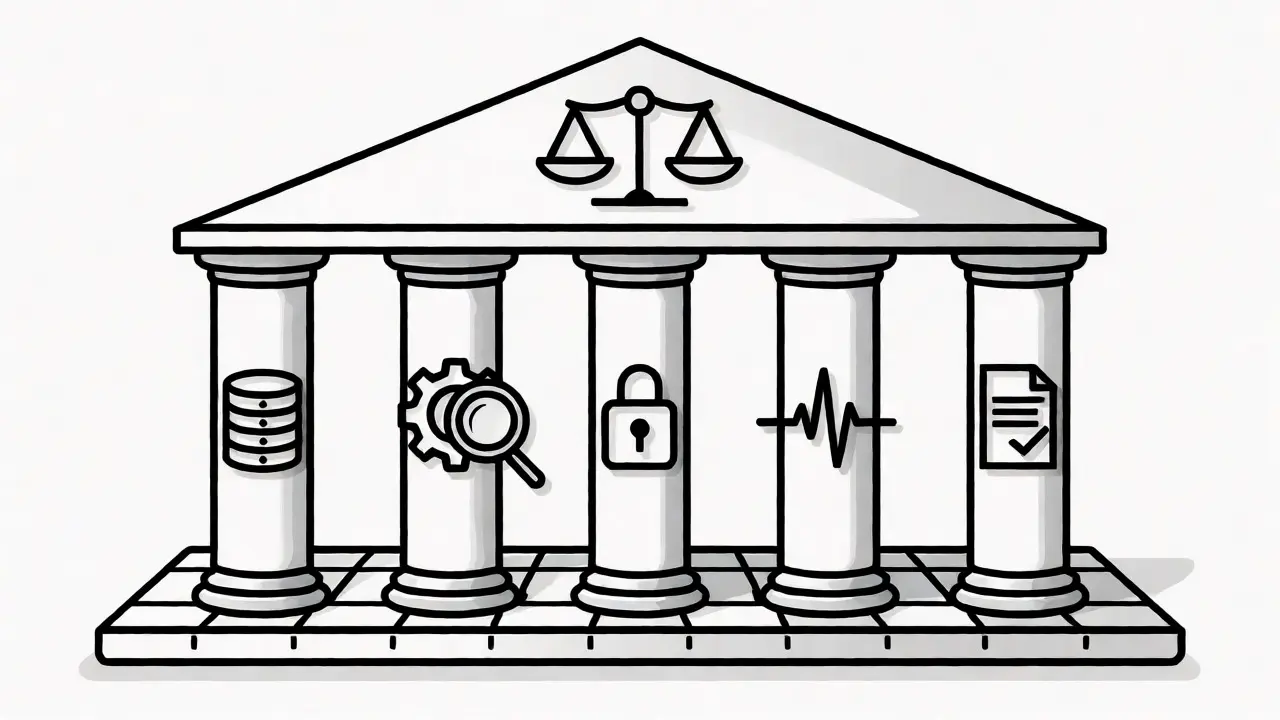
Your risk score shouldn't just measure the past; it should influence future behavior. Contractual terms are powerful levers. If a vendor refuses to sign an addendum regarding AI transparency, their risk score should increase significantly. Conversely, accepting strict liability for IP leakage lowers the score.
Include these clauses in your vendor agreements to actively manage risk:
- Right to Audit: Ensure you can audit not just their security practices, but their AI model governance processes.
- Model Change Notification: Require 30-day notice for major model upgrades that affect output quality or privacy settings.
- Data Deletion Guarantees: Specify exactly when prompt data is purged from servers. "Best effort" is not a guarantee.
- Indemnification for Hallucinations: While tricky to enforce, some enterprises now seek indemnity for damages caused by clearly negligent AI outputs, though this varies by jurisdiction.
PwC and other advisory firms emphasize that modernizing contracts is key to keeping pace with AI adoption. Don't treat the AI component as a black box feature; treat it as a service with specific performance and privacy obligations.
Continuous Monitoring vs. Point-in-Time Assessments
A risk score assigned during onboarding becomes stale within months. AI vendors iterate rapidly. They update models weekly, change pricing tiers, and shift infrastructure providers. A static assessment gives you a false sense of security.
Shift to continuous monitoring. Integrate your TPRM platform with external threat intelligence feeds. Set up alerts for keywords related to your vendor, such as "breach," "outage," or "EU AI Act violation." For deeper visibility, monitor internal telemetry. How much data are developers sending to the AI tool? Has the volume spiked unexpectedly? A sudden increase in data transfer could indicate a misconfiguration or a new feature enabling broader context sharing.
Transcend’s best practices suggest using application-level guardrails to feed real-time usage data into your risk evaluation. If developers start pasting entire production config files into the chat window, your risk profile changes instantly. Automated permission checks can block this, and the attempt itself serves as a signal to review user training needs.
Common Pitfalls in AI Vendor Scoring
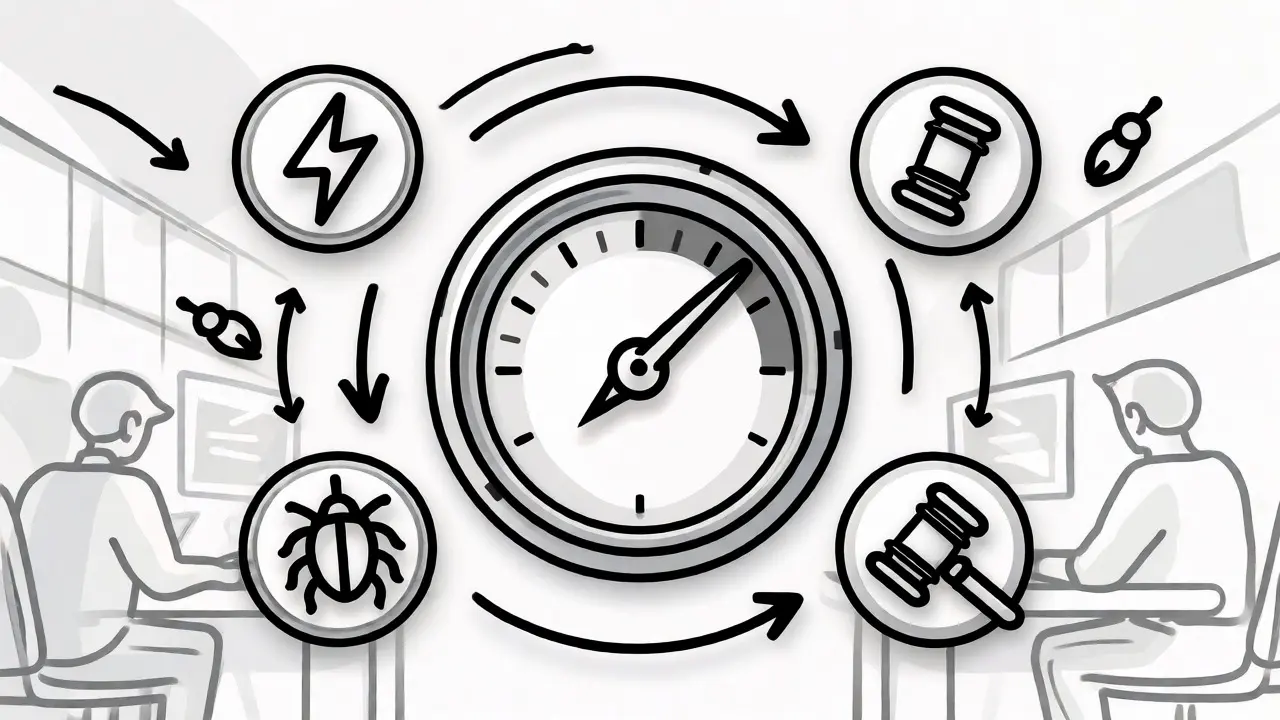
Even well-intentioned programs fail due to predictable errors. Avoid these traps:
Over-reliance on Certifications: A SOC 2 report proves good general hygiene. It does not prove the AI model doesn't memorize and regurgitate sensitive strings. Always supplement certifications with technical deep dives.
Ignoring Sub-Processors: Many AI coding vendors are wrappers around larger foundation models (like GPT-4o or Claude 3.5 Sonnet). If the wrapper vendor has great security but the underlying model provider has weak data policies, your risk is inherited. Map the entire chain.
Static Thresholds: What was acceptable risk in 2024 may be unacceptable in 2026 as regulations tighten. Regularly recalibrate your scoring weights against current regulatory landscapes, particularly the EU AI Act which categorizes many AI applications by risk level.
Putting It All Together
Scoring AI coding vendors requires a blend of traditional security rigor and new-age AI literacy. You aren't just buying software; you're integrating a probabilistic engine into your core engineering workflow. By focusing on data usage, model governance, and operational resilience, you create a defensible position against both cyber threats and regulatory scrutiny.
Start small. Pick your top three AI coding tools. Run them through this five-pillar framework. You’ll likely find gaps you didn’t know existed. Fix those, adjust your contracts, and then scale the process across your vendor ecosystem. The goal isn't to eliminate all risk-that's impossible with AI-but to understand and price it accurately.
Do I need a separate risk assessment for every AI coding tool?
Not necessarily. You can group similar tools into categories (e.g., "IDE Assistants" vs. "CI/CD Code Reviewers") and apply a baseline assessment. However, if a tool integrates deeply with your repository or handles highly sensitive code, it warrants a bespoke, detailed assessment.
How does the EU AI Act affect my vendor scoring?
The EU AI Act introduces specific requirements for transparency and human oversight. If your vendor operates in or serves the EU market, their inability to demonstrate compliance with these rules increases their regulatory risk score. You should verify if they classify their product as "limited risk" or "high risk" under the Act.
Can I trust a vendor's self-reported data usage policies?
Self-reporting is a starting point, but not sufficient for high-stakes environments. Look for independent attestations or third-party audits of their data pipelines. Additionally, test the tool yourself by inputting unique, identifiable strings and checking if they appear in subsequent responses or logs, if accessible.
What is the biggest security risk with AI coding assistants?
Prompt injection and data leakage are top concerns. Malicious actors can craft inputs that force the AI to reveal system instructions or previous conversation history. Data leakage occurs if the vendor retains your prompts for training without explicit consent, potentially exposing proprietary logic.
How often should I re-score my AI vendors?
Given the rapid pace of AI development, annual reviews are too slow. Aim for quarterly reviews for high-criticality vendors. Implement continuous monitoring for automated signals like security advisories, model version changes, or negative news sentiment.
 Artificial Intelligence