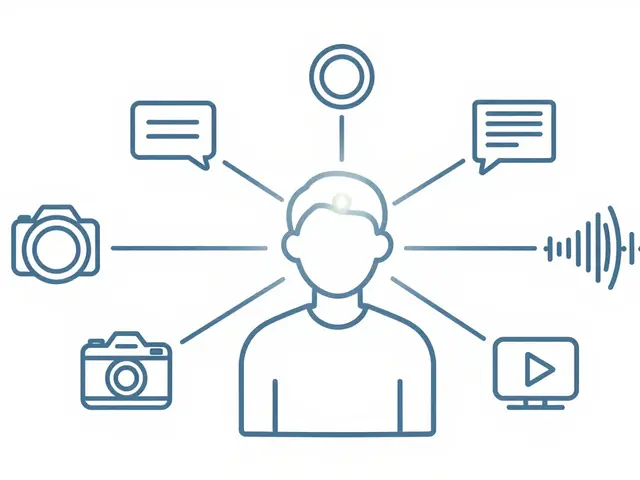
You’ve got a massive dataset of customer support tickets. You want to fine-tune Large Language Models (LLMs) on it. But you also have a legal team breathing down your neck about Personally Identifiable Information (PII). Do you scrub the data until it’s unrecognizable, or do you just swap names for codes? This isn’t just a semantic debate; it’s the difference between a compliant product and a six-figure GDPR fine.
The terms anonymization and pseudonymization get thrown around interchangeably, but they are fundamentally different tools with distinct risks. One is irreversible; the other is reversible. One removes you from GDPR jurisdiction; the other keeps you firmly inside it. If you’re building AI workflows in 2026, picking the wrong one can break your model’s utility or your company’s compliance status.
The Core Difference: Reversibility is Everything
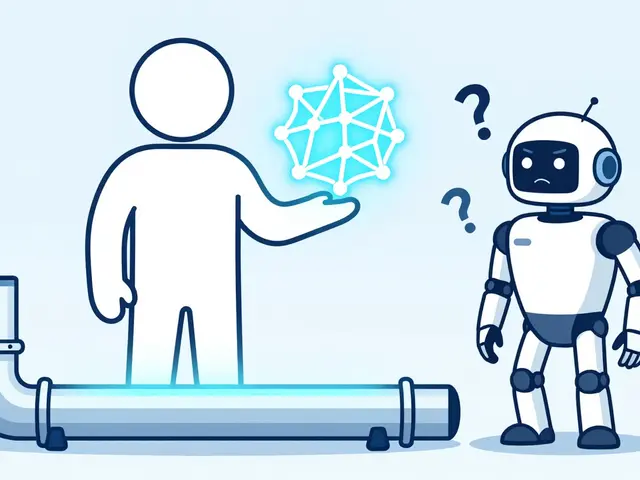
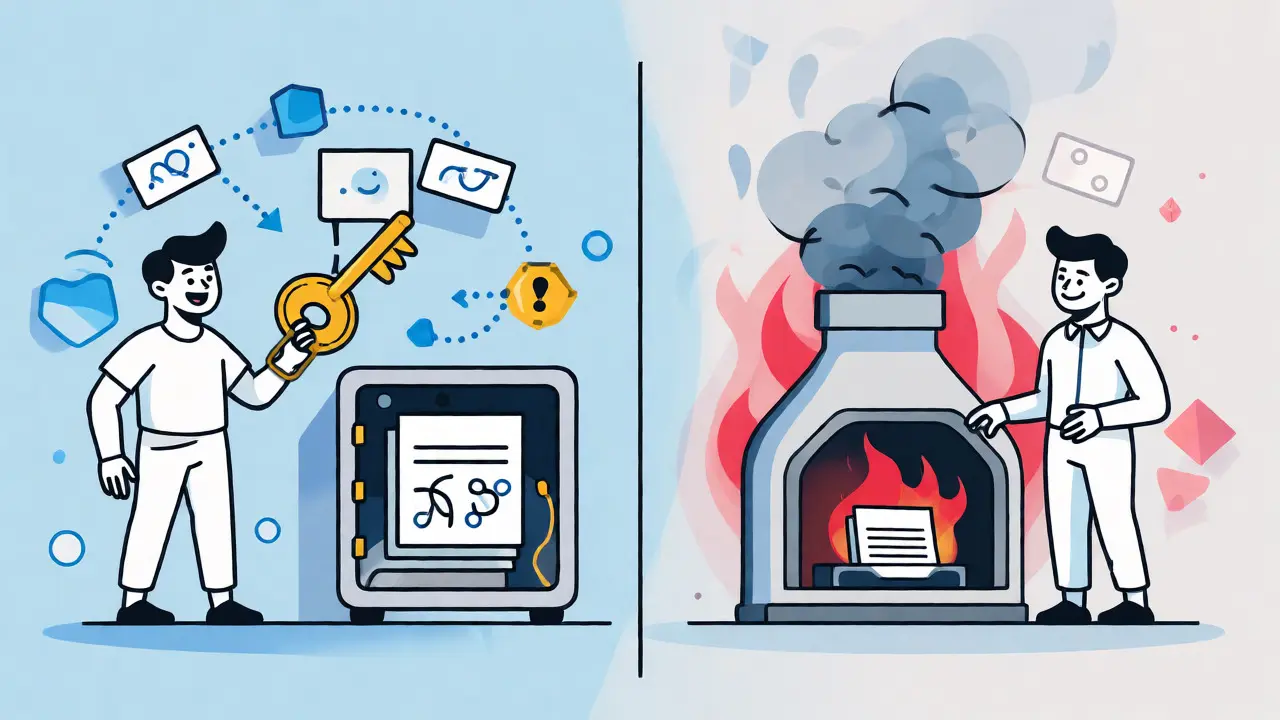
Think of it like locking a door versus burning the key. Pseudonymization is locking the door. You replace sensitive identifiers-like names, emails, or phone numbers-with artificial identifiers or "pseudonyms." The original data still exists somewhere, mapped by a secure key. If you have that key, you can unlock the data and re-identify the person. Because the link remains possible, pseudonymized data is still considered personal data under regulations like the General Data Protection Regulation (GDPR).
Anonymization, on the other hand, is burning the key. It permanently alters the data so that no individual can be identified, directly or indirectly, without disproportionate effort. Once data is properly anonymized, it falls outside the scope of GDPR. You don’t need consent to use it, and if it leaks, it’s not a "personal data breach" because there’s no person left to identify. The catch? Anonymization often strips away context that makes the data useful for training models.
| Feature | Pseudonymization | Anonymization |
|---|---|---|
| Reversibility | Yes (with key) | No (Irreversible) |
| GDPR Status | Personal Data | Not Personal Data |
| Data Utility | High (preserves relationships) | Limited (loses specific details) |
| Breach Risk | Medium-High (must notify) | Low (no notification needed) |
| Best For | Internal analytics, testing | Public sharing, strict compliance |
Why Your LLM Cares About the Method
Here’s where it gets tricky for machine learning engineers. LLMs thrive on context. If you aggressively anonymize text by replacing every instance of "New York" with "LOCATION_1," you might lose the subtle geographic cues the model needs to understand regional dialects or local references. Recent research from the PrivateNLP workshop at the ACL Anthology in 2025 tested this exact trade-off.
The study compared simple masking, contextual anonymization, and pseudonymization across models like Llama 3.3:70b and GPT-4o. The results were counter-intuitive. For Llama, straightforward anonymization actually outperformed complex contextual methods in inference accuracy. Why? Adding descriptive context to masked entities sometimes gave the LLM enough clues to reconstruct the original entity, defeating the purpose of privacy. Meanwhile, GPT-4o benefited from added context, showing that different architectures process masked data differently.
This means you can’t just pick one method and apply it everywhere. You need to test how your specific target model reacts to data transformation. A strategy that preserves utility for one model might degrade performance for another.

Technical Implementation: How to Actually Do It
If you’re choosing pseudonymization, you’re likely using techniques like Named Entity Recognition (NER). Tools like XLM-RoBERTa-large-finetuned-conll03-english can identify entities and swap them for structured pseudonyms. Instead of deleting "John Doe," you replace it with "PERSON_1." If "Jane Smith" appears later, she becomes "PERSON_2." This maintains relational integrity-you know two sentences refer to different people, even if you don’t know who they are.
For anonymization, you might use libraries like Faker in Python. Faker generates realistic but fake data. It replaces "John Doe" with "Michael Scott" and "123 Main St" with "456 Oak Ave." The structure looks real, but the identity is gone. Another common technique is generalization. Instead of saying a user is "34 years old," you change it to "30-40 years." This reduces precision but increases anonymity.
Tokenization is a hybrid approach. You replace sensitive data with unique tokens that map back to the original via a secure vault. Without access to the vault, the token is meaningless. This is great for internal systems where you control the key management infrastructure tightly.
Regulatory Risks: The GDPR Trap
Many companies think pseudonymization is a safe harbor. It’s not. Under GDPR, pseudonymized data is still personal data. If your database containing pseudonymized records gets hacked, you must treat it as a full-blown data breach. You have to investigate, notify regulators within 72 hours, and potentially alert affected users. The attacker might not be able to identify individuals without the key, but legally, the risk is yours.
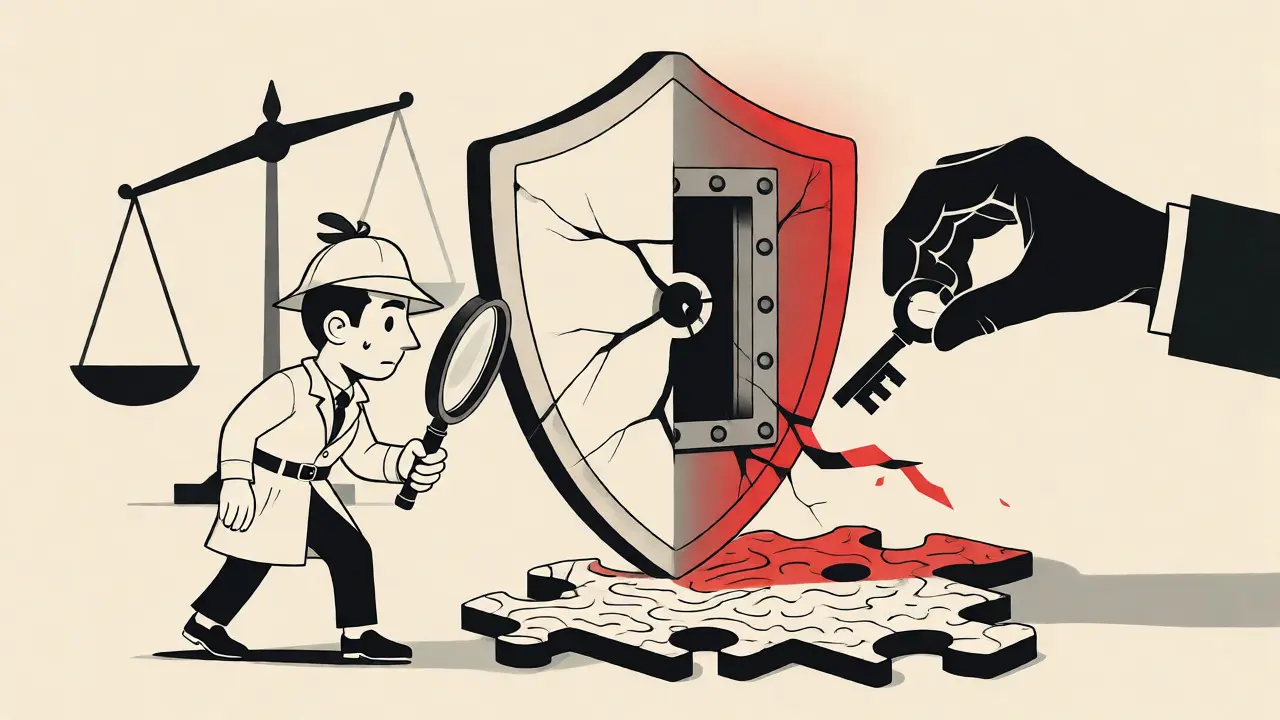
Anonymized data frees you from this burden. If an anonymized dataset leaks, it’s bad for reputation, sure, but it’s not a regulatory violation because no personal data was exposed. This makes anonymization the preferred choice for sharing data with third parties or publishing public datasets. However, achieving true anonymization is hard. With enough auxiliary data (like zip codes, birth dates, and gender), someone can often re-identify individuals even in supposedly anonymous datasets. This is known as the "mosaic effect." Always assume sophisticated attackers will try to reverse-engineer your anonymization.
Choosing the Right Strategy for Your Workflow
So, which one should you use? It depends on what you’re doing with the LLM.
- Use Pseudonymization when: You need to maintain links between records over time (longitudinal analysis). Think healthcare, where you need to track a patient’s history without exposing their name to junior analysts. Or fraud detection, where you need to spot patterns across transactions while keeping customer identities hidden from the algorithm developers.
- Use Anonymization when: You’re sharing data externally, publishing research, or training models where individual identification isn’t necessary for the task. If you’re building a sentiment analysis tool for general market trends, you don’t need to know *who* complained, just *that* someone complained.
A practical rule of thumb: Start with pseudonymization for internal development and testing. It’s easier to debug and retains more utility. When you move to production deployment or external sharing, switch to anonymization or ensure your pseudonymization keys are isolated in a separate, highly secured environment with strict access controls.
Common Pitfalls to Avoid
Don’t rely solely on removing direct identifiers like names and emails. Indirect identifiers matter too. A rare disease diagnosis combined with a specific age and location can uniquely identify a person. Scrubbing names but leaving these details intact leaves you vulnerable.
Another mistake is assuming all LLMs behave the same way. As noted earlier, some models can infer missing information from context better than others. Test your privacy-preserving transformations against your specific model version. What works for Claude 3 might fail for Gemini Pro.
Finally, never store the mapping key alongside the pseudonymized data in the same database. If both are stolen, your pseudonymization has failed. Keep the key in a separate, encrypted vault with its own access logs.
Is pseudonymized data still subject to GDPR?
Yes. Under GDPR, pseudonymized data is still considered personal data because it can be re-identified with additional information (the key). Therefore, all rights and obligations regarding personal data apply, including breach notifications and subject access requests.
Can I train an LLM on anonymized data without losing quality?
Generally, yes, but with caveats. Research shows minimal response quality loss (approx. 1 point on a 10-point scale) when using effective anonymization strategies. However, aggressive anonymization can remove nuanced context, affecting tasks that rely on specific entity recognition or geographic details.
What is the biggest security risk with pseudonymization?
The main risk is the compromise of the mapping key. If an attacker obtains both the pseudonymized dataset and the key used to generate the pseudonyms, they can fully re-identify all individuals. Secure key management and separation of duties are critical.
Which is better for sharing data with third-party vendors?
Anonymization is usually better for third-party sharing because it removes the data from GDPR jurisdiction, reducing legal liability. If you must share pseudonymized data, ensure strict contractual agreements limit how the vendor can use and protect the data.
Does anonymization always work perfectly?
No. True anonymization is difficult to achieve. Techniques like k-anonymity help, but sophisticated attacks using external datasets can sometimes re-identify individuals through the "mosaic effect," where combining multiple indirect identifiers reveals identity.
 Artificial Intelligence