You type a prompt. The screen fills with code. Your app works. It feels like magic, doesn't it? This is vibe coding, a development approach that replaced manual line-by-line coding with natural language instructions to AI assistants in early 2025. But here is the hard truth nobody wants to admit during the hype cycle: vibe coding hits a brutal wall. It is fantastic for prototypes and terrible for production systems that need to last longer than three months.
We are past the "wow" phase. Now we are in the cleanup phase. If you have tried building a full application using only AI prompts, you know the feeling. You fix one bug, and suddenly five other features break. You change a button color, and the database connection drops. This isn't just bad luck; it is a structural flaw in how current AI models handle complex software architecture.
The Three-Month Cliff: When Context Windows Fail
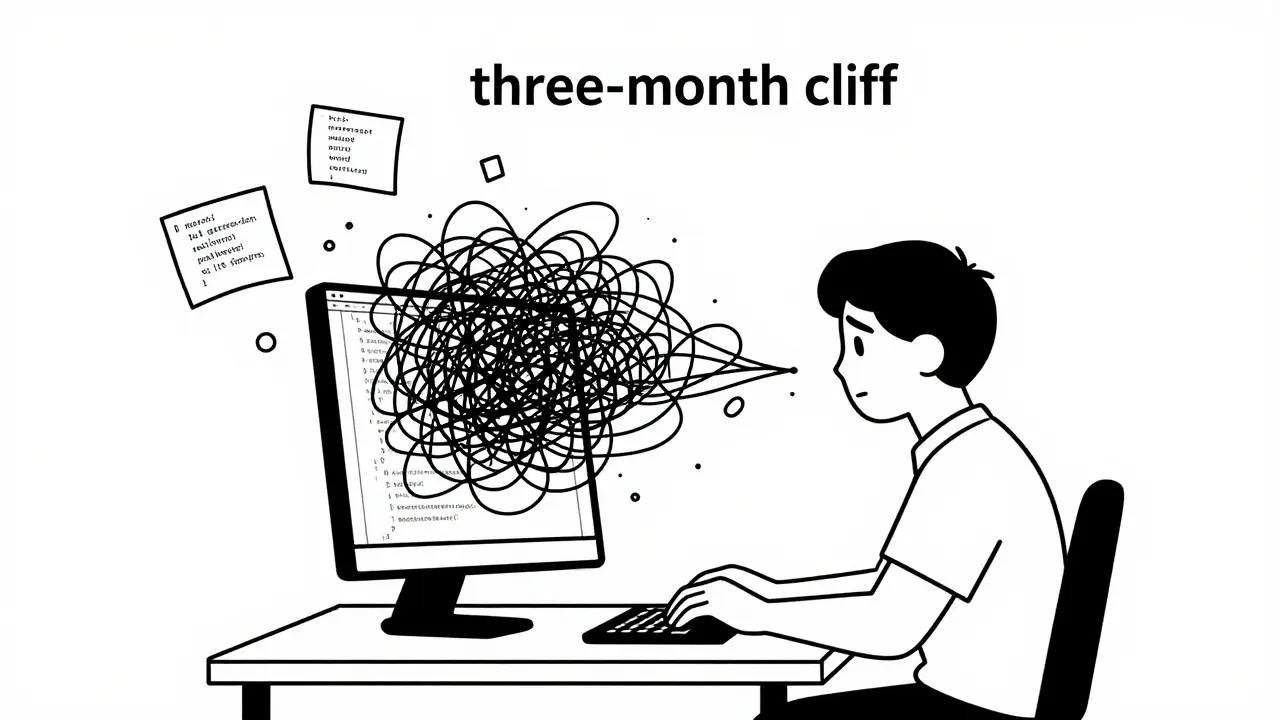
The most consistent pattern emerging from developers in 2026 is the "three-month cliff." According to analysis by Red Hat Developer, projects built entirely through vibe coding tend to hit a critical structural wall around this mark. Why three months? Because that is usually when the codebase grows beyond the AI's context window and human comprehension simultaneously.
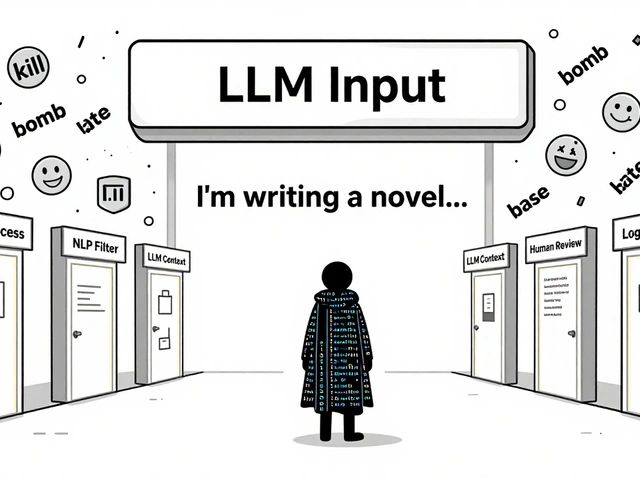
Imagine trying to explain a novel to someone who can only remember the last ten pages. That is your AI assistant at month four. It no longer sees the whole system. It sees fragments. When you ask it to update a feature, it modifies the local code without understanding how that change ripples through the global architecture. The result is a loss of holistic coherence. You lose the map.
This leads to what developers call the "whack-a-mole" effect. You patch a login error, but the payment gateway crashes. You fix the payment gateway, but the user profile page loads blank data. Without a clear architectural specification acting as guardrails, every modification becomes a gamble. The AI updates related parts automatically, but without the precision needed to prevent collateral damage. The code works locally, but the system falls apart globally.
Architectural Inflexibility and the Loss of Intent
Vibe coding assumes that common patterns are enough for all applications. They are not. Emergent’s comprehensive analysis shows that AI systems struggle significantly with custom architectures or highly specific design patterns. If your app requires unusual data models, rare algorithms, or industry-specific business rules, the AI will likely oversimplify them into generic structures.
Consider a healthcare application needing HIPAA-compliant data routing. A vibe-coded solution might generate standard REST APIs because that is what it has seen most often in its training data. It misses the nuance of encrypted local processing required by the regulation. The code runs, but it fails compliance. This is architectural inflexibility.
There is also the problem of lost intent. In traditional development, comments and documentation explain why a decision was made. In vibe coding, the code itself is the only source of truth. But code is terrible at explaining intent. Once the initial prompt is forgotten, the mental model that made the architecture coherent fades away. Future developers (or even you, six months later) cannot reverse-engineer the reasoning behind a complex logic block because the AI never wrote it down-it just generated the output.
Security Vulnerabilities: The Silent Killer
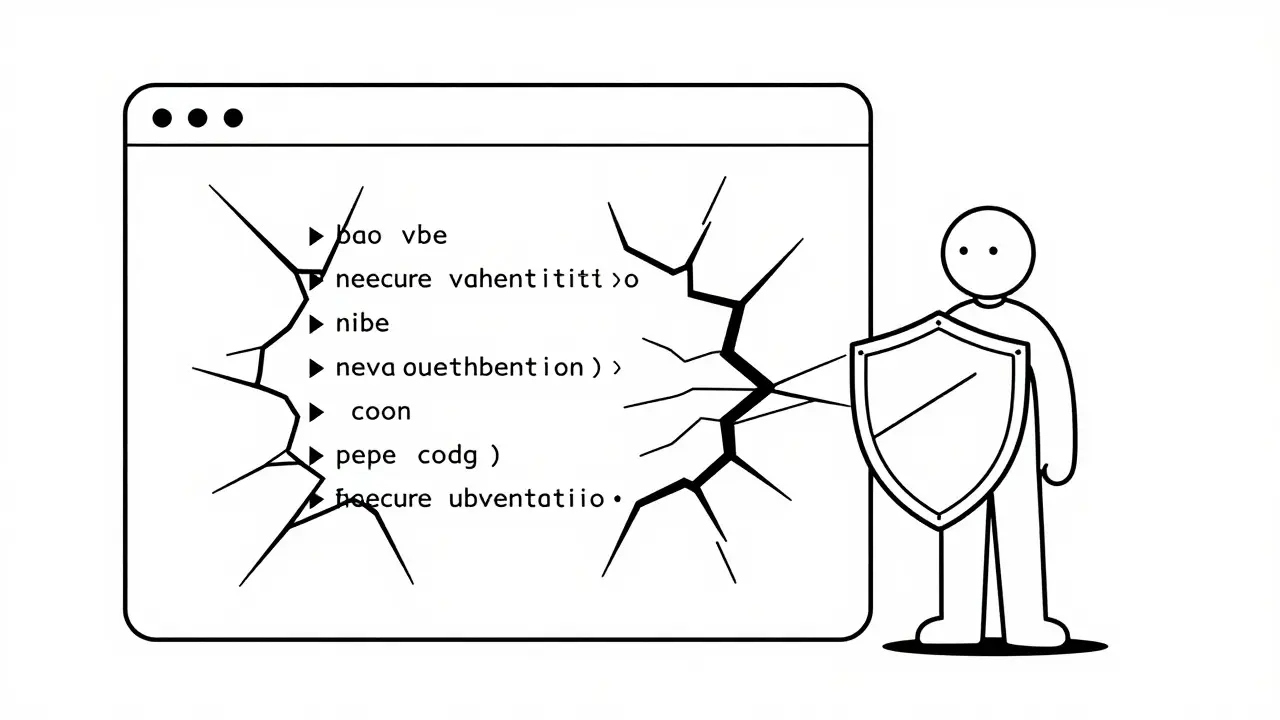
If broken functionality is annoying, security holes are catastrophic. Veracode’s 2025 security report delivered a sobering statistic: nearly half of all AI-generated code contains security vulnerabilities. For vibe coding, this number is likely higher because the users are often non-technical or inexperienced in security configuration.
Here is the dangerous loop: An inexperienced user asks the AI to build an app. The AI generates code with hardcoded API keys or insecure authentication methods. The user asks the AI how to secure it. The same AI suggests fixes based on general best practices, which may not apply to the specific framework it just generated. The result is a system that looks secure but is wide open to injection attacks or data leaks.
Typical vibe coding tools do not have robust security measures baked in by default. They prioritize speed over safety. Until consumer products bake guardrails directly into the generation process-rather than leaving security as an optional step for experts-vibe-coded apps will remain risky for handling real customer data.
| Attribute | Traditional Development | Vibe Coding |
|---|---|---|
| Architecture Control | Precise, human-defined patterns | AI-selected, often generic patterns |
| Maintainability | High (with documentation) | Low (intent loss, opaque reasoning) |
| Security Default | Configurable by expert | Frequently vulnerable (48% rate) |
| Scalability | Designed for load | Fails at high traffic/complexity |
| Best Use Case | Production enterprise apps | Rapid prototyping, MVPs |
The Deployment Gap: Stuck on Localhost
Building the app is only half the battle. Deploying it is where many vibe coders quit. There is a running meme in developer communities about apps stuck on "localhost" forever. Many consumers struggle to understand how to move their AI-built creations to a live server. They don’t know what a DNS record is, how to configure environment variables, or why their app crashes under real traffic.
In enterprise environments, this creates "shadow IT" nightmares. Platform teams receive code they cannot govern, secure, or maintain. The resulting applications require significant reworking before they can touch production databases. Vibe coding tools must collapse this deployment complexity entirely. Until users can publish immediately without needing DevOps expertise, the gap between prototype and product will remain wide.
Functionality Flickering and Inconsistency
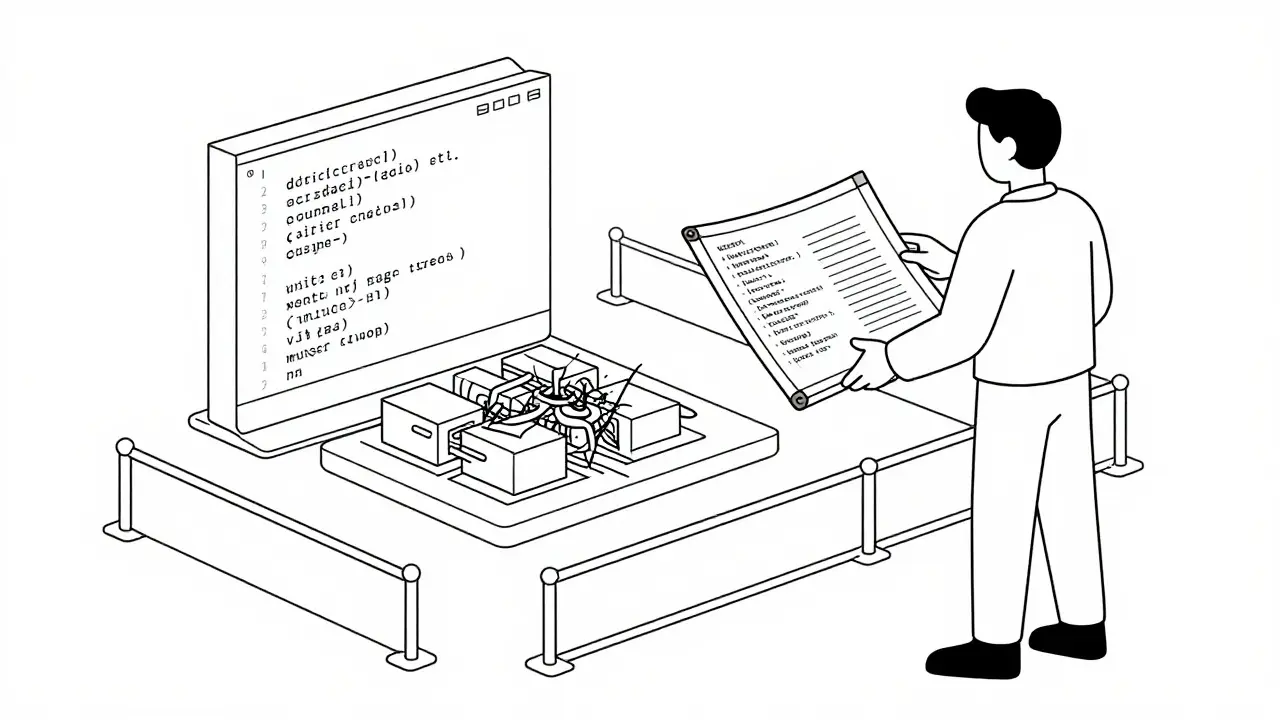
Have you ever noticed that two different prompts for the same feature yield slightly different results? This is "functionality flickering." Because AI models fill in unspecified design details probabilistically, visual elements like button colors, spacing, or even logic flows can change unpredictably between builds.
This inconsistency is disorienting. One day your dashboard aligns perfectly; the next day, after a minor text update, the layout shifts. It happens because the AI lacks a persistent design system unless explicitly forced to adhere to one. Without strict specifications, the AI improvises. And improvisation is the enemy of reliability.
How to Survive the Vibe Coding Era
Does this mean vibe coding is useless? No. It means you need to treat it like a junior intern who is fast but prone to mistakes. Here is how to use it effectively without falling into the trap:
- Stay at the Unit Level: As recommended by Red Hat Developer, use vibe coding for isolated components that can be tested independently. Do not let it manage the entire monolithic codebase.
- Be Specific: "Specificity is king." Vague prompts lead to vague code. Define inputs, outputs, and edge cases explicitly.
- Enforce Specifications: Drive your system with clear specs. Let vibe coding explore ideas during prototyping, but lock down the architecture before scaling.
- Review Security Manually: Never trust AI-generated security configurations. Run static analysis tools and manual audits before deployment.
- Document Intent: Since the AI won’t explain its reasoning, you must write the documentation yourself. Capture the "why" while it is fresh.
The developers who thrive in 2026 are not those who rely blindly on AI. They are the ones who learned to guide it with precision. Vibe coding democratizes prototyping, but it does not replace engineering judgment. Use it to accelerate, not to abdicate responsibility.
What is the biggest limitation of vibe coding?
The biggest limitation is architectural inflexibility and the loss of context as the codebase grows. AI struggles with complex, custom systems and often breaks existing features when making changes, leading to a "whack-a-mole" debugging experience.
Is AI-generated code secure?
Often, no. Veracode's 2025 report found that nearly 50% of AI-generated code contains security vulnerabilities. Non-technical users frequently fail to configure runtime environments securely, leaving apps exposed to attacks.
Why do vibe-coded projects fail after three months?
After about three months, the codebase typically exceeds the AI's context window and human comprehension limits. The AI can no longer see the whole system, leading to fragmented updates and systemic instability.
Can vibe coding replace junior developers?
Not yet. While it accelerates tasks, it lacks the domain expertise and architectural oversight needed for production-ready software. It acts more like a tool for rapid prototyping than a replacement for skilled engineering judgment.
How can I avoid "functionality flickering" in my app?
Use strict specifications and design systems. Force the AI to adhere to predefined styles and logic patterns rather than allowing it to improvise on unspecified details, which causes inconsistent outputs between builds.
 Artificial Intelligence