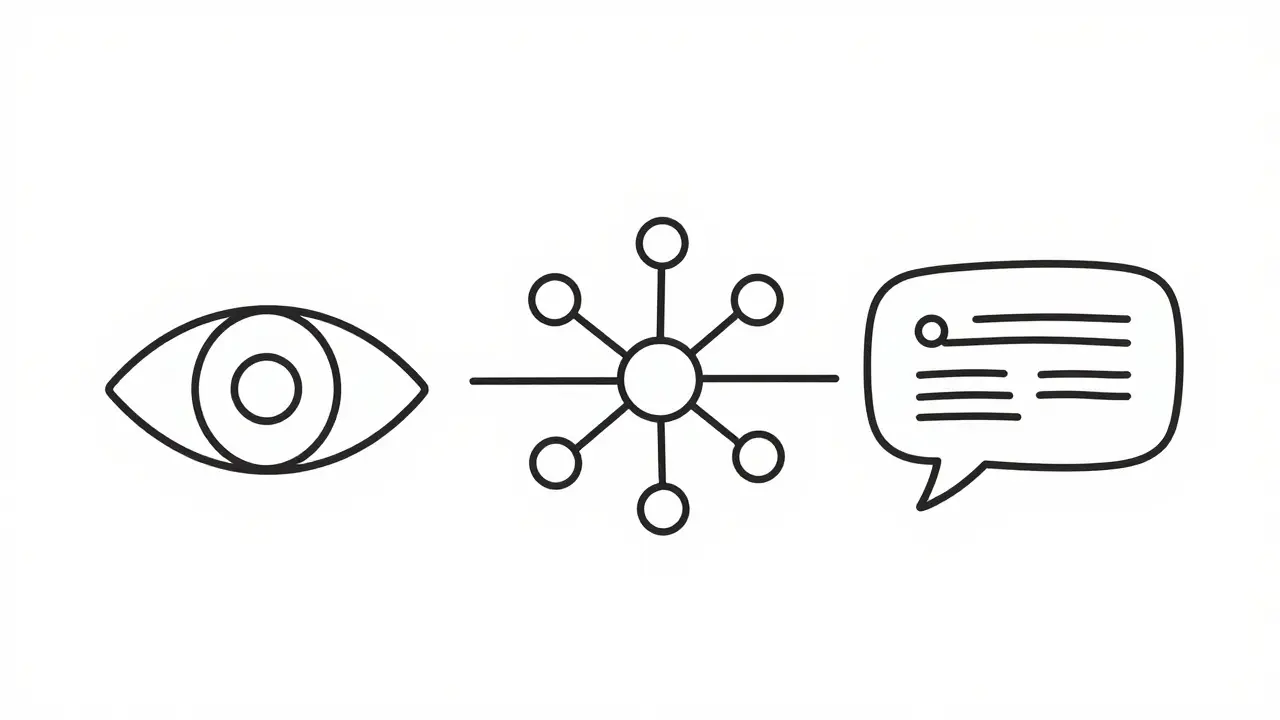
Getting a multimodal model to actually understand the connection between an image and its description is harder than it looks. You might think feeding a billion-parameter foundation model like Gemma 3 or Meta Llama 3.2 with enough data will solve everything. It won't. Without precise dataset design and carefully balanced alignment losses, your model will either ignore the visual input entirely or hallucinate text that has nothing to do with what’s on screen. This isn’t just about throwing compute at the problem; it’s about engineering the relationship between modalities.
The gap between general-purpose capabilities and specialized business needs is where most projects stall. A base model can identify a cat. Your application needs to detect specific industrial defects in manufacturing lines or interpret nuanced dermatological images for medical diagnostics. Bridging that gap requires more than prompt engineering. According to benchmarks from AWS in August 2025, properly executed multimodal fine-tuning delivers up to 74% accuracy improvements on specialized visual understanding tasks compared to using prompt engineering alone on base models. But achieving those numbers demands a rigorous approach to how you structure your data and how you penalize errors during training.
The Core Challenge: Aligning Modalities
Multimodal generative AI combines different types of data-text, images, audio, video-into a single coherent output. The difficulty lies in ensuring these distinct streams of information speak the same language within the model’s latent space. If the textual embeddings and visual embeddings don’t align perfectly, the model fails to perform cross-modal reasoning effectively.
This is where Alignment Losses come into play. In unimodal text models, you typically rely on cross-entropy loss to predict the next token. In multimodal settings, you need additional mechanisms to force the model to pay attention to the visual context when generating text, and vice versa. AWS’s best practices guide for Meta Llama 3.2 highlights a winning combination: merging contrastive loss (with a temperature parameter τ=0.07) with cross-entropy loss for textual components and mean squared error for visual embeddings. Their experiments showed this hybrid approach yielded 18.3% higher F1-scores on vision-language tasks compared to using a single loss function.
Why does this matter? Because without contrastive loss, there’s no strong incentive for the model to pull similar image-text pairs closer together in vector space while pushing dissimilar pairs apart. The result is often "modality dominance," where the powerful language backbone overrides the weaker visual encoder, leading to outputs that are grammatically perfect but visually irrelevant. To combat this, Google Cloud recommends using modality-specific learning rate schedules-setting vision components to 0.0002 and text components to 0.0005-to ensure neither side overwhelms the other during gradient updates.
Designing Datasets That Actually Work
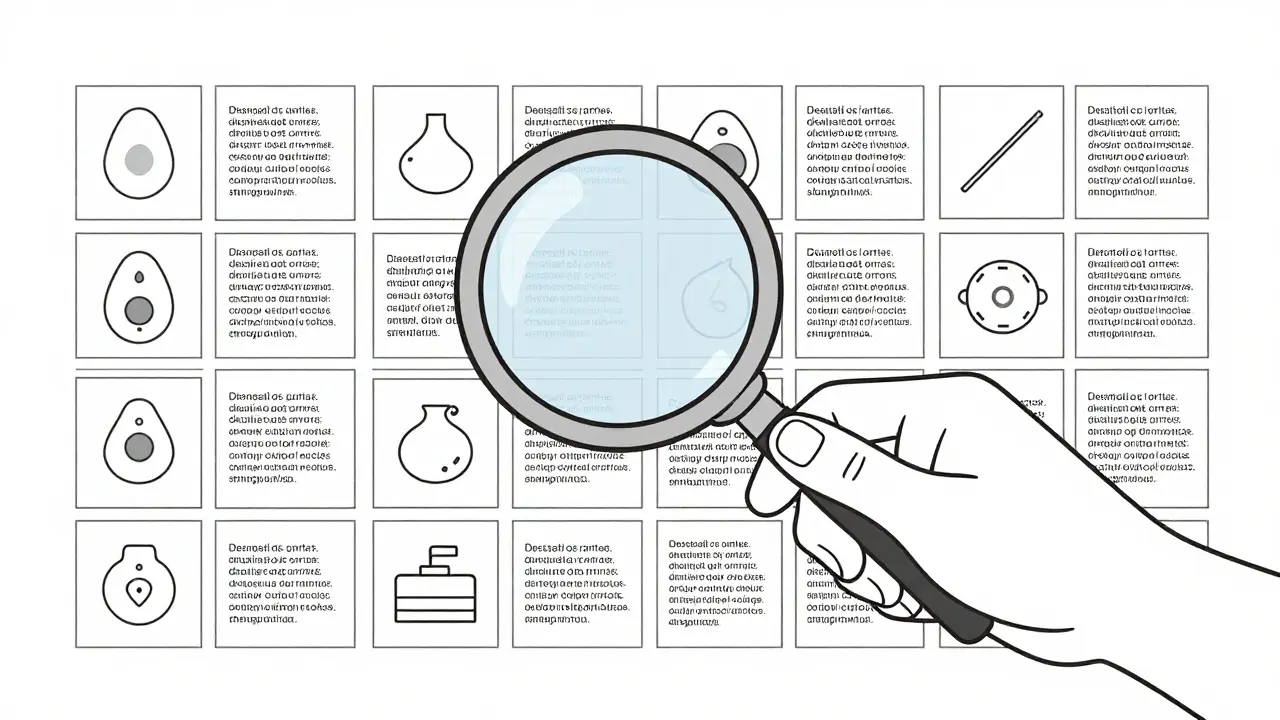
Data quality dictates ceiling performance. In multimodal fine-tuning, quantity means less than precision. Google Cloud’s analysis reveals that 68.3% of failed multimodal fine-tuning attempts stem directly from improper alignment between visual and textual components in the training data. It’s not just about having matching images and captions; it’s about structural integrity.
Your training examples must follow extended chat template formats. Each instance needs explicit positional encoding so the model knows exactly where the image tokens sit relative to the text tokens. For example, when fine-tuning Gemma 3 on the SIIM-ISIC Melanoma dataset, engineers had to pair 12,874 dermatological images with corresponding diagnostic text descriptions using strict formatting rules. One developer, Alex Rodriguez, reported spending 37 hours debugging alignment issues before realizing the issue was simply incorrect positional encoding in the chat template.
- Precision Pairing: Ensure every image has a semantically dense caption. Vague descriptions like "a picture of a skin lesion" provide little signal. Detailed annotations describing shape, color, and texture yield better embeddings.
- Balanced Distribution: Use stratified sampling to maintain class distribution across training, validation, and test sets. An 80/10/10 split helps prevent bias toward majority classes.
- Synthetic Data Augmentation: Tools leveraging GANs and VAEs can generate synthetic datasets, improving creation time by 47-63% according to Business Compass LLC. However, be cautious-the University of Washington’s AI Ethics Lab warned that synthetic data can amplify representation biases by up to 22.8% if not monitored closely.
Don’t assume clean data comes out of the box. Curating multimodal datasets remains one of the most labor-intensive parts of the pipeline, requiring significant expertise in both computer vision and natural language processing.
Parameter-Efficient Fine-Tuning (PEFT): Saving Compute and Money
Full fine-tuning of a 7-billion parameter multimodal model is prohibitively expensive. It requires eight NVIDIA A100 80GB GPUs and costs around $14,200 per training run. Most organizations cannot justify this expense for iterative development. Enter Parameter-Efficient Fine-Tuning (PEFT). As of Q3 2025, PEFT techniques account for 73.5% of enterprise multimodal implementations, up from just 41.2% a year earlier.
The three dominant methods are LoRA, QLoRA, and Adapters. Understanding their trade-offs is critical for choosing the right path.
| Method | Trainable Parameters | Hardware Requirement | Performance vs Full FT | Best Use Case |
|---|---|---|---|---|
| LoRA | <1% (0.5-0.8%) | Single A100 GPU | 92.4% average accuracy | Highly specialized tasks requiring fine-grained changes |
| QLoRA | Quantized 4-bit | Consumer GPU (e.g., RTX 4090) | 87.2% average accuracy | Resource-constrained environments; rapid prototyping |
| Adapters | Insertion layers | Standard Server GPU | 89.1% average accuracy | Multi-task learning; reduces catastrophic forgetting |
LoRA (Low-Rank Adaptation) works by inserting trainable rank-decomposed matrices into existing model layers. Introduced by Microsoft Research in 2021, it freezes the pre-trained weights and only trains these small new modules. Digital Divided Data’s benchmarking across 17 tasks confirmed LoRA maintains 98.7% of full fine-tuning performance while drastically reducing memory footprint. For highly specialized domains, LoRA remains the gold standard.
QLoRA (Quantized Low-Rank Adaptation) takes efficiency further by quantizing the base model to 4-bit precision before applying LoRA. This allows fine-tuning 65-billion parameter models on a single NVIDIA RTX 4090 with 24GB VRAM-a 5.8x reduction in memory requirements compared to standard approaches. The catch? Dequantization overhead increases training time by roughly 22%. If speed is your priority, stick to standard LoRA. If hardware access is limited, QLoRA is your lifeline.
Adapter-based methods shine in multi-task scenarios. They add small neural network blocks between transformer layers. While slightly less accurate than LoRA on single tasks (89.1% vs 92.4%), they suffer 37.2% less catastrophic forgetting when adapting sequentially to new tasks. If your model needs to learn radiology reports today and insurance claim summaries tomorrow, Adapters offer better stability.
Avoiding Common Pitfalls in Production
Even with the right architecture and dataset, deployment introduces new risks. The most insidious is "alignment drift." This occurs when a fine-tuned model performs exceptionally well on training distributions but degrades significantly-by 18-35%-on out-of-distribution examples. Google Cloud’s operational guides emphasize continuous monitoring and periodic re-fine-tuning to mitigate this decay.
Another frequent failure point is ignoring bias amplification. When fine-tuning on domain-specific data, especially in healthcare, models can inherit and exaggerate biases present in the source material. Siemens Healthineers documented this challenge while fine-tuning a model for radiology report generation. They achieved 89.4% clinically acceptable outputs, but it took 14 iterations to properly balance the contrastive and cross-entropy losses and ensure equitable performance across diverse patient demographics. With the EU’s AI Act mandating impact assessments for high-risk applications, skipping bias testing is no longer an option.
Technical skills gaps also hinder progress. Surveys indicate that teams with dedicated computer vision specialists achieve 34.2% better results than generalist data science teams. Success requires deep knowledge of PyTorch or TensorFlow, multimodal data engineering, and loss function configuration. Organizations typically spend 6-8 weeks building internal capability. Using managed services like Google Vertex AI or Amazon Bedrock can reduce implementation complexity by 68%, accelerating time-to-value, though initial dataset formatting challenges remain common complaints among users.
Future Trajectories and Market Context
The landscape is shifting rapidly. By 2027, the multimodal fine-tuning services market is projected to reach $4.8 billion, driven heavily by healthcare (32.7% share), manufacturing (24.1%), and retail (18.9%). Cloud providers dominate, with Google Cloud holding 38.2% market share, followed by AWS at 34.7% and Azure at 23.1%. Yet open-source frameworks like Axolotl retain strong traction, powering 61.3% of self-managed implementations among technically sophisticated teams.
Innovation continues to lower barriers. Google’s release of Gemma 3.1 in January 2026 introduced enhanced cross-modal alignment features that reduce required training data by 35%. Meta’s upcoming Llama 3.3 promises native support for structured output generation. Meanwhile, AI-assisted dataset curation tools are expected to cut manual labeling requirements by 82% by 2027. These advancements suggest that while the technical complexity of alignment losses and dataset design remains high, the tooling ecosystem is maturing to handle much of the heavy lifting automatically.
However, consolidation is likely. Analysts predict only three or four major platforms will survive beyond 2027. Choosing a vendor now requires evaluating not just current capabilities but long-term roadmap viability. For enterprises, the decision often boils down to control versus convenience. Self-managed pipelines via Axolotl offer maximum flexibility but demand significant engineering resources. Managed cloud solutions provide speed and compliance safeguards but may lock you into proprietary formats.
What is the difference between LoRA and QLoRA?
Both are parameter-efficient fine-tuning techniques. LoRA inserts low-rank matrices into frozen model layers, requiring minimal extra parameters (<1%). QLoRA extends this by first quantizing the base model to 4-bit precision. This allows QLoRA to run on consumer-grade hardware like an RTX 4090, whereas standard LoRA typically requires server-grade GPUs like an A100. QLoRA trades off slightly longer training times (due to dequantization) for massive hardware accessibility.
Why do alignment losses matter in multimodal AI?
Alignment losses ensure that the model learns meaningful relationships between different data types, such as images and text. Without them, the model might ignore visual inputs or fail to connect specific visual features to correct textual descriptions. Combining contrastive loss with cross-entropy loss forces the model to keep similar image-text pairs close in vector space, significantly boosting performance on vision-language tasks.
How much data do I need to fine-tune a multimodal model?
There is no fixed number, but quality outweighs quantity. Projects like the SIIM-ISIC Melanoma study used around 12,000 precisely paired image-text examples. Recent advancements like Gemma 3.1 aim to reduce required data by 35% through better inherent alignment. Focus on creating dense, semantically rich pairs rather than accumulating thousands of vague captions.
What is alignment drift?
Alignment drift refers to the degradation of model performance on out-of-distribution data after fine-tuning. A model might score 95% on training set variations but drop to 65% when encountering real-world edge cases. Mitigating this requires rigorous testing on diverse validation sets and ongoing monitoring post-deployment.
Is it worth using synthetic data for fine-tuning?
Synthetic data can speed up dataset creation by up to 63%, but it carries risks. Studies show it can amplify existing biases by nearly 23% if not carefully curated. Use synthetic data to augment scarce categories, but always validate against real-world samples and implement strict bias testing protocols, especially for regulated industries like healthcare.
 Artificial Intelligence