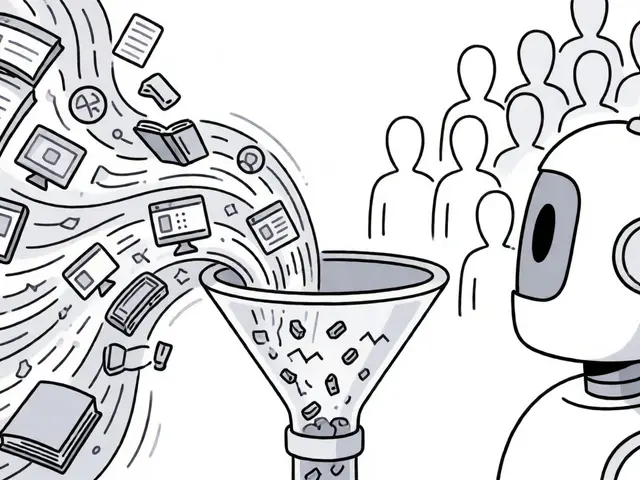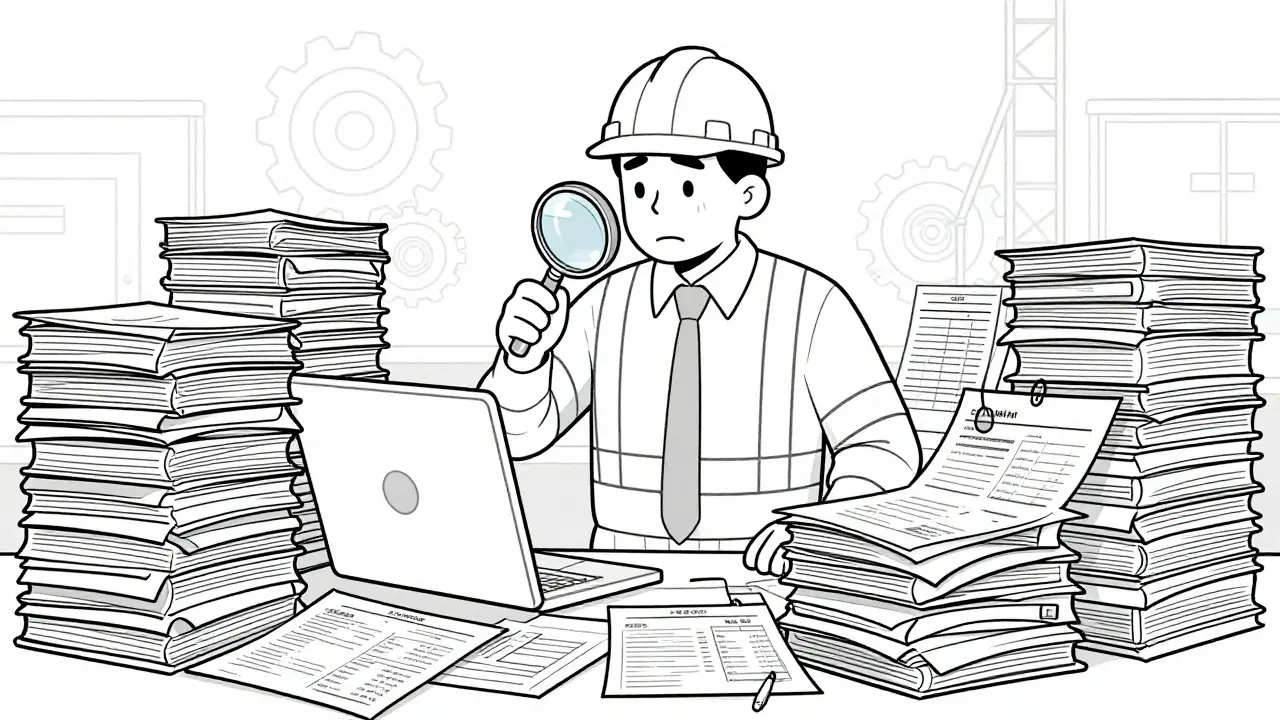
Imagine walking onto a massive construction site or stepping into a nuclear facility. The air is thick with activity, but beneath the noise lies a mountain of paperwork. Incident logs, maintenance records, safety regulations from OSHA, and vendor-specific manuals sit in digital silos, mostly locked away in PDFs or free-text entries. For decades, human experts have manually sifted through this data to keep people safe. Now, Large Language Models (LLMs) are advanced artificial intelligence systems capable of understanding, generating, and analyzing human language, changing how these critical safety checks happen.
The promise is huge: instead of spending hours searching for a specific clause in a 500-page regulatory document, a safety officer can ask a question and get an instant, precise answer. But there’s a catch. In regulated industries-like healthcare, defense, civil nuclear operations, and construction-you cannot afford mistakes. A wrong answer isn’t just an inconvenience; it can cost lives. So, how do we deploy these powerful tools without compromising safety? Let’s look at the real-world applications, the hard constraints, and the frameworks that make it possible.
Why Traditional Tools Fail in Safety Management
To understand why LLMs are necessary, you first have to see what they replace. Most industrial sites operate on legacy systems. Think about a power plant that has been running for thirty years. Every time a valve leaks or a worker trips, someone writes it down. Often, this is done in free text fields within software that wasn’t designed for analysis. You end up with hundreds of thousands of entries containing acronyms, slang, and inconsistent formatting.
Traditional keyword search fails here. If one technician writes "hydraulic pressure drop" and another writes "low fluid force," a basic search tool won’t connect them. This creates blind spots. Hazardous patterns hide in plain sight because the data is unstructured and fragmented across different departments. Humans are great at spotting these patterns, but they are slow and prone to fatigue. LLMs excel at finding semantic connections-the meaning behind the words-allowing them to aggregate insights from decades of scattered records instantly.
Core Safety Use Cases in Regulated Sectors
The application of LLMs in safety isn't theoretical anymore. It’s happening right now in high-stakes environments. Here are the primary ways these models are being used to protect workers and ensure compliance.
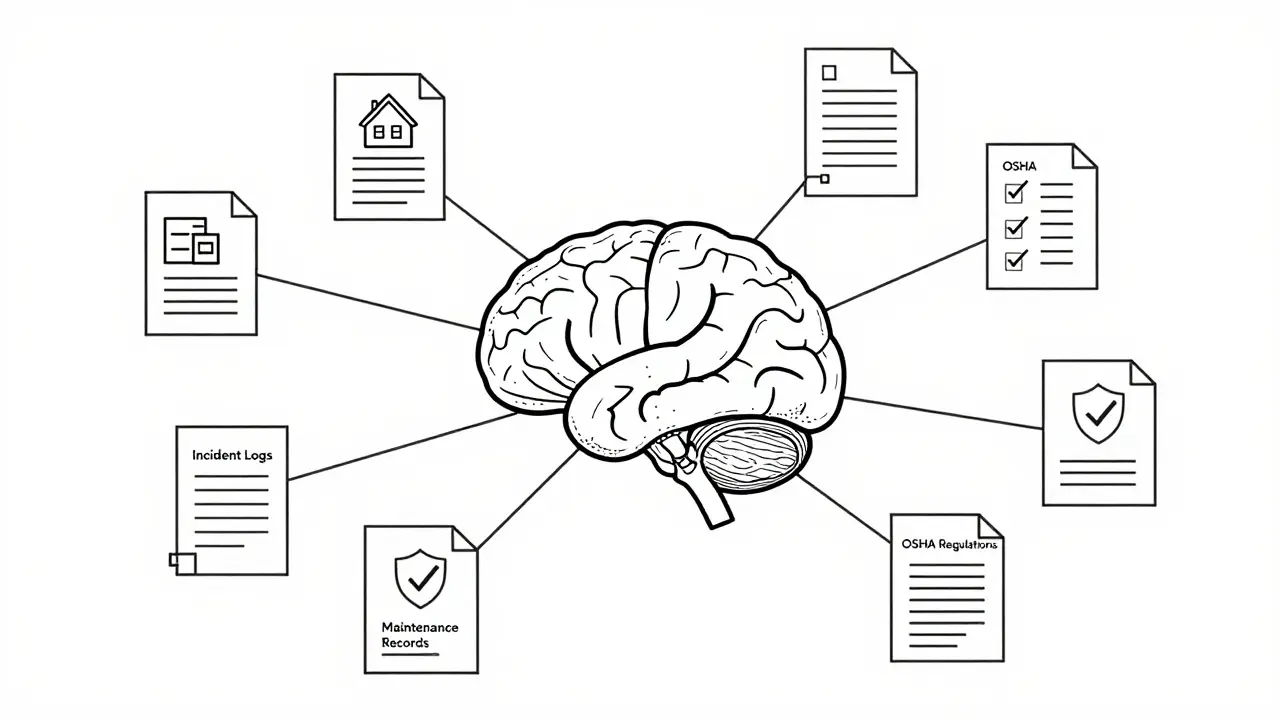
- Regulatory Information Extraction: Regulations change constantly. The Construction Safety Query Assistant (CSQA) is a specialized system leveraging LLMs to extract and interpret complex safety regulations like those from OSHA. Instead of reading the entire code, managers can query the system for specific requirements related to scaffolding or electrical work. The LLM provides contextually accurate answers, reducing the risk of non-compliance due to outdated knowledge.
- Incident Log Analysis: By analyzing historical incident reports, LLMs can identify recurring hazards before they cause harm. For example, if multiple reports mention "slippery surfaces near Zone B" over six months, the model flags this as a systemic issue requiring engineering controls, not just more caution signs.
- Maintenance Record Review: In aviation or nuclear energy, maintenance logs are critical. LLMs can cross-reference repair histories with manufacturer guidelines to predict potential failures. They read the technical manuals and compare them against the actual work performed by technicians, highlighting any deviations.
- Virtual Safety Officers: Emerging research tests LLMs as virtual assistants in chemical laboratories. Students and researchers can query the model about handling dangerous compounds. The goal is to provide immediate, accurate safety advice, acting as a second layer of verification alongside human supervision.
The Security Dilemma: Public vs. Private Models
Here is where things get tricky. The most powerful LLMs available today, such as GPT-4 is a state-of-the-art large language model developed by OpenAI known for its advanced reasoning capabilities, Google’s Gemini, and Microsoft Copilot, are hosted on cloud servers operated by third parties. To use them, you send your data to their servers.
In a marketing department, this might be fine. In the defense sector or civil nuclear industry, it is unacceptable. Sending classified operational data or sensitive patient health information to a public API violates strict privacy laws and security protocols. This data exposure is a fundamental constraint. If you leak proprietary design schematics or confidential employee injury records, the legal and reputational damage is irreversible.
This has driven a surge in interest toward open-source models. Models like Llama or Mistral can be hosted on-premise, within your own secure firewalls. While they may sometimes lag slightly behind the top-tier commercial models in general creativity, they offer control. You can fine-tune them on your specific dataset without ever sending that data outside your network. For regulated industries, the trade-off often favors local hosting over raw performance.
Three Principles for Regulatory-Grade AI
You can’t just plug an LLM into a safety system and hope for the best. Deploying AI in regulated environments requires adherence to three core principles. Without these, the technology is too risky to use.
- No-BS (Explainability and Accuracy): Regulators demand transparency. If an AI suggests a safety protocol, it must cite its source. Hallucinations-where the model makes up facts-are fatal in safety contexts. The system must provide verifiable references to the original documents, allowing human experts to validate the output quickly.
- No Data Sharing (Privacy and Security): As mentioned, data sovereignty is key. Whether using private clouds or on-premise servers, the architecture must guarantee that sensitive operational data never leaves the controlled environment. Encryption and access controls must meet industry standards like HIPAA for healthcare or ITAR for defense.
- No Test Gaps (Rigorous Verification): You need rigorous testing frameworks. This means creating benchmark datasets of known safety questions and answers to test the model continuously. Tests should be public and verifiable within the organization, ensuring that the model performs consistently under various conditions. The European Union’s AI Act emphasizes this by treating AI as a product that requires safety validation throughout its lifecycle.
Implementation Challenges and Human Oversight
Even with the right principles, implementation is hard. One major hurdle is the "black box" nature of neural networks. It’s difficult to know exactly why a model made a certain decision. In safety-critical roles, this lack of interpretability causes friction with regulators who need clear audit trails.
Another challenge is bias. If the training data contains outdated or biased safety practices, the LLM will replicate them. For instance, if historical incident reports underreport injuries among certain demographics, the model might fail to recognize risks associated with those groups. Continuous monitoring and diverse training data are essential to mitigate this.
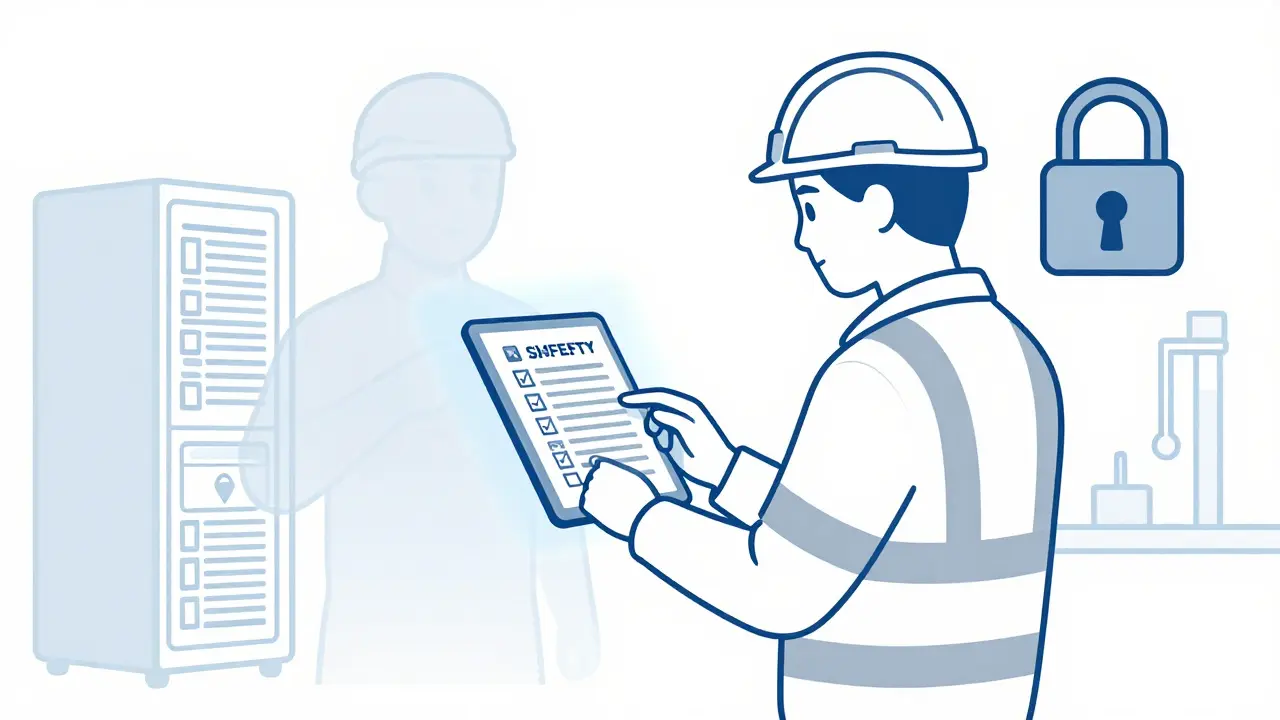
Most importantly, humans must remain in the loop. LLMs should be viewed as decision-support tools, not decision-makers. A safety officer uses the LLM to gather information and highlight risks, but the final judgment call rests with trained professionals who understand the physical context of the job site. The technology augments human expertise; it does not replace it.
| Feature | Public Cloud LLMs (e.g., GPT-4) | On-Premise/Open Source LLMs |
|---|---|---|
| Data Privacy | Low (Data leaves organization) | High (Data stays internal) |
| Performance | Very High | High (Improving rapidly) |
| Customization | Limited (Prompt engineering only) | Full (Fine-tuning allowed) |
| Cost Structure | Pay-per-use | High upfront infrastructure cost |
| Regulatory Fit | Low for classified/sensitive data | High for all regulated sectors |
The Future of AI in Safety Management
We are only scratching the surface. Future developments will likely focus on multimodal AI-systems that can read text, analyze images of accident scenes, and listen to audio recordings of site inspections simultaneously. This holistic approach will provide a much richer picture of workplace safety.
Additionally, continuous feedback loops will become standard. As safety officers correct the AI’s suggestions, the model learns and improves over time, becoming more tailored to the specific culture and risks of each organization. The goal is not just compliance, but a proactive safety culture where hazards are identified and mitigated before they result in incidents.
For leaders in regulated industries, the question is no longer whether to adopt AI, but how to do it safely. By prioritizing explainability, data security, and rigorous testing, organizations can harness the power of LLMs to build safer workplaces for everyone.
Can LLMs replace human safety officers?
No. LLMs are decision-support tools, not replacements for human judgment. They excel at processing information and identifying patterns, but they lack the contextual awareness and ethical responsibility required for final safety decisions. Human oversight remains critical in all regulated industries.
Is it safe to use public LLMs like ChatGPT for sensitive safety data?
Generally, no. Public LLMs require sending data to external servers, which poses significant privacy and security risks. In highly regulated sectors like defense, healthcare, or nuclear energy, using on-premise or private cloud solutions is recommended to prevent data leakage and comply with strict regulations.
How do LLMs handle hallucinations in safety contexts?
Hallucinations are mitigated through techniques like Retrieval-Augmented Generation (RAG), where the LLM is forced to base its answers on a verified database of documents. Additionally, rigorous testing frameworks and human-in-the-loop verification ensure that outputs are accurate before they influence safety protocols.
What industries benefit most from LLM safety use cases?
Industries with heavy documentation and high risk profiles benefit most. These include construction, civil nuclear operations, defense, healthcare, life sciences, and manufacturing. Any sector dealing with complex regulatory compliance and vast amounts of unstructured safety data can leverage LLMs effectively.
What is the Construction Safety Query Assistant (CSQA)?
The CSQA is a specialized system that uses LLMs to help construction professionals extract and understand safety regulations. It processes user queries in real-time, referencing indexed regulations like OSHA standards to provide precise, context-aware safety instructions, thereby improving compliance and worker protection.
 Artificial Intelligence