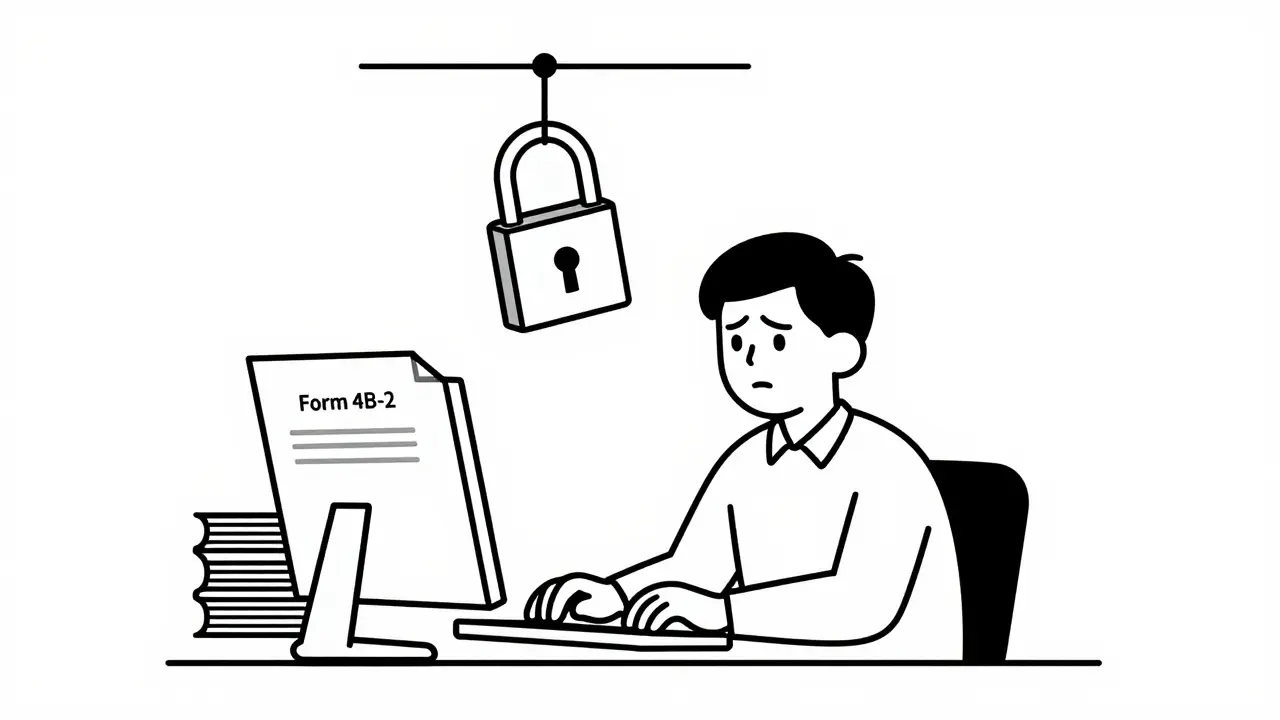
There is a specific kind of frustration that hits when you are in the zone, your fingers flying across the keyboard, and then-bam. A compliance check fails. Or worse, an email arrives from security asking why you didn’t fill out form 4B-2 before deploying. You stop. You context-switch. You wait. By the time you get back to coding, that flow state is gone, and it will take you twenty-three minutes just to find your rhythm again.
This is the central tension in modern software development. We need software governance, which is the set of policies, standards, and controls that ensure security, compliance, and quality in software delivery. But we also need speed. The industry term for this speed is developer velocity, defined by the Agile Alliance as the total effort estimates associated with user stories completed during an iteration.
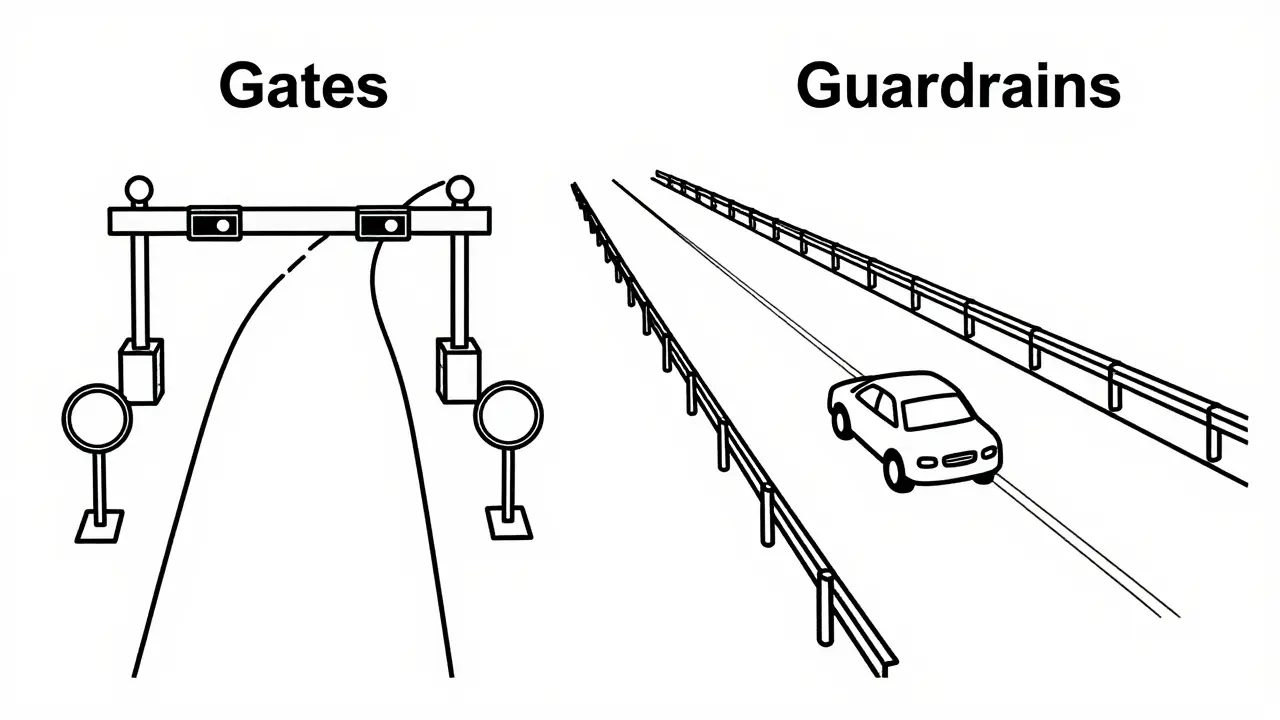
For years, organizations treated these two goals as enemies. You either had rigid control (slow, safe) or wild west innovation (fast, risky). That binary is dead. In 2026, the expectation is different. Governance should not be a gatekeeper; it should be a guide rail. It should help developers move faster by removing ambiguity and automating checks. If your governance process feels like a tax on productivity, you are doing it wrong.
The Cost of Poor Communication
Why does this matter so much? Because bad governance communication has a real price tag. According to data from Entelligence.ai’s Q3 2024 survey, 78% of platform engineers spend 15 to 20 hours every week just handling manual configuration requests. That is half a work week lost per engineer, every single week, to administrative friction. Meanwhile, 63% of developers cite inconsistent enforcement of rules as their biggest workflow disruptor.
When governance is communicated poorly, it creates what Nicole Lazzaro, founder of Experience Dynamics, calls "psychological reactance." When people feel restricted without understanding why, they resist. Her research shows that framing governance purely as restriction can reduce compliance by up to 40%. Developers aren’t trying to break the rules; they are trying to ship features. If the rules feel arbitrary or opaque, they will find ways around them, often creating shadow IT systems that are even harder to secure.
The alternative is clear. Organizations that master the balance between control and speed see tangible business results. McKinsey reported in 2023 that companies excelling in developer velocity achieve 2.3x higher business performance metrics than their peers. This isn’t about coding faster; it’s about reducing the drag caused by poor processes.
Dos: How to Embed Governance in Flow
To keep velocity high while maintaining strict standards, you have to change how you communicate and enforce rules. Here are the proven strategies that top-performing teams use.
- Do build "paved paths" instead of gates. The concept of a paved path, championed by platform leaders like David McKay at CircleCI, means creating pre-approved configurations that make the right choice the easiest choice. Instead of forcing a developer to choose between ten different database options and hoping they pick the compliant one, give them one button that spins up a secure, monitored instance. CircleCI’s enterprise clients report that this approach cuts new project onboarding time by 65%.
- Do explain the "why" behind every policy. Forrester’s Q2 2024 report found that organizations documenting the business impact of their policies see 3.2x higher adherence rates. Don’t just say "you must encrypt this data." Say, "we encrypt this data because a breach would cost us $X million and violate SEC regulations." When developers understand the risk, they become allies in security rather than adversaries.
- Do automate the boring stuff. Use tools like Terraform or CI/CD pipelines to enforce rules automatically. If a policy requires a specific log level, let the pipeline fix it or reject it instantly. Cloudomation’s 2024 benchmark report shows that manual governance processes lead to 4.7x more compliance violations than automated ones. Automation removes the human element of forgetfulness and resentment.
- Do offer self-service exceptions. Sometimes a team needs to deviate from the standard. Instead of making them write a ticket and wait three weeks, create a self-service workflow where they can request an exception with an automated risk assessment. Reddit’s r/devops community highlighted this as a top solution, with thousands of upvotes for advice on embedding scanners directly into IDEs to catch issues before a pull request is even created.
Don'ts: Common Traps That Kill Speed
Avoiding mistakes is just as important as adopting good practices. These are the anti-patterns that destroy trust and slow down delivery.
- Don't treat documentation as the primary interface. Stack Overflow’s 2024 Developer Survey revealed that 68% of developers prefer governance communicated through tooling and automation, not PDF manuals. If a developer has to read a 20-page wiki to know how to deploy, you have failed. The tool should tell them what to do, or prevent them from doing it wrong.
- Don't surprise teams with sudden policy changes. A viral post on Dev.to in January 2025 detailed how a sudden security policy update, announced without warning, caused three-week delays across multiple projects. Always provide transition periods. CircleCI’s 2025 release of "policy impact forecasting" allows teams to see how upcoming governance changes will affect their specific workflows before they go live, reducing pushback by 63%.
- Don't over-enforce without context. Bunnyshell’s 2024 survey found that 32% of developers feel frustrated by "governance overreach" when policies are applied too rigidly. Not every internal tool needs the same security clearance as a customer-facing payment processor. Apply risk-based governance. Tailor the controls to the sensitivity of the asset.
- Don't ignore feedback loops. Google’s 2023 SRE book update recommends allocating 15-20% of platform team time to governance communication and improvement. If you implement a rule and nobody talks about it, you don’t know if it’s working. Hold "governance office hours" where developers can discuss pain points. High-velocity organizations adopt this practice at a rate of 62%, according to McKinsey.
The Role of Platform Engineering
The rise of platform engineering, a discipline focused on building internal developer platforms that abstract away infrastructure complexity, is the structural answer to this problem. Companies like Netflix and Spotify pioneered internal developer platforms (IDPs) that allow teams to work autonomously while staying within organizational boundaries.
In 2026, the market for platform engineering solutions is booming, growing from $1.2 billion in 2023 to $1.8 billion in 2024, according to Gartner. Tools like Backstage, Harness, and Humanitec are becoming standard. These platforms don’t just manage servers; they manage expectations. They present governance as a feature, not a bug.
Consider the difference in approval cycles. Traditional waterfall methodologies required sign-offs at each phase, causing 2-3 week delays per project, per a 2022 McKinsey study. Modern platform engineering approaches using self-service portals with embedded governance reduce those approval cycles to under 48 hours. The shift is from "ask permission" to "inform and proceed," backed by automated safety nets.
| Feature | Traditional Manual Governance | Modern Platform Engineering |
|---|---|---|
| Approval Time | 2-3 weeks per phase | Under 48 hours |
| Compliance Violations | 4.7x higher rate | Automated enforcement reduces errors |
| Developer Satisfaction | Low (high friction) | 28% higher scores |
| Primary Interface | Email, Tickets, Docs | Self-Service Portals, IDE Plugins |
| Onboarding Speed | Slow, variable | 65% faster via paved paths |
Future Trends: AI and Observable Outcomes
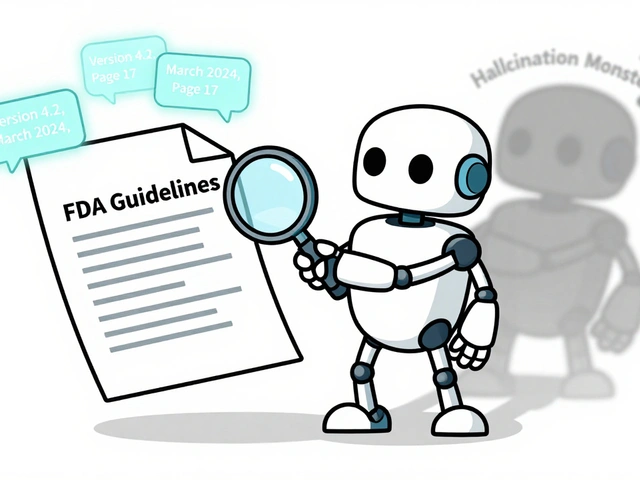
We are moving toward a future where governance is invisible until it matters. The Platform Engineering Consortium formalized a best practice framework in Q2 2025 that emphasizes communicating governance through "observable outcomes" rather than abstract rules. Instead of telling a developer "do not use library X," the system shows them "library X introduces vulnerability Y, here is a safer alternative Z." GitHub’s 2025 roadmap includes "policy explainers" powered by Copilot, which provide contextual rationale based on specific code changes. Imagine writing a function and having an AI assistant gently suggest, "Hey, this looks like it might bypass our audit trail. Want me to add the logging wrapper?" This shifts the dynamic from policing to assisting. However, challenges remain. The 2025 State of Platform Engineering survey cites AI-generated code governance as a top concern for 72% of platform engineers. As AI writes more code, we need new ways to verify that the generated output meets our governance standards without slowing down the generation process itself. This will require tighter integration between AI models and governance policies, ensuring that the "guardrails" are baked into the model’s instructions, not just checked after the fact.
Practical Next Steps for Your Team
If you want to start improving your governance communication today, focus on these immediate actions:
- Audit your current friction points. Ask your developers: "What is the most annoying part of our compliance process?" Listen to the answers. Often, the biggest blockers are simple things like unclear documentation or slow review cycles.
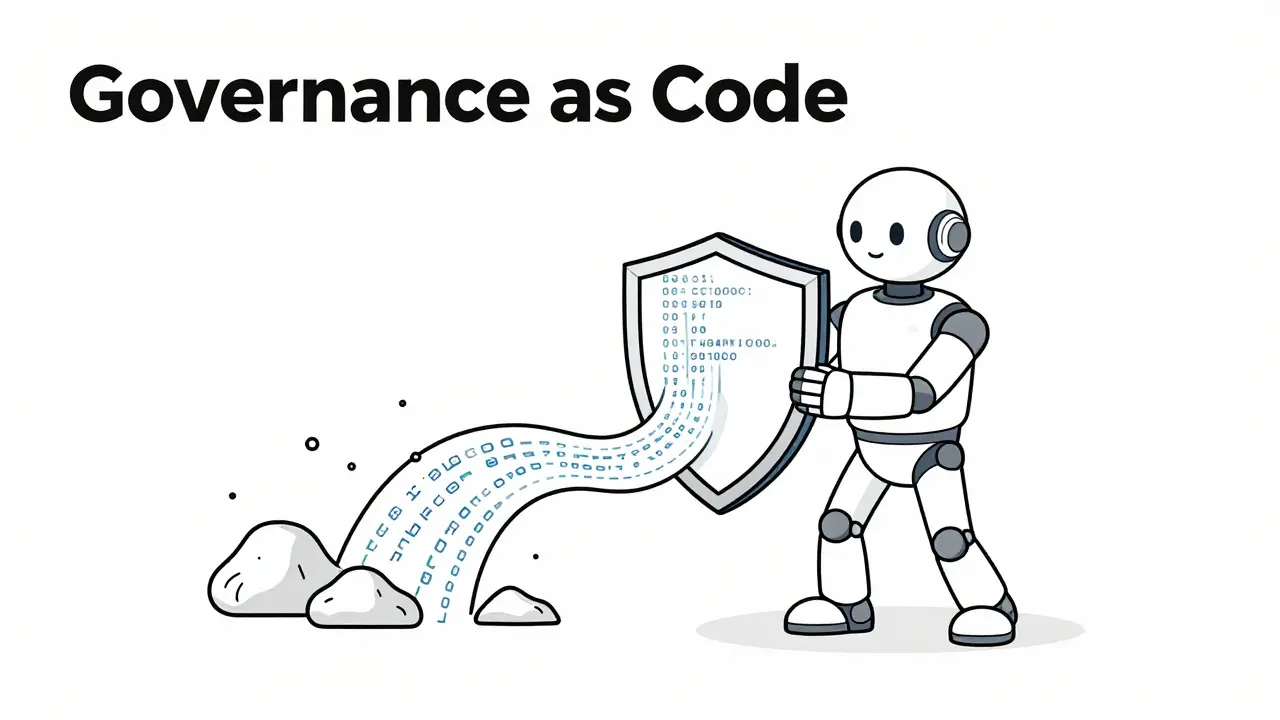
- Implement "Governance as Code". Move policies into version-controlled files. Use tools like Open Policy Agent (OPA) or CircleCI’s job-level policy enforcement to apply rules automatically. This ensures consistency and transparency.
- Create a feedback loop. Establish a monthly forum where platform teams and development teams discuss governance pain points. Use this data to refine your policies. If a rule is rarely violated, maybe it’s unnecessary. If it’s constantly worked around, maybe it’s broken.
- Train your platform engineers in empathy. Technical skills are not enough. Platform teams need to understand the psychological impact of their decisions. Forrester’s analysis shows that training in change management and technical writing leads to 3.5x higher governance adoption rates.
Governance doesn’t have to be the enemy of speed. In fact, when done right, it is the foundation of sustainable speed. By treating developers as partners, automating the mundane, and explaining the rationale behind every rule, you can create an environment where safety and velocity reinforce each other. The goal is not to control every line of code, but to create a system where the right thing is the easy thing.
How do I measure if my governance is killing velocity?
Look at your deployment frequency and lead time for changes. If these metrics drop significantly after introducing new governance rules, you may have added too much friction. Also, track the number of manual tickets related to compliance. A high volume indicates that governance is not automated or clearly communicated. Finally, survey your developers about their perceived friction. If more than 30% report that governance slows them down, you need to rethink your approach.
What is the difference between gates and guardrails?
Gates are checkpoints that stop progress until a human approves it. They create bottlenecks and delay delivery. Guardrails are automated constraints that prevent unsafe actions but allow free movement within safe boundaries. For example, a gate might require a manager to approve every cloud server creation. A guardrail would automatically block the creation of a server in a non-compliant region but allow instant creation in approved regions. Guardrails enable autonomy; gates enforce dependency.
How can I get buy-in from developers for new governance policies?
Involve developers in the design process. Before rolling out a new policy, ask for their input on potential pitfalls. Explain the "why" behind the rule, focusing on business risks and benefits rather than just compliance checkboxes. Make the compliant path the easiest path by automating the implementation. If developers see that the new policy saves them time or prevents late-night fires, they will support it.
Is "Governance as Code" suitable for small teams?
Yes, absolutely. While large enterprises often drive the trend, small teams benefit greatly from codifying their standards. It ensures consistency as the team grows and reduces cognitive load. You don’t need complex enterprise tools to start; simple scripts in your CI/CD pipeline that check for basic security headers or dependency vulnerabilities are a form of governance as code. It scales with you.
How does AI impact software governance in 2026?
AI is changing governance from reactive to proactive. Instead of scanning code after it’s written, AI assistants can suggest compliant code patterns as developers type. However, it also introduces new challenges, such as verifying that AI-generated code meets security standards. Organizations are now integrating governance policies directly into AI prompts and using AI to explain policy violations in plain language, making governance more accessible and less frustrating.
 Artificial Intelligence