You’ve probably felt it in your IDE lately. You type a prompt, hit enter, and code appears. But here is the real question: how much of that process should you actually control? As we move through mid-2026, developers are no longer just asking if AI can help them code. They are arguing about *how* it helps. On one side, you have vibe coding, where you stay in the driver’s seat, chatting with an assistant to shape ideas on the fly. On the other, you have Agentic Systems that operate with high autonomy, planning and executing complex tasks with minimal human input. The choice between these two isn't just technical; it changes how you work, what you build, and even how fast you burn out.
Choosing the wrong level of autonomy for your project can lead to wasted time, buggy production releases, or creative stagnation. If you treat a simple prototype like a massive enterprise refactor, you’ll overcomplicate things. If you hand a critical legacy migration to a chatbot without guardrails, you might break everything. This guide breaks down exactly when to use which approach, based on real-world data from early 2026.
The Core Difference: Conversation vs. Execution
To pick the right tool, you first need to understand what they actually do. These aren’t just different interfaces; they are fundamentally different architectures.
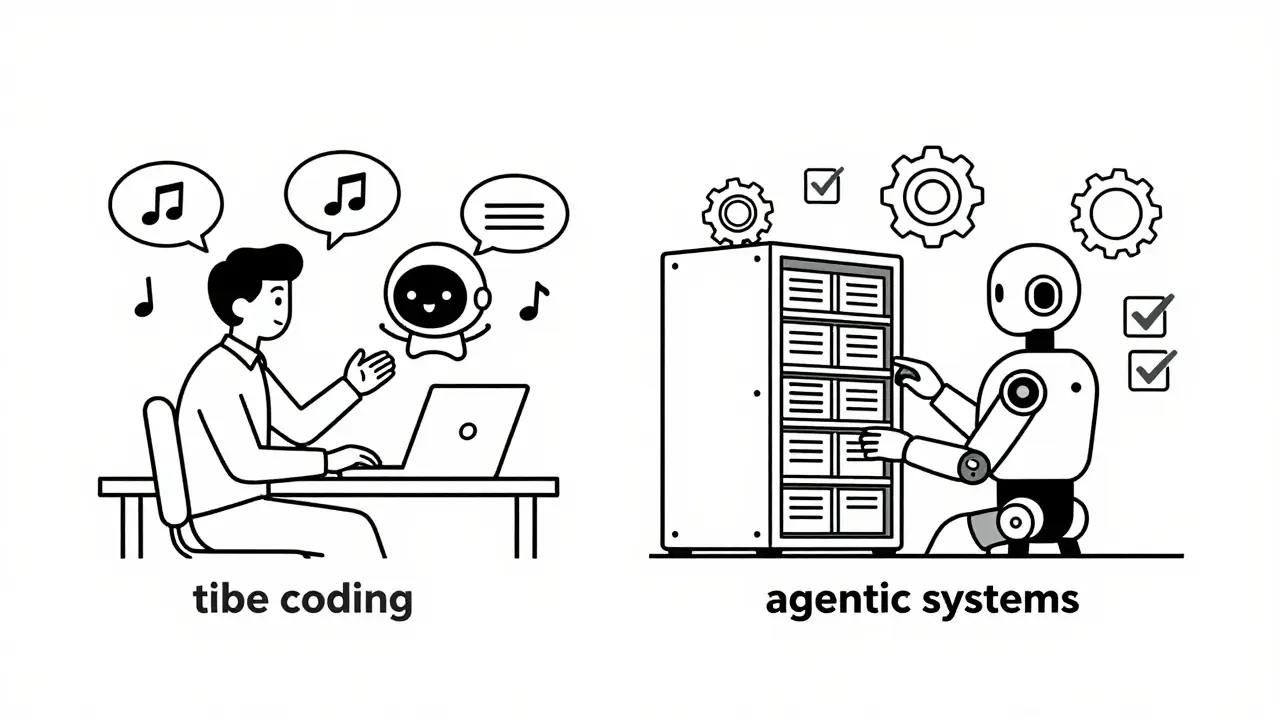
Vibe Coding is a human-in-the-loop paradigm where developers interact conversationally with AI assistants to generate code snippets, debug errors, and explore ideas. Think of tools like GitHub Copilot or Cursor. You provide the context, the intent, and the direction. The AI suggests, but you decide. It feels like having a brilliant junior developer sitting next to you who types fast but needs constant guidance. According to Microsoft’s internal studies from 2024, this approach improved coding efficiency by 55% because it blends creativity with productivity. You are vibing with the machine.
In contrast, Agentic Coding uses autonomous AI agents that plan, execute, test, and iterate on software tasks with minimal human intervention. Tools like Devin 2.0 or OpenDevin don’t just suggest code; they take a goal ("Refactor this Java module to Kotlin") and go to town. They break the task into subtasks, write the code, run the tests, fix the failures, and commit the changes. A 2025 arXiv paper by Sapkota et al. highlights that while vibe coding relies on continuous steering, agentic systems rely on goal-driven execution. One is a co-pilot; the other is an autopilot.
| Feature | Vibe Coding | Agentic Systems |
|---|---|---|
| Autonomy Level | Moderate (Human-in-the-loop) | High (Goal-driven) |
| Primary Use Case | Rapid prototyping, learning, ideation | Large-scale refactoring, CI/CD maintenance |
| Response Time | 2-5 seconds | Minutes to hours (depending on complexity) |
| Risk Profile | Low (Immediate human review) | Higher (Risk of silent failures) |
| Infrastructure Needs | Standard workstation (8GB+ RAM) | Robust setup (16GB+ RAM, GPU acceleration) |
When Vibe Coding Wins: Speed and Creativity
If you are building something new from scratch, vibe coding is usually your best friend. Why? Because it keeps you in the flow. When you are brainstorming a feature or trying to figure out why a CSS grid is breaking, you don’t want to wait for an agent to plan its attack. You want immediate feedback.
Data from Sourcedesk.io analyzing 500 beginner projects shows a 92% success rate for simple CRUD applications built with vibe coding. That is huge. It means if you know basic programming concepts, you can move from concept to running demo in under 30 minutes. I’ve seen developers build working MVPs in two hours that would have taken two days previously. The barrier to entry is incredibly low. You don’t need to understand system architecture deeply; you just need to be able to describe what you want clearly.
However, there is a catch. Vibe coding tends to produce "spaghetti code" if you aren’t careful. Apiiro.com’s analysis found that vibe-coded projects often require 30-40% rework before they are production-ready. The code works, but it might not be clean, scalable, or well-documented. This is fine for prototypes, but dangerous for long-term products. Also, Dr. Sarah Chen from Microsoft Research warns that this ease of use can create "black box applications" where creators lack understanding of the underlying code, leading to maintenance nightmares later.
When Agentic Systems Win: Scale and Consistency
Now, imagine you have a legacy codebase with 10,000 lines of outdated JavaScript that needs to be migrated to TypeScript. Or perhaps you need to update dependencies across fifty microservices. Doing this manually is soul-crushing. Doing it with vibe coding is tedious because you still have to approve every single change. This is where agentic systems shine.
An enterprise case study from Apiiro.com in late 2025 showed that agentic coding handled codebase modifications across 10,000+ lines with 78% accuracy, compared to just 43% for vibe coding approaches. Agents like Devin 2.0 use specialized planning modules to decompose these massive tasks. They don’t get tired. They don’t lose focus. They can handle repetitive, high-volume tasks with a consistency humans simply cannot match.
But you pay for this power with complexity and risk. Agentic systems demand more infrastructure-often 16GB+ RAM and GPU acceleration-and cost more, typically $29-$99/month depending on usage. More importantly, they carry a higher risk of "silent failures." Rocket.new’s incident analysis found that 37% of production issues in early agentic implementations were due to incorrect implementations proceeding without detection until later stages. An agent might solve a bug in one place but introduce a race condition in another, and if you aren’t watching closely, it slips through.
The Hybrid Approach: The "Autonomy Dial"
So, do you have to choose one forever? No. The smartest teams in 2026 are using both. In fact, Gartner forecasts that 68% of development teams will adopt a hybrid pipeline by the end of this year. The pattern is simple: human-prompted → agent-executed → human-reviewed.
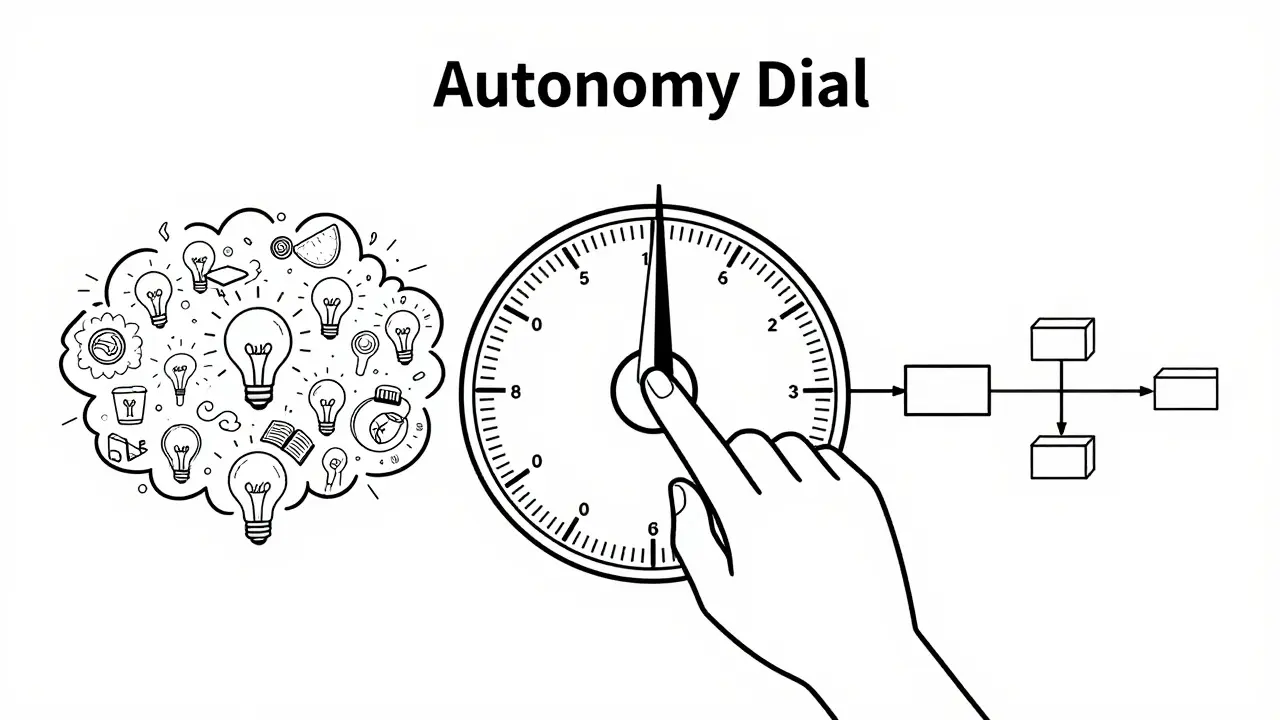
This hybrid model leverages the strengths of each. You use vibe coding to define the requirements, sketch the architecture, and write the initial prompts. Then, you hand those clear instructions to an agentic system to execute the heavy lifting. Finally, you step back in as the reviewer to ensure quality and security. GitHub’s January 2026 release of Copilot Agent introduced an "autonomy dial" feature that lets you adjust this balance from 0% to 100% based on task criticality. For low-risk tasks, you crank the autonomy up. For critical infrastructure, you keep it low.
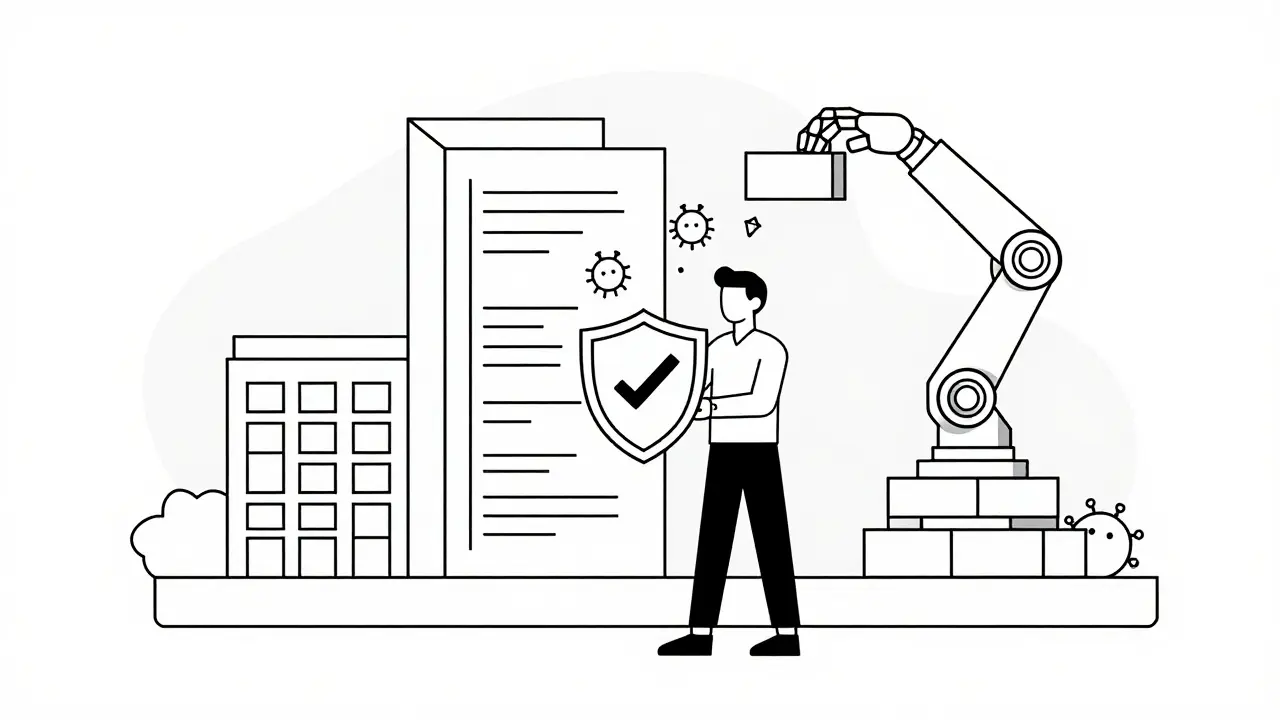
Forrester’s Mark Grannan notes that over-reliance on fully autonomous coding without proper oversight contributed to 22% of production incidents in Q4 2025. The key is to implement "autonomy gates." These are checkpoints where the agent must seek human approval before proceeding to critical decision points. This prevents the "black box" problem while still saving you dozens of hours of manual work.
Practical Tips for Implementation
If you are ready to integrate these tools into your workflow, start with these practical steps:
- Establish Prompt Hygiene: For vibe coding, limit your prompts to clear, concise instructions (under 500 characters) with specific acceptance criteria. Vague prompts lead to vague code.
- Implement Validation Gates: For agentic systems, never let an agent push directly to production. Set up rigorous validation gates where agents must pass automated tests and peer reviews before merging.
- Match Tool to Task: Use vibe coding for greenfield projects, learning, and rapid prototyping. Use agentic systems for maintenance, refactoring, and large-scale migrations.
- Monitor Skill Atrophy: Microsoft’s internal studies show a 23% decline in low-level debugging proficiency among teams using high-autonomy agentic coding for six months or more. Make sure you and your team are still reading and understanding the code, not just generating it.
The future of coding isn’t about replacing developers. It’s about amplifying them. By choosing the right level of autonomy for each task, you can build faster, scale easier, and spend less time fighting syntax errors and more time solving real problems.
What is the main difference between vibe coding and agentic systems?
Vibe coding is a human-in-the-loop approach where you converse with an AI assistant to generate code snippets and explore ideas, keeping you in control of every step. Agentic systems are autonomous agents that take a high-level goal and independently plan, execute, test, and iterate on the code with minimal human intervention.
Which approach is better for beginners?
Vibe coding is significantly better for beginners. It has a lower barrier to entry, requiring only basic programming concepts, and provides immediate feedback. Studies show 78% of beginners report productivity gains within one week of using vibe coding tools like Cursor or GitHub Copilot.
Are agentic systems safe for production code?
They can be, but they require strict oversight. Agentic systems carry a higher risk of "silent failures" where bugs slip through undetected. To mitigate this, implement "autonomy gates" where the agent must seek human approval at critical decision points, and always enforce rigorous automated testing and code review processes before deployment.
How much does agentic coding cost compared to vibe coding?
Vibe coding tools often have lower entry costs, with many offering free tiers or affordable subscriptions (e.g., GitHub Copilot). Agentic systems typically cost more, ranging from $29 to $99 per month based on usage tiers, and may require more robust hardware infrastructure (16GB+ RAM, GPU acceleration) for local deployments.
What is the "hybrid approach" in AI coding?
The hybrid approach combines the strengths of both paradigms: using vibe coding for initial ideation, requirement definition, and creative exploration, then handing off execution to agentic systems for repetitive or large-scale tasks, followed by human review. This "human-prompted → agent-executed → human-reviewed" pipeline is predicted to be adopted by 68% of teams by 2026.
Do agentic systems replace developers?
No. Experts emphasize that neither approach replaces developer expertise. Agentic systems excel at execution and maintenance, but they struggle with ambiguous requirements and creative problem-solving. The role of the developer shifts towards defining goals, validating outputs, and managing the AI tools, rather than writing every line of code manually.
 Artificial Intelligence