
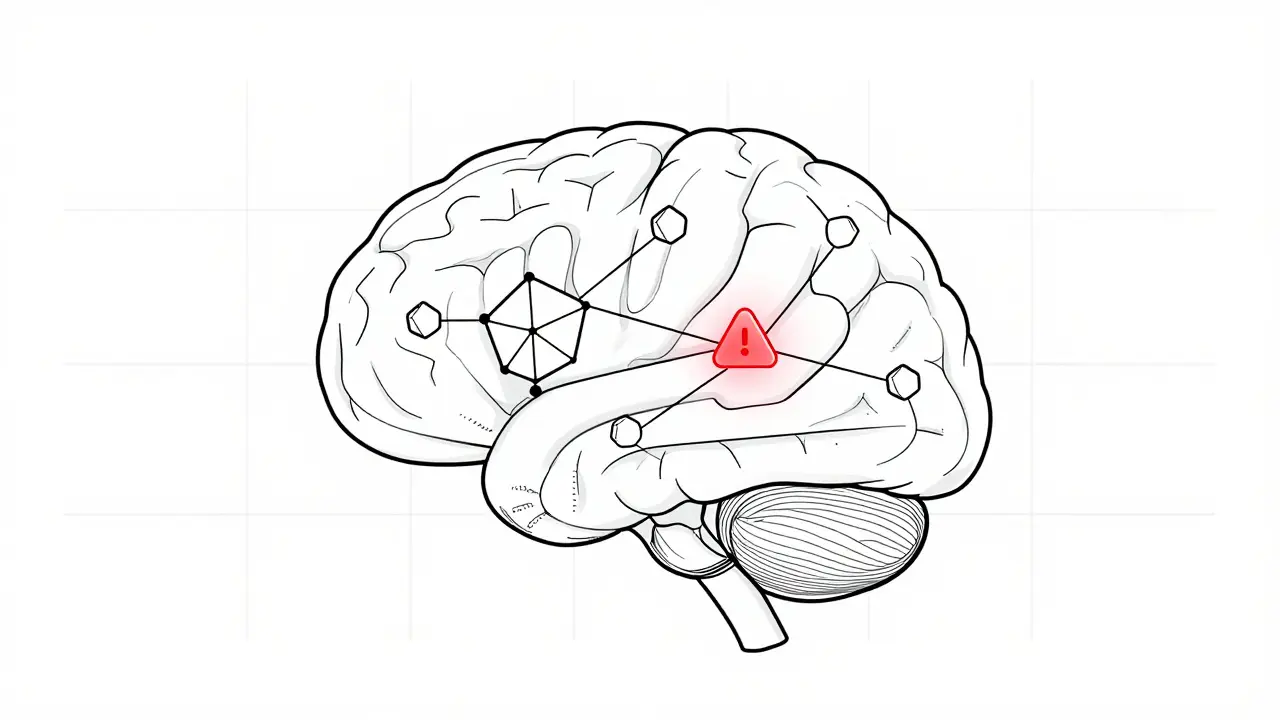
You’ve spent months building a Retrieval-Augmented Generation (RAG) system that feels like magic. Your app answers questions about internal company policies with pinpoint accuracy. But here’s the catch: you just stored your entire legal department’s confidential contracts into a vector database is a specialized storage system designed to handle high-dimensional vector data for AI applications. If you haven’t locked down those embeddings, you might be handing your competitors-or hackers-a key to your crown jewels.
In 2026, the threat landscape has shifted. It’s no longer just about SQL injection or weak passwords. The real danger lies in semantic leakage, where the mathematical relationships between vectors inadvertently expose sensitive information. A query meant to find “similar contract clauses” can reconstruct private customer identities if the underlying embeddings aren’t properly secured. This isn’t theoretical fluff; it’s the new frontier of data privacy.
The Hidden Danger of Semantic Leakage
Most developers think encryption solves everything. They encrypt the text before sending it to an embedding model, or they encrypt the resulting vectors at rest. That’s a good start, but it misses the core problem. Vector embeddings are numerical representations of meaning. When you store a document as a vector, you’re storing its semantic DNA.
Imagine you have two documents: one about a specific patient’s rare medical condition and another about a different patient with similar symptoms. In a traditional database, these are just separate rows. In a vector store, they sit close together in multi-dimensional space. An attacker doesn’t need to decrypt the whole database. They just need to probe the neighborhood of a known vector. By analyzing the proximity of other vectors, they can infer sensitive details about who else shares that diagnosis. This is what experts call embedding re-identification is the risk where vectors of private data can be matched to source records through sophisticated similarity attacks.
Dr. Sarah Chen from MIT’s AI Security Lab highlighted this in 2024, noting that seemingly innocuous vectors can be reverse-engineered. If your RAG system retrieves context based on similarity, it’s effectively broadcasting the relationships between your most private documents. Without specific controls, you’re not just storing data; you’re mapping your organization’s secrets in a way that’s surprisingly easy to trace.
Encryption Isn't Enough: The Performance Trap
Here’s the hard truth many teams discover too late: standard encryption breaks search functionality. You can’t run a cosine similarity calculation on encrypted blobs of data. So, what do engineers usually do? They decrypt the vectors, perform the search, and then re-encrypt the results. This introduces a massive window of vulnerability where the data is exposed in memory.
Some teams try format-preserving encryption to keep things searchable. We saw this in a real-world case from a Fortune 500 security engineer on Reddit. Their team spent six months trying to secure their customer service transcript store. They implemented custom similarity metrics on encrypted data, only to find that search accuracy dropped by 8.3%. That might sound small, but in a support context, missing the right answer means frustrated customers and lost revenue.
Then there’s the latency hit. Pure Storage’s benchmarks from mid-2024 showed that adding robust security layers to vector operations increased latency by 22% to 35%. For an enterprise handling billions of vectors, that overhead adds up quickly. You’re forced to choose between speed and safety, which is a losing proposition. The solution isn’t choosing one over the other; it’s using tools designed to handle both simultaneously.
Choosing the Right Secure Embedding Store
Not all vector databases are created equal when it comes to security. As of 2026, the market has matured enough that you can find platforms with built-in protections, but you still need to know what to look for. Here’s how the major players stack up:
| Platform | Key Security Feature | Isolation Method | Best For |
|---|---|---|---|
| MongoDB Vector Search | Field-level encryption with customer-managed keys (AWS KMS, Azure Key Vault) | Role-Based Access Control (RBAC) | Enterprises already using MongoDB ecosystems |
| Pinecone | Namespace isolation with fully isolated partitions | Multi-tenancy via namespaces | SaaS companies needing strict tenant separation |
| ChromaDB | Basic authentication (open-source version lacks enterprise features) | Minimal native isolation | Prototyping and non-sensitive development work | r>
| Weaviate | Robust RBAC and encryption options | Schema-based access controls | Complex applications requiring granular permissions |
If you’re dealing with highly regulated data like healthcare or finance, open-source solutions like ChromaDB often fall short without significant custom engineering. Pinecone’s namespace isolation is a standout feature because it ensures complete partition isolation. One tenant’s vectors are mathematically separated from another’s, preventing cross-tenant inference attacks. MongoDB’s integration with existing key management systems makes it easier for large organizations to maintain compliance without reinventing the wheel.
Seven Essential Security Practices for 2026
Technology alone won’t save you. You need a layered approach. Based on guidelines from the Vector Database Security Consortium and industry leaders like Privacera, here are the seven pillars you must implement:
- Data Encryption: Encrypt data both in transit (TLS 1.3) and at rest. Ensure you control the keys. If the vendor holds the keys, they can see your data.
- Strict Access Control: Implement least-privilege principles. Not every developer needs read access to production embeddings. Use Role-Based Access Control (RBAC) to limit who can query or modify the index.
- Anonymization Before Embedding: This is critical. Strip Personally Identifiable Information (PII) from the text before you generate the vector. If the PII never enters the embedding model, it can’t leak out through semantic proximity.
- Regular Auditing: Monitor query patterns. Sudden spikes in similarity searches or queries targeting specific vector neighborhoods can indicate reconnaissance.
- Embedding Validation: Use automated pipelines to scan generated vectors. Some advanced tools can detect if sensitive information was accidentally encoded during the embedding process.
- Secure Model Deployment: Host your embedding models in controlled environments. Don’t let untrusted code interact directly with your generation API.
- Incident Response Plan: Have a clear protocol for what happens if a breach occurs. Can you delete a specific vector? Remember, under GDPR’s “right to be forgotten,” you must ensure no residual information remains in the index or model weights.
Emerging Tech: Differential Privacy and Semantic Encryption
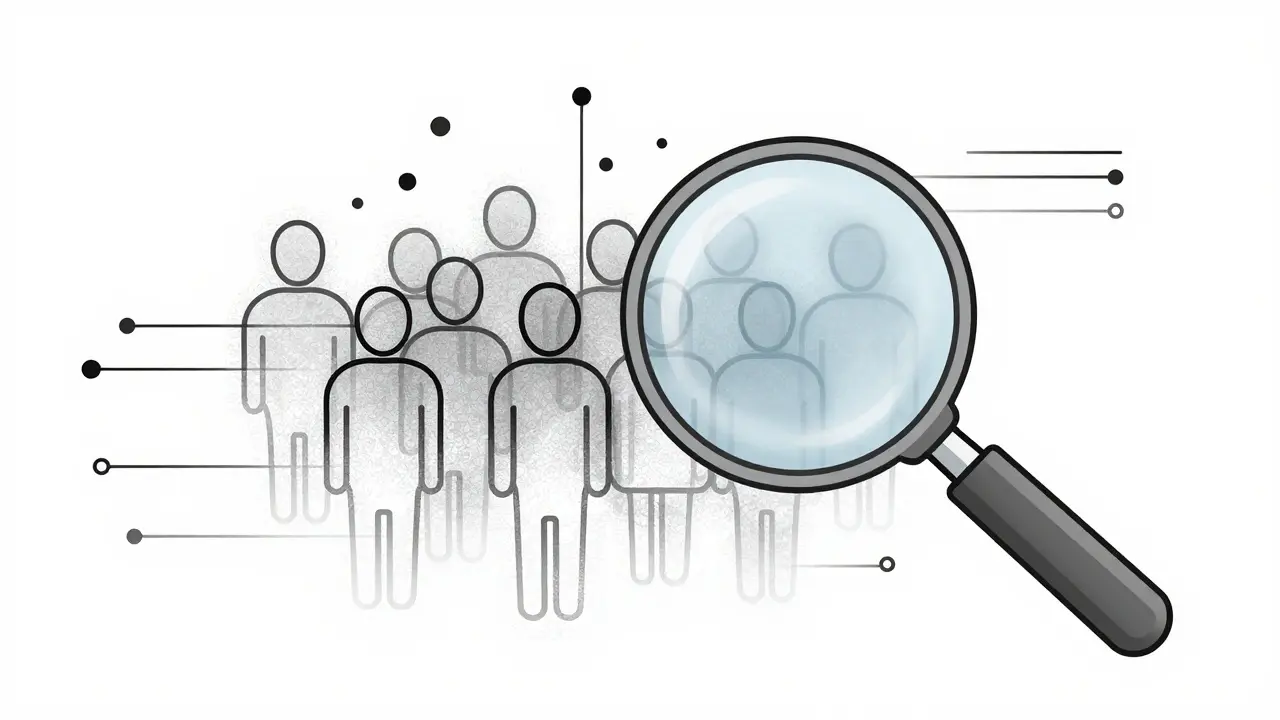
The industry is moving fast to solve the encryption-vs-search dilemma. In late 2024, Google Cloud introduced Differential Privacy for Vector Embeddings is a technique that adds statistical noise to embeddings to preserve privacy while maintaining search accuracy in Vertex AI. By adding carefully calculated noise to the vectors, they make it statistically impossible to identify individual records while preserving 92-95% of search accuracy. It’s a trade-off, but for many use cases, it’s acceptable.
MongoDB followed suit with “Semantic Encryption,” which attempts to maintain search functionality while keeping vectors encrypted. Early tests show a 15-20% performance penalty, but it eliminates the need to decrypt data in memory. These technologies are becoming standard expectations rather than nice-to-haves. If your current provider doesn’t offer something similar by 2027, you’ll likely face compliance hurdles.
Implementation Checklist for Teams
Ready to secure your store? Start with these actionable steps:
- Audit your ingestion pipeline: Where does the raw text come from? Add a PII-redaction step immediately before the embedding model.
- Rotate your keys: If you’re using AWS KMS or Azure Key Vault, set up automatic rotation schedules.
- Test for leakage: Try to reconstruct a known document by querying its nearest neighbors. If you can guess the content of adjacent vectors, your isolation is weak.
- Monitor latency: Keep an eye on query times after implementing security measures. If latency jumps above 35%, consider optimizing your indexing strategy (e.g., switching from HNSW to IVF-PQ for larger datasets).
- Train your team: Developers often treat vector databases like simple key-value stores. Educate them on the risks of semantic inference.
Securing vectorized private documents isn’t just an IT task; it’s a business imperative. With the European AI Act enforcing stricter rules on high-risk personal data processing, the cost of getting this wrong is higher than ever. Don’t wait for a breach to realize that your AI’s memory is also its biggest vulnerability.
What is semantic leakage in vector databases?
Semantic leakage occurs when the mathematical relationships between vector embeddings inadvertently reveal sensitive information. Even if the original text is encrypted, the proximity of vectors in multi-dimensional space can allow attackers to infer connections between private documents, such as identifying patients with similar medical conditions or linking corporate secrets.
Can I encrypt my vectors and still perform similarity searches?
Standard encryption prevents similarity searches because you cannot calculate distances between encrypted numbers. However, emerging technologies like Differential Privacy (adding noise to vectors) and Semantic Encryption (specialized algorithms that allow computation on encrypted data) are making this possible, though often with a slight performance trade-off.
Which vector database is best for HIPAA or GDPR compliance?
Platforms like MongoDB Vector Search and Pinecone offer robust compliance features, including field-level encryption, customer-managed keys, and strict namespace isolation. Open-source options like ChromaDB may require significant custom engineering to meet these standards. Always verify that the provider supports audit logging and data deletion capabilities required by regulations.
How much does securing vector embeddings impact performance?
Implementing comprehensive security measures typically increases latency by 22% to 35%, according to 2024 benchmarks. Techniques like Differential Privacy may reduce search accuracy slightly (by 5-8%) but maintain usability. The exact impact depends on your indexing strategy and the complexity of your encryption methods.
What is the "right to be forgotten" challenge in vector stores?
Under GDPR, users can request the deletion of their personal data. In vector databases, simply deleting a vector isn't always enough because the remaining vectors' positions were influenced by the deleted data during indexing. True deletion requires re-indexing or using techniques that ensure no residual semantic influence remains, which is computationally expensive.
 Artificial Intelligence



Patrick Dorion
July 5, 2026 AT 22:07It's wild how we treat vector stores like magic black boxes without thinking about the geometry of privacy. The idea that semantic proximity can leak PII is actually a pretty deep philosophical problem about how meaning is constructed in high-dimensional space. If you strip the identity from the text, do the vectors still hold the ghost of that person? Probably yes, because the relationships define the context. We need to stop treating data as just rows and start treating it as a landscape that can be mapped and exploited.
Marissa Haque
July 6, 2026 AT 23:37OMG this is literally terrifying!! 😱 I had no idea that encrypting the text wasn't enough!! Like... what?? How are hackers even doing this?! Is my company safe right now?! 🤯 I feel so exposed just reading this!! We really need to lock down our RAG systems ASAP before someone leaks our client list!! This article saved me from making a huge mistake!! Thank you so much for sharing this!! 💖✨
Keith Barker
July 7, 2026 AT 08:18encryption is an illusion anyway. the math doesn't care about your keys if the similarity metric remains constant. people worry about sql injection but ignore that cosine similarity on encrypted blobs is fundamentally broken unless you use homomorphic encryption which is too slow for real time. we are building castles on sand.
Lisa Puster
July 8, 2026 AT 17:25typical american tech bro post pretending to know security while ignoring the fact that most of these 'secure' databases are built by clueless startups who dont understand basic cryptography. i've seen pinecone implementations fail harder than this article suggests. its not about the tool its about the incompetence of the engineers using them. stop buying into the hype and learn actual crypto primitives instead of relying on vendor buzzwords like 'semantic encryption'. pathetic.
Joe Walters
July 9, 2026 AT 02:06lol imagine being worried about semantic leakage when your codebase is held together with duct tape and prayers. i spent 6 months debugging latency issues with chromadb and never once thought about hackers probing my vector neighborhood. probably because nobody cares enough to hack my startup. also typo alert: 'sequestial' timestamps? whatever man just encrypt it and move on. life is too short for overthinking.
Robert Barakat
July 10, 2026 AT 21:01The concept of deleting a vector under GDPR is philosophically troubling. When you remove one point from a manifold, the curvature of the remaining space has already been influenced by its presence. True erasure in a non-linear embedding space may be mathematically impossible without retraining the entire index. We are trying to apply linear legal frameworks to non-linear mathematical realities. It will never work cleanly.
Michael Richards
July 11, 2026 AT 16:15You're all missing the point. It's not about the database, it's about your ingestion pipeline. If you're sending raw PII into an embedding model, you're already dead. Stop blaming the storage layer and fix your data hygiene. Anonymize before you embed. That's step one. Step two is RBAC. Step three is audit logs. Anything else is just noise. Get your house in order before you worry about differential privacy.
Laura Davis
July 11, 2026 AT 20:16I hear you guys! It's super important to stay calm but also take action! Let's focus on what we can control like PII redaction! Don't let the fear paralyze you! We can build secure systems together! Just remember to rotate those keys and keep an eye on latency! You got this! 💪🔥
Lisa Nally
July 12, 2026 AT 21:34Actually, the term 'semantic leakage' is often misused here. What you're describing is more accurately termed 'embedding inversion' or 'membership inference attacks'. While dramatic, the risk is overstated for most general-purpose LLM embeddings due to the inherent dimensionality curse. However, for specialized fine-tuned models handling high-value proprietary data, the attack surface is indeed significant. One must differentiate between theoretical vulnerabilities and practical exploitability. Also, note that Pinecone's namespace isolation is technically multi-tenant partitioning, not cryptographic separation. Nuance matters.