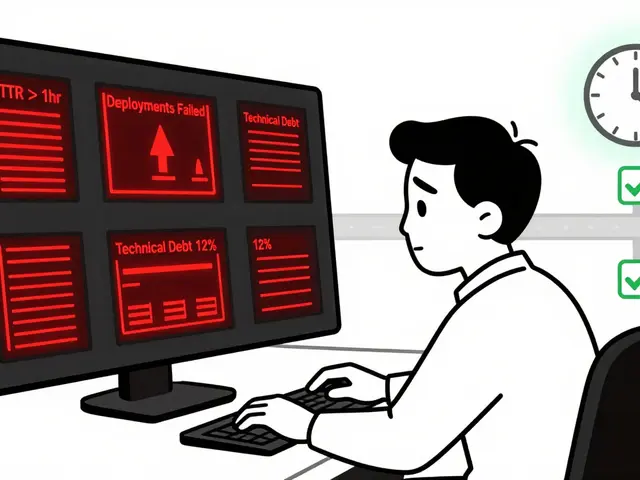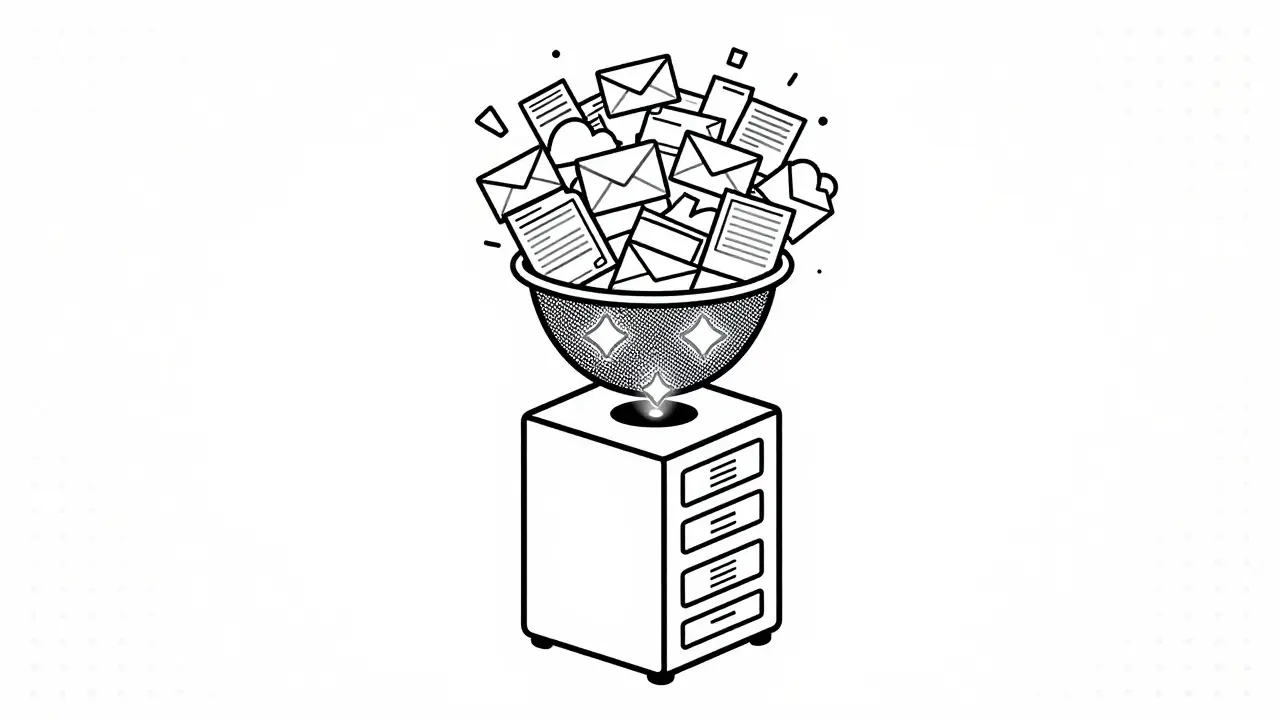
You are feeding your Generative AI is a type of artificial intelligence capable of creating new content, such as text, images, or code, based on patterns learned from training data. everything. Customer emails, medical records, proprietary code snippets. The logic seems sound: more data equals smarter models. But in 2026, that logic is a liability waiting to explode. Every byte of personal data you collect increases your attack surface, your regulatory risk, and your potential for catastrophic brand damage.
The old rule of big data was "collect it all, figure it out later." That era is over. Today, the most successful organizations are flipping the script. They are practicing Data Minimization is the principle of limiting data collection and processing to only what is strictly necessary for a specific purpose.. This isn't just about compliance with regulations like GDPR or CCPA. It is about building better, safer, and more efficient AI systems by removing the noise and protecting the signal. If you want to protect more while collecting less, you need to understand how to apply these strategies without crippling your model's performance.
Rethinking Data Minimization for AI Models
For years, privacy experts and AI engineers have been at odds. Privacy advocates say, "Delete what you don't need." AI engineers reply, "I need every pixel to train this vision model." This tension created a stalemate. However, recent frameworks, including analysis from the Information Policy Centre in late 2024, have clarified this conflict. Data minimization does not mean you cannot use large volumes of data. It means you must ensure that every piece of data serves a specific, necessary purpose for the intended outcome.
Think of it like cooking. You don't throw the entire vegetable bin into the soup just because you can. You chop exactly what you need for the flavor profile. In Generative AI Development is the process of designing, training, and deploying AI models that generate new content., this means asking hard questions before you start scraping databases. Do you really need the user's home address to power a customer service chatbot? Probably not. Do you need their order history? Maybe. Do you need their credit card number? Definitely not.
This contextual approach allows organizations to maintain robust, high-quality models while adhering to privacy principles. It shifts the focus from hoarding data to curating data. When you strip away the irrelevant, sensitive, or redundant information, you often find that your model trains faster and performs better because it isn't distracted by bias or noise hidden in unnecessary fields.
Technical Pillars: Anonymization and Differential Privacy
If you decide you do need personal data to achieve your business goals, you must transform it so it no longer identifies an individual. This is where technical strategies come into play. The first line of defense is Anonymization is the process of removing personally identifiable information from data sets so that individuals cannot be identified.. Simple techniques include generalization (changing "35 years old" to "30-40 age group") and randomization (shuffling non-critical attributes). These methods help maintain user privacy while still allowing for meaningful statistical analysis.
However, basic anonymization is often insufficient for modern AI threats. Re-identification attacks can link anonymous data back to individuals using auxiliary datasets. This is why Differential Privacy is a mathematical framework that adds calculated 'noise' to datasets to obscure individual identities while preserving aggregate statistical accuracy. has become the gold standard. By adding mathematical noise to your training data, you ensure that the output of your AI model does not reveal whether any specific individual's data was included in the training set.
Research indicates that implementing differential privacy can decrease the chances of data leakage significantly. Some studies suggest that adopting these privacy-preserving techniques can cut down the risk of data exposure during model training by up to 60%. This allows you to extract valuable insights from aggregated data without compromising the anonymity of individual contributors. It is a way to have your cake and eat it too-getting the benefits of big data analysis while keeping individual data points secure.
The Power of Synthetic Data Generation
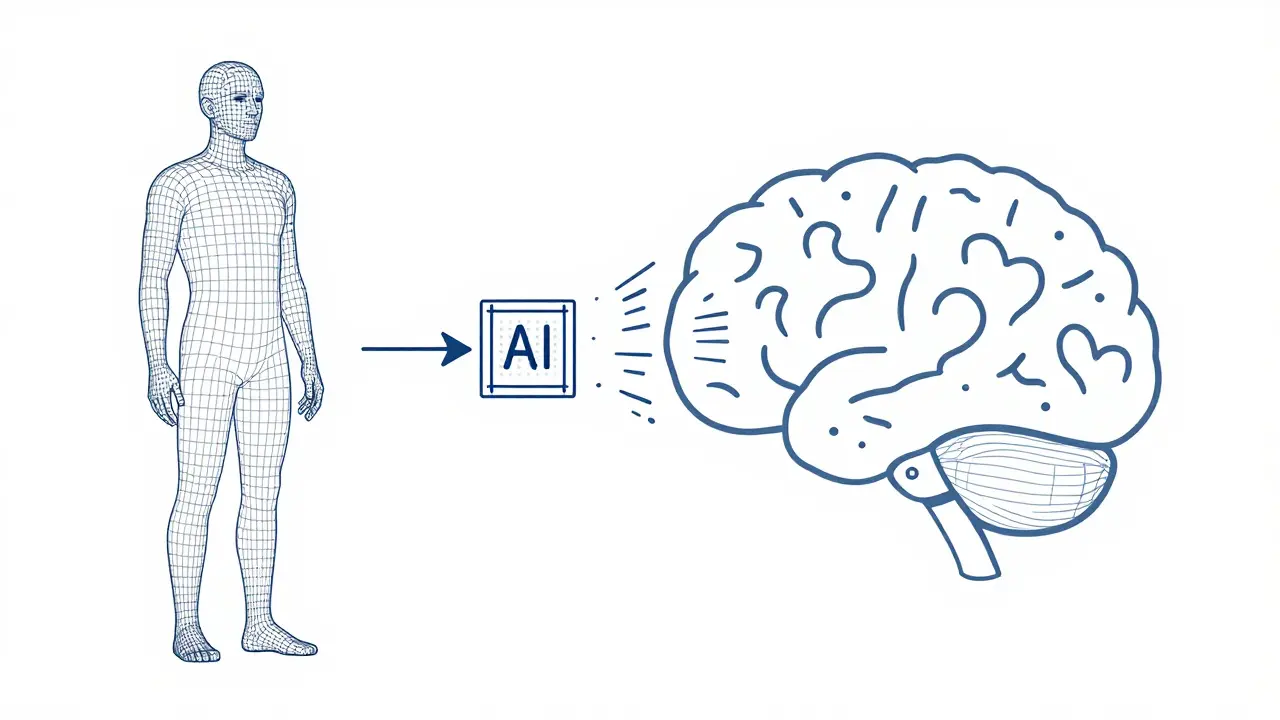
One of the most exciting developments in 2026 is the rise of Synthetic Data is artificially generated data that mimics the statistical properties of real-world data without containing actual personal information.. Instead of sharing or storing real customer records, organizations use generative AI to create fake but realistic datasets. These synthetic datasets preserve the statistical characteristics of the original data-such as correlations between variables and distribution patterns-but contain zero personally identifiable information (PII).
According to analysis by BigID, leveraging generative AI methods for data sharing can reduce the likelihood of privacy breaches by as much as 75%. Imagine a healthcare company wanting to share patient data with a research partner. Instead of navigating complex legal agreements and risking HIPAA violations, they generate a synthetic dataset. The researchers get accurate results; the patients remain completely anonymous. This enables seamless collaboration and information exchange among organizations without compromising confidentiality.
Synthetic data is also invaluable for testing. Developers can use it to stress-test their AI models against edge cases and rare scenarios without exposing real user data. It creates a safe sandbox environment where innovation can happen rapidly and securely.
Data Masking and Secure Development Environments
Even if your production data is minimized and anonymized, your development environment is often a weak link. Developers need realistic data to build and test features effectively. Using real production data in development stages is a major security risk. A single misconfigured database connection can leak terabytes of sensitive information.
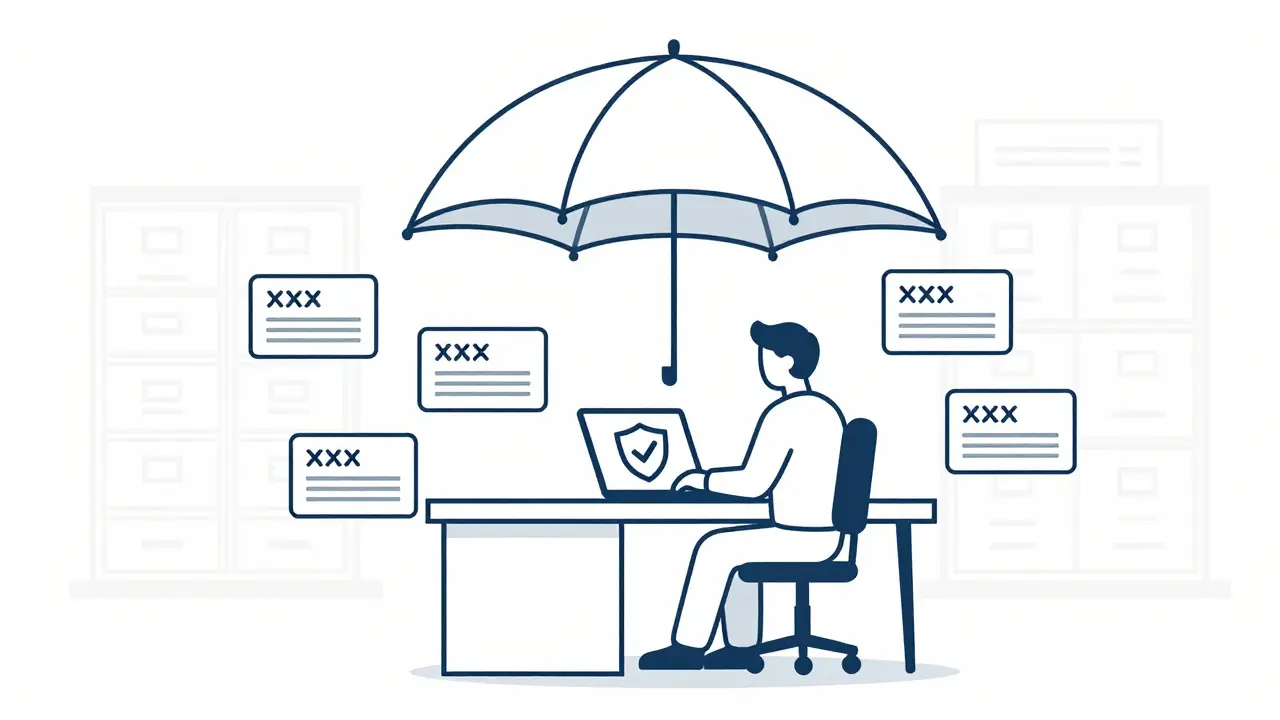
This is where Data Masking is the practice of concealing specific data within a database to protect sensitive information, often used in non-production environments. becomes essential. As recommended by Aviso's best practices guide, data masking should be standard procedure in non-production environments. This involves replacing sensitive characters with substitute characters or generating fake values that look real but aren't. For example, a credit card number might be masked as "XXXX-XXXX-XXXX-1234."
This approach allows development teams to work with realistic data scenarios without exposing actual sensitive information. It ensures that even if a developer's laptop is stolen or a staging server is hacked, the attacker gains nothing of value. Integrating data masking into your CI/CD pipeline ensures that privacy is automated, not optional.
Governance and Storage Limitation
Technology alone cannot solve the data minimization challenge. You need strong governance. Many organizations struggle with the dilemma of balancing data minimization with the hunger of AI tools. To manage this, you must implement a comprehensive Data Governance Framework is a set of policies, procedures, and standards that manage an organization's data assets throughout their lifecycle..
This framework should include clear data retention policies. Storage limitation is closely related to data minimization. It follows the principle of keeping data only as long as necessary. Personal and sensitive data held for too long quickly becomes excessive, inaccurate, or redundant. Effective data minimization serves as an enabler for many elements of a strong data security posture. If you delete data you no longer need, you cannot be breached for it.
Regular audits are crucial. You need to know what data you have, where it is, and why you have it. Maintaining accurate data inventories helps you identify stale data that should be erased. The International Association of Privacy Professionals (IAPP) emphasizes that fairness in model development is equally critical. Lawyers and technologists must work together to apply established standards to generative AI systems. This collaborative approach ensures that AI tools are built with security and privacy in mind from the outset.
| Technique | Primary Function | Best Use Case | Risk Reduction Impact |
|---|---|---|---|
| Differential Privacy | Adds mathematical noise to obscure individual identities | Training models on sensitive aggregated data | Up to 60% reduction in leakage risk |
| Synthetic Data | Generates artificial data mimicking real statistics | Cross-organizational sharing and testing | Up to 75% reduction in breach likelihood |
| Data Masking | Conceals sensitive fields in non-production envs | Development and QA testing phases | Prevents exposure in dev/staging leaks |
| Anonymization | Removes direct identifiers via generalization | Basic reporting and historical analysis | Moderate protection against re-identification |
Implementing Privacy-Enhancing Technologies (PETs)
Beyond basic minimization, you should employ Privacy-Enhancing Technologies (PETs) are technological solutions designed to limit the processing of personal data and enhance user privacy.. These include the methods mentioned above, as well as federated learning and homomorphic encryption. PETs allow organizations to process necessary personal data while maintaining strict privacy protections. They are critical mitigation strategies when data minimization alone is not enough to meet business requirements.
Building AI tools with security in mind from the outset is crucial. This means incorporating data protection measures into AI development processes and regularly auditing these tools. This approach to secure AI development mitigates risks associated with data retention while allowing organizations to benefit from AI innovations. It is not a one-time fix but an ongoing commitment to privacy principles.
Does data minimization hurt the performance of my Generative AI model?
Not necessarily. While reducing data volume can impact some models, removing irrelevant or noisy data often improves efficiency and reduces bias. Contextual minimization focuses on collecting only what is necessary for the specific task, ensuring high-quality inputs without the bloat of unnecessary personal information.
What is the difference between anonymization and pseudonymization?
Anonymization permanently removes identifying information so that the individual cannot be re-identified under any circumstances. Pseudonymization replaces identifiers with artificial labels, but the data can still be linked back to the individual using a separate key. Anonymized data is generally not considered personal data under laws like GDPR, whereas pseudonymized data still is.
How can I use synthetic data for training AI models?
You can use generative AI algorithms to analyze your real dataset and create a new, artificial dataset that mirrors its statistical properties. This synthetic data can then be used to train your models safely, as it contains no real personal information. This is particularly useful for sharing data with third parties or for testing edge cases.
Is differential privacy difficult to implement?
It requires careful tuning to balance privacy and utility. Adding too much noise can degrade model accuracy, while too little may not provide sufficient privacy guarantees. However, many modern AI libraries now offer built-in support for differential privacy, making implementation more accessible than in previous years.
Why is storage limitation important for AI companies?
Storage limitation ensures you only keep data as long as necessary. Holding data indefinitely increases the risk of breaches and regulatory fines. For AI companies, deleting stale data reduces the attack surface and ensures that models are trained on current, relevant information rather than outdated or redundant records.
 Artificial Intelligence