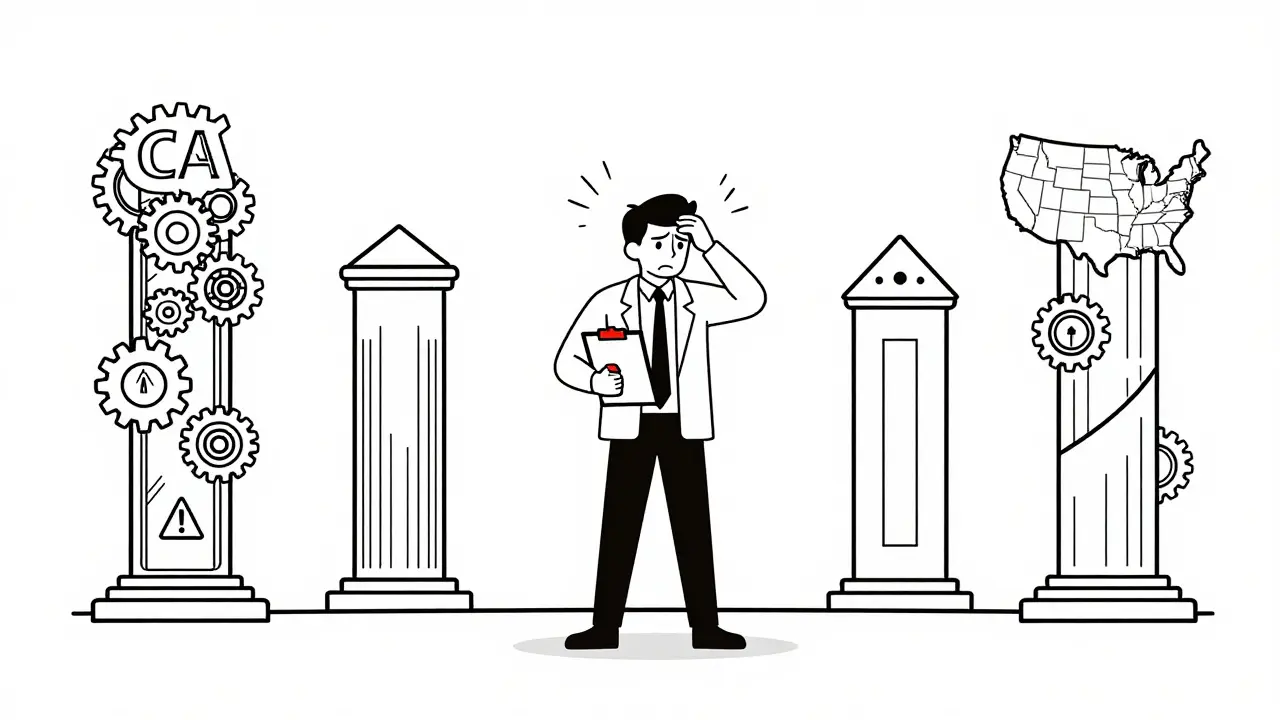
Imagine launching a new generative AI tool that works perfectly across the country, only to get hit with a $5,000 fine per violation because you missed a disclosure requirement in one specific state. That is the reality for businesses navigating the current patchwork of artificial intelligence regulations in the United States. While federal legislation remains stalled, states are moving at different speeds, creating a complex legal landscape where what is legal in Utah might be a major compliance headache in California.
As we move through 2026, the regulatory gap between states has widened significantly. California has established itself as the aggressive leader in AI oversight, while states like Colorado, Illinois, and Utah have taken narrower, sector-specific approaches. For any company deploying generative AI-whether for marketing, healthcare, or customer service-understanding these distinct state-level rules is no longer optional. It is a critical business survival skill.
The California Standard: Comprehensive and Aggressive
If you are building or using generative AI in the United States, California is your primary concern. The state has enacted the most comprehensive framework for AI regulation in the nation, signaling that compliance is now a mandatory operational cost rather than an afterthought. Governor Gavin Newsom’s administration has pushed through a series of bills since late 2023, culminating in a robust set of laws that took effect in early 2025 and continue to roll out throughout 2026.
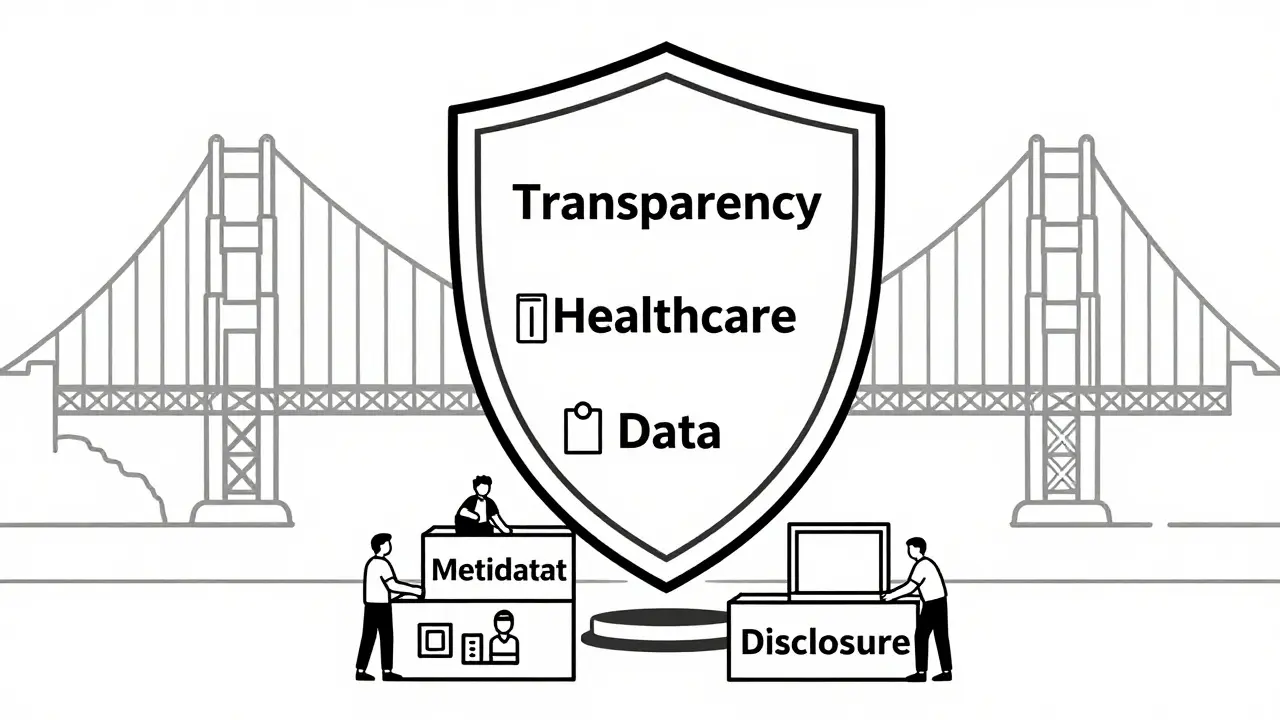
The cornerstone of this approach is the California AI Transparency Act (AB853), which mandates strict labeling requirements for AI-generated content. This law requires large online platforms, system-hosting providers, and even manufacturers of capture devices to embed both 'manifest' (visible) and 'latent' (metadata-based) disclosures into AI outputs. The goal is clear: consumers must know when they are interacting with synthetic media. Implementation deadlines were extended to August 2, 2026, giving companies time to build the necessary technical infrastructure, but the pressure is mounting. Violations can result in daily penalties enforced by the California Attorney General.
Beyond transparency, California focuses heavily on developer accountability and data provenance. The Generative Artificial Intelligence Training Data Transparency Act (AB 2013) forces developers to disclose detailed information about their training datasets. Crucially, this applies retroactively to systems released or modified after January 1, 2022. This means if you updated your model last year, you need documentation on where that data came from, its composition, and potential biases. Non-compliance here carries fines of up to $5,000 per violation under the Business and Professions Code.
Healthcare is another major target. The Physicians Make Decisions Act (SB 1120) ensures that licensed physicians supervise AI tools used in decision-making processes for provider requests. Health insurers cannot let algorithms deny claims without human medical oversight. Additionally, AB 489 prohibits AI developers from falsely claiming to hold healthcare licenses, protecting patients from misleading automated advice.
For frontier AI developers, the Transparency in Frontier Artificial Intelligence Act (SB53) requires public publication of frameworks describing how national and international standards are incorporated into development. The state is also exploring 'CalCompute,' a state-backed cloud computing cluster for AI research, aiming to balance innovation with safety. With the California Privacy Protection Agency establishing a dedicated AI enforcement division starting January 1, 2026, expect rigorous audits and stricter enforcement in the coming months.
Colorado: Narrow Focus on Insurance
In stark contrast to California’s broad sweep, Colorado has adopted a targeted approach, focusing almost exclusively on the insurance industry. If your business is not involved in insurance, you likely face minimal direct regulatory burden from Colorado’s AI laws, though the lack of comprehensive guidelines creates some uncertainty for other sectors.
The key legislation here is House Bill 24-1262 (Regulation of Artificial Intelligence in Insurance), which took effect on July 1, 2024. This law prohibits insurers from using AI to engage in unfair discrimination. More importantly, it requires disclosure whenever AI systems are used to make underwriting decisions. This means if an algorithm helps determine a premium or coverage eligibility, the consumer must be informed.
This narrow focus reflects Colorado’s legislative strategy: address high-risk, high-impact areas first. According to surveys from the Denver Business Journal, 78% of Colorado insurers found HB 24-1262 manageable compared to California’s extensive requirements. However, legal experts warn that non-insurance businesses operate in a gray area. There is no statewide mandate for general AI transparency or training data disclosure for tech companies outside the insurance vertical. As the state considers broader measures like the proposed Consumer Generative AI Transparency Act (HB 25-1047), businesses should monitor developments closely, but for now, the risk is contained primarily within the insurance sector.
Illinois: Biometrics and Deepfakes
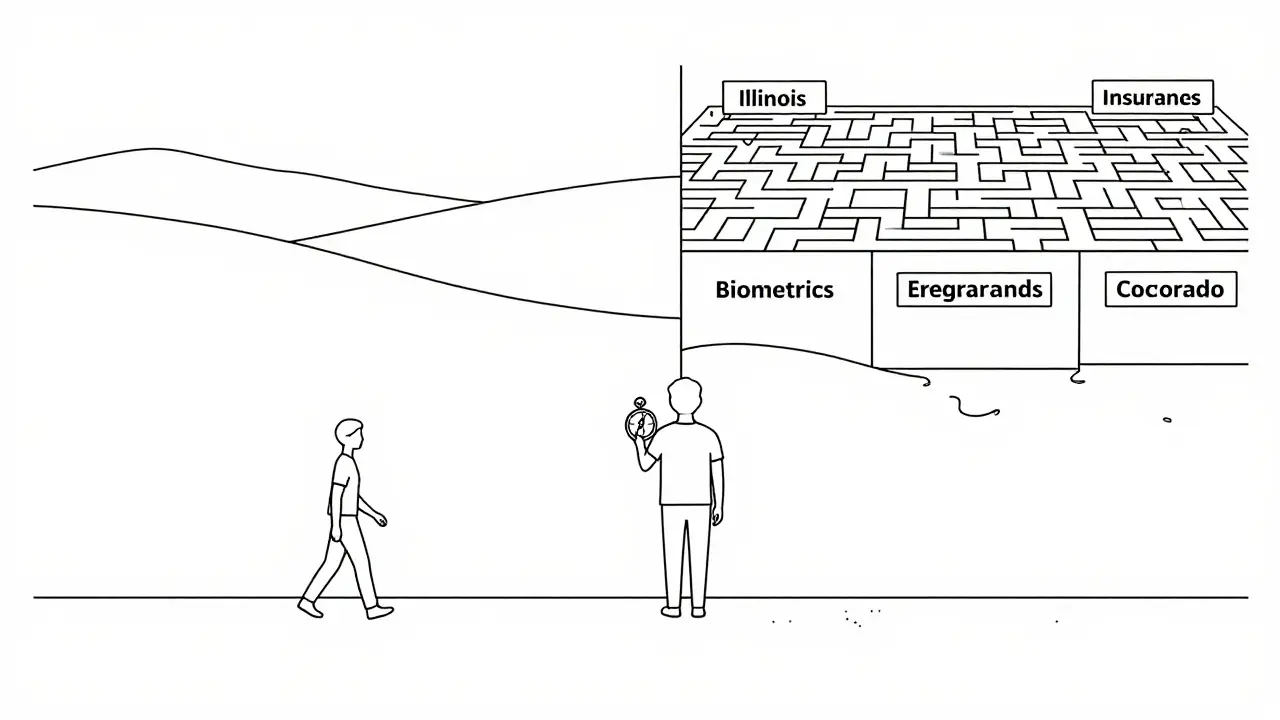
Illinois has historically been a pioneer in privacy law, best known for the Biometric Information Privacy Act (BIPA). Its approach to generative AI extends this legacy by focusing on biometric data protection and political integrity rather than broad developer liability.
The state amended BIPA in 2023 to specifically address AI-related biometric collection issues. Given that many generative AI models rely on facial recognition or voice synthesis, this amendment is critical. A Chicago Tribune case study highlighted a marketing firm fined $250,000 for using AI to analyze facial recognition data without proper consent. This serves as a stark warning: if your AI interacts with biometric identifiers, Illinois’ strict consent and retention rules apply.
Additionally, Senate Bill 3197, effective January 1, 2025, targets deepfakes in the political sphere. The Artificial Intelligence Video Recording Act prohibits creating or distributing AI-generated deepfakes of political candidates within 60 days of an election. This protects the electoral process from synthetic misinformation during critical voting periods. While Illinois lacks a comprehensive generative AI law akin to California’s, its combination of strong biometric protections and anti-deepfake statutes makes it a significant jurisdiction for companies handling personal data or engaging in political advertising.
Utah: Minimal Regulation and Broad Privacy
Utah represents the minimalist end of the spectrum. The state has not passed specific generative AI legislation, instead relying on its broader Consumer Privacy Act (UCPA), which took effect on December 31, 2023. The UCPA provides general data privacy rights but does not contain explicit provisions addressing the unique risks of generative AI, such as hallucinations, copyright infringement, or synthetic media.
Senate Bill 232, the Artificial Intelligence Policy Act, was introduced in January 2025 to establish a task force for studying AI governance. However, as of late 2025, this bill remained pending, with delays pushing it into the 2026 legislative session. This 'wait-and-see' approach has drawn mixed reactions. While some tech companies appreciate the regulatory clarity of having fewer restrictions, others, including the Salt Lake City Technology Council, argue that Utah risks falling behind in the AI economy without clearer guardrails. For businesses operating in Utah, compliance currently means adhering to general data privacy principles rather than specific AI mandates.
Comparing State Approaches: A Quick Reference
| State | Primary Focus | Key Legislation | Enforcement Body | Compliance Burden |
|---|---|---|---|---|
| California | Transparency, Developer Accountability, Healthcare | AB853, AB 2013, SB 1120 | Attorney General, CPPA | High ($250k - $2.5M+) |
| Colorado | Insurance Underwriting & Discrimination | HB 24-1262 | Department of Regulatory Agencies | Low (Sector-Specific) |
| Illinois | Biometrics & Political Deepfakes | BIPA Amendments, SB 3197 | Attorney General | Medium (Data-Intensive) |
| Utah | General Data Privacy | UCPA (Pending AI Task Force) | Attorney General | Low |
Practical Steps for Compliance
Navigating this fragmented landscape requires a proactive strategy. Here is how you can prepare your organization:
- Audit Your Training Data: Regardless of your location, document the provenance, composition, and biases of your datasets. This satisfies California’s AB 2013 and prepares you for similar laws elsewhere.
- Implement Metadata Tagging: Build systems to embed latent metadata in AI-generated content. This is essential for California’s AB853 and increasingly expected industry-wide.
- Review Insurance Workflows: If you operate in Colorado, ensure AI-driven underwriting decisions include clear disclosures and bias checks.
- Secure Biometric Consent: In Illinois, obtain explicit consent before collecting or processing biometric data via AI, and adhere to strict retention schedules.
- Monitor Legislative Updates: Assign a team to track pending bills in Utah and other states, as the regulatory tide is shifting rapidly toward more comprehensive frameworks.
The cost of non-compliance is rising. Early adopters who integrated these controls reported implementation costs ranging from $250,000 for small businesses to over $2 million for enterprise platforms. However, these investments protect against massive fines and reputational damage. As California’s standards potentially become the de facto national baseline, aligning with its rigorous requirements now positions your business for future-proof growth.
Does California's AI law apply to my business if I am based outside the state?
Yes, if your business offers services or products to California residents. The California AI Transparency Act (AB853) applies to covered providers serving over one million monthly users, including large online platforms and system hosts. Even if your headquarters are elsewhere, targeting California consumers triggers compliance obligations.
What are the penalties for violating California's training data transparency laws?
Under AB 2013, violations can result in penalties of up to $5,000 per violation. These fines are enforceable by the California Attorney General and can accumulate quickly if multiple instances of non-disclosure are found. Additionally, private right of action may be possible depending on the nature of the violation.
How does Colorado's AI regulation differ from California's?
Colorado’s regulation is narrowly focused on the insurance industry, prohibiting unfair discrimination and requiring disclosure in underwriting decisions. California’s laws are comprehensive, covering transparency, training data, healthcare, and frontier AI development across all sectors. Colorado does not currently have broad generative AI disclosure requirements for general tech companies.
Is there a federal AI law that supersedes state regulations?
As of mid-2026, there is no comprehensive federal AI law that preempts state regulations. This creates a patchwork where businesses must comply with the strictest applicable state laws. Federal agencies like the FTC are enforcing existing consumer protection laws, but state legislatures are leading the way in specific AI mandates.
What should I do about Illinois' deepfake laws?
If you create or distribute AI-generated video or audio content involving political candidates, you must ensure no deepfakes are produced within 60 days of an election. Additionally, if your AI uses biometric data, strictly follow BIPA consent and retention rules to avoid significant fines.
 Artificial Intelligence