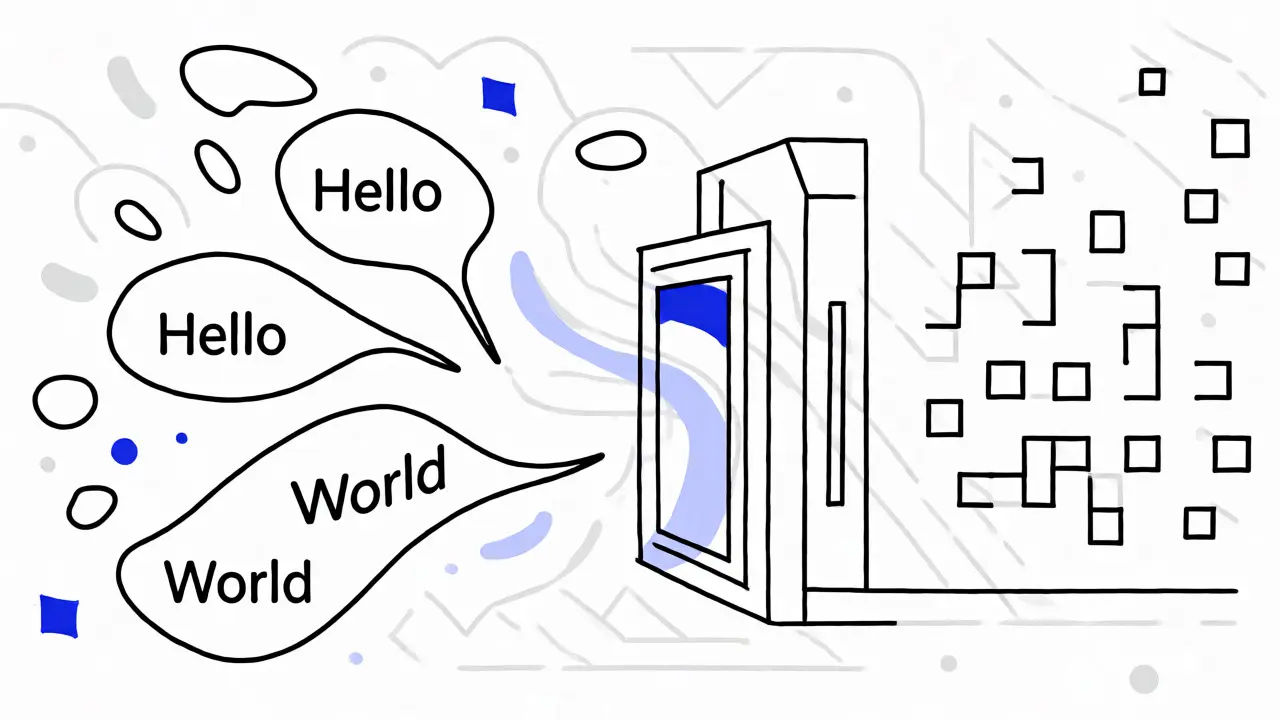
You’ve probably heard the term "token" thrown around in every AI discussion lately. But have you ever stopped to wonder how a computer actually reads a sentence? It doesn’t see words like we do. It sees numbers. The bridge between human language and machine math is called tokenization. If you’re building or fine-tuning Large Language Models (LLMs), understanding how this process works isn't just academic-it’s the difference between a model that costs you pennies and one that burns through your budget.
At its core, tokenization splits text into smaller chunks. These chunks are the basic units of meaning for the neural network. Get it wrong, and your model struggles with rare words, wastes compute power on redundant data, or fails completely when asked about something outside its training set. Let’s break down the three main strategies dominating the industry today: Byte-Pair Encoding (BPE), WordPiece, and Unigram. We’ll look at why they matter, how they differ, and which one fits your specific use case.
Why Tokenization Is the Foundation of Modern LLMs
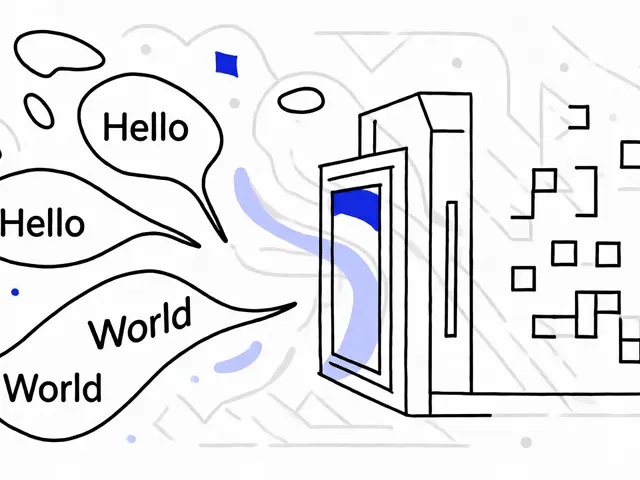
Before we dive into algorithms, let’s address the elephant in the room: why not just tokenize by word? In the early days of Natural Language Processing (NLP), that was the standard. You’d split "Hello world" into ["Hello", "world"]. Simple, right? But this approach hits a wall fast. What happens when the model encounters "hello-world" or "helloo"? It has no idea what those mean. They become "Out-Of-Vocabulary" (OOV) tokens, essentially garbage data to the model.
Subword tokenization solves this. By breaking words into pieces, models can handle unseen words by combining known fragments. For example, "unbelievable" might be split into ["un", "believ", "able"]. Even if the model hasn’t seen "unbelievable" before, it understands the components. This method balances two competing needs: lexical coverage (knowing enough words) and computational efficiency (keeping sequences short).
Research from arXiv in 2024 showed that careful tokenization design can boost model performance on downstream tasks by up to 15%. That’s huge. It means better accuracy without necessarily making the model bigger. The goal is always to transform variable-length text into fixed-dimensional representations while keeping linguistic integrity intact.
Byte-Pair Encoding (BPE): The Industry Standard
Byte-Pair Encoding (BPE) is a subword tokenization algorithm originally developed for data compression but adapted for NLP to handle open-vocabulary problems. It’s the engine behind OpenAI’s GPT series and many other major models. Why is it so popular? Because it’s robust, relatively simple to implement, and handles diverse languages reasonably well.
Here’s how it works under the hood. Imagine you start with a corpus of text where every character is its own token. BPE looks for the most frequent pair of adjacent tokens. Say "t" and "h" appear together often as "th". It merges them into a new token "th". Then it repeats the process, looking for the next most frequent pair, maybe "in" or "the". It keeps merging until it reaches a predefined vocabulary size, usually around 50,000 tokens for GPT models.
The beauty of BPE is its greedy nature. It prioritizes frequency. Common patterns get merged first, creating efficient shortcuts for common words. Rare words remain split into their constituent characters or small subwords. This ensures that even if a word is never seen during training, it can still be processed, albeit less efficiently.
| Algorithm | Merge Strategy | Avg Tokens per Word (English) | Primary Users | Best For |
|---|---|---|---|---|
| BPE | Frequency-based merging | ~1.4 | GPT-3/4, Llama 2/3 | General-purpose generation |
| WordPiece | Likelihood-based merging | ~1.7 | BERT, DistilBERT | Classification & Understanding |
| Unigram | Probabilistic pruning | ~1.2 | T5, ALBERT | Compression & Multilingual |
WordPiece: The Likelihood-Based Alternative
If BPE asks "What appears most often?", WordPiece asks "Which merge increases the probability of the corpus the most?". Developed by Google for BERT, WordPiece uses a likelihood score rather than raw frequency counts to decide which pairs to merge. This subtle difference changes the behavior significantly.
Because it optimizes for probability, WordPiece tends to produce slightly larger vocabularies for the same amount of text, or conversely, higher fertility scores. Fertility is just a fancy term for the average number of tokens per word. Studies show WordPiece averages about 1.7 tokens per word compared to BPE’s 1.4. Why does this matter? Higher fertility means more granular information. Each token carries less semantic weight individually, but the sequence preserves more structural detail.
This makes WordPiece excellent for tasks requiring deep linguistic analysis, like named entity recognition or sentiment analysis, where understanding the exact boundaries of morphemes matters. However, that granularity comes at a cost. Longer sequences mean more computation time and memory usage. If you’re deploying a model on edge devices with limited RAM, WordPiece might make your application sluggish compared to BPE.
Unigram: The Probabilistic Pruner
Unigram takes a completely different approach. Instead of building up from scratch, it starts with a massive initial vocabulary-every possible substring-and then prunes it down. It calculates the probability of each token appearing in the corpus and removes the least likely ones until it hits the target vocabulary size.
During inference, if a word can be segmented in multiple ways, Unigram picks the segmentation with the highest total probability. This probabilistic framework allows for flexible decoding. Interestingly, research indicates Unigram offers superior compression efficiency. On machine code datasets, it demonstrated 22% better compression than BPE and 31% better than WordPiece. Its fertility score hovers around 1.2, meaning it represents text very compactly.
Where should you use Unigram? Think of scenarios where input length is critical. If you’re processing long documents or working with multilingual data where non-English texts already suffer from high token counts, Unigram’s efficiency can save significant resources. T5 and ALBERT, two influential transformer models, rely on this strategy for good reason.
The Hidden Costs: Vocabulary Size and Language Bias
Choosing an algorithm is only half the battle. The other half is deciding on vocabulary size. This is a classic trade-off. A larger vocabulary allows the model to represent common words as single tokens, reducing sequence length and speeding up inference. But it also increases the model’s parameter count, making it slower to train and more expensive to run.
Consider the disparity across languages. English benefits massively from being the primary language of most LLM training data. An English-optimized tokenizer might need only 1.3 tokens per word. Turkish, with its complex morphology, might require 2.1 tokens per word. That’s a 61% discrepancy in efficiency. Dr. Petrov’s research highlights a 37% efficiency gap between English and low-resource languages in models trained primarily on English data.
This isn’t just a technical curiosity; it impacts your wallet. Cisco’s research documented a 37% increase in API costs when serving non-English requests due to these tokenization inefficiencies. If your user base is global, ignoring this bias means paying more for the same service quality. Newer models like Meta’s Llama 3.2 are addressing this by expanding vocabularies to 128,000 tokens, which reduced the English-to-Swahili tokenization gap from 37% to 22%. Still, the problem persists.

Practical Implementation Tips for Developers
So, how do you apply this knowledge? Here are some hard-won lessons from the field:
- Start with Pre-trained Tokenizers: Don’t reinvent the wheel unless you have to. Fine-tuning a pre-trained tokenizer on domain-specific data reduces implementation time by 63% compared to training from scratch. Only build custom ones if your domain (like medical codes or legal jargon) is vastly different from general web text.
- Watch Your Whitespace: One common pitfall reported on Reddit’s r/MachineLearning is improper handling of whitespace. Incorrect splitting can inflate token counts by 15-20%, silently doubling your inference costs. Always verify how your tokenizer treats spaces, tabs, and newlines.
- Normalize Before You Tokenize: Preprocessing matters. In machine code analysis, normalizing addresses (replacing random hex values with sequential IDs) improved masked token prediction accuracy by 9.3 percentage points. Clean data leads to better token distributions.
- Test on Your Target Languages: If you support multiple languages, test tokenization fertility for each. Don’t assume uniformity. Use tools like Hugging Face’s tokenizer library to benchmark real-world inputs.
For experienced NLP engineers, implementing a custom tokenizer takes about 2-3 weeks. The most critical decision point is vocabulary size selection. Start small (e.g., 32k) for speed-focused applications, or go large (128k+) for multilingual accuracy. There is no one-size-fits-all answer.
Future Trends: Beyond Fixed Vocabularies
The field isn’t standing still. Researchers are exploring dynamic vocabulary allocation, which could improve non-English efficiency by 15-20% by 2026. Another exciting direction is neural tokenization, where the model learns segmentation directly from raw bytes, potentially eliminating fixed vocabularies altogether. Gartner’s AI research team predicts this shift will redefine how we preprocess text.
Meanwhile, morphologically aware tokenization is gaining traction. Experiments forcing tokenizers to respect known morphemes improved task performance by 9.7%. As models become more specialized, we’ll likely see hybrid approaches that combine the strengths of BPE, WordPiece, and Unigram depending on the context of the input.
Frequently Asked Questions
What is the difference between BPE and WordPiece?
The main difference lies in how they select merges. BPE selects the most frequently occurring pairs of characters or subwords to merge. WordPiece selects merges based on likelihood scores, optimizing for the probability of the corpus. This results in WordPiece having a higher fertility score (more tokens per word) than BPE, offering more granularity but at the cost of longer sequences.
Why does tokenization affect API costs?
Most LLM APIs charge per token. Since different languages and tokenization strategies result in different numbers of tokens for the same text, inefficient tokenization leads to higher costs. For example, non-English text often requires 30-40% more tokens than English equivalents due to vocabulary bias, directly increasing the bill.
Can I change the tokenizer after training a model?
Generally, no. The tokenizer is integral to the model's architecture because it determines the embedding matrix size and the input representation. Changing the tokenizer would require retraining the model from scratch, as the learned weights correspond to specific token IDs generated by the original tokenizer.
What is 'fertility' in tokenization?
Fertility refers to the average number of tokens required to represent a single word. Lower fertility means more efficient compression (fewer tokens per word), which reduces sequence length and computational load. Higher fertility provides more granular control over word parts but increases processing overhead.
Which tokenizer is best for multilingual models?
Unigram often performs better for multilingual tasks due to its high compression efficiency and lower fertility scores. However, modern approaches increasingly favor larger vocabularies (128k+) with BPE or SentencePiece implementations to mitigate the tokenization penalty for non-English languages.
 Artificial Intelligence