
You might be hearing conflicting numbers about the state of AI development right now. One report claims 74% of developers see productivity gains, while another says 72% aren't using these tools at all. It sounds impossible, doesn't it? This isn't just noise; it's the reality of vibe coding in early 2026. If you are trying to measure adoption within your team or industry, you need to understand why these numbers diverge so wildly. The gap between what developers say and what they do is where the real story lives.
Understanding this landscape requires more than just asking if people like AI. You need to dig into the specific workflows, security fears, and trust levels that define the current engineering culture. This guide breaks down exactly what questions to ask in your next survey and why those metrics matter for the future of software development.
Defining Vibe Coding in the 2026 Context
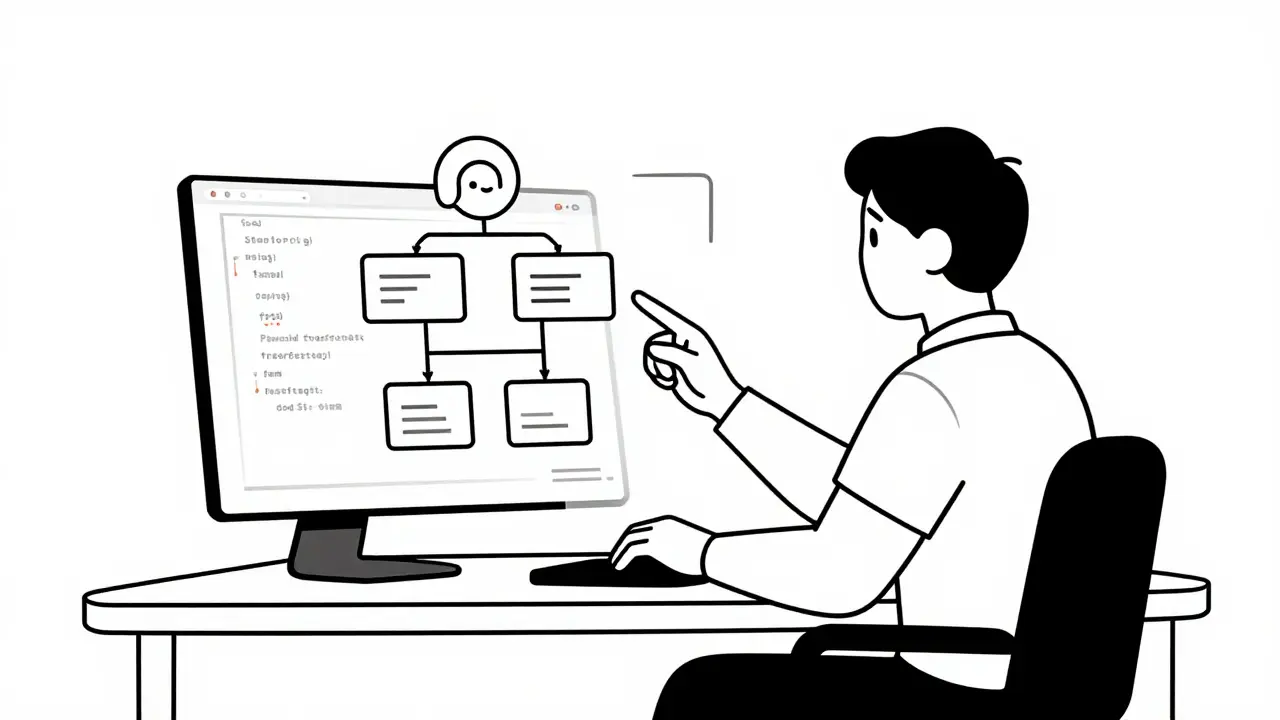
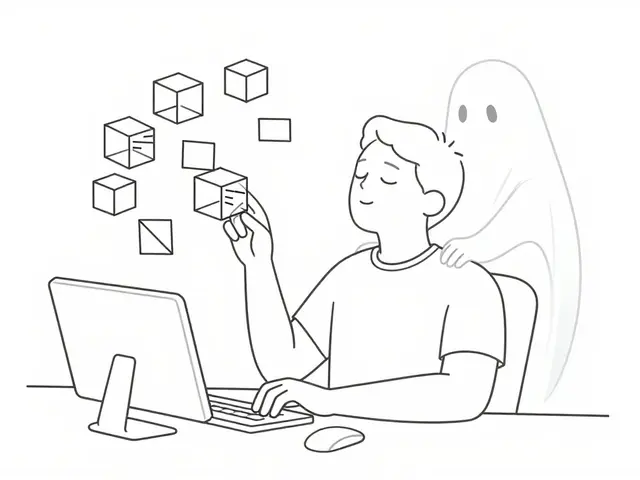
Before you write a single survey question, you need a shared definition. In the industry today, Vibe Coding is an engineering methodology grounded in large language models where human developers interact with software projects through natural language prompts. It's not just code completion; it's a triadic relationship between the human, the project, and the Coding Agent.
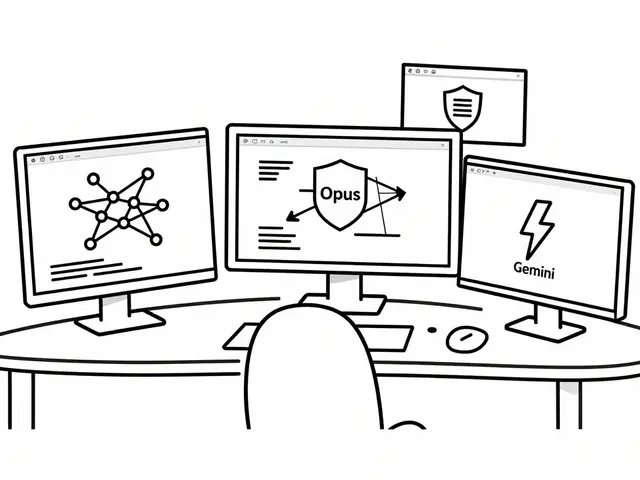
This methodology exploded between 2023 and 2024, but by March 2026, it has settled into a specific niche. Platforms like Lovable, Bolt.new, and Base44 allow users to build applications without writing traditional syntax. However, the definition varies by role. A frontend developer might see it as UI generation via v0 by Vercel, while a backend engineer might view it as automated API scaffolding through GitHub Copilot.
This distinction matters for your survey. If you ask "Do you use vibe coding?" without defining the scope, a frontend engineer using v0 might say yes, while a backend engineer using Copilot might say no. To get accurate sentiment data, you must segment the question by tool type and workflow integration.
The Adoption Paradox: Why the Numbers Clash
The most striking data point from late 2025 is the contradiction in adoption rates. Second Talent reported that 74% of developers experienced productivity increases. Yet, the Stack Overflow Developer Survey from 2025 showed that 72% of respondents explicitly stated they are not using vibe coding. An additional 5% emphatically denied its place in their workflow.
Why does this happen? It often comes down to how "using" is defined. Many developers use AI assistants for code completion or debugging (87% and 72% respectively) but don't consider that "vibe coding." They reserve that term for full-stack generation where the AI writes the bulk of the logic. When you design your survey, you need to separate "AI assistance" from "AI-driven development."
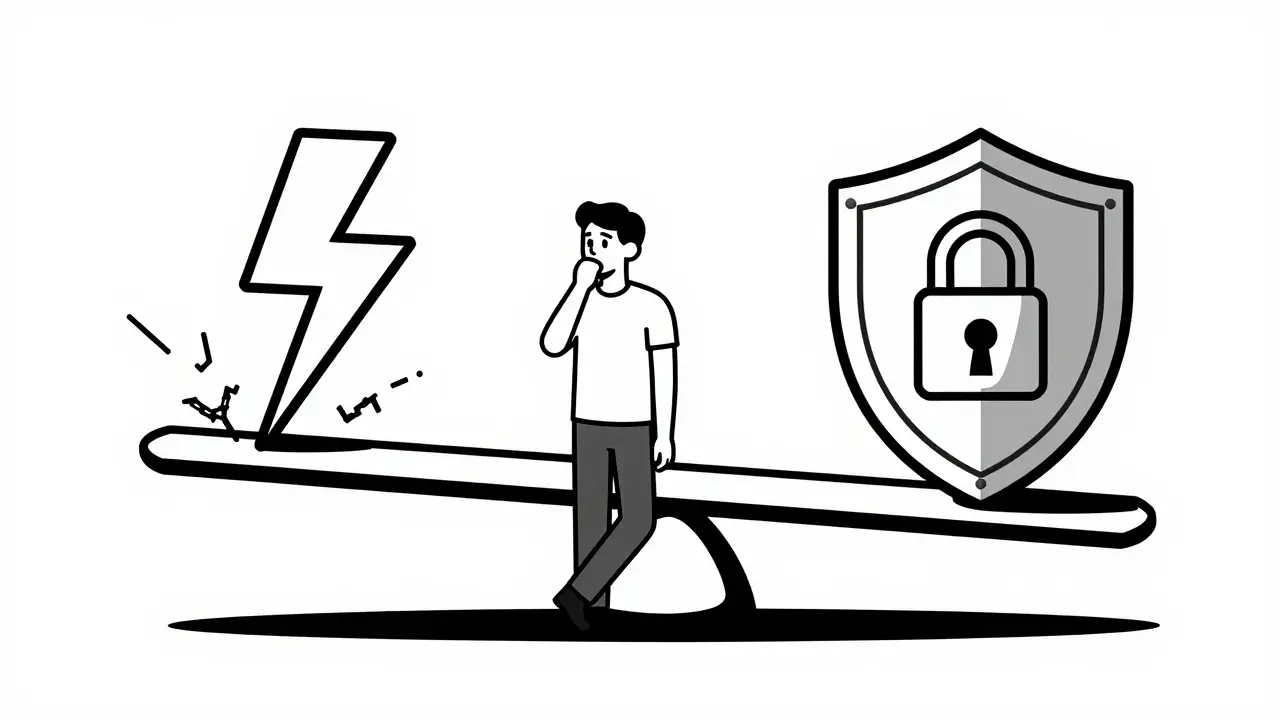
Another factor is the confidence gap. A survey by Bubble in late 2025 found that 71.5% of developers feel confident using visual development for mission-critical apps, compared to only 32.5% for vibe coding. Only 9% deploy vibe coding tools for business-critical applications. This suggests that while developers enjoy the speed, they don't trust the reliability enough for production environments. Your survey questions must probe this trust threshold directly.
Security and Reliability: The Elephant in the Room
If you ignore security in your survey, you are missing the biggest barrier to adoption. Research from Escape Tech in December 2025 uncovered over 2,000 vulnerabilities in vibe-coded applications. These weren't minor bugs; they included exposed secrets, personally identifiable information (PII), and anonymous JWT tokens.
The issue is often infrastructure. Platforms heavily reliant on Supabase were particularly vulnerable to exposed API routes. When 75% of R&D leaders express concern about data privacy, that sentiment has to be reflected in your data collection. You need to ask developers if they feel safe deploying AI-generated code in their specific security context.
Consider the hidden costs. Academic researchers noted that 63% of developers have spent more time debugging AI-generated code than they would have spent writing the original code at least once. This is a critical metric for ROI. If a tool saves 51% on task completion but doubles debugging time, the net gain is negative. Your survey should quantify time spent on debugging versus time saved on generation.
What to Ask: Crafting Effective Survey Questions
To get actionable data, move beyond "Do you like AI?" and ask about specific behaviors. Here are the key categories you should cover in your developer sentiment survey.
- Workflow Integration: Ask where AI fits in the daily routine. Do they use it for boilerplate, documentation, or test cases? Data shows 87% use it for code completion, but only 54% for test case creation. Knowing where the tool stops being useful helps identify gaps.
- Trust Levels: Measure the "trust threshold." At what point do developers switch from AI to manual coding? The Stack Overflow survey found 75% seek human assistance when they don't trust AI's answers. Ask respondents to rate their confidence on a scale of 1 to 10 for critical vs. non-critical tasks.
- Security Perception: Ask if they scan AI-generated code before deployment. If 62% of users struggle with maintaining code quality standards, knowing who scans and who doesn't is vital for risk management.
- Tool Specifics: Don't just ask about "AI." Break it down by tool. Frontend developers favor v0 (28%) and Cursor (19%), while backend developers prefer GitHub Copilot (38%). Aggregating these into one "AI" question dilutes the data.
- Debugging Overhead: Ask for a time estimate. How many hours per week are spent fixing AI hallucinations? This quantifies the "hidden cost" mentioned in the arXiv survey.
Why These Metrics Matter for Decision Makers
Collecting this data isn't just about academic curiosity; it drives hiring and tool procurement. If your survey reveals that junior developers are deploying code they don't understand (40% admitted this in Second Talent's report), you have a training gap. You might need to invest in code review processes rather than buying more AI licenses.
For product managers, the confidence gap between visual development and vibe coding is crucial. If 68.3% of builders expect to increase visual development usage but only 31.7% plan to increase vibe coding, your roadmap should reflect that preference. Investing heavily in vibe coding features when the team prefers visual tools is a strategic error.
Furthermore, understanding the security sentiment helps with compliance. If 75% of R&D leaders worry about data privacy, your internal policies need to address this before rolling out enterprise AI tools. A survey that highlights these fears can justify budget for security scanning tools or specialized training.

Comparing Vibe Coding Models
The arXiv survey identified five distinct development models within this space. Knowing which model your team uses changes the survey questions you need. The Unconstrained Automation Model lets the AI run wild, while the Planning-Driven Model requires human oversight before code generation. Your survey should identify which model is prevalent in your organization.
| Metric | Vibe Coding | Visual Development | Traditional Coding |
|---|---|---|---|
| Confidence for Mission-Critical Apps | 32.5% | 71.5% | 85%+ |
| Productivity Increase Reported | 74% | 50% | 20% |
| Security Vulnerability Rate | High (2000+ found) | Medium | Low |
| Deployment in Production | 9% | 65.2% | 95% |
This table highlights why sentiment varies so much. High productivity claims often come with high risk. When you ask developers about their sentiment, you are really asking them to weigh speed against safety. The data suggests that for mission-critical systems, traditional methods still win on trust, even if they lose on speed.
Future Trajectory and Survey Evolution
By Q2 2026, the market is shifting. Security-audited platforms are expected to capture 45% of the low-code market for non-critical applications. As platforms like Lovable implement mandatory secret scanning (version 2.4, November 2025), the security sentiment should improve. Your surveys need to track this change over time.
Don't treat sentiment as a static number. A developer might reject vibe coding today because of a security scare, but adopt it tomorrow once the tool updates. Longitudinal surveys are better than one-off snapshots. Ask the same cohort quarterly to see how trust evolves as the technology matures.
The tension between productivity gains and security concerns will shape the next generation of tools. If your survey shows that 51% faster task completion is outweighed by fear of data leaks, the solution isn't better AI; it's better security guarantees. Use your data to advocate for the features your team actually needs.
What is the main difference between vibe coding and traditional AI coding assistants?
Vibe coding involves a triadic relationship where natural language prompts drive full application creation, often using platforms like Lovable or Bolt.new. Traditional AI assistants like GitHub Copilot focus on line-by-line code completion within an IDE rather than generating entire projects from prompts.
Why do productivity stats conflict with adoption rates?
The conflict arises because productivity stats often measure task completion speed, while adoption rates measure deployment in production. Developers may use tools for speed but avoid them for critical apps due to trust and security concerns, creating a gap between usage and reliance.
What security risks are associated with vibe coding platforms?
Research identified over 2,000 vulnerabilities including exposed secrets, PII, and anonymous JWT tokens. Platforms relying on Supabase infrastructure were particularly vulnerable to exposed API routes, making security scanning essential before deployment.
How should I segment survey questions for different developer roles?
Segment by workflow needs. Frontend developers often use UI tools like v0, while backend developers prefer logic tools like GitHub Copilot or Amazon CodeWhisperer. Ask specific questions about the tools relevant to each role to avoid skewed data.
Is vibe coding suitable for mission-critical applications?
Currently, only 9% of developers deploy vibe coding tools for business-critical applications. The confidence gap remains significant, with 71.5% trusting visual development for critical apps compared to 32.5% for vibe coding, suggesting caution is still warranted.
What is the hidden cost of using AI for code generation?
The hidden cost is debugging time. 63% of developers have spent more time fixing AI-generated code than writing it themselves at least once. This overhead can negate the initial speed gains reported in productivity surveys.
 Artificial Intelligence
Ajit Kumar
March 26, 2026 AT 17:19We need to talk about the ethics here. It is not just about productivity. It is about our souls as engineers. When we let machines write code we do not understand. We lose the ability to fix them when they break. This is a slippery slope into dependency. The security risks mentioned are just the tip of the iceberg. We are training a generation to be lazy. They will not know the fundamentals of logic. They will just prompt and pray. This is irresponsible for the industry. We have a duty to maintain standards. Cutting corners now means disaster later. The data shows trust is low for a reason. We should not ignore the warning signs. It is our moral obligation to code correctly.
Noel Dhiraj
March 27, 2026 AT 14:11Hey everyone just wanted to say that we should not be afraid of these tools They are here to help us build faster and we can learn from them. I think the security stuff is valid but we can work around it. Just keep testing your code and you will be fine. It is all about finding the balance between speed and safety. Let us all support each other in this transition
Amit Umarani
March 27, 2026 AT 20:56The grammar in this post is actually decent but the logic falls apart when you look at the definitions. It is annoying how they mix up code completion with vibe coding without clarifying. You cannot just lump everything together and call it a trend. The distinction matters for anyone trying to build a real product. I hope the next survey fixes these basic errors before publishing.
vidhi patel
March 28, 2026 AT 03:59The terminology used in this article is entirely insufficient for professional discourse. One cannot simply define vibe coding as a triadic relationship without rigorous mathematical backing. The data presented lacks the necessary statistical significance to be considered authoritative. Developers must demand better precision from survey creators.
Priti Yadav
March 30, 2026 AT 02:01These numbers are definitely cooked by the big tech companies pushing their agenda.