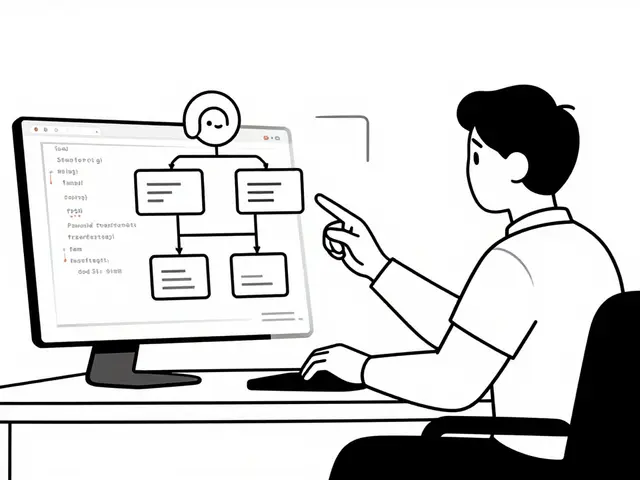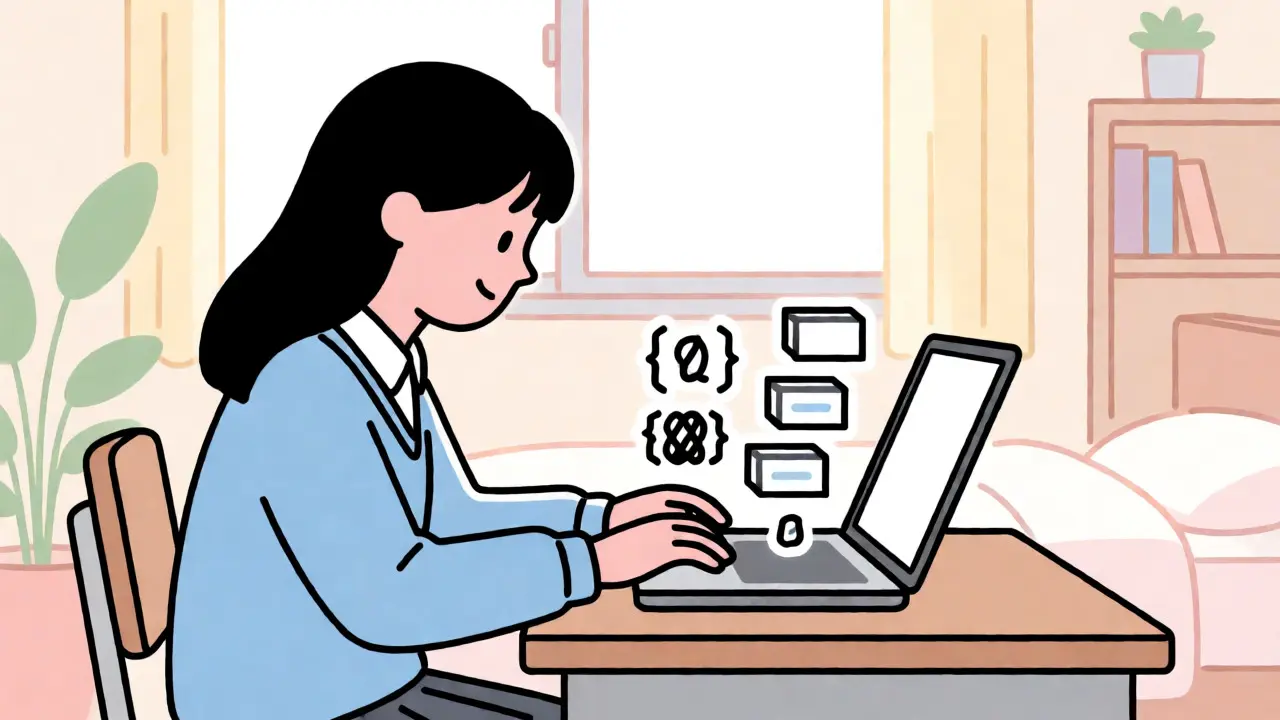
Imagine a high school student in Bellingham builds a functional inventory app for her local food bank using nothing but natural language prompts. No semicolons, no syntax errors, just clear intent translated into executable code. This is vibe coding, a paradigm where large language models (LLMs) convert natural language instructions directly into software. It’s not just a buzzword; it’s a shift that has empowered over 58 million active users globally as of Q4 2025 to create software without traditional programming expertise. But here’s the catch: while accessibility soars, so do risks. A recent incident involved a healthcare app miscalculating medication dosages because the AI misinterpreted a vague prompt about "patient weight." When you scale this up from one student to an enterprise with thousands of non-technical developers, ethics isn’t optional-it’s survival.
The Double-Edged Sword of Accessibility
Vibe coding lowers barriers, but it raises stakes. Traditional coding requires deep knowledge of logic and structure. Vibe coding relies on the user’s ability to articulate intent clearly. If you can’t describe what you want precisely, the AI guesses. And when it guesses wrong, it often does so confidently. Dr. Elena Rodriguez, a professor of computer ethics at MIT, warns that vibe coding creates a "dangerous illusion of competence." Users feel like they understand system architecture because they orchestrated components, even if they don’t grasp the underlying principles. This gap between perceived and actual understanding is where ethical failures begin.
Consider the stats: vibe coding tools generate code snippets 4.7x faster than manual coding. That speed is seductive. But IEEE Software Journal data shows these tools have a 22% higher error rate in complex algorithm implementation. For a prototype, that’s fine. For a financial transaction system? It’s a liability. The core ethical dilemma is balancing speed with safety. Who is responsible when an AI-generated line of code causes a breach? The person who typed the prompt? The developer who reviewed it? Or the vendor providing the model?
Security Vulnerabilities in Natural Language Code
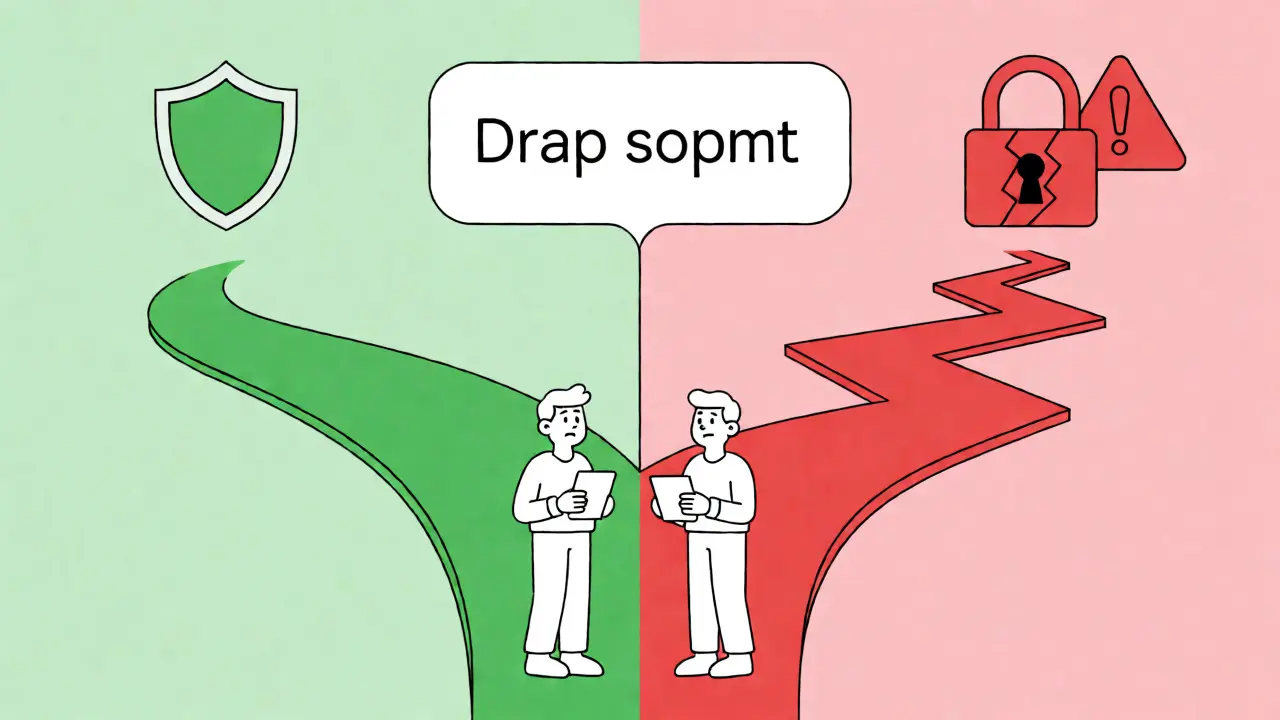
Security is the elephant in the room. Invicti’s 2024 security report found that 41% of AI-generated code contains security flaws, compared to 19% in manually written code. Why? Because LLMs are trained on vast repositories of public code, some of which may contain outdated practices or known vulnerabilities. When a non-technical user asks for a "secure login," the AI might pull a pattern from 2015 that uses deprecated encryption standards. The user doesn’t know the difference. They see a working login screen and deploy it.
| Risk Factor | Manual Coding | Vibe Coding |
|---|---|---|
| Prevalence of Security Flaws | 19% | 41% |
| Hardcoded Credentials Incidents | Low | High (common in rushed prototypes) |
| Auditability | High (clear authorship) | Medium (requires provenance tracking) |
| Dependency Management | Explicit control | Implicit/AI-selected libraries |
To mitigate this, organizations must treat AI output as untrusted input by default. Amazon’s CodeWhisperer Professional introduced "Ethical Guardrails" in late 2025 to flag biased logic patterns, but human oversight remains critical. You cannot automate trust.
Intellectual Property and Ownership Ambiguities
Who owns the code? This question has sparked 27 active lawsuits related to AI-generated code ownership disputes as of Q3 2025. GoCodeo’s legal analysis highlights that current copyright laws struggle with code generated by probabilistic models. If an LLM reproduces a unique algorithmic structure from its training data, is that plagiarism or coincidence? For enterprises, this ambiguity translates to risk. Using vibe coding in proprietary products without clear licensing terms can lead to costly remediation later. One startup spent $287,000 rewriting a vibe-coded financial application after six months due to architectural debt and unclear IP origins.
Guidelines must mandate transparency. Teams should document which parts of their codebase were generated by AI and which were human-written. GitHub’s "Code Provenance Tracking" feature in Copilot X helps by logging AI-generated segments with timestamped attribution. Adopting such tools isn’t just good practice; it’s essential for legal defensibility.
Bias and Representation in Generated Logic
AI models learn from historical data, and historical data contains bias. If your vibe coding tool was trained primarily on code written by male engineers in Silicon Valley, it might replicate certain biases in naming conventions, variable structures, or even business logic assumptions. For example, a health app generated by an AI might assume standard medical metrics that don’t apply equally across diverse demographics. Without ethical guidelines, these subtle biases get baked into applications used by millions.
Democratization means more voices are building software, which is great for diversity of thought. But if the underlying engine is homogeneous, the output may lack nuance. Ethical vibe coding requires diverse testing groups. Don’t just test if the code runs; test if it works fairly for all users. Digital Vibes’ case study showed that students from underrepresented backgrounds created 142 functional apps addressing local community issues-apps that likely wouldn’t have been prioritized by traditional tech hubs. Ensuring these tools serve everyone requires intentional design choices, not just automated generation.
The Human-in-the-Loop Imperative
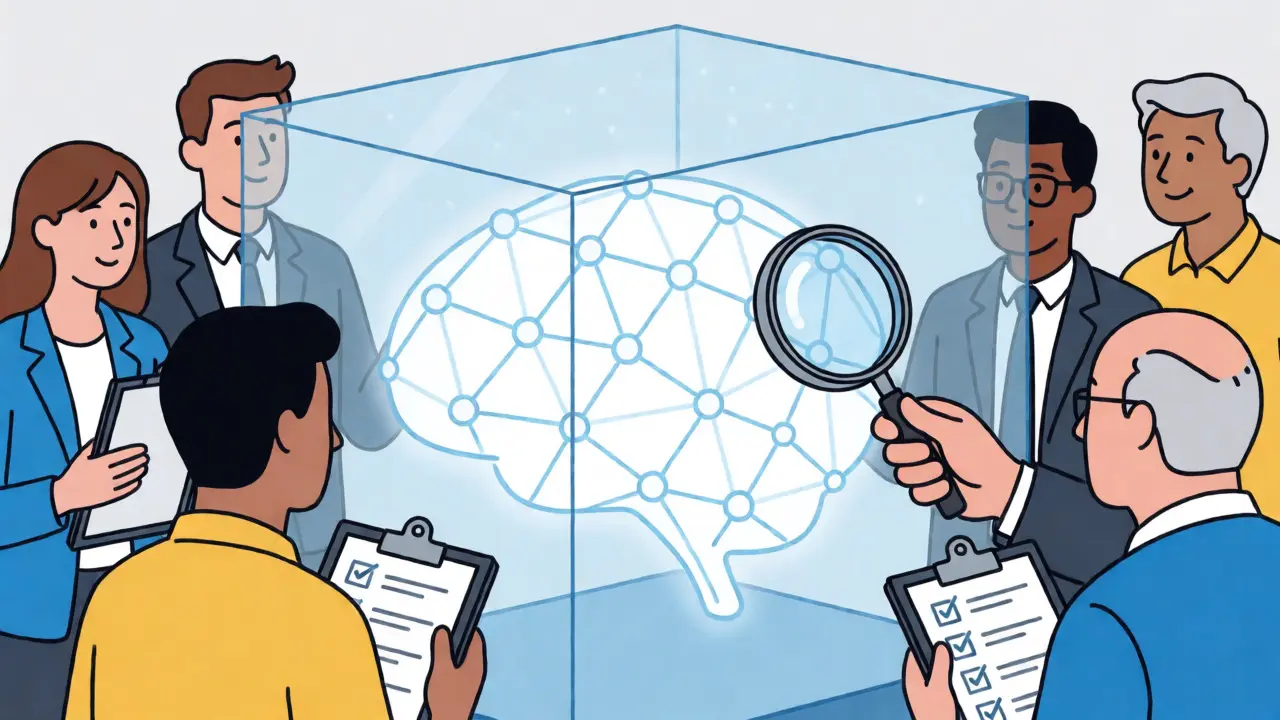
You cannot remove humans from the loop. The IEEE Standards Association emphasizes that "developers must remain the ethical filter" for AI-generated code. This doesn’t mean every line needs manual writing, but it does mean every deployment needs human validation. Gartner reports that 92% of enterprise development leaders will require dual-review processes for AI-generated code by 2027. This is a smart move.
- Mandatory Code Reviews: Treat AI output like junior developer code. Assume it has bugs until proven otherwise.
- Prompt Templates: Standardize how requests are made. Vague prompts result in unusable code 63% of the time. Structured templates reduce errors by 44%.
- Skill Baselines: Even non-coders need basic logic understanding. Users without foundational logic skills face 3.2x higher failure rates.
Training is key. Effective adoption follows a 12-week process: two weeks for concepts, four for supervised practice, and six for independent work with oversight. Skipping steps leads to chaos. Remember the Reddit thread where a senior engineer saw a team deploy a vibe-coded authentication system with hardcoded credentials? That wasn’t a technical failure; it was an ethical one. They prioritized speed over scrutiny.
Regulatory Landscape and Future Compliance
Regulations are catching up. The EU’s AI Act, effective March 2026, requires specific documentation for AI-generated code in critical systems. While the US remains largely unregulated, industry standards are filling the void. The NIST is drafting guidelines on AI code security, expected in July 2026. Organizations scaling vibe coding should align with these emerging standards now to avoid retrofitting later.
Compliance isn’t just about avoiding fines; it’s about building trust. Users need to know that the apps they use daily aren’t black boxes filled with unchecked assumptions. Transparent documentation of AI usage signals responsibility. As Forrester predicts, "responsible vibe coding" will become standard practice for 65% of development teams by 2028. Those who adopt ethical guidelines early will lead this transition.
Is vibe coding secure enough for production environments?
It depends on the context. With proper security scans and mandatory human reviews, yes. However, relying solely on AI generation without validation increases vulnerability risks by over 40%. Always implement static analysis tools specifically tuned for AI-generated patterns.
Who owns the intellectual property of code generated by vibe coding tools?
Currently, this is legally ambiguous and varies by jurisdiction and vendor agreement. Most enterprise licenses grant ownership to the user, but you must check specific terms. Documenting the generation process helps defend ownership claims in court.
Do non-technical users need coding knowledge to use vibe coding ethically?
They don't need to write code, but they need logical reasoning skills. Understanding basics like conditionals, loops, and data flow helps them validate outputs. Without this, they risk deploying logically flawed applications that look correct on the surface.
How does vibe coding impact long-term maintainability?
It can hurt maintainability if architectural coherence is ignored. AI often generates disconnected snippets rather than cohesive systems. Regular refactoring and adherence to style guides are essential to prevent "architectural debt," which can cost hundreds of thousands to fix later.
What are the biggest ethical risks of scaling vibe coding?
The main risks are security vulnerabilities due to lack of oversight, intellectual property disputes, and embedded biases in logic. Additionally, there's a risk of eroding fundamental programming skills among new developers, potentially creating a workforce unable to debug complex AI-generated issues.
 Artificial Intelligence