
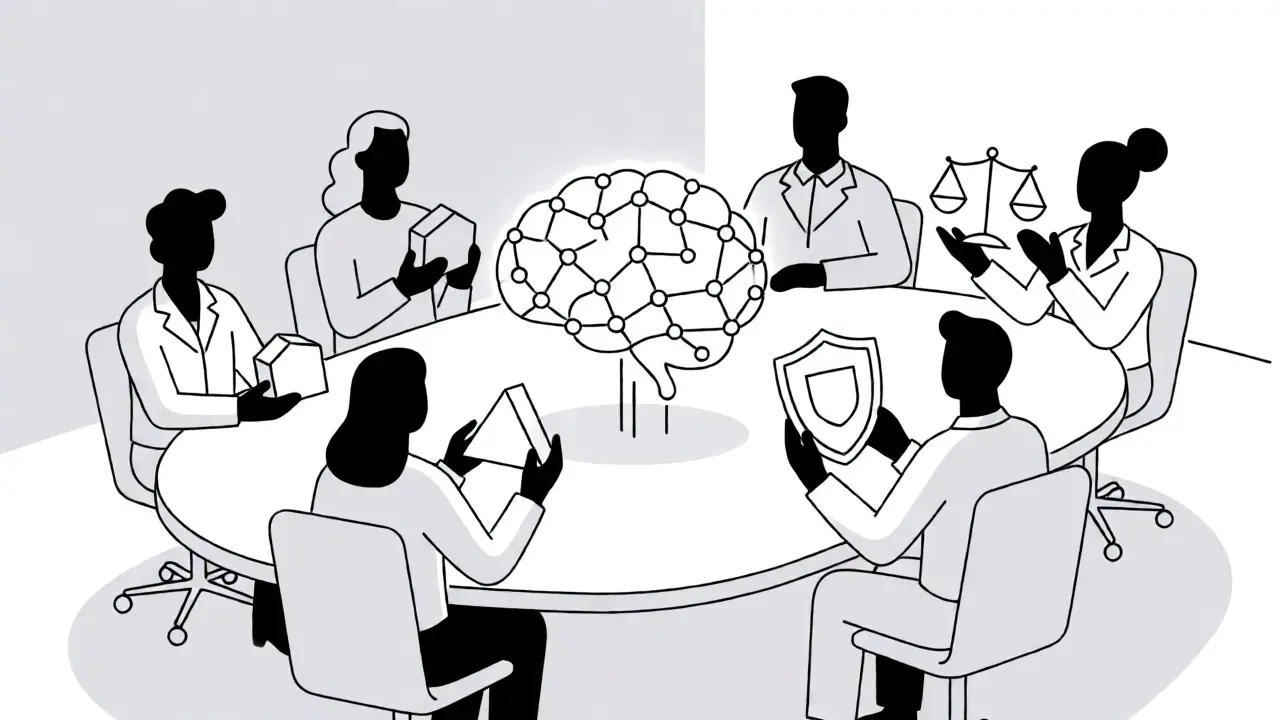
You’ve built a shiny new Generative AI model. It writes code, summarizes reports, and maybe even generates marketing copy. But before you ship it to thousands of users, someone needs to ask the hard questions: Who gets hurt if this thing hallucinates? Is the training data biased? Does it respect privacy? That’s where an Ethical Review Board comes in. Think of them as the gatekeepers of responsible innovation.
If you’re managing an AI project today, ignoring these boards is risky. According to KPMG’s 2023 survey, nearly 70% of large enterprises with significant AI investments have already set up formal ethics review bodies. Why? Because the stakes are high. A single bias scandal can wipe out brand trust faster than any ad campaign can rebuild it. This guide breaks down how these boards actually work, what they look for, and what happens when things go right-or wrong.
Why Your Organization Needs an AI Ethics Board Now
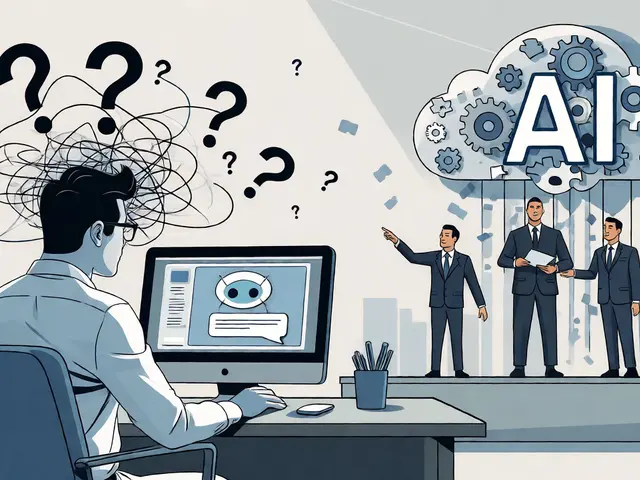
It wasn’t long ago that “AI ethics” was just a conference buzzword. That changed after ChatGPT launched in late 2022. Suddenly, every company had access to powerful generative tools, but few had guardrails. The result? A scramble for structure.
These boards aren’t just about checking boxes. They are risk mitigation engines. IBM’s internal data shows that companies using formal ethics reviews saw a 47% drop in compliance incidents. That’s not just good PR; it’s money saved on lawsuits and remediation.
Consider the regulatory landscape. The EU AI Act, finalized in early 2024, mandates ethics reviews for high-risk systems. In the US, states like California are pushing bills like SB-1047 that require oversight for large foundation models. If you wait until regulators come knocking, you’ll be playing catch-up. Establishing a board now gives you control over your narrative rather than letting headlines dictate it.
Who Sits at the Table? Building the Right Team
A common mistake is filling the board with only engineers. Sure, they know how the model works, but do they understand its social impact? Effective boards need diversity of thought and expertise.
Shelf.io analyzed Fortune 500 companies and found the sweet spot is 7-12 members. Here’s the breakdown that works:
- Technical Experts (30-40%): ML engineers and data scientists who can dissect model architecture.
- Ethics & Philosophy (25-35%): People trained to think about fairness, justice, and societal impact.
- Legal & Compliance (20-25%): Lawyers who know GDPR, CCPA, and liability issues inside out.
- Community Stakeholders (10-15%): Representatives from groups likely affected by your AI. This is often missing, and it’s a huge blind spot.
Timnit Gebru, founder of the Distributed AI Research Institute, warns that boards lacking community representation miss 30-40% of potential failure points. You might think your model is fair because your team thinks it’s fair. But if your training data underrepresents non-native English speakers, your customer service bot might fail them silently. A diverse board catches that.
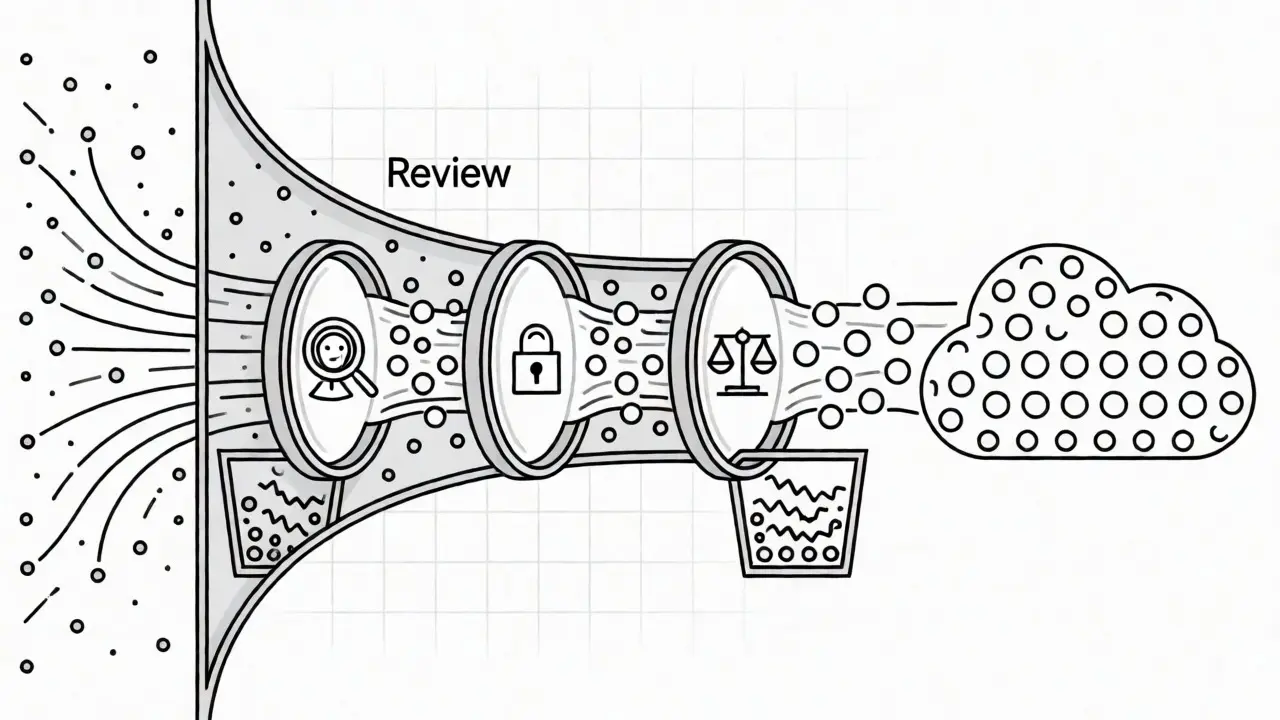
The 7-Step Review Process: From Idea to Deployment
So, what actually happens when you submit a project? While every organization tweaks the process, most follow a variation of these seven steps. Microsoft, for example, averages 21 business days for high-risk projects.
- Pre-submission Consultation: A quick chat to see if your idea is even viable ethically. Takes 3-5 days.
- Formal Application: You document everything. Training data sources, model type, intended use cases. No vague promises here.
- Initial Triage: Business unit focal points do a first pass. If it’s low-risk, it moves fast. High-risk goes to the full board.
- Risk Assessment: The core evaluation. Does it align with principles like fairness, transparency, and accountability?
- Stakeholder Impact Analysis: Who benefits? Who loses? Are equity-deserving groups protected?
- Decision Making: Usually requires 75% board approval. Rationale must be documented.
- Post-Deployment Monitoring: The work isn’t done at launch. Reviews happen quarterly or semi-annually.
This isn’t bureaucracy for the sake of it. Each step forces you to confront assumptions. For instance, during the risk assessment, you might realize your model’s “transparency” claim falls apart when you try to explain a decision to a layperson. Better to fix that before launch than after a complaint.
What Do They Actually Check? Key Evaluation Criteria
Boards don’t just guess. They use specific criteria. The Enterprise Big Data Framework identified 12 critical areas. Here are the big ones that will determine your fate:
| Criterion | What They Look For | Adoption Rate |
|---|---|---|
| Data Provenance | Where did the training data come from? Was consent obtained? | 92% |
| Bias Assessment | Performance disparity across gender, race, age, etc. Must be <5%. | 78% |
| Human Oversight | Can a human intervene? Required for 100% of high-risk apps. | 100% |
| Privacy Protection | Compliance with GDPR/CCPA standards. | 95% |
| Content Safety | Filters for harmful outputs (hate speech, misinformation). | 89% |
| IP Compliance | Does the model infringe on copyrights? | 91% |
Notice the emphasis on bias. It’s not enough to say “we checked for bias.” You need metrics. If your model performs 10% worse for women than men, you need a plan to fix it. Also, environmental impact is becoming a factor. 63% of boards now assess energy consumption, recognizing that training large models has a carbon footprint.

Outcomes: What Happens After the Review?
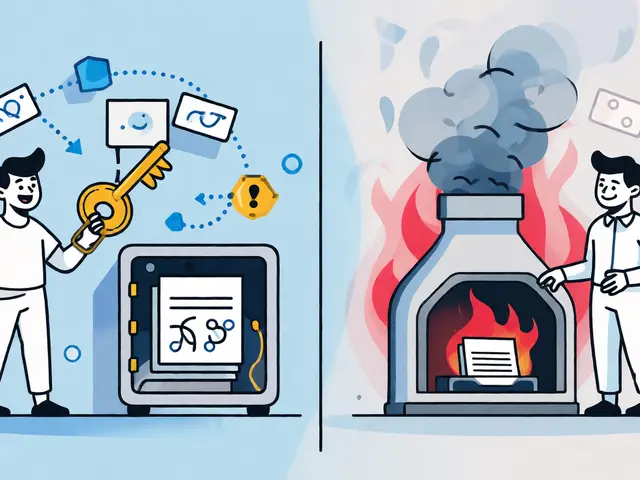
Not every project gets a green light. Some get approved with conditions. Others get sent back for rework. Rarely, they get rejected outright.
The benefits of passing review are measurable. Organizations with mature processes report 38% fewer regulatory issues and 42% less reputational damage. Plus, stakeholder trust goes up. Customers feel safer using AI they know is being watched.
But there are downsides, too. Bottlenecks are real. 58% of organizations report delays averaging 17 business days. This can slow down agile development cycles. To combat this, some companies are piloting automated ethics screening tools. Gartner notes that 61% of orgs are testing AI-powered bias detection to speed up the initial triage.
Another challenge is authority. Many boards lack teeth. If senior leadership has already committed to a project, board members may feel pressure to approve it. Gary Marcus, a well-known AI critic, argues that structural conflicts of interest plague many corporate boards. The solution? Independence. Harvard DCE found that boards with external members were 28% more effective in independence assessments.
Making It Work: Practical Tips for Implementation
If you’re setting up a board, don’t just copy-paste a template. Tailor it to your industry. Healthcare AI faces different risks than retail chatbots. In healthcare, false positives matter more. In retail, tone and brand safety are key.
Here are three tips to avoid common pitfalls:
- Train Your Board: Google provides 40+ hours of specialized training for their ethics members. It pays off. Their review consistency improved by 31%.
- Define “High Risk”: Not every AI tool needs a full board review. Create tiers. Low-risk internal tools can skip the heavy process.
- Empower Them: Give the board the power to pause deployment. If they can’t stop a bad launch, they’re just decoration.
Remember, the goal isn’t to kill innovation. It’s to steer it. When done right, ethical review boards help you build products people actually trust. And in the crowded AI market, trust is your biggest competitive advantage.
Do small businesses really need an AI ethics board?
Not necessarily a full-time board. Small businesses can start with a designated ethics officer or a part-time advisory panel. However, if you deploy generative AI in customer-facing roles, some form of structured review is essential to mitigate legal and reputational risks.
How much does an AI ethics board cost to run?
Costs vary widely. Large enterprises allocate around $350,000 annually for operations, including external experts and tools. Smaller firms might spend significantly less by leveraging internal staff time and open-source audit tools, though opportunity costs should be considered.
What is the biggest mistake companies make with AI ethics boards?
Creating a board without real authority. If the board cannot veto a project or mandate changes, it becomes "ethics washing." Another common error is lacking technical expertise, leading to superficial reviews that miss deep algorithmic biases.
How long does an AI ethics review typically take?
For high-risk projects, expect 21 business days on average. Low-risk projects can clear in 3-7 days. Delays often occur due to incomplete documentation or bottlenecks in scheduling board meetings.
Are AI ethics boards legally required?
In the EU, yes, for high-risk AI systems under the EU AI Act. In the US, there is no federal mandate yet, but state laws like California's SB-1047 are introducing requirements for large foundation models. Industry-specific regulations (like HIPAA in healthcare) also impose de facto requirements.
 Artificial Intelligence
Mark Harvey
September 10, 2026 AT 03:19Love this breakdown really helps clarify the process for teams just starting out
Brandon Olvera
September 10, 2026 AT 10:28Finally someone admitting that US regulation is lagging behind the EU which is embarrassing for American tech leadership and shows we need stronger domestic oversight instead of letting Silicon Valley run wild without checks on their power and influence globally.
Elizabeth Brooks
September 11, 2026 AT 18:25This is a solid overview but I think you underplay the importance of continuous monitoring after deployment since models can drift over time due to data changes or user behavior shifts which means a one-time review isn't enough to ensure long term safety and compliance with evolving standards like GDPR updates or new state laws that might emerge in the next few years so keep iterating on your feedback loops constantly to catch issues early before they become scandals that hit the news cycle hard and fast.
alex kobri
September 12, 2026 AT 06:24The tension between speed and ethics is real
Boards often lack teeth because leadership wants results now not questions later
True independence requires structural separation from product teams otherwise it's just theater
We must respect boundaries even when innovation pushes against them
Tamara Miller
September 13, 2026 AT 13:14It is absolutely crucial, nay, essential, that every single organization establishes such a board; otherwise, they are merely complicit in the erosion of human dignity. The fact that many boards lack authority is simply unacceptable! One cannot simply 'check boxes' and call it ethical rigor. It is lazy, it is dangerous, and frankly, it is morally bankrupt to prioritize profit over people without genuine, binding oversight mechanisms in place. Shame on those who treat this as optional!
john randall
September 14, 2026 AT 14:23Interesting read. The stats on cost seem high for smaller firms though.
Most startups probably skip this until they get funded.
Not sure if community stakeholders actually have enough input in most corporate setups.
Jeff Falcon
September 15, 2026 AT 23:47I totally agree with the point about diverse teams being critical, because honestly if you only have engineers looking at the problem you're going to miss all the social nuances that matter just as much as the code itself, and while the 21 day timeline sounds reasonable for big companies I wonder how that scales for agile teams that ship daily features because waiting three weeks for an ethics sign-off feels like it kills momentum and maybe we need automated tools to handle the low risk stuff so humans can focus on the tricky edge cases where bias might hide in plain sight unnoticed by standard metrics.
Alyson Karson
September 17, 2026 AT 17:05Dude this is spot on!! We literally tried to launch without proper reviews and got burned HARD last year. The bias testing saved us from a PR nightmare. Seriously invest in this stuff now dont wait till regulators slap you down its way cheaper to fix it early than pay fines later go get em team!!!
Chris Neal
September 19, 2026 AT 11:23Actually the KPMG stat cited is misleading because it conflates formal bodies with informal practices. Most enterprises have ad-hoc committees not true independent boards. Also Timnit Gebru's warning is valid but the solution isn't just adding community reps it's changing the incentive structure entirely. Without veto power these boards are decorative. Harvard DCE data supports this but ignores the political reality of corporate hierarchy.
Vishnu Vardhan Reddy M S
September 20, 2026 AT 22:12Oh wow another article telling us how to do our jobs while ignoring the fact that in India we deal with massive scale diversity that Western models never see. Your 'community stakeholder' idea is cute but try getting consensus across 22 official languages and hundreds of dialects. Good luck with that 7-12 member board. Maybe hire more people? Just saying.