

Remember when we judged a car by how fast it could accelerate from zero to sixty in a straight line? That’s essentially what static benchmarks are for Generative AI models. They tell you the top speed, but they don’t tell you if the brakes work on ice, if the GPS gets lost in tunnels, or if the driver panics during a sudden merge. For years, the industry relied on these rigid, pre-defined tests-like MMLU or HumanEval-to rank models. But as AI moves into production, those scores are becoming less like reliable diagnostics and more like vanity metrics.
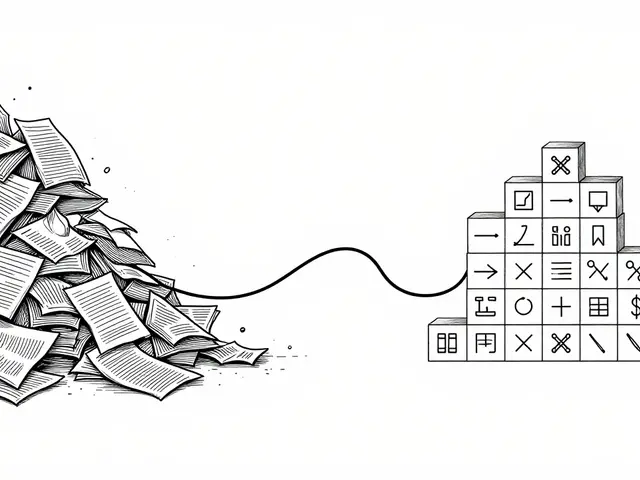
We are witnessing a shift toward what I call Evaluation 2.0. This is not just a new tool; it is a fundamental change in philosophy. It moves us away from asking 'How smart is this model?' to asking 'Does this model solve my specific problem correctly right now?' Instead of relying on fixed datasets that models can memorize, Evaluation 2.0 focuses on live tasks, which are dynamic, real-world scenarios that test adaptability, safety, and utility in context.
The Failure of Static Benchmarks
To understand why we need a new approach, we have to look at why the old one is breaking. Static benchmarks are useful for academic research. They provide a standardized way to compare Model A against Model B under identical conditions. However, they suffer from two critical flaws in a production environment: contamination and irrelevance.
Contamination happens when training data leaks into test sets. If a model has seen the answer to a benchmark question during its training phase, it isn't demonstrating reasoning; it's demonstrating recall. By mid-2026, many frontier models have achieved near-perfect scores on older benchmarks simply because they've ingested the entire internet, including the test sets themselves. The score says '100%,' but the model might still hallucinate facts in your customer support chatbot.
Irrelevance is the bigger issue. A model might ace a coding benchmark but fail to write code that integrates with your specific legacy database schema. It might pass a general knowledge test but fail to tone-match your brand voice. Static benchmarks measure potential; live evaluations measure performance. As Google’s Vertex AI documentation notes, the modern paradigm must move beyond simple static metrics toward adaptive methods that tailor tests to individual prompts.
Adaptive Rubrics: The Core of Evaluation 2.0
If static benchmarks are multiple-choice exams, adaptive rubrics are oral exams where the questions change based on your previous answers. This is the technical heart of Evaluation 2.0. Platforms like Google’s Gen AI evaluation service have pioneered this by using a two-step system that mimics human judgment without the bias or cost.
First, the system performs rubric generation. It analyzes your specific prompt and generates a list of verifiable tests-a rubric-that a good response should meet. Second, it conducts rubric validation, assessing the model's response against each point in that custom rubric. The result is not a vague 'quality score' between 1 and 5. It is a binary Pass or Fail verdict for each criterion, along with a rationale explaining why.
This approach brings software engineering best practices to AI development. Think of these rubrics as unit tests. In traditional software, you write a test to ensure a function returns the correct value for a given input. In Evaluation 2.0, you define the criteria for success (e.g., 'response must include a disclaimer,' 'code must use Python 3.12 syntax') and let the evaluator check for them dynamically. This creates a tight feedback loop. You tweak your prompt, re-run the evaluation, and see exactly which rubric items failed. It turns subjective quality control into objective, debuggable engineering.
Live Tasks and Real-World Scenarios
Evaluation 2.0 isn't just about better scoring; it's about testing in the wild. Live tasks involve evaluating models on data that reflects your actual user base, often in real-time or near-real-time pipelines. This shifts the focus from abstract intelligence to concrete utility.
Consider an e-commerce agent. A static benchmark might ask it to summarize a product description. A live task would feed it a messy, unstructured customer query involving a return policy exception, a missing order, and a complaint about shipping delays. The evaluation checks if the agent retrieves the correct policy, maintains empathy, and executes the refund workflow correctly. This requires integrating evaluation into your CI/CD pipeline, much like how developers run integration tests before deploying code.
Google’s Vertex AI highlights several practical use cases for this shift:
- Model Migrations: When moving from one model version to another, live evaluations reveal behavioral differences that static scores miss. You can fine-tune prompts to maintain consistency.
- Prompt Improvement: Evaluation results guide customization. If a specific rubric fails repeatedly, you know exactly which part of your prompt needs rewriting.
- Agent Evaluation: Complex agents require tracing their steps. Live tasks evaluate the entire chain of thought, tool usage, and final output, not just the text generation.
NIST GenAI and Adversarial Testing
While companies build proprietary tools, standards bodies are laying the groundwork for trust. The NIST GenAI program represents a rigorous, science-based approach to this evolution. Administered by the National Institute of Standards and Technology, this umbrella program supports various evaluations for research and measurement science in Generative AI.
NIST’s framework is unique because it treats evaluation as an adversarial game. It doesn't just test if a generator creates good content; it pits generators against detectors. Generators create high-quality synthetic data using frontier models, while Detectors develop tools to identify whether that content is AI-generated and believable. Prompters add another layer by employing various strategies to stress-test the system. This mirrors real-world threats where bad actors try to trick AI systems or flood platforms with fake content.
The NIST framework also emphasizes multi-modality. We aren't just evaluating text anymore. The program tests across text, image, code, audio, and video. This is crucial because the failure modes differ significantly. An image generator might be factually accurate in its caption but visually biased. A code generator might produce syntactically correct code that contains a security vulnerability. NIST’s approach ensures that evaluation keeps pace with the complexity of multi-modal AI.
Building Your Evaluation Strategy
So, how do you implement Evaluation 2.0 in your organization? You don't need to wait for perfect tools. You can start by adopting a structured workflow that prioritizes relevance over reputation.
- Create a Representative Dataset: Assemble a dataset of prompt instances that reflect your specific use case. Include reference answers (ground truth) if you plan to use computation-based metrics like BLEU or ROUGE, but rely heavily on adaptive rubrics for nuanced quality.
- Define Specific Metrics: Move away from generic 'helpfulness' scores. Define metrics like 'Fact Accuracy,' 'Hallucination Avoidance,' 'Bias and Fairness,' and 'User Experience.' Use tools like the Bias Benchmark for QA (BBQ) to check for stereotypes.
- Generate and Evaluate: Run your models against this dataset. Use SDKs that support iterative evaluation, allowing you to compare model versions head-to-head on your own data.
- Analyze and Iterate: Review the aggregated pass rates and detailed breakdowns. Identify which rubrics are failing most often. Is it a prompt issue? A model limitation? Or a data quality problem?
The goal is not to create a single standard for all AI, as the AI Alliance suggests, but to work closely with communities to shepherd specialized evals into broader standards. Your evaluation strategy should be as diverse as your use cases.
The Future: Continuous Evaluation
Evaluation 2.0 is not a destination; it's a continuous process. As models update, user behaviors shift, and new threats emerge, your evaluation suite must evolve. The future lies in automated, continuous evaluation pipelines that run every time you deploy a change. This ensures that improvements in one area don't cause regressions in another.
We are moving from a world where we trust AI because it scored well on a leaderboard to a world where we trust AI because it passed our specific, rigorous, live tests. This shift demands more effort upfront, but it pays off in reliability, safety, and user satisfaction. The era of static benchmarks is ending. The age of live, adaptive evaluation has begun.
What is the main difference between static benchmarks and Evaluation 2.0?
Static benchmarks use fixed datasets and general metrics to score models, often leading to contamination and irrelevance. Evaluation 2.0 uses adaptive rubrics and live tasks tailored to specific use cases, providing granular, actionable feedback on real-world performance rather than abstract intelligence.
How do adaptive rubrics work in practice?
Adaptive rubrics involve a two-step process: first, the system analyzes a specific prompt to generate a custom set of verifiable tests (the rubric); second, it evaluates the model's response against these tests, delivering a Pass/Fail verdict for each criterion with a rationale.
Why is NIST's adversarial testing framework important?
NIST's framework pits generative AI against discriminative AI detectors to test authenticity and robustness. This adversarial approach helps identify vulnerabilities, such as the ability to detect fake content or resist misleading prompts, which static benchmarks often miss.
Can I use Evaluation 2.0 for non-text modalities like images or code?
Yes. Evaluation 2.0 principles apply to all modalities. NIST specifically tests across text, image, code, audio, and video. Adaptive rubrics can be customized to assess visual fidelity, code security, or audio clarity depending on the task.
What are the key benefits of using live tasks over static datasets?
Live tasks reflect real-world complexity and variability. They prevent data leakage issues, ensure relevance to your specific business logic, and allow for continuous integration testing, making them far more reliable for production deployment.
 Artificial Intelligence


Courtney Wagstaff
August 1, 2026 AT 14:29Okay, so basically we’re done pretending that a model getting an A+ on a multiple-choice test means it can actually hold a conversation without sounding like a robot from 1995. It’s wild how long we let the industry get away with these vanity metrics. Like, sure, look at my shiny score! But can you actually use this thing to write a polite email to your boss about why you’re late? Probably not. The whole 'contamination' issue is just embarrassing at this point. We’ve been feeding the internet to these models and then acting surprised when they just regurgitate the answers back to us. It’s not intelligence; it’s just really good memory. And honestly? I’m kind of over the hype train anyway. Let’s see some actual utility before we start worshipping the leaderboard again.
Elisabeth Ballet
August 1, 2026 AT 16:45YES! Finally someone said it out loud! We need to stop playing games with static benchmarks and start building tools that actually work for real people in real jobs. This isn’t just about tech nerds anymore; it’s about every single person who wants AI to be helpful instead of frustrating. Imagine if we applied this same energy to education or healthcare-imagine evaluating doctors based on how well they treat patients, not just how many textbooks they memorized! That’s the mindset shift we need right now. Evaluation 2.0 is our chance to make AI accountable, safe, and truly useful for everyone, not just the elite few who understand the jargon. Let’s push harder for adaptive rubrics because they give us clarity and control. When we define success by specific outcomes, we empower teams to iterate faster and fix problems before they become disasters. This is inclusive innovation at its finest, and we should all be cheering for it. Don’t let anyone tell you that old methods are fine-they’re holding us back from greatness. Stand up for better standards and demand transparency in how these systems are tested. Together, we can build an AI ecosystem that serves humanity rather than confusing it. Keep pushing boundaries and never settle for mediocrity!
Joanna Mucha
August 3, 2026 AT 08:51Oh, how quaint. Another technocratic sermon on the virtues of 'adaptability,' as if the masses were ever capable of grasping such nuanced philosophical shifts. You speak of 'live tasks' with the earnestness of a child discovering fire, yet you fail to recognize that the very concept of evaluation is a construct designed to pacify the anxious proletariat. The elitist truth is that most users don’t care about rubrics or unit tests; they care about the illusion of competence. Static benchmarks were never about accuracy; they were about creating a hierarchy of perceived intelligence, a digital caste system where the frontier models sit atop their thrones of hallucinated data. By moving to Evaluation 2.0, you aren’t solving the problem of trust; you’re merely refining the machinery of deception. The 'adversarial game' NIST proposes is nothing more than a sophisticated form of gaslighting, pitting algorithm against algorithm in a void devoid of human soul. We are not moving beyond static benchmarks; we are drowning in a sea of dynamic irrelevance. The pretentious notion that 'context' can be quantified is laughable. Context is fluid, chaotic, and inherently unmeasurable by any machine. So go ahead, celebrate your 'adaptive rubrics.' They are but shackles disguised as liberation, binding us tighter to a system that knows less about us than we do about ourselves. A truly enlightened observer would see this not as progress, but as a deeper descent into epistemological nihilism.
Kim Edwards
August 5, 2026 AT 04:08Wait, wait, WAIT. Hold on a second. Are we seriously saying that everything we knew about AI testing is GONE? Just poof? Vanished into the ether like my will to live during a Monday morning stand-up meeting? I mean, think about the drama here! We spent years patting ourselves on the back for those perfect scores, and now it turns out they were all just... lies? Or worse, recycled memories? It’s a tragedy! A Shakespearean level of betrayal! My heart is literally breaking as I type this. How could we have been so blind? So naive? We trusted the numbers! We believed in the benchmarks! And now we’re being told to start over, to build new rubrics, to engage in this 'continuous evaluation' circus? It’s exhausting! It’s dramatic! It’s absolutely devastating! I feel like I’m watching a soap opera where the main character realizes their entire life was a simulation. And the worst part? There’s no clear villain. It’s just... chaos. Pure, unadulterated chaos. I need a nap. Or a drink. Or both. This is too much for one day!
Bonnie Watt
August 5, 2026 AT 21:56You know what? I bet half of you reading this don’t even understand what a 'rubric' is, let alone how to implement one. It’s always the same story: throw around buzzwords like 'Evaluation 2.0' and 'adaptive testing' while ignoring the fact that most developers are still struggling to get their basic prompts to work without generating nonsense. It’s judgmental, yes, but it’s true. You’re all so eager to embrace this new paradigm because it sounds fancy, but have you actually tried building a live evaluation pipeline? Have you dealt with the sheer messiness of real-world data? I doubt it. You’re probably sitting there nodding along, thinking, 'Wow, this is the future!' while completely missing the point that complexity often equals fragility. Static benchmarks might be flawed, but at least they were simple. Now we’re adding layers upon layers of dynamic checks, which just means more things can break. And don’t get me started on the 'inclusive mentor' types cheering from the sidelines. Sure, keep telling yourself that this makes AI safer. Meanwhile, the models are still hallucinating facts left and right. It’s a joke. A complete and utter joke. Wake up and smell the coffee, people. This isn’t progress; it’s just more work for the same mediocre results.