
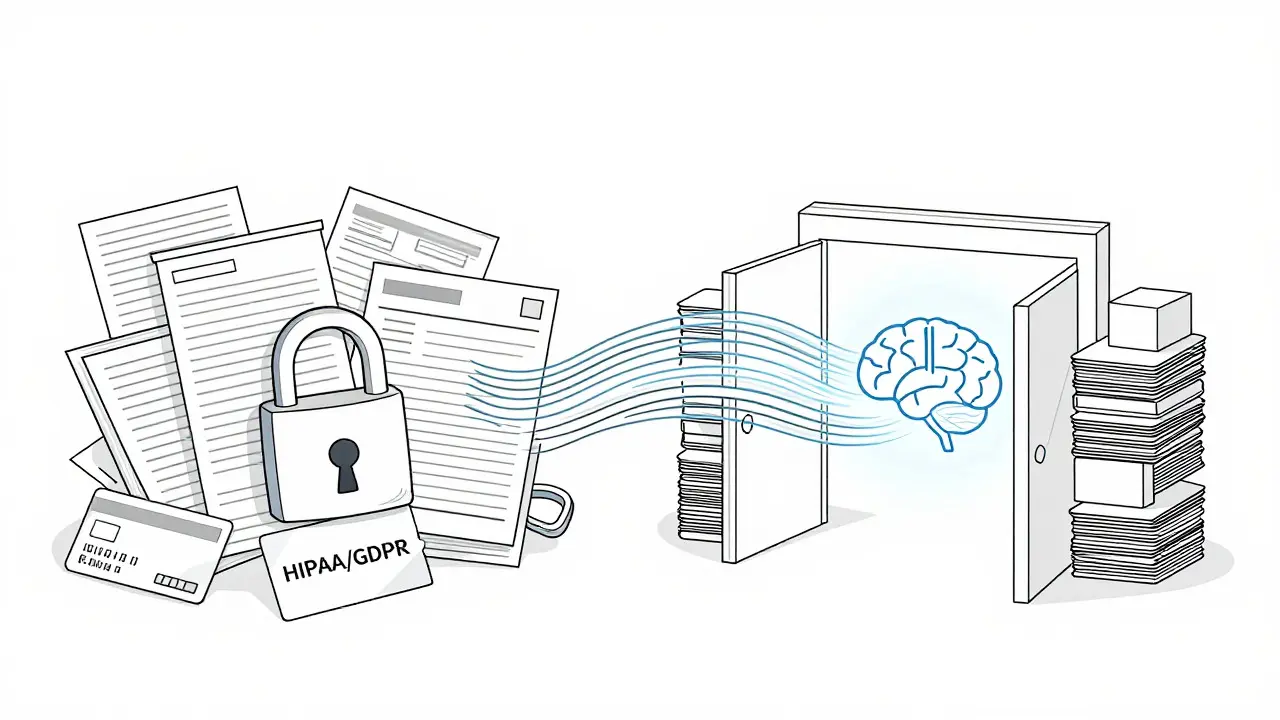
Imagine having access to a massive database of patient medical records or millions of credit card transactions. You want to train an AI model on this data to catch fraud or predict disease outbreaks, but you can't share the raw files because of strict privacy laws like HIPAA or GDPR. If you strip out names and IDs, researchers still find ways to re-identify people by cross-referencing other details. It’s a stalemate: we need the data to build better AI, but using real data risks exposing private lives.
This is where Synthetic Data Generation creates artificial datasets that mimic the statistical patterns of real-world data without containing actual individual records steps in. Instead of feeding your AI raw customer emails or health logs, you generate fake versions that look and behave just like the real thing. The goal isn't just to hide names; it's to mathematically guarantee that no single person's information can be reverse-engineered from the output. With the rise of Large Language Models (LLMs), this technique has moved from niche research to a critical necessity for any organization handling sensitive info.
The Problem with Traditional Anonymization
For years, companies relied on "anonymization"-scrubbing names, addresses, and social security numbers before sharing data. But as data science advanced, this method proved fragile. A study published in 2016 showed that combining just three pieces of non-sensitive data (zip code, birth date, and gender) could uniquely identify 87% of the US population. When you add more variables, like purchase history or browsing habits, re-identification becomes almost trivial.
Traditional methods fail because they treat privacy as a static state. Once data leaves the secure environment, it can be combined with other public datasets to reveal identities. This creates a bottleneck for innovation. Healthcare providers hesitate to share clinical trial data. Banks are wary of collaborating on anti-money laundering algorithms. Researchers sit on goldmines of insight, unable to use them effectively. We needed a way to make the data useful for machine learning while making it useless for spying on individuals.
Differential Privacy: The Mathematical Shield
To solve this, experts turned to Differential Privacy a mathematical framework that adds calibrated noise to data or computations to ensure individual contributions cannot be distinguished. Unlike simple anonymization, differential privacy provides a rigorous guarantee. It ensures that the output of a query or model changes very little whether or not any single individual's data is included in the dataset. If removing one person's record doesn't change the result significantly, then that person's privacy is protected.
The core mechanism involves adding carefully calculated noise to the training process. Think of it like trying to hear a specific conversation in a crowded room. If there's enough background chatter (noise), you can understand the general topic (the pattern) without hearing exactly what one specific person said. In technical terms, this often uses DP-SGD Differentially Private Stochastic Gradient Descent, an algorithm that adds noise to gradients during neural network training. During each step of training an LLM, the algorithm calculates how much the model should change based on the data. DP-SGD clips these updates and adds random noise before applying them. This prevents the model from memorizing specific sentences or unique identifiers from the training set.
A major breakthrough came in May 2024 when Google DeepMind and Google Research published detailed findings on differentially private synthetic data generation. Their work demonstrated that you could maintain high data utility-meaning the synthetic data was actually good for training other models-while providing these strong privacy guarantees. They showed that if the initial step of generating the synthetic data satisfies differential privacy, all subsequent uses of that data remain privacy-preserving. This composability is huge. It means once you create the synthetic dataset, you can share it freely, knowing the privacy protection sticks.
How LLMs Create Synthetic Data
So, how do you actually make this data? You don't start from scratch. You take an existing Large Language Model, which already understands language structure, grammar, and general world knowledge, and fine-tune it on your sensitive dataset. However, you don't just throw the data at it. You use parameter-efficient fine-tuning techniques to keep the privacy budget low.
Full fine-tuning, where you update every single weight in a massive model, requires a lot of noise to protect privacy. Too much noise ruins the quality of the generated text. To balance this, researchers use methods like LoRA Low-Rank Adaptation, a technique that freezes most model weights and trains small adapter matrices. LoRA works by freezing the bulk of the pre-trained model and only updating a tiny fraction of parameters-specifically, low-rank matrices added to the attention layers.
Google's experiments highlighted this trade-off clearly. They compared prompt-based fine-tuning, which modified only about 41,000 parameters, against LoRA, which adjusted around 20 million parameters of their Lamda-8B model. Surprisingly, LoRA performed better. Even though it touched more parameters, the structured nature of the adaptation allowed for higher-quality synthetic data generation while still maintaining the necessary privacy guarantees. The resulting model could generate realistic-looking text samples-like synthetic patient histories or financial transaction descriptions-that captured the complex correlations in the original data without leaking specific user details.
| Method | Parameters Modified | Data Quality | Privacy Efficiency |
|---|---|---|---|
| Prompt-Based Tuning | ~41,000 | Lower | Moderate |
| LoRA | ~20 Million | High | High |
| Full Fine-Tuning | Billions | Highest | Low (Requires excessive noise) |
Real-World Applications and Use Cases
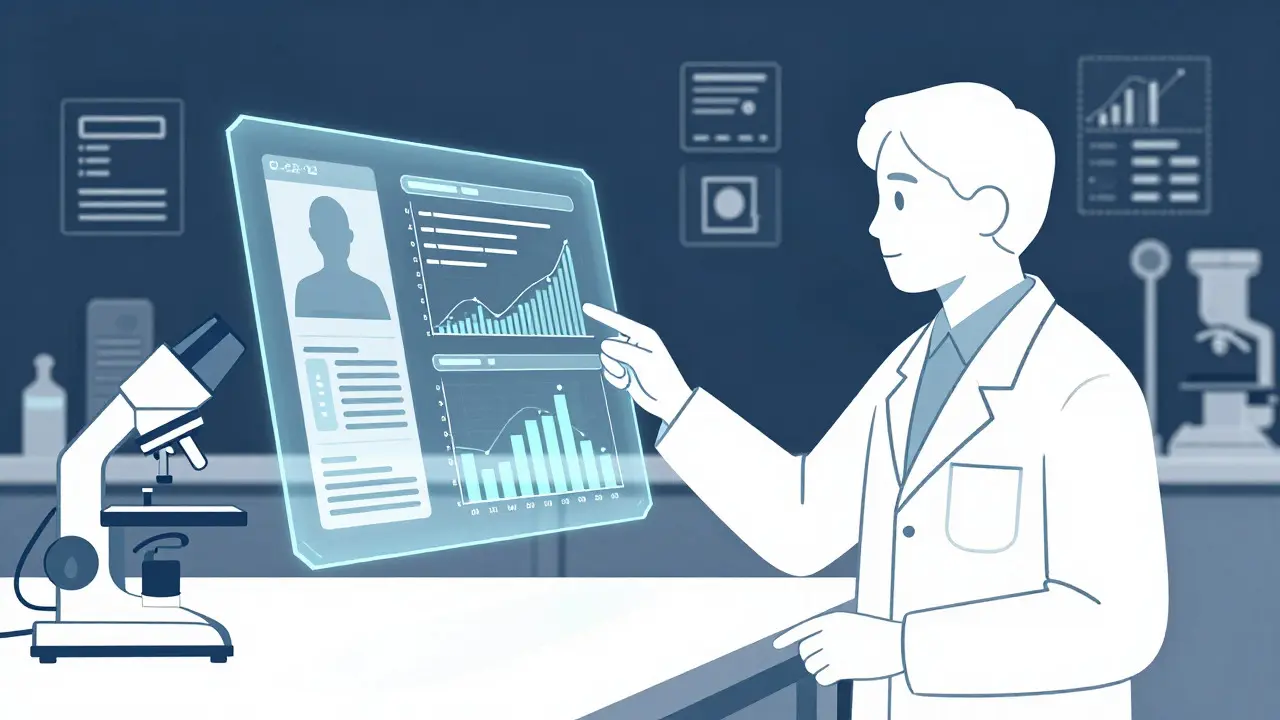
This technology isn't just theoretical. It's solving immediate problems in industries where data sensitivity is paramount. Let's look at healthcare. Medical researchers need diverse datasets to train diagnostic AI tools. Real patient records contain Protected Health Information (PHI). By using synthetic data generation, hospitals can create thousands of synthetic Electronic Health Records (EHRs). These records preserve the statistical relationships between symptoms, diagnoses, and treatments. For example, if the real data shows a correlation between a specific genetic marker and a rare side effect, the synthetic data will reflect that pattern. Researchers can train new models on this safe data, improving diagnostics without ever seeing a real patient's file.
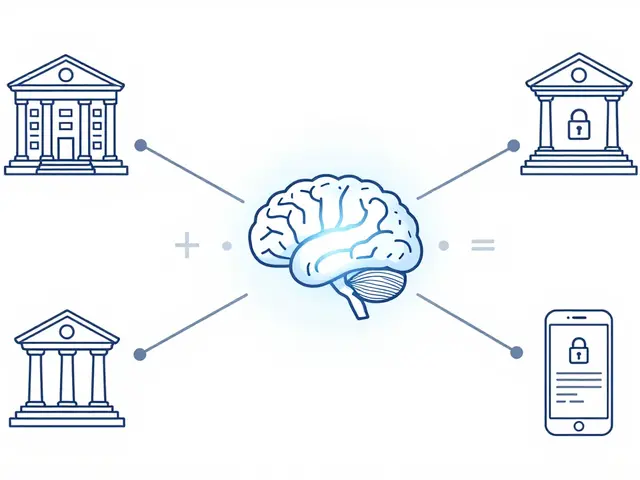
In finance, the application is equally powerful. Banks deal with transaction histories that reveal spending habits, locations, and income levels. Sharing this data with third-party vendors for fraud detection is risky. Synthetic transaction datasets allow banks to collaborate. They can generate fake transaction logs that include realistic fraud indicators and normal spending patterns. Vendors can test their algorithms against this data. The bank gets better fraud detection; the vendor gets a robust testing ground; and the customers' financial lives remain private.
Even software development benefits. Developers often need realistic test data to populate databases. Using production data is dangerous. Using completely random data breaks tests because it lacks realism. Synthetic data bridges this gap. It provides the complexity and edge cases found in real user behavior without the liability.
Challenges and Limitations
It’s not a magic bullet. There are significant hurdles. First, there is the "privacy-utility trade-off." The more privacy you demand (higher epsilon values in differential privacy), the more noise you add, and the lower the quality of the synthetic data. Finding the sweet spot requires expert tuning. If the data is too noisy, the downstream AI models trained on it will perform poorly. If it's too clean, you risk privacy breaches.
Second, computational cost is high. Generating high-quality synthetic data using LLMs with differential privacy is expensive. It takes time and significant GPU resources. Organizations must weigh the cost of computation against the cost of potential privacy fines or reputational damage. For many, especially those under GDPR scrutiny, the investment is worth it. But for smaller startups, the barrier to entry remains steep.
Third, validation is tricky. How do you know the synthetic data is truly representative? You need rigorous statistical tests to compare the distribution of the synthetic data against the real data. Metrics like Kolmogorov-Smirnov tests or Wasserstein distances help quantify this similarity. Without proper validation, you might end up with biased synthetic data that reinforces stereotypes present in the original dataset, even if it's technically "private."
Best Practices for Implementation
If you're looking to implement this in your organization, start small. Don't try to synthesize your entire database overnight. Pick a specific, high-value dataset with clear privacy constraints. Define your privacy budget early. Work with data scientists to determine the acceptable level of noise. Use established libraries like TensorFlow Privacy or PySyft, which have built-in support for DP-SGD.
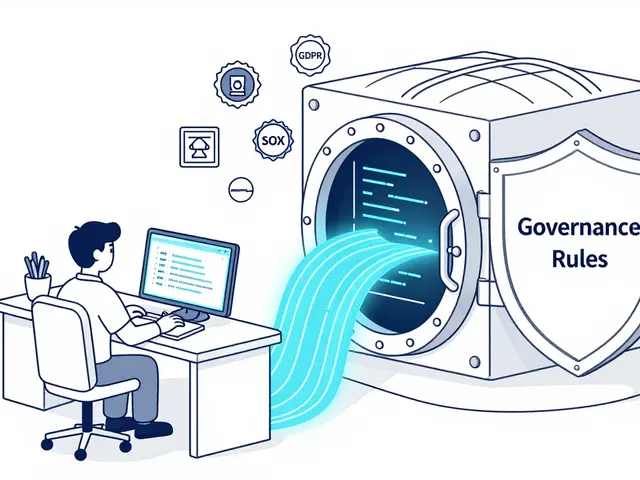
Focus on parameter-efficient fine-tuning. As Google's research showed, LoRA offers a better balance than full fine-tuning or minimal prompt tuning. Monitor the output closely. Check for "mode collapse," where the model generates repetitive or unrealistic variations. Finally, document everything. Auditors will want to see proof that your synthetic data pipeline adheres to differential privacy standards. Keep logs of the noise scales used and the validation metrics achieved.
The Future of Privacy-Preserving AI
We are moving toward a future where raw data sharing becomes obsolete. Instead of passing around CSV files of personal information, organizations will exchange synthetic datasets. This shifts the paradigm from "trust us, we deleted the names" to "mathematically proven privacy." As LLMs become more efficient and hardware gets cheaper, the cost barrier will drop. We'll likely see standardized benchmarks for synthetic data quality and privacy, similar to how we measure model accuracy today.
Regulators are already taking notice. The EU's AI Act and evolving interpretations of GDPR suggest that synthetic data will play a key role in compliance strategies. Companies that master this technology now will have a competitive advantage. They can innovate faster, collaborate more openly, and sleep easier at night knowing their users' data is safe. The tension between AI progress and privacy protection is real, but synthetic data generation offers a viable path forward.
What is synthetic data generation?
Synthetic data generation is the process of creating artificial data that mimics the statistical properties and patterns of real-world data. It is designed to preserve the utility of the original dataset for tasks like machine learning while removing direct links to individual records, thereby protecting privacy.
How does differential privacy protect data in LLM training?
Differential privacy protects data by adding calibrated mathematical noise to the training process, specifically to the gradients in algorithms like DP-SGD. This ensures that the influence of any single individual's data point on the final model is negligible, making it impossible to reverse-engineer specific inputs from the outputs.
Why is LoRA preferred over full fine-tuning for synthetic data?
LoRA (Low-Rank Adaptation) is preferred because it modifies a smaller subset of parameters efficiently. Research by Google in 2024 showed that LoRA achieves higher data quality and better privacy efficiency compared to prompt-based tuning, while avoiding the excessive noise requirements of full fine-tuning, which can degrade data utility.
Can synthetic data be used for compliance with GDPR and HIPAA?
Yes, synthetic data generated with rigorous privacy guarantees like differential privacy is increasingly seen as a compliant method for sharing sensitive data. Since the data does not contain real individual records, it reduces the regulatory burden under frameworks like GDPR and HIPAA, though legal counsel should always verify specific use cases.
What are the main challenges of using synthetic data?
The main challenges include the privacy-utility trade-off (more privacy means less accurate data), high computational costs for generation, and the difficulty of validating that the synthetic data accurately represents the real-world distributions without introducing bias.
 Artificial Intelligence

Stephanie Frank
July 26, 2026 AT 05:46Another tech bro fantasy where we pretend math can solve human greed. You think adding noise to a dataset stops a corporation from selling your behavioral profile? Please. The 'privacy budget' is just a fancy term for how much they're willing to risk before the SEC comes knocking. I've seen these 'anonymized' datasets in healthcare startups and they leak more than a sieve. It's not about protecting you, it's about letting them train models without getting sued into oblivion while still mining your data for profit.
Patrick Dorion
July 26, 2026 AT 20:44The philosophical implication here is that we are shifting from a model of consent to one of statistical abstraction. By treating individuals as mere data points in a distribution rather than moral agents with rights, we simplify the ethical burden on corporations. It is efficient, certainly, but it feels like a surrender of individual sovereignty to the algorithmic state. We are essentially saying that privacy is only valuable if it doesn't hinder computational efficiency. That is a dangerous precedent for democratic societies where the individual should theoretically hold power over their own information.
Edward Gilbreath
July 28, 2026 AT 08:37its all a lie. google deepmind is feeding this back into their main models to track us better. differential privacy is just code for 'we added enough static so you cant hear the wiretaps'. they want you to believe the data is fake so you stop fighting the surveillance state. its lazy thinking. why do you think they push loras so hard? because full tuning would reveal the truth about what they actually know about your medical history. wake up sheeple.
kimberly de Bruin
July 29, 2026 AT 01:20the soul of data is lost when it becomes synthetic. we are creating ghosts of our lives to feed the machine gods. is it really privacy if the ghost looks exactly like you? i feel like we are dancing with shadows. the math says safe but the spirit says otherwise. maybe the noise is the only real thing left.
Edward Nigma
July 29, 2026 AT 09:17You guys are missing the point entirely because you're too busy typing on your phones. Synthetic data isn't about privacy, it's about copyright evasion. They don't care if your zip code leaks; they care that they can train on copyrighted text without paying royalties. LoRA is just a tool to scrape more efficiently while hiding behind 'privacy' as a smokescreen. It's not assertive enough to call it theft directly, but that's what it is. Stop pretending this helps the little guy.
Francis Laquerre
July 31, 2026 AT 00:06In my experience working across European and North American markets, the cultural reception to this technology varies wildly. In France, there is a deep skepticism rooted in historical distrust of centralized data collection, whereas in Silicon Valley, it is embraced as the ultimate innovation enabler. This divergence creates a fragmented global standard for AI ethics. We need a unified framework that respects these cultural nuances rather than imposing a one-size-fits-all mathematical solution. The dramatic shift towards synthetic data must be accompanied by robust international dialogue to prevent a race to the bottom in privacy standards.