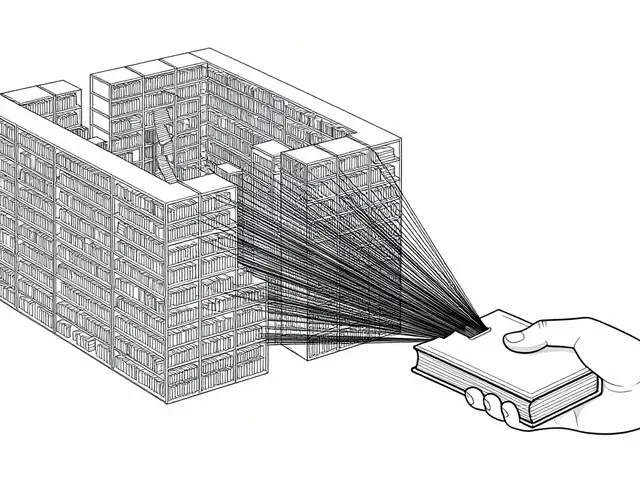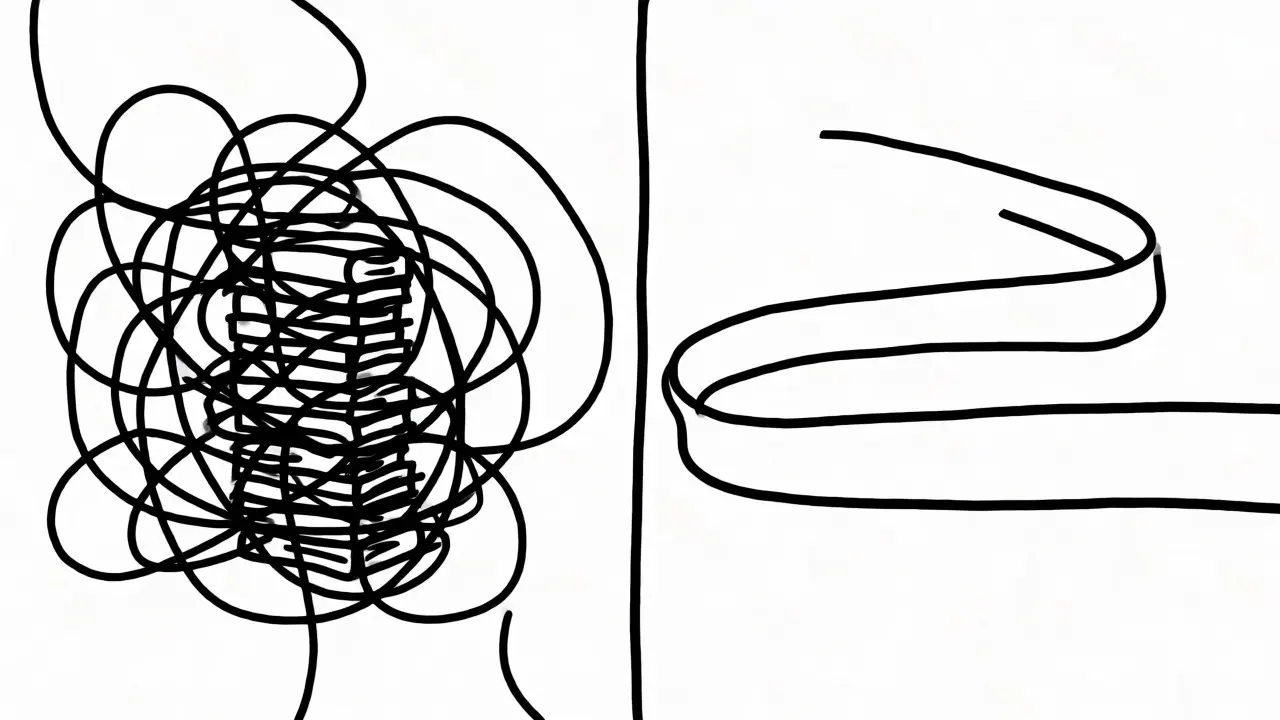
Imagine trying to read a 100-page book by re-reading every single previous sentence for each new word you encounter. That’s essentially what standard Transformers do with their self-attention mechanism. It works brilliantly for understanding context, but it becomes computationally expensive as the text gets longer. The cost scales quadratically-double the length, and you might need four times the compute power. This is why processing massive documents or maintaining long chat histories can grind even powerful GPUs to a halt.
Enter Hybrid Recurrent-Transformer Designs. These are not just minor tweaks; they represent a fundamental shift in how we build large language models (LLMs). By mixing the linear efficiency of recurrent models like Mamba with the relational reasoning power of Transformers, engineers are trying to have their cake and eat it too. But does this combination actually work? Or is it just architectural noise? Let’s look at the data, the trade-offs, and whether these hybrids are the future of efficient AI.
The Core Problem: Quadratic Scaling vs. Linear Efficiency
To understand why hybrids matter, you first need to grasp the bottleneck in modern AI. Standard Transformer layers rely on self-attention. Every token in a sequence looks at every other token to decide how much weight to give it. If you have a sequence of length $N$, the computational complexity is $O(N^2)$. For short sentences, this is fine. For a 32,000-token context window, it’s a memory hog.
On the other side of the ring are State-Space Models (SSMs), like Mamba. These operate recursively. They process one token at a time, updating an internal hidden state that summarizes everything seen so far. This means the complexity is linear, $O(N)$. You can process a million tokens without blowing up your GPU memory. The catch? Recurrent models historically struggled to "look back" at specific details from thousands of tokens ago. They tend to forget specifics while remembering general vibes.
Hybrid designs aim to fix this by letting the SSM handle the heavy lifting of sequential flow and local patterns, while injecting attention mechanisms only where necessary to capture long-range dependencies. It’s a division of labor.
How Hybrids Are Built: Sequential vs. Parallel
Not all hybrids are created equal. How you mix the ingredients determines the taste-and the performance. Research into architectures like Hunyuan-TurboS and AMD-HybridLM reveals two main integration strategies: sequential and parallel.
Sequential Hybrids stack components. You might have a block of Mamba layers followed by a block of Attention layers. The output of the Mamba layer feeds directly into the Attention layer. This creates aligned representations. Because the information flows in one direction, the features learned by the recurrent part are naturally compatible with the attention part. Studies show that sequential hybrids excel at commonsense reasoning and short-context tasks because the internal representations stay consistent across layers.
Parallel Hybrids run both components simultaneously on the same input. One branch uses Mamba, the other uses Attention. Then, you merge their outputs using a projection layer or simple averaging. This approach generates more diverse internal representations. While this sounds better, it’s trickier to train. If the merging strategy is poor, the model gets confused by conflicting signals. However, when done right-specifically using merge-attention aggregation-parallel hybrids crush it on long-context recall tasks. They retain specific details over long distances better than their sequential counterparts.
| Feature | Sequential Hybrid (e.g., Mamba-Attention) | Parallel Hybrid (e.g., Dual-Stream) |
|---|---|---|
| Integration Method | Output of one component feeds into the next | Both process input independently, then merge |
| Representation Alignment | High cosine similarity between layers | Lower similarity; diverse feature spaces |
| Best Use Case | Short-context reasoning, commonsense tasks | Long-context retrieval, complex dependency tracking |
| Training Complexity | Lower; stable gradient flow | Higher; requires careful fusion logic |
| Performance Trend | Consistent gains over pure baselines | Superior on recall if aggregation is optimized |
Real-World Performance: Does It Actually Help?
Theoretical elegance doesn’t pay the cloud bills. We need hard numbers. Recent benchmarks comparing hybrid models against pure Transformers and pure SSMs tell a compelling story.
At the 430-million parameter scale, hybrid models consistently outperform non-hybrid equivalents. This trend holds up as models scale to 1.3 billion parameters. A key finding from recent studies is the importance of the Feed-Forward (FF) layers. Adding FF layers to only one component (say, just the Mamba part) actually hurts performance. You need to augment both the recurrent and attention streams with FF layers to see benefits. This suggests that the capacity for non-linear transformation must be balanced across the architecture.
One standout example is Jamba, which uses a ratio of roughly 1:7 or 1:8 attention-to-SSM layers. This sparse use of attention keeps the overall scaling near-linear while preserving the ability to attend to critical tokens. In practical terms, this means you can serve a model with a 128k context window at a fraction of the cost of a dense Transformer.
Another major player is Tencent’s Hunyuan-TurboS. It’s a monster: 560 billion total parameters, but only 56 billion active during inference thanks to a Mixture-of-Experts (MoE) design. It interleaves Attention, Mamba2, and MoE blocks across 128 layers. The result? Enterprise-grade performance with significantly reduced latency. It proves that hybrid designs aren’t just academic toys; they scale to production environments.
The AMD Approach: Surgical Layer Replacement
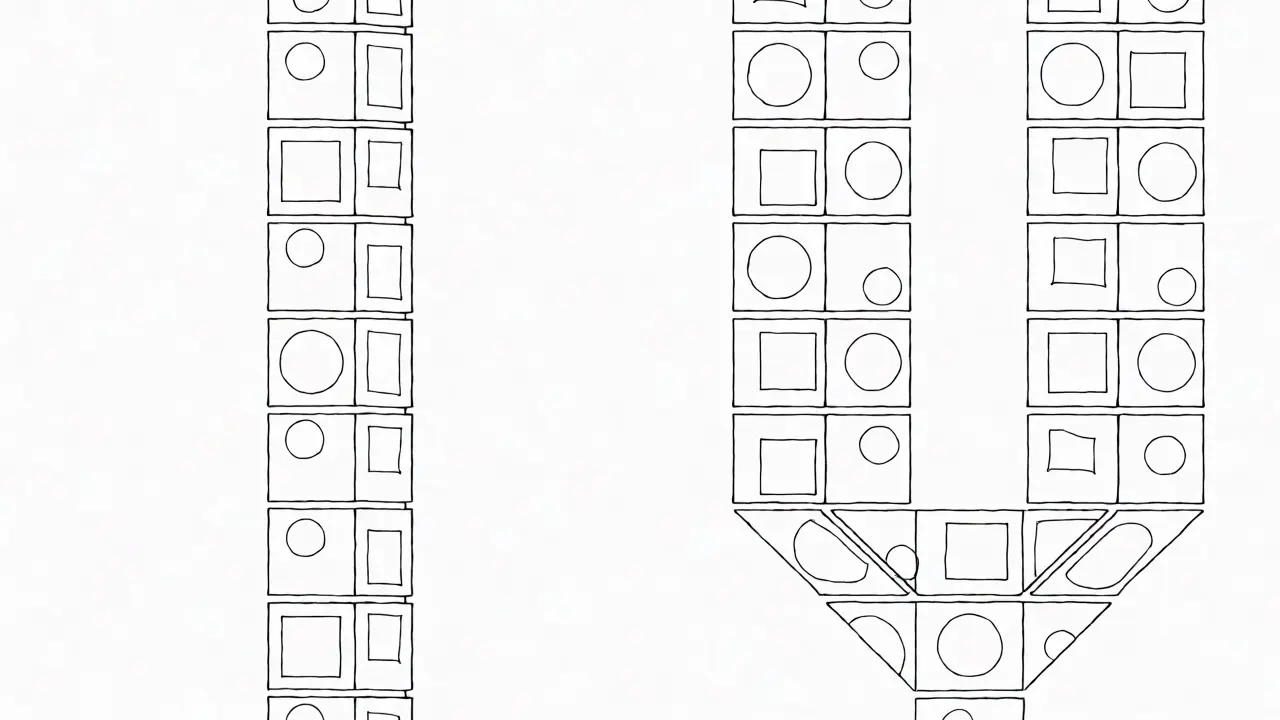
If you already have a trained Transformer, do you need to retrain from scratch to make it hybrid? Not necessarily. AMD-HybridLM offers a fascinating shortcut. Instead of building a new model, they take existing Transformer weights and surgically replace specific layers with Mamba2 blocks.
How do they choose which layers to swap? They use a sensitivity score. This metric measures how much replacing a layer increases the Kullback-Leibler (KL) divergence from the original model’s behavior. Layers with low sensitivity scores are safe to replace with Mamba2 because they don’t drastically change the model’s output distribution. Layers with high sensitivity scores-usually those handling complex relational reasoning-are kept as attention layers.
This method allows for dramatic reductions in memory usage and inference costs without sacrificing accuracy. It’s a pragmatic approach for companies that want efficiency without the risk of full retraining. It also highlights a crucial insight: not all layers are equally important for attention. Many layers just pass information along, and Mamba can do that faster.
Skill Delegation: Who Does What?
Interestingly, hybrid models seem to develop specialized roles internally. When researchers analyze pretrained hybrid models, they find a clear delegation of duties. The Attention layers tend to take responsibility for "aggregate heads" functionality. In simpler terms, they handle the complex task of connecting disparate pieces of information across the sequence. They act as the relational engine.
Meanwhile, the Recurrent (SSM) components manage sequential state. They track the flow of the narrative, maintain the immediate context, and compress past information into a manageable summary. This specialization emerges automatically through training. The model learns that it doesn’t need full attention everywhere; it just needs it where relationships are tricky.
This has implications for interpretability. Because the roles are distinct, it’s easier to debug why a model made a certain decision. If a long-range dependency was missed, you look at the attention layers. If the model lost the thread of the conversation, you look at the SSM state updates.
Limitations and Pitfalls
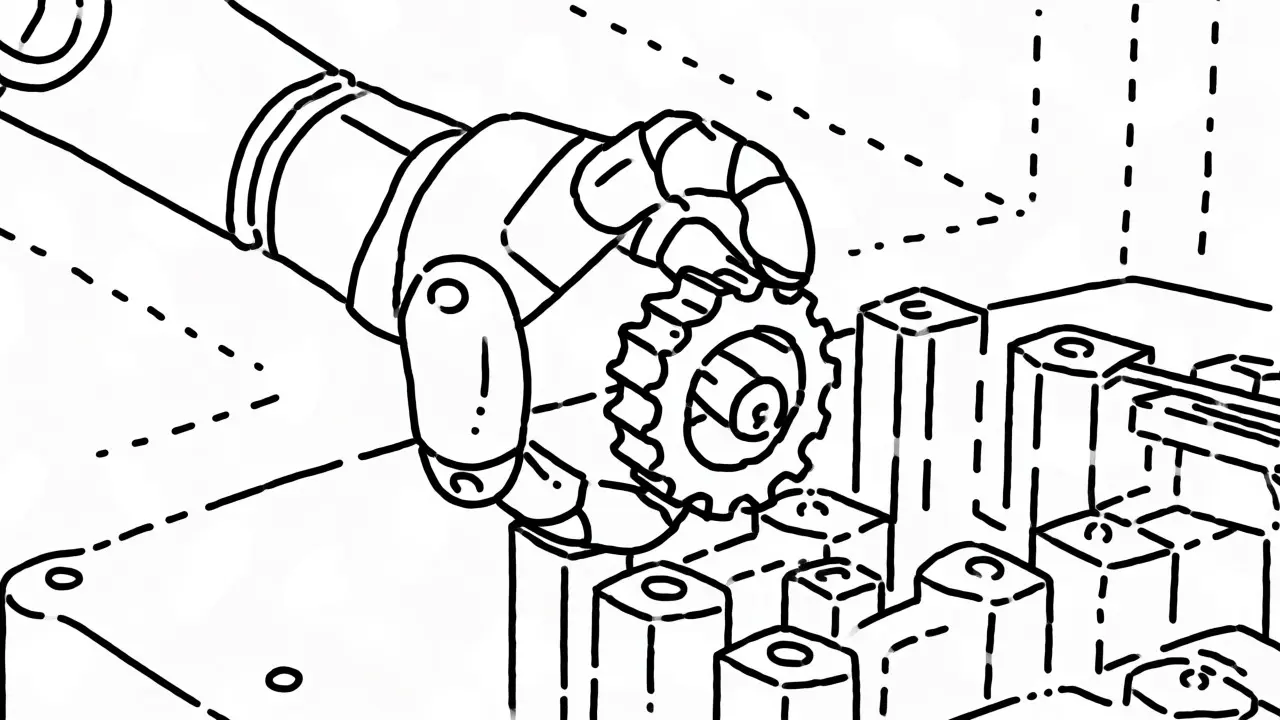
Are hybrids perfect? No. There are still hurdles. First, training stability can be an issue, especially with parallel hybrids. If the fusion mechanism isn’t tuned correctly, the gradients can explode or vanish. Second, while hybrids reduce compute, they increase architectural complexity. Debugging a model with mixed block types is harder than debugging a uniform Transformer stack.
Also, some tasks still favor pure attention. For very short sequences, the overhead of managing two different computational paths might outweigh the benefits. Pure Transformers remain simpler to implement and optimize for small-scale applications. Hybrids shine when sequence length becomes the primary constraint.
Finally, ecosystem support is still catching up. Most AI hardware and software libraries are optimized for standard Transformers. Running Mamba or other SSMs efficiently often requires custom kernels or specific library versions. As adoption grows, this friction will decrease, but today, it’s a consideration for engineering teams.
The Verdict: Evolution, Not Revolution
So, do hybrid recurrent-transformer designs help large language models? Yes, but with caveats. They are not a magic bullet that makes Transformers obsolete. Instead, they represent a necessary evolution. As we push towards longer contexts and lower-cost inference, the quadratic wall of self-attention becomes unsustainable.
Hybrids offer a path forward by distributing the computational load. They allow us to keep the reasoning capabilities of attention while gaining the speed of recurrence. For developers building chatbots with long histories, document summarizers, or code assistants, this efficiency gain translates directly to lower API costs and faster response times.
The technology is young. Most comprehensive research dates back to 2024-2025. Long-term deployment patterns are still emerging. But the evidence from Hunyuan-TurboS and AMD-HybridLM shows that these designs work at scale. If you’re working on LLMs today, ignoring hybrid architectures means leaving performance on the table.
What is the main advantage of hybrid LLM architectures?
The primary advantage is computational efficiency. By combining linear-time State-Space Models (like Mamba) with quadratic-time Transformers, hybrids reduce memory usage and inference costs, especially for long sequences, while maintaining strong reasoning capabilities.
Do hybrid models perform worse than pure Transformers?
Generally, no. Benchmarks show that well-tuned hybrid models often match or exceed pure Transformers in tasks involving long-context recall and commonsense reasoning. However, poorly configured hybrids (e.g., incorrect feed-forward layer placement) can underperform.
What is the difference between sequential and parallel hybrids?
Sequential hybrids process inputs through one component (e.g., Mamba) before passing them to another (e.g., Attention), leading to aligned representations. Parallel hybrids process inputs through both components simultaneously and then merge outputs, creating more diverse representations that benefit long-context tasks if aggregated correctly.
Can I convert an existing Transformer to a hybrid model?
Yes, methods like AMD-HybridLM demonstrate that you can selectively replace specific Transformer layers with Mamba2 blocks based on sensitivity scores, reducing costs without requiring full retraining from scratch.
Which tasks benefit most from hybrid designs?
Tasks involving long sequences, such as document summarization, long-chat history maintenance, and code generation, benefit most. These scenarios suffer heavily from the quadratic scaling of pure Transformers, making the linear efficiency of hybrids highly valuable.
 Artificial Intelligence