
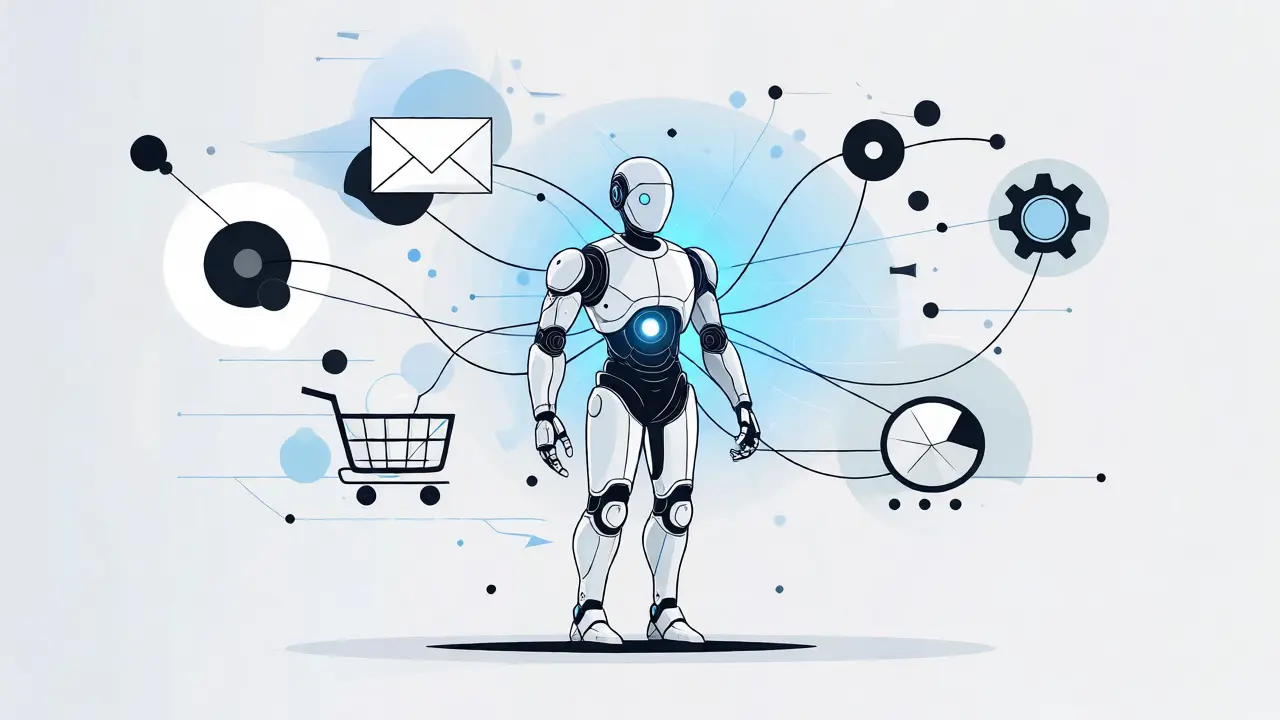
You’ve probably heard the buzz about Agentic Generative AI being the next big thing in tech. But what does it actually mean for your business? It’s not just another chatbot or a tool that writes emails. We’re talking about systems that can plan, decide, and act on their own to finish entire jobs. Think of it as moving from having a smart assistant who takes notes to having an autonomous employee who gets work done while you sleep.
The shift is real. Traditional automation was rigid. You gave it rules, and it followed them until something unexpected happened. Then it broke. Agentic AI changes that game. It uses intelligence to adapt. According to a 2025 analysis by Boston Consulting Group (BCG), early adopters are seeing workflow cycles speed up by 20% to 30%. That’s not a small tweak; that’s a fundamental change in how fast your company moves. If you’re still treating AI like a fancy autocomplete, you’re leaving money on the table. This article breaks down how to capture that value by letting AI handle end-to-end workflows.
Key Takeaways
- Autonomy over Assistance: Agentic AI doesn't just suggest actions; it executes complete workflows without human handoffs.
- Measurable ROI: Organizations report 20-60% productivity gains and significant reductions in back-office costs.
- Integration is Key: Success depends on connecting AI agents with existing enterprise platforms like SAP, Salesforce, and ServiceNow.
- Data Foundation Matters: You cannot automate chaos. High-quality, mapped data is a prerequisite for accurate agent performance.
- Human-in-the-Loop: The best results come from symbiotic setups where AI handles routine tasks and humans manage exceptions.
Beyond Chatbots: What Makes AI "Agentic"?
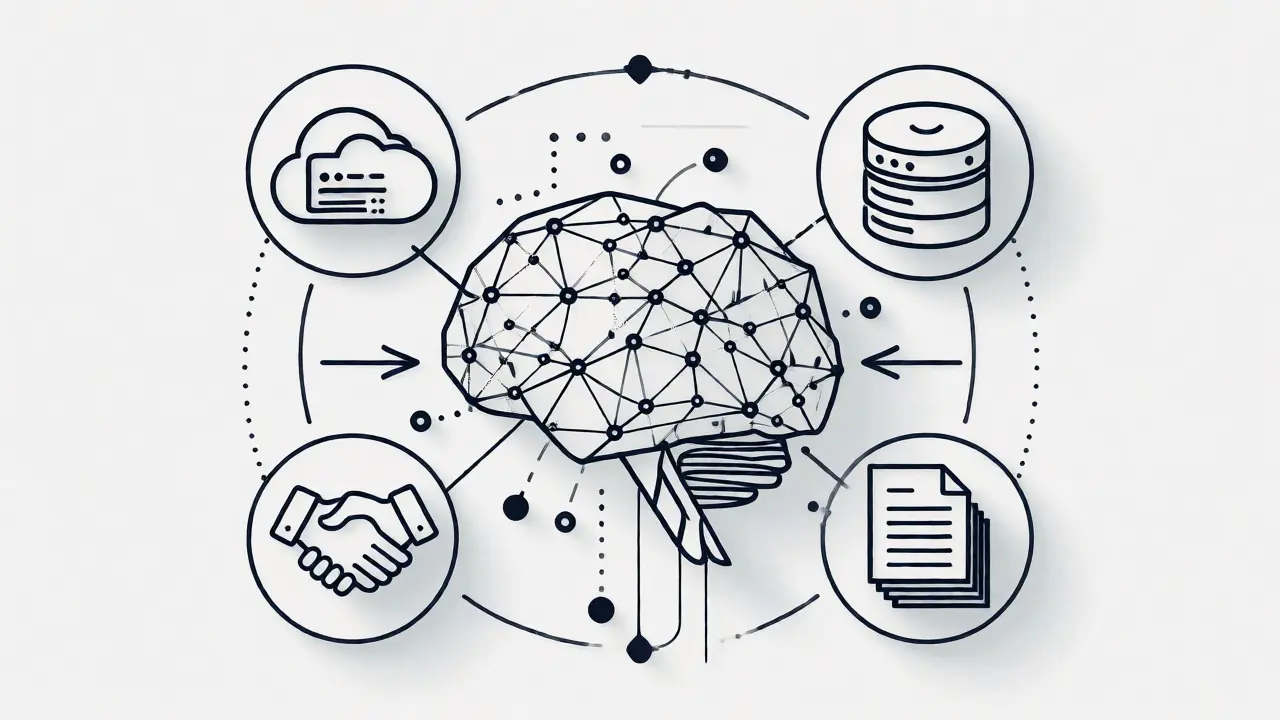
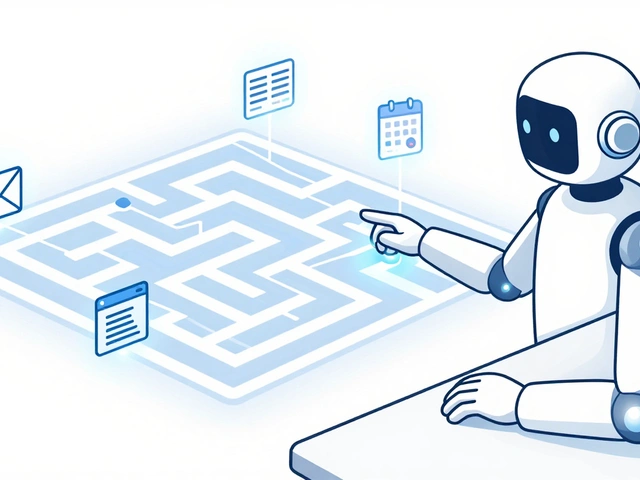
Let’s clear up the confusion. Most people use "Generative AI" and "Agentic AI" interchangeably, but they are different beasts. Standard GenAI generates content-text, images, code. It waits for your prompt. Agentic AI is goal-oriented. It perceives its environment, reasons about what needs to be done, takes action, and learns from the outcome. It operates in a continuous loop. For example, a standard GenAI might draft an email response to a customer complaint. An agentic system will read the complaint, check the customer’s purchase history in your CRM, verify if the product is under warranty, issue a refund in the billing system, update the inventory database, and send the confirmation email-all without you clicking a button.
This capability relies on sophisticated architecture. These systems often use Hierarchical Task Networks (HTNs) to break down big goals into smaller steps. They combine Large Language Models (LLMs) for reasoning with Reinforcement Learning (RL) to improve over time. IBM’s Institute for Business Value describes this as enabling systems to "perceive their environment, reason about possible actions, and learn from experiences." It’s less like using a calculator and more like hiring a junior manager who learns the ropes quickly.
The Value Proposition: Why Bother?
Why switch from traditional Robotic Process Automation (RPA) to agentic systems? RPA is great for repetitive, rule-based tasks. Copy-paste data from Excel to SAP? RPA handles it fine. But RPA struggles when things get messy. If the invoice format changes slightly, RPA fails. Agentic AI adapts. Automation Anywhere’s 2024 analysis points out that while RPA improves efficiency for straightforward tasks, it often creates new silos because it can’t handle complex, multi-step processes across different systems.
| Feature | Traditional RPA | Agentic Generative AI |
|---|---|---|
| Logic Type | Predefined rules (If X, then Y) | Goal-oriented reasoning and planning |
| Adaptability | Low; breaks with minor changes | High; learns and adjusts to variations |
| Scope | Single-task automation | End-to-end workflow execution |
| Learning | None; requires manual reconfiguration | Continuous learning from interactions |
| Error Handling | Stops or flags error | Attempts resolution or escalates intelligently |
The financial impact is substantial. McKinsey’s quantumblack division found that organizations embedding AI agents into workflows achieve about a 30% faster turnaround on tasks like credit-memo creation compared to using GenAI alone. Productivity improvements range from 20% to 60%. This isn’t just about saving time; it’s about freeing up your human talent to do high-value work instead of pushing paper.
Real-World Implementation Scenarios
Where does this actually work today? Look at customer service. Zendesk has documented cases where agentic workflows handle repetitive, high-volume inquiries. An AI agent can resolve IT service tickets, reroute supplies during inventory shortages, and trigger procurement flows. ServiceNow customers report reducing manual workloads by up to 60%. Imagine a scenario where a server goes down. Instead of waiting for a human to notice, diagnose, and ticket it, an agentic system detects the anomaly, checks the knowledge base, applies a known fix, and notifies the team only if the fix fails.
In sales, Salesforce’s Einstein AI and AgentForce platforms use predictive analytics to adapt scripts based on specific customer situations. It’s not just sending generic follow-ups. The agent analyzes the prospect’s recent news, updates in their industry, and past interactions to craft a personalized message and schedule a meeting. In finance, early adopters have seen a 75% reduction in invoice processing time. The agent extracts data, validates it against purchase orders, flags discrepancies, and routes approvals automatically.
The Roadmap: How to Deploy Agentic Workflows
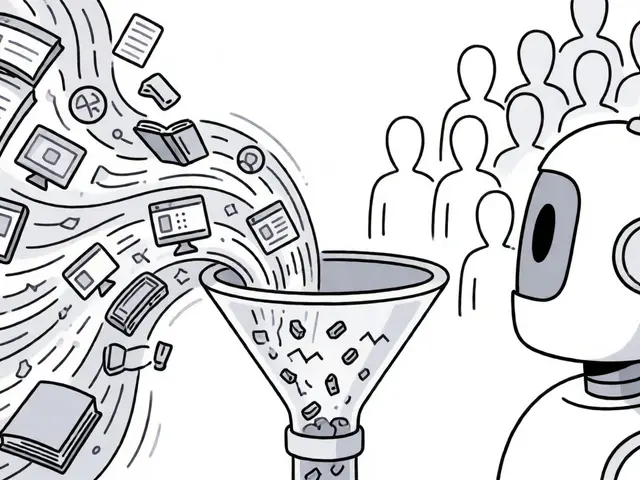
You can’t just flip a switch. Successful deployment requires preparation. KMS Technology outlines a three-step approach that serves as a solid framework. First, build a solid data foundation. Your AI needs structured and unstructured data to reason correctly. If your customer records are scattered across five different spreadsheets and two legacy databases, your agent will hallucinate or fail. Second, identify high-value, repeatable workflows. Don’t start with your most complex, novel problem. Start with something painful but predictable, like invoice processing or tier-one support tickets. Third, map underlying systems and governance. You need clear APIs and rules for when the AI should escalate to a human.
Technical requirements include robust API connectivity. The agent must be able to pull information from and push updates to CRMs, order management systems, and knowledge bases. Integration complexity is real. TrustRadius reviews of tools like ServiceNow’s Now Assist note that initial configuration can take 8-12 weeks of consultant support. Budget accordingly. PwC’s 2024 pricing analysis suggests implementation costs can range from $150,000 to $1.2 million depending on workflow complexity. However, companies that address data silos and mapping issues upfront see 2.3x faster time-to-value than those who rush.
Pitfalls and Risks to Avoid
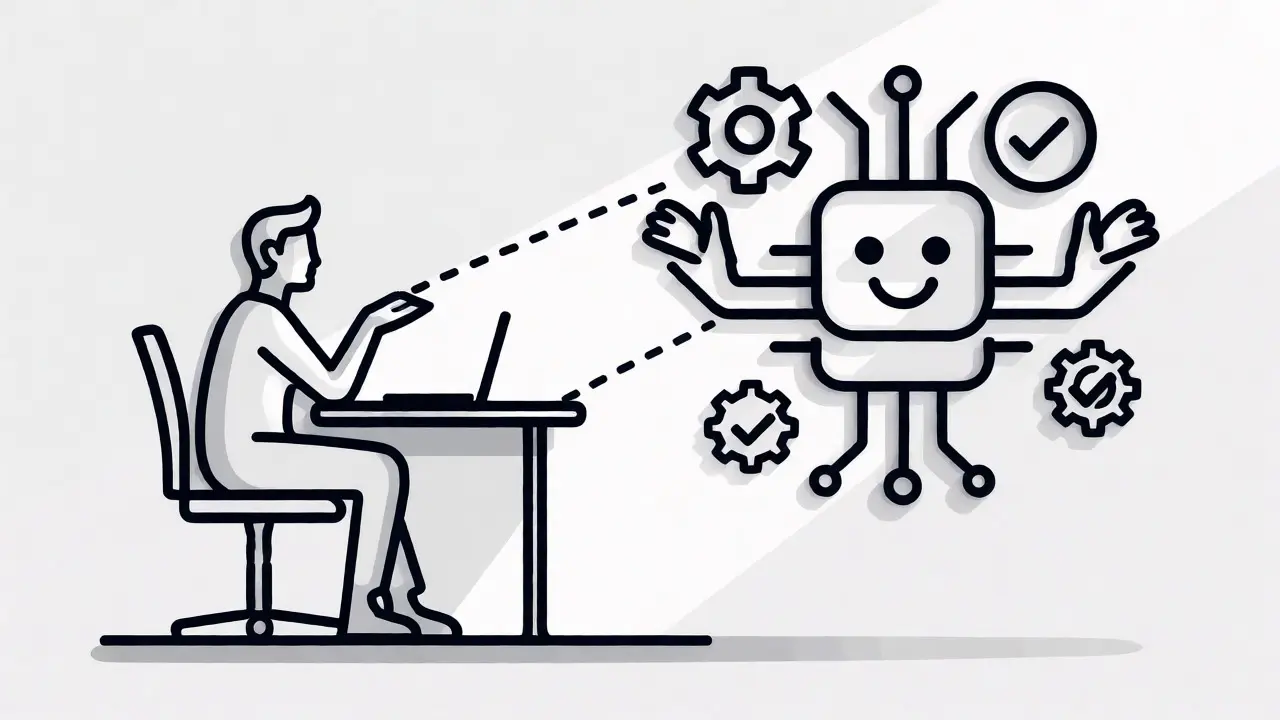
It’s not all smooth sailing. One major risk is over-automation. UiPath warns that agentic automation works best as a symbiotic combination of AI agents, robots, and people. If you remove humans entirely from customer-facing roles, you risk alienating customers who encounter edge cases the AI hasn’t learned yet. Reddit discussions in r/AI highlight that some companies saw a 15-20% increase in customer escalation rates when they relied too heavily on AI for complex queries.
Another challenge is trust and transparency. In regulated industries like finance and healthcare, you need audit trails. Who made the decision? Why did the AI approve this loan? Governance frameworks are essential. Without them, you face regulatory risks. Also, watch out for the "garbage in, garbage out" principle. If your training data is biased or incomplete, your agent will make bad decisions confidently. Continuous monitoring is required to catch drifts in accuracy.
The Future of Work: Symbiosis, Not Replacement
We are moving toward a future where AI owns the process, not just the task. BCG predicts that soon, interconnected agents will adapt dynamically to environmental changes, detecting and fixing issues before they become problems. This shifts the role of human workers from executors to managers and strategists. You’ll spend less time doing the work and more time overseeing the agents that do it.
The market reflects this urgency. IDC forecasts the global agentic AI market will grow from $2.8 billion in 2024 to $14.7 billion by 2027. Gartner estimates that 45% of large enterprises will deploy at least one agentic workflow by the end of 2025. The question isn’t whether you will adopt this technology, but how quickly you can integrate it to stay competitive. Those who master value capture now will define the next decade of operational efficiency.
What is the main difference between Generative AI and Agentic AI?
Generative AI focuses on creating content (text, images, code) based on prompts. Agentic AI goes further by pursuing goals autonomously. It plans, executes actions across multiple systems, and learns from outcomes without needing constant human direction.
How much ROI can businesses expect from agentic AI?
Studies from McKinsey and BCG indicate productivity improvements ranging from 20% to 60%, with workflow cycles speeding up by 20-30%. Specific areas like invoice processing have seen up to 75% time reductions.
Do I need to replace my current RPA tools with Agentic AI?
Not necessarily. Many experts recommend a hybrid approach. Use RPA for simple, rule-based tasks and Agentic AI for complex, multi-step workflows that require reasoning and adaptation. They can coexist and complement each other.
What are the biggest challenges in implementing agentic AI?
The primary challenges include poor data quality, lack of clear workflow mapping, integration complexity with legacy systems, and ensuring proper governance and audit trails for compliance.
Is Agentic AI suitable for customer service?
Yes, particularly for high-volume, repetitive inquiries. It can resolve tickets, update accounts, and escalate complex issues. However, human oversight is crucial for handling emotional or nuanced customer interactions to maintain satisfaction scores.
 Artificial Intelligence


Tommy Cahyadi
October 6, 2026 AT 08:39oh great another buzzword bingo card. we're moving from chatbots to autonomous employees? sure buddy. i bet my coffee maker is next in line for a promotion and a 401k. 🙄