
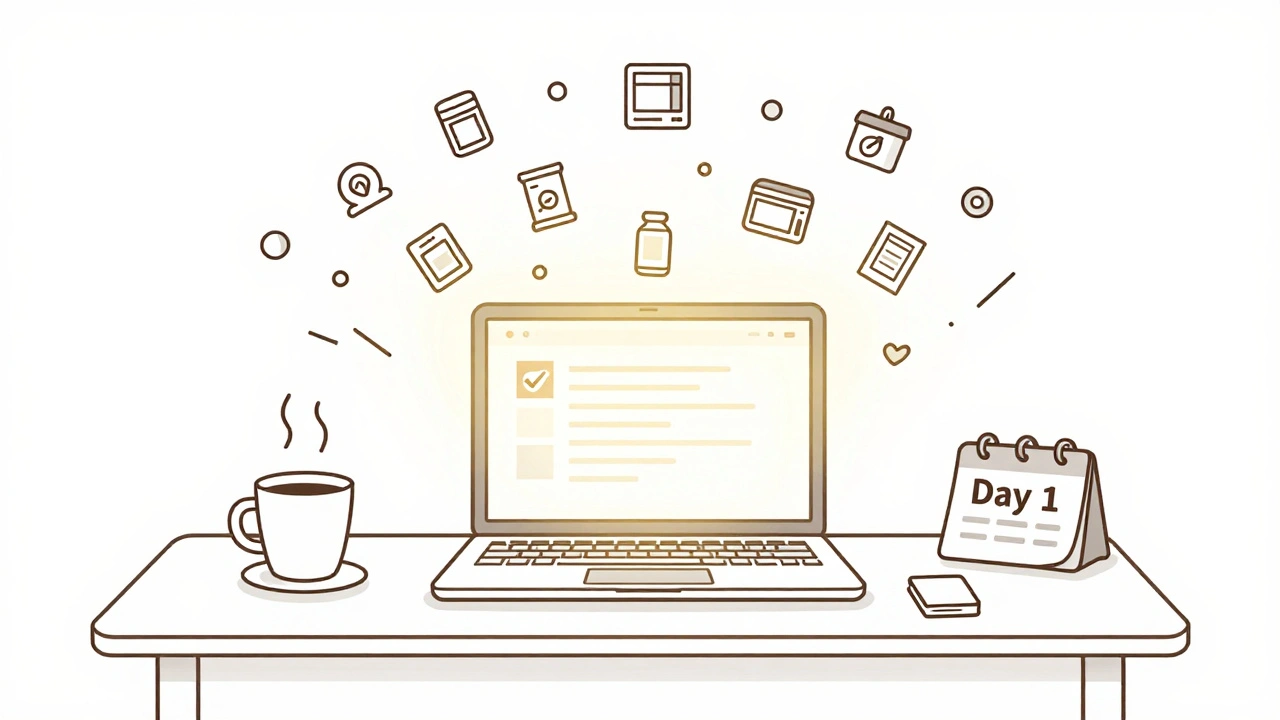
Imagine launching 200 new products and writing unique, brand-aligned descriptions for each one in under a day. No more teams working late nights, no more copywriters burning out. This isn’t science fiction-it’s what companies are doing right now with generative AI. By the start of 2025, 83% of marketing teams were using AI to create content, up from just 55% the year before. And it’s not just about speed. It’s about scaling personalization without scaling your team.
How Generative AI Actually Works for Marketing
Generative AI doesn’t just copy-paste old content. It learns patterns-from your past emails to your best-selling product descriptions-and uses that to create something new. Think of it like a writer who’s read every piece of content you’ve ever published, studied your tone, and knows exactly how you talk to your customers. When you give it a prompt like, ‘Write a 100-word email for busy moms who want organic baby food,’ it doesn’t guess. It predicts the most likely next words based on your brand’s history.
This isn’t magic. It’s math. These systems are built on massive neural networks-some with over a trillion parameters-that have been trained on billions of text samples. Tools like Jasper, Copy.ai, and Writer.com use these models to generate content tailored to your brand. The key? You feed them your data. Past campaigns. Customer reviews. Brand guidelines. The more you train it, the better it gets.
Product Descriptions That Sell Without the Grind
Product descriptions are the most repetitive, time-sucking part of e-commerce. Writing 50 variations of ‘premium wireless headphones’ is exhausting-and boring. Generative AI changes that.
One outdoor gear brand in Oregon used AI to generate 300 product descriptions for their new seasonal line. Instead of spending three weeks, they did it in 18 hours. The catch? They didn’t just hit ‘generate’ and publish. They trained the AI on their top-performing past descriptions, their voice (casual, adventurous, no fluff), and even their most common customer questions. The result? A 22% increase in click-through rates compared to their old human-written versions.
But here’s the reality: AI can’t replace context. If your product has a unique warranty or a manufacturing detail that matters to buyers, you still need a human to double-check. AI hallucinates. In McKinsey’s 2025 survey, 15-20% of AI-generated product details contained factual errors. That’s why the best teams use AI to draft, then humans to verify.
Emails That Feel Human (Even When They’re Not)
Email marketing is where AI shines brightest-because personalization at scale is its superpower.
Spotify doesn’t just recommend songs. It analyzes your listening habits down to the seconds you skip. Then it uses AI to generate personalized email subject lines like: ‘You skipped 3 songs from this playlist. Here’s what you might actually like.’ Engagement jumped 40%. That’s not a template. That’s AI learning your behavior and speaking directly to you.
For most businesses, you don’t need that level of data. But you do need to go beyond ‘Hi [First Name]’.
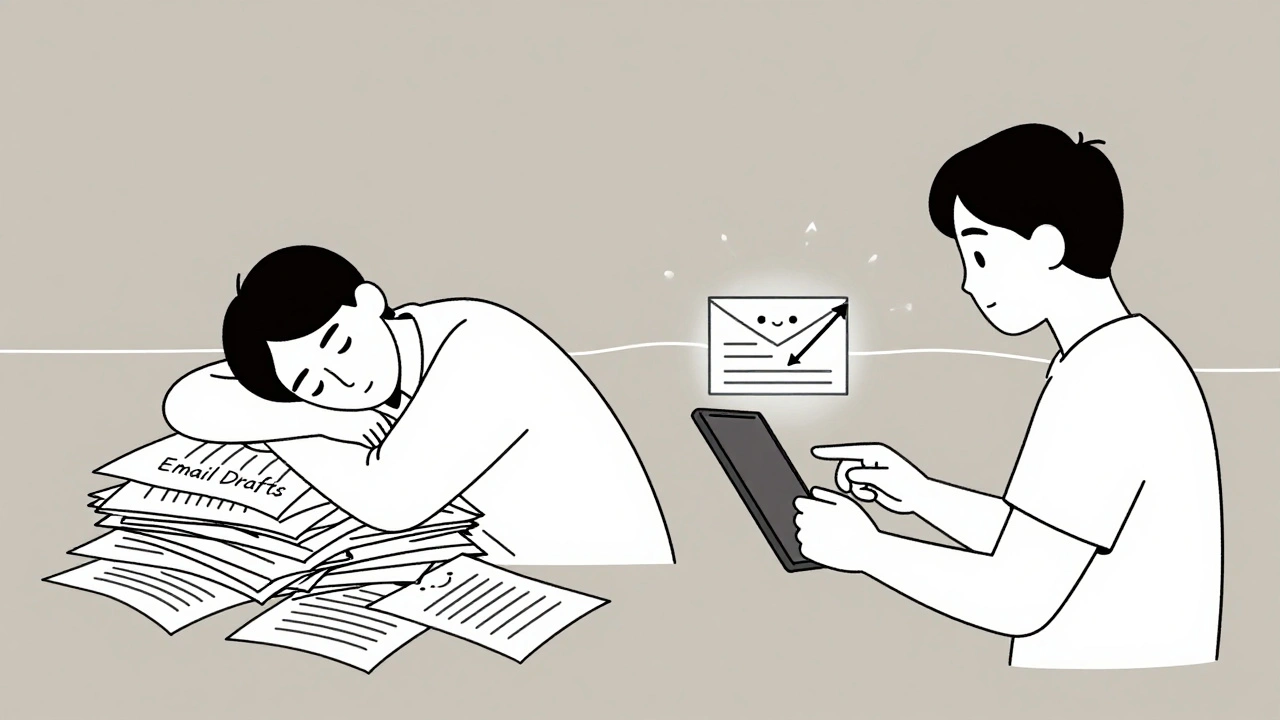
Try this: Feed your AI tool 50 of your best-performing emails. Then ask it to write 10 new ones in the same style. One SaaS company did this and saw open rates rise by 31% because the AI mimicked their most successful tone-friendly, slightly quirky, no corporate jargon. The emails didn’t feel robotic. They felt like the same person who’d been answering support tickets for years.
But avoid generic prompts like ‘Write a welcome email.’ Instead, say: ‘Write a welcome email for new users who signed up after reading our blog post on time-saving tools. Use our brand voice: helpful, calm, and a little dry. Mention our 24/7 chat support. Keep it under 120 words.’ Specificity beats creativity here.
Social Posts That Don’t Sound Like Robots
Social media moves fast. Posting daily on Instagram, TikTok, and X isn’t optional-it’s survival. But writing fresh, engaging posts every day? That’s impossible without a team.
AI helps you batch-create. A skincare brand in Bellingham uses AI to generate 30 Instagram captions and 15 TikTok scripts every Monday. The AI pulls from their top-performing posts from last quarter, their product specs, and even trending audio snippets. Then their social manager picks the top 5 and adds a personal touch-a photo caption, a comment reply, a behind-the-scenes note.
Here’s what doesn’t work: posting AI-generated content straight from the tool. Social audiences smell inauthenticity. A retail brand tried it last year. They posted 100 AI-written Instagram captions. Engagement dropped 30%. Why? The tone was too polished. Too salesy. No personality.
The fix? Use AI for volume. Use humans for soul. Let the AI draft 20 versions of a post. Then pick the one that feels closest to your voice. Edit the punchline. Add a meme reference. Mention your dog who hates the new packaging. That’s what makes it real.
Top Tools for Marketing Teams in 2025
Not all AI tools are built the same. Here’s what’s working for real teams right now:
- Jasper AI: Best for long-form content like emails and landing pages. Used by 100,000+ brands. Strong creative muscle, but 32% of users report inconsistent brand voice.
- Copy.ai: Super easy for beginners. 4.6/5 on Trustpilot. Great for quick social posts and ad copy. But it often feels generic unless you tweak it heavily.
- Writer.com: Used by 30% of Fortune 500 companies. Built for brand consistency. Trains on your style guide. Costs more-$18/user/month-but saves hours of editing.
- HubSpot AI: If you’re already using HubSpot for CRM and automation, this integrates seamlessly. Great for turning customer data into personalized email sequences.
- Contents: The dark horse. New in 2025, focused entirely on brand voice training. Average contract value is $65,000/year. Used by brands that can’t afford to mess up their tone.
Choose based on your needs. If you’re a startup, start with Copy.ai. If you’re a mid-sized brand with a strong brand book, invest in Writer.com. If you’re deep in HubSpot, stick with their AI.
What Goes Wrong (And How to Avoid It)
AI isn’t a magic button. Many teams fail because they treat it like a replacement, not a tool.
Here are the top three mistakes:
- Skipping brand training: If you don’t feed the AI your past content, it defaults to generic. One company used AI to write product descriptions for their luxury candles. The AI used phrases like ‘affordable’ and ‘great value.’ Their customers were paying $85 a jar. The result? Confusion and refunds.
- No human review process: 63% of marketers say brand voice inconsistency is their biggest challenge. Only 28% have a formal review step. That’s a recipe for disaster. Assign one person to audit every 10 pieces of AI content.
- Ignoring compliance: The EU AI Act now requires disclosure of AI-generated commercial content. In the U.S., the FTC is watching. If you’re selling something, and the description was written by AI, you need to be transparent. Don’t hide it. Own it.
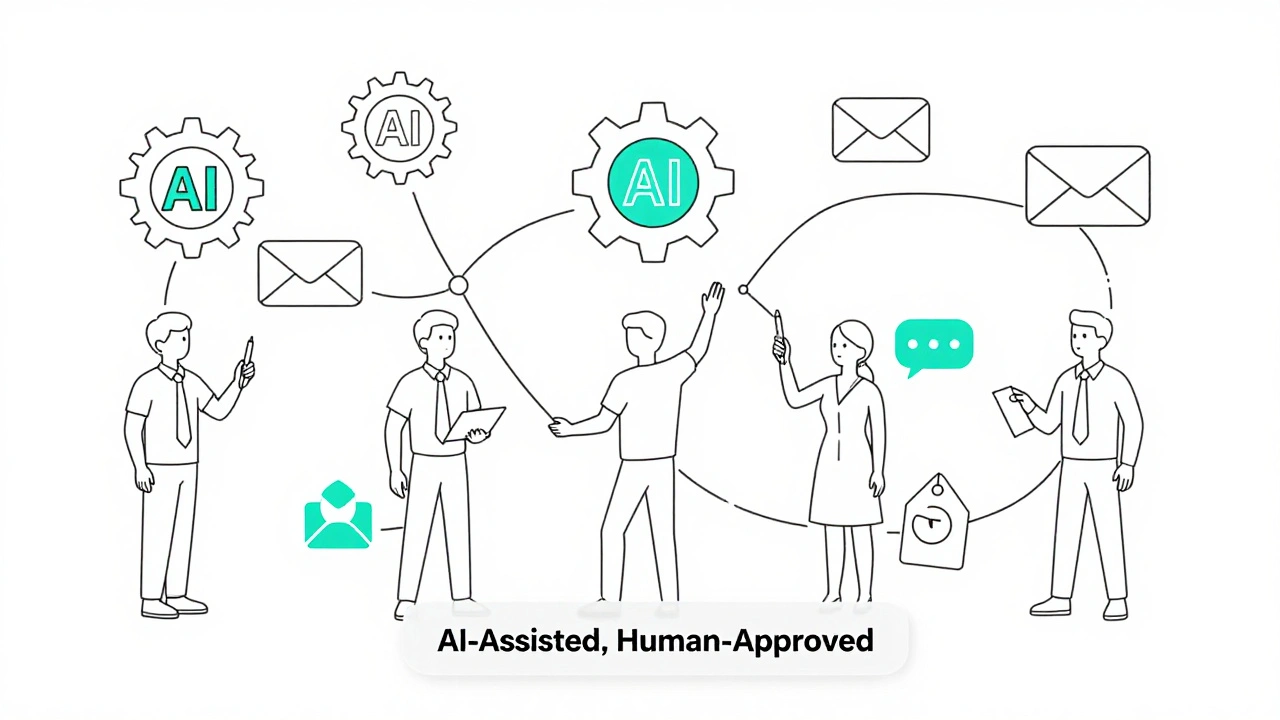
The best teams treat AI like a junior copywriter. They train it. They supervise it. They edit it. And they never let it go live without a second set of eyes.
What’s Next? AI Agents and Workflow Automation
2025 isn’t about writing one email. It’s about building entire content teams with AI.
Companies are starting to use ‘AI agents’-tools like n8n, GPT AgentKit, and Google’s Opal-that can chain tasks together. For example: AI scans your Shopify store for new products → generates descriptions → checks them against your brand guide → sends them to your CMS → schedules social posts → sends a Slack alert to the marketing lead.
That’s not a tool. That’s a workflow. And it’s already happening. Burberry reduced seasonal creative production time by 50% using this exact setup. Their AI learned their signature check pattern, heritage tone, and even how their designers talk in internal briefs.
By 2026, marketers won’t be writing content. They’ll be managing AI teams.
Where to Start Today
You don’t need a big budget or a tech team. Here’s your 7-day plan:
- Day 1-2: Pick one content type to test. Product descriptions? Email subject lines? Pick one.
- Day 3: Gather 20 of your best examples from the last year. Paste them into your AI tool as training data.
- Day 4: Write a clear prompt. Don’t say ‘Write a description.’ Say ‘Write a 100-word product description for [product] targeting [audience]. Use our tone: [describe tone]. Avoid [words to avoid].’
- Day 5: Generate 10 versions. Pick the best one. Edit it. Make it human.
- Day 6: Publish it. Track performance. Did clicks go up? Did customers ask questions?
- Day 7: Repeat with another piece. Then scale.
Success isn’t about replacing humans. It’s about freeing them. Let AI handle the grind. Let your team focus on strategy, creativity, and connection.
Can generative AI replace human copywriters?
No. AI is a tool, not a replacement. It handles volume and repetition, but humans bring strategy, emotional intelligence, and brand nuance. The best results come when AI drafts and humans refine. Teams that treat AI as a co-writer outperform those that treat it as a replacement.
Is AI-generated content bad for SEO?
Not if it’s high-quality and original. Google doesn’t penalize AI content-it penalizes low-value, spammy, or duplicated content. If your AI-generated product descriptions are detailed, accurate, and tailored to user intent, they’ll rank just fine. The key is editing for depth and uniqueness. Don’t just copy-paste.
How much time can I really save with AI?
Teams report saving 50-70% of their content creation time. Writing 200 product descriptions that used to take three weeks now takes under 24 hours with AI. But you’ll still spend 20-30% of that time editing for tone, accuracy, and brand fit. The real time savings come from eliminating brainstorming, rewriting, and redoing drafts.
What’s the biggest risk of using AI for marketing?
The biggest risk is losing your brand voice. AI doesn’t understand nuance. It can make your luxury brand sound cheap, your playful tone sound robotic, or your expert advice sound misleading. Without training and oversight, AI homogenizes your messaging. That’s why brand-specific fine-tuning and human review are non-negotiable.
Do I need to disclose that AI wrote my content?
In the EU, yes-under the AI Act, commercial AI-generated content must be disclosed. In the U.S., it’s not required yet, but the FTC warns against deceptive practices. If your content could mislead customers (e.g., fake testimonials, false claims), you’re at risk. Transparency builds trust. Even if it’s not required, consider adding a small note: ‘This description was assisted by AI.’ It shows integrity.
Which industries benefit most from AI-generated marketing content?
E-commerce, SaaS, and retail lead the way because they need high-volume, repetitive content. But any business with multiple products, services, or customer segments benefits. Local service providers (plumbers, dentists) use AI to generate location-specific Google Business posts. Fitness coaches use it to create weekly email newsletters. The common thread? Scale. If you need to produce lots of content for different audiences, AI helps.
AI won’t make your marketing better. But it will make it faster. And in a world where attention is scarce and competition is fierce, speed with quality is the only advantage that matters.
 Artificial Intelligence

TIARA SUKMA UTAMA
December 12, 2025 AT 18:46AI wrote this whole thing and I still cried reading the part about moms and baby food. No joke.
Jasmine Oey
December 14, 2025 AT 08:03OMG I JUST REALIZED-AI is basically that one coworker who shows up to every meeting with a PowerPoint but never actually *knows* anything?? 😭 I mean, sure, it can spit out 300 product descriptions… but do they sound like *us*? Or just a really polite robot who went to business school in 2007??
Also, ‘affordable luxury candles’?? 😂 My grandma paid $85 for a candle that smelled like ‘burnt pineforest and regret’-and she’d have thrown it at the screen if AI called it ‘affordable.’
Also also-why is everyone acting like this is new? We had spam bots writing emails in 2004. This is just… fancier spam. With better grammar. And a subscription fee.
Marissa Martin
December 15, 2025 AT 20:18I don’t think people realize how much emotional labor goes into writing a product description that doesn’t feel like a sales pitch.
It’s not just about tone or vocabulary-it’s about knowing when to pause, when to soften, when to let silence speak.
AI doesn’t know what it’s like to sit with a customer who cried because your product helped them feel seen.
So yes, use it for drafts. But please-don’t let it replace the heart behind the words. It’s not just content. It’s connection.
And if you’re not auditing every piece? You’re not being responsible. You’re being lazy.
James Winter
December 16, 2025 AT 13:36Canada’s got better things to do than read AI-written ads. Why are Americans so obsessed with outsourcing their brains to machines? We still make stuff here. Real stuff. With hands.
Also, ‘Fortune 500 companies use Writer.com’? So? They also use PowerPoint. Doesn’t make it smart.
Aimee Quenneville
December 16, 2025 AT 21:44So… we’re all just… pretending this isn’t just corporate laziness with a fancy name??
AI doesn’t care if your brand voice sounds like a depressed robot who went to a TED Talk and thought ‘this is how humans talk.’
Also, ‘add your dog who hates the new packaging’? 😂 I’m not editing AI content-I’m doing emotional first aid on a marketing bot.
Also also, I’m pretty sure the ‘dark horse’ tool is just a Shopify plugin that charges $65k/year to say ‘hi’ in 17 different accents.
Can we just… hire a human again? I miss sarcasm. And typos. At least typos meant someone was alive.