
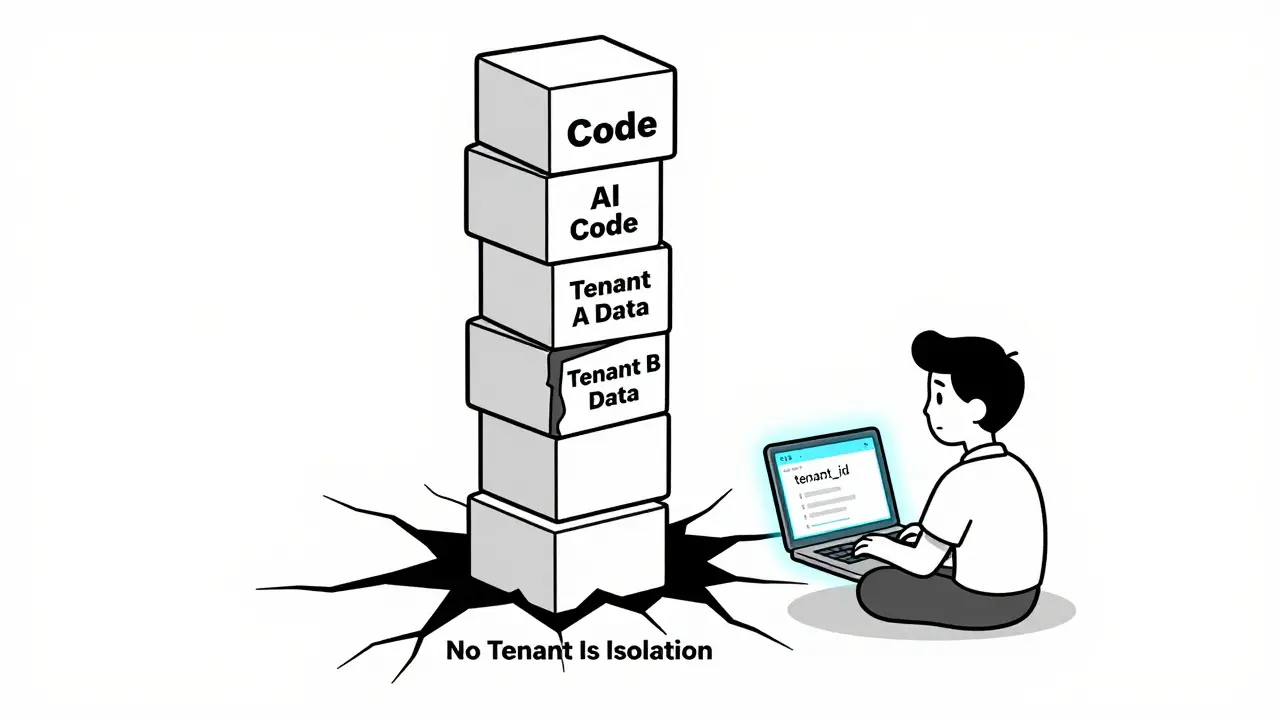
Building a SaaS product today isn’t just about writing code-it’s about building a system that can handle dozens, hundreds, or even thousands of customers all using the same software without seeing each other’s data. That’s multi-tenancy. And if you’re using AI to generate your code-what some call vibe coding-you’re not just coding faster. You’re risking your entire architecture if you don’t get the fundamentals right from day one.
Imagine this: You’re building a project management tool for small teams. You vibe-code the whole thing in two days. AI generates the UI, the API, even the login flow. It works. You launch. Then, a customer reports they can see another company’s tasks. Panic. You didn’t isolate tenants. You didn’t filter queries. You didn’t think about who owns what data. And now you’re patching a leak in a dam you built with duct tape.
Multi-tenancy isn’t an add-on. It’s the foundation. Vibe coding makes it easy to skip the foundation and go straight to the roof. But the roof will fall if the foundation cracks.
What Is Multi-Tenancy, Really?
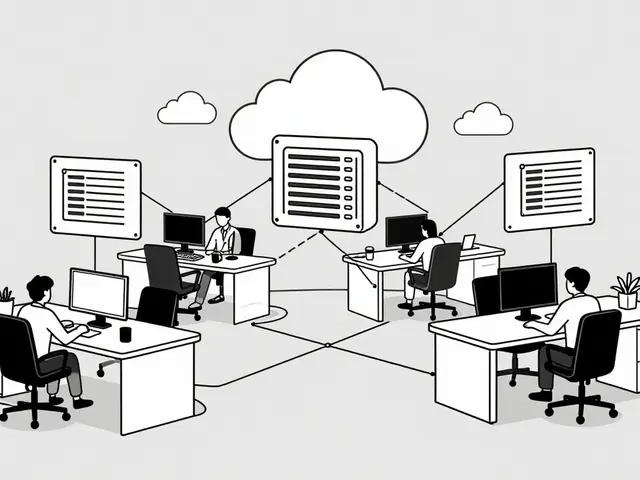
Multi-tenancy means one software instance serves many customers-called tenants-while keeping their data, settings, and experiences completely separate. It’s not just about saving server costs. It’s about trust. Your customer needs to know their HR records, financial data, or internal communications are locked away from every other company using your tool.
There are three ways to do this:
- Database-per-tenant: Each customer gets their own database. Safe, but expensive. Scaling means managing hundreds of databases.
- Shared database, separate schemas: One database, but each tenant has their own schema (like a folder inside the database). Good balance of isolation and cost.
- Shared database, row-level isolation: Everyone shares the same tables, but every row has a
tenant_id. Queries must always filter by this ID. This is the most common approach today-and the one AI tools mess up most often.
Bitcot’s 2024 analysis showed that 78% of new SaaS apps built with AI tools started with row-level isolation. But 41% of them had bugs where tenant_id was missing from at least one query. That’s not a typo. That’s a data breach waiting to happen.
Why Vibe Coding Fails at Isolation
Vibe coding works great when you say: "Build a login page with email and password." AI generates it. Done.
But when you say: "Make this multi-tenant," it doesn’t know what you really mean. Does "multi-tenant" mean row-level security? Schema separation? JWT tokens? API gateways? AI doesn’t ask. It guesses. And it guesses wrong.
GitHub’s May 2024 study found that AI assistants correctly implemented tenant isolation in only 72% of cases when developers gave vague prompts. But when prompts were specific-"Use PostgreSQL row-level security with tenant_id as the discriminator, and enforce it in every SELECT, UPDATE, DELETE"-accuracy jumped to 87%. That’s higher than human developers under pressure.
The problem isn’t the AI. It’s the prompt.
One developer on Reddit built a SaaS analytics dashboard in two days using vibe coding. Then spent a week fixing data leakage. Why? Because the AI generated a query like:
SELECT * FROM reports WHERE user_id = $1But it never added:
AND tenant_id = $2That’s it. One missing line. And now Company A can see Company B’s revenue charts.
Authentication: One Login, Many Rules
Authentication in multi-tenant SaaS isn’t just "log in." It’s:
- Each tenant can have its own SSO provider (Okta, Azure AD, Google)
- Some tenants require MFA; others don’t
- Email verification flows might differ per tenant
- Admins can invite users, but only within their own tenant
Supabase Auth and Firebase Auth are popular because they handle tenant context automatically-if you configure them right. But vibe coding often generates a generic auth flow that assumes one identity provider for everyone. Then you get confused users: "Why can’t I log in with my Google account?"
Bitcot’s automated system uses an API gateway to route authentication requests based on the tenant’s domain. If you’re logging in as companyx.yourapp.com, the system knows to use Company X’s Okta setup. If you’re companyy.yourapp.com, it uses their Azure AD. The AI can generate this-but only if you tell it exactly how to route based on subdomain or tenant identifier.
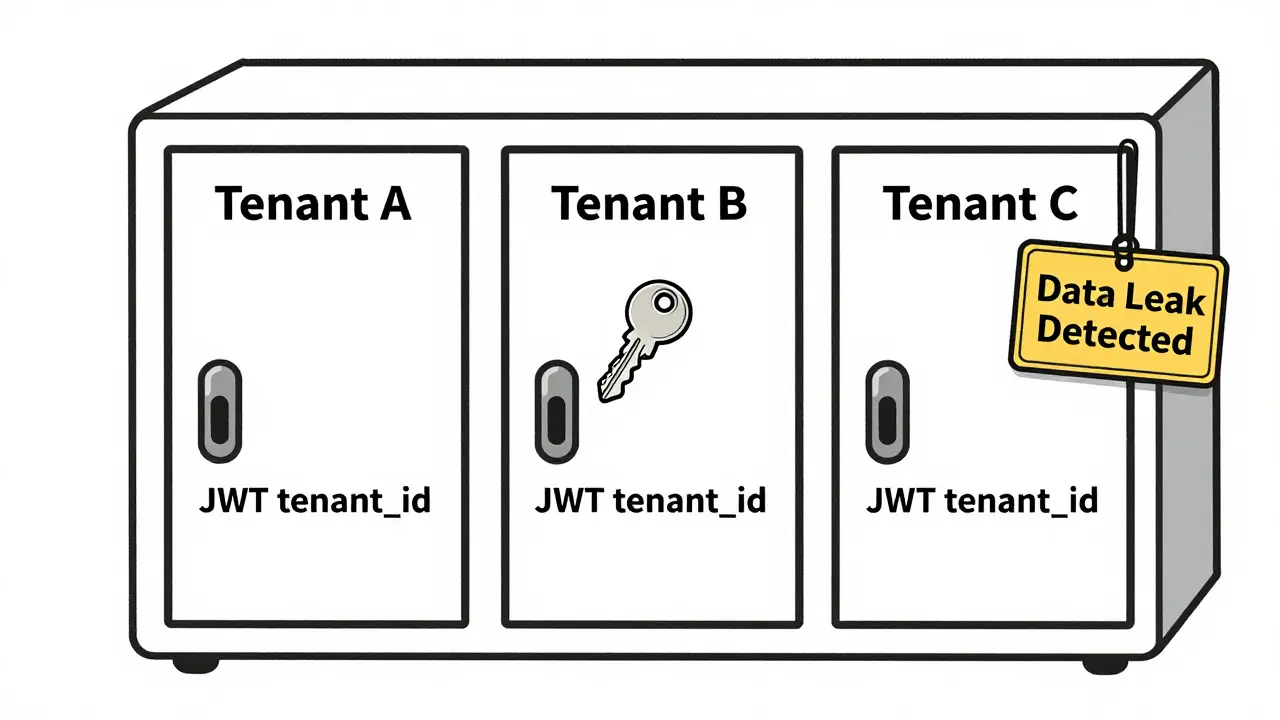
A common mistake? Using email domains to infer tenant. That fails when two companies have employees with the same email domain. Or when a tenant uses Gmail. Don’t assume. Explicitly link the user to their tenant via a tenant_id stored in the JWT token or session.
Cost Controls: When One Tenant Eats All the Resources
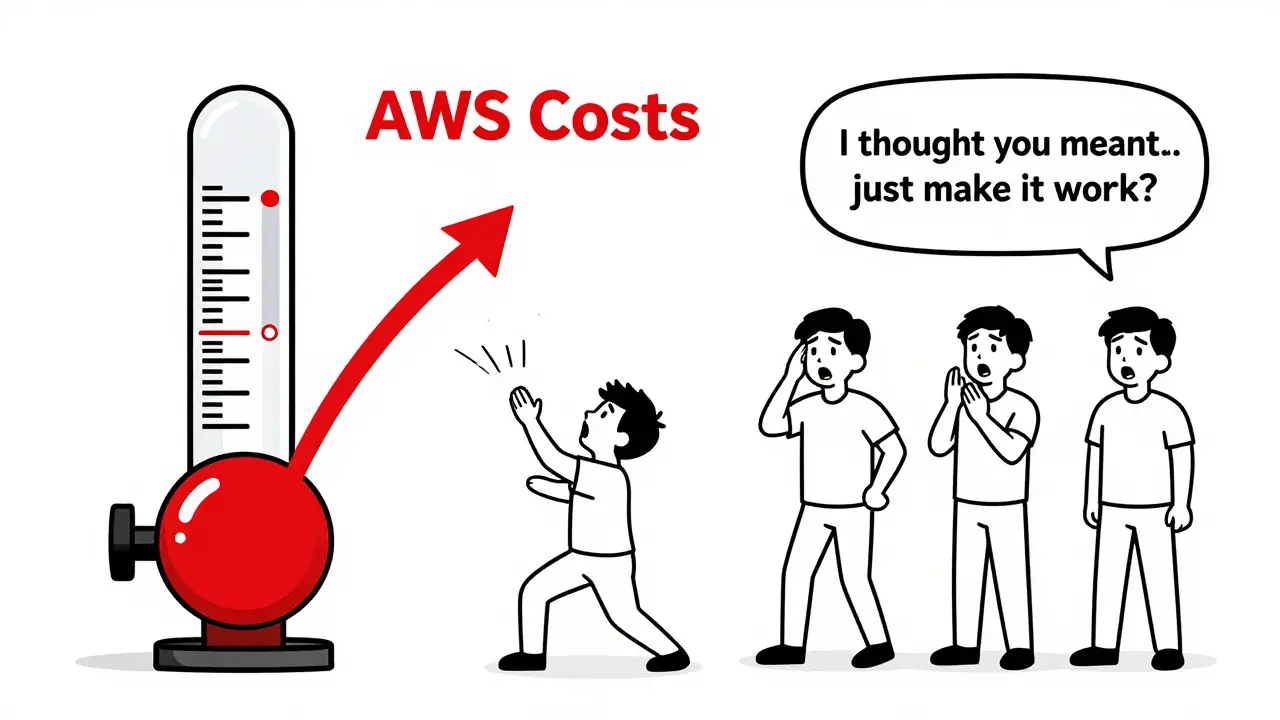
One of the scariest stories from 2024 involved a vibe-coded HRMS tool. The developer used serverless functions to handle payroll processing. They didn’t set usage limits. One tenant uploaded 20,000 employee records at once. The system spun up 1,200 Lambda functions. The AWS bill? $12,000 in 48 hours.
Multi-tenancy without cost controls is like renting out an apartment building but not installing water meters. One tenant could flood the whole building.
Here’s how to prevent it:
- Set per-tenant quotas: Max 100 API calls/minute, 5GB storage, 5 concurrent workers.
- Use serverless function throttling: AWS Lambda or Cloudflare Workers can cap concurrent executions per tenant.
- Track usage in real time: Log every resource consumed by tenant_id. Alert when usage hits 80% of limit.
- Charge based on usage: If a tenant exceeds limits, they pay extra. Or get locked out until next billing cycle.
Bitcot’s automated provisioning system includes these controls from day one. Their AI prompts include: "Enforce rate limits per tenant using API Gateway, and log all usage to a tenant-specific metrics table." That’s not vague. That’s specific. And it works.
How to Build It Right-Without Starting Over
Aatir’s 2024 Substack post titled "I Tried Vibe Coding Multi-Tenancy and Had to Restart" went viral. Why? Because so many developers have been there. You start building a single-tenant app. Then your first paying customer says: "Can I use this with my team?" You panic. You try to retrofit multi-tenancy. And it turns into a nightmare.
There’s a better way.
Before you write a single line of code:
- Define your isolation strategy. Pick one: row-level, schema, or database-per-tenant. Write it down.
- Write your AI prompts like a spec. Not: "Make this multi-tenant." But: "Use PostgreSQL row-level security. Every table must have a tenant_id column. All queries must include WHERE tenant_id = current_tenant(). No exceptions. Use Supabase Auth and inject tenant_id into JWT claims."
- Generate tests first. Ask the AI to write automated tests that check for cross-tenant data access. "Write a test that tries to fetch data from tenant B while logged in as tenant A. It should fail with 403."
- Run penetration tests. Use tools like Burp Suite or OWASP ZAP to simulate attacks. Can you access another tenant’s data by tampering with headers? If yes, you missed something.
GitHub Copilot’s version 4.1 now has "multi-tenancy awareness" built in. When you type a prompt about tenants, it asks: "Do you want row-level isolation? Schema separation? Or separate databases?" That’s progress.
The Hard Truth
AI doesn’t replace architecture. It amplifies it.
If you know what you’re doing, vibe coding lets you build a production-ready multi-tenant SaaS in hours. If you don’t, it lets you build a ticking time bomb in hours.
Gartner’s 2024 report says 62% of new SaaS startups use AI for core features. But only 28% get multi-tenancy right on the first try. The rest? They spend months fixing leaks, rewriting queries, and paying AWS bills they can’t afford.
Security experts like Troy Hunt warn that 34% of SaaS breaches in 2024 came from poor multi-tenancy. Not from hackers. From developers who thought "AI will handle it."
Don’t be that developer.
Use vibe coding to move fast. But don’t move fast enough to skip the basics. Isolation isn’t optional. Authentication isn’t a checkbox. Cost controls aren’t a luxury. They’re the difference between scaling and collapsing.
Can I add multi-tenancy to an existing single-tenant app?
Technically, yes-but it’s risky. Most attempts end in rewrites. Adding tenant_id to every table, updating every query, migrating data, and rewriting auth logic is error-prone and time-consuming. Experts estimate it takes 40-60 hours of rework for a medium-sized app. If you’re still in early development, start over with multi-tenancy built in. If you’re already live, isolate new tenants in a separate instance and migrate slowly.
What’s the easiest way to implement tenant isolation?
For most startups, use row-level security in PostgreSQL with tenant_id as the discriminator. Pair it with Supabase Auth or Firebase Auth, which automatically inject tenant context into JWT tokens. Then, enforce isolation with middleware that checks tenant_id on every request. This setup is fast, affordable, and supported by most AI tools when prompted correctly.
How do I prevent AI from generating insecure code?
Be hyper-specific in your prompts. Don’t say "make it secure." Say: "Every database query must include WHERE tenant_id = current_user_tenant_id(). No queries should ever omit this filter. Use PostgreSQL RLS. Block all queries that don’t include tenant_id. Write unit tests that simulate cross-tenant access attempts and verify they fail." The more precise you are, the less room the AI has to guess wrong.
Do I need to use AWS or can I use another cloud?
No, AWS isn’t required. Google Cloud, Azure, and even DigitalOcean can support multi-tenant SaaS. But AWS offers the most mature tools for it: API Gateway for tenant routing, Lambda for serverless isolation, and CloudWatch for usage tracking. If you’re using vibe coding, AWS’s new "Tenant Isolation Blueprints" in Serverless Application Repository can generate starter templates with built-in controls. Other clouds have similar tools, but AWS has the most documentation and community examples.
What if my tenant needs custom branding?
That’s normal. Store branding (logos, colors, domain names) in a tenant_settings table linked by tenant_id. Your AI-generated frontend should fetch these values on login and apply them dynamically. Don’t hardcode styles. Use environment variables or a config service tied to tenant_id. Most vibe coding tools can generate this if you say: "Load tenant-specific branding from a JSON config stored in the database, keyed by tenant_id."
 Artificial Intelligence

Dmitriy Fedoseff
February 16, 2026 AT 17:05Look, I get it - vibe coding is sexy because it feels like magic. But magic doesn’t pay your AWS bill when Company B sees Company A’s payroll data. I’ve been there. Built a SaaS in 72 hours with AI, launched, and within 48 hours had a customer screaming about seeing competitor invoices. No tenant_id. No filters. Just pure dumb luck that it worked at all. The real crime isn’t using AI - it’s assuming AI knows what ‘multi-tenancy’ means without you spelling it out like you’re explaining it to a five-year-old. Stop being lazy. Write the spec. Then let the AI execute. Not the other way around.
Meghan O'Connor
February 17, 2026 AT 16:50Ugh. Another ‘vibe coding is dangerous’ post. Can we please stop pretending AI is some sentient entity that ‘guesses’? It’s a pattern matcher. If you feed it garbage prompts, it gives you garbage output. The issue isn’t AI. It’s developers who can’t write a clear sentence. ‘Make it multi-tenant’ isn’t a prompt - it’s a cry for help. You want isolation? Say: ‘Use PostgreSQL RLS with tenant_id on every table. Enforce via middleware. Fail hard on missing tenant_id.’ That’s five words. Not a paragraph of vibes.
Morgan ODonnell
February 18, 2026 AT 02:50Honestly? I think people are overcomplicating this. If you’re building something small, just use row-level security with tenant_id. It’s not that hard. I’ve done it twice now. The AI didn’t mess up when I told it: ‘Add tenant_id to every query. No exceptions.’ That’s it. No drama. No ‘foundations’ or ‘dams.’ Just add the field. Check the query. Done. Also, don’t overthink auth - Supabase handles most of it if you just let it. Stop trying to be a genius. Just build.
Liam Hesmondhalgh
February 19, 2026 AT 16:34Y’all are acting like this is some groundbreaking revelation. We’ve known this since 2018. If you don’t filter by tenant_id, you get breached. Full stop. The fact that people are still surprised by this is why Irish devs are the only ones left with clean codebases. Everyone else is just vibing into bankruptcy. Also - AWS bills? Pfft. You’re using serverless wrong. You don’t need 1,200 Lambdas for 20k records. You need a queue. And a brain. Maybe start there.
Patrick Tiernan
February 20, 2026 AT 17:15so like… i vibe coded my saas and it worked?? no one complained?? until one guy said he saw his boss’s budget?? and i was like… ohhhhhhh
so yeah i added tenant_id and now it works
also i’m still not sure what rls is but it’s probably something i should google
also why is everyone so dramatic about this like it’s a horror movie??
Patrick Bass
February 21, 2026 AT 03:34One thing no one’s talking about: testing. If you’re using AI to generate code, generate the tests first. Not the UI. Not the auth. The tests. Ask it: ‘Write a test that tries to access tenant B’s data while logged in as tenant A.’ If the test passes, you’ve got a problem. If it fails, you’re golden. I’ve done this twice now. Saved me 40 hours of debugging. AI doesn’t write perfect code. But it can write perfect tests - if you tell it how.
Tyler Springall
February 21, 2026 AT 20:37You think this is about multi-tenancy? It’s not. It’s about the death of architectural discipline. We’ve outsourced thinking to LLMs. We don’t design systems anymore - we prompt them. And then we’re shocked when the system collapses under its own ignorance. This isn’t a technical issue. It’s a cultural one. We’ve turned engineering into a magic trick, and now we’re all pretending we didn’t see the rabbit come out of the hat. The real danger isn’t the missing tenant_id - it’s the belief that someone else - or something else - will fix it for you.
Colby Havard
February 23, 2026 AT 12:43It is imperative to underscore, with the utmost gravity, that the conflation of expedience with efficacy constitutes a fundamental misapprehension of software engineering principles. The assertion that AI-generated code can be deployed without rigorous architectural validation is not merely negligent - it is an affront to the very tenets of systems design. Multi-tenancy is not a feature; it is an ontological requirement for data integrity. The omission of tenant_id filters is not a ‘bug’ - it is a violation of the social contract between service provider and user. One must not, under any circumstances, permit the allure of velocity to supersede the imperative of correctness. The Gartner statistic is not a headline - it is a warning bell.
Amy P
February 24, 2026 AT 16:04I just want to say - I LOVE this post. Like, I’m crying a little. This is EXACTLY what I’ve been screaming about for months. I built a vibe-coded HR tool last year. One tenant uploaded 50k records. AWS bill was $18k. I had to quit my job to pay it. But now? I have a checklist. Every prompt starts with: ‘Enforce tenant_id on every query. Write a test that fails if tenant_id is missing. Use Supabase RLS. Log usage per tenant.’ And guess what? It works. I’m not a genius. I just stopped vibing and started writing specs. If you’re reading this and you’re still vibing - stop. Breathe. Write the damn prompt. Your future self will thank you. (And so will your bank account.)