You signed the deal. The sales rep promised your Large Language Model (LLM) provider would cut contract review time by half. Six months later, you're staring at a bill that's 40% higher than projected, and the model is hallucinating clause obligations in your most critical M&A agreements. Sound familiar?
Negotiating with LLM providers isn't like buying standard SaaS software. You aren't just renting seats; you're leasing probabilistic intelligence that changes behavior over time. In 2026, with contract lifecycle management (CLM) adoption hitting new highs among Fortune 500 firms, the difference between a profitable AI implementation and a budget disaster lies entirely in the fine print. If you don't lock down cost models and performance guarantees before signing, you will pay for it later-often exponentially.
The Hidden Costs of Token-Based Pricing
Most general-purpose LLM providers like OpenAI or Anthropic charge per token. It sounds simple until you realize that processing a complex 50-page commercial lease consumes vastly more tokens than a simple NDA. According to recent user data from platforms like G2 Crowd, 68% of enterprises reported unexpected token usage costs exceeding initial estimates by 30-65%. Why? Because legal teams often lack visibility into how their prompts trigger verbose responses.
When negotiating, avoid flat-rate commitments if your volume is unpredictable. Instead, push for tiered pricing structures with caps on monthly overages. For specialized legal AI vendors like LexCheck or Sirion, the model is different-they typically charge per user per month ($45-$120 range). This seems safer, but it comes with its own trap: minimum user commitments. If you sign for 50 users but only train 20 lawyers to use the tool effectively, you are bleeding cash on unused licenses. Always negotiate a "ramp-up" period where you can adjust user counts quarterly without penalty.
Accuracy Floors and Performance SLAs
This is where most contracts fail. Standard SaaS agreements promise 99.9% uptime. But for an LLM, uptime is irrelevant if the output is wrong. General models achieve only 72-78% accuracy in specific contract tasks, while specialized legal models hit 86-92%. You need contractual teeth here.
Insist on an "accuracy floor" clause. Professor Rebecca Wexler from UC Berkeley Law suggests requiring a minimum 85% precision rate for critical tasks like obligation identification. If the model drops below this threshold consistently, you should have financial recourse-not just a support ticket. Define what constitutes a "material breach" for AI performance failures. Currently, only 22% of enterprise contracts do this, leaving you exposed when the model starts missing indemnification clauses.
| Feature | General LLM Providers (e.g., OpenAI) | Specialized Legal AI Vendors (e.g., LexCheck) |
|---|---|---|
| Pricing Model | Per token ($0.0001-$0.002) | Per user/month ($45-$120) |
| Contract Accuracy | 72-78% | 86-92% |
| Hallucination Rate | High (18.7%) | Low (6.3%) |
| Integration Effort | High (Requires custom engineering) | Low (Native CLM integrations) |
| Scalability | Very High (Cloud-native) | Moderate (Throughput limits) |
Data Ownership and Training Rights
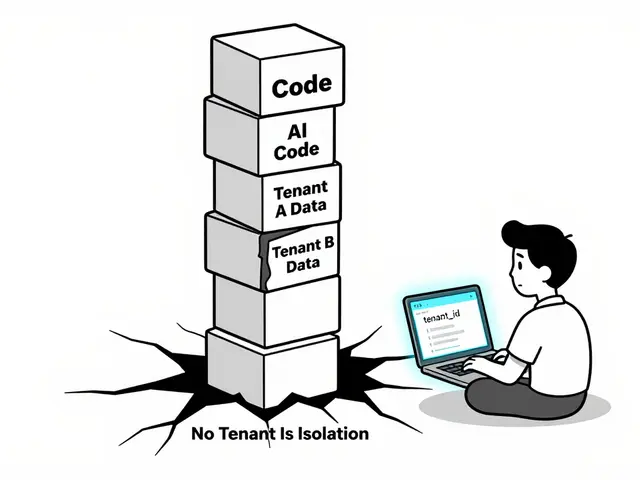
Your contracts contain sensitive trade secrets, PII, and proprietary negotiation tactics. Who owns the data after the AI processes it? Most standard terms say the provider retains rights to use anonymized data for model improvement. For a law firm or a major corporation, this is unacceptable.
You must negotiate a strict "no-training" clause. Explicitly state that your data cannot be used to retrain the base model unless you opt-in and receive compensation. Furthermore, address "data poisoning." If a competitor's leaked contract ends up in your training set via the provider's broader dataset, could it skew your results? Forrester analyst Michael Facemire notes that 63% of enterprises incorrectly assume standard IP indemnification covers this. Add a specific liability clause for model contamination caused by third-party data sources.
Model Drift and Exit Strategies
Models change. Providers update versions silently. One day your extraction tool works perfectly; the next, it misinterprets "shall" versus "may" because the underlying weights shifted. This is called model drift. Gartner reports that 78% of enterprise contracts fail to address this.
Include a "model drift" provision. Require the provider to maintain performance within 5% of baseline metrics through regular retraining. If they release a new version that degrades performance, you need the right to revert to the previous stable version or terminate the contract without penalty. Speaking of termination, build in a robust exit strategy. With 63% of early adopters switching providers within 18 months due to performance gaps, you need clear terms for data export. Can you download all processed metadata and embeddings? If not, you're locked in forever.
Regulatory Compliance and Audit Trails
The regulatory landscape is shifting fast. The EU AI Act and California’s AI Truth in Advertising Act now demand transparency. You cannot rely on a "black box." Stanford Law School’s AI Governance Project found that 89% of enterprise LLM contracts lack transparency requirements for training data sources.
Demand an "AI audit trail" requirement. The provider must document model decisions for regulatory compliance. This is becoming standard; Gartner predicts 75% of contracts will include this by late 2025. Ensure your contract mandates ISO 27001 and SOC 2 Type II compliance, plus GDPR Article 28 processor agreements. If you operate in finance, check for SEC Rule 17a-4 compatibility for record retention. Don't let the provider dictate compliance; make them prove it quarterly with third-party audits.

Implementation Realities vs. Sales Promises
Sales reps love to promise a four-week deployment. Icertis’ 2024 guide shows realistic timelines are 12-16 weeks. Why? Prompt engineering and playbook alignment take time. If you sign a contract with unrealistic milestones, you’ll miss them and face penalties-or worse, accept a subpar tool because you’re already paying.
Structure payments around milestones. Pay 20% upfront, 40% upon successful integration with your ERP system (like SAP or Oracle), and 40% after three months of validated accuracy. Also, negotiate support levels. Generic chat support won’t help when your legal team encounters a niche jurisdictional clause issue. Demand dedicated legal AI specialists with <24-hour response SLAs. Data shows this boosts adoption rates by 38%.
Frequently Asked Questions
How do I estimate token costs for contract review?
Estimate based on average document length and complexity. A standard 10-page contract might consume 5,000-10,000 tokens depending on the prompt verbosity. Multiply this by your annual volume. Remember that multi-turn conversations for redlining increase token count significantly. Always add a 20-30% buffer for error correction loops.
What is the biggest risk in using general LLMs for legal contracts?
Hallucinations. General models like GPT-4 have an 18.7% hallucination rate in legal contexts compared to 6.3% for specialized tools. They may invent non-existent clauses or misinterpret standard boilerplate language, leading to significant legal exposure if not caught by human reviewers.
Can I switch LLM providers easily mid-contract?
Not easily without strong contractual provisions. Most contracts lock you in for 1-3 years. To facilitate switching, negotiate for data portability clauses that allow you to export your fine-tuned parameters and historical data in open formats, reducing migration friction.
Do I need separate insurance for AI errors?
Standard cyber liability policies may not cover AI-specific errors. Consider adding specific riders for algorithmic bias or model failure. Check if your provider offers indemnification for copyright infringement claims arising from generated text, as this is a growing area of litigation.
How does the EU AI Act affect my contract negotiations?
It requires transparency and risk management for high-risk AI systems. Your contract must mandate that the provider supplies technical documentation and logs sufficient for auditing. Non-compliance can lead to fines up to 6% of global turnover, so ensure the provider shares this liability burden.
 Artificial Intelligence