Imagine your AI assistant confidently telling you the capital of France is Paris in 2024, but by August 2026, it’s still citing outdated tax laws from 2023. That’s the core problem with static Large Language Models neural networks trained on fixed datasets that struggle to incorporate new facts without significant intervention. As data changes daily, keeping these models accurate becomes a massive operational headache. You have two main paths: updating the model’s internal weights through retraining or fine-tuning, or letting it pull fresh information on the fly using Retrieval-Augmented Generation a technique that retrieves external documents at inference time to ground responses in current data. Which one actually works better for real-world applications? The answer isn’t always simple, but the evidence strongly favors one approach for most dynamic scenarios.
Quick Summary / Key Takeaways
- RAG keeps knowledge separate from the model, allowing instant updates without touching the model’s core weights.
- Retraining and fine-tuning embed knowledge directly into the model, which is powerful but slow and expensive to update.
- Catastrophic forgetting is a major risk with retraining; RAG largely avoids this by keeping historical data intact in the external index.
- RAG is typically 20 times cheaper to operate than continuous fine-tuning cycles for dynamic data needs.
- The best strategy often combines both: use RAG for facts and current events, and fine-tuning for style and specific task behaviors.
How RAG Handles New Information
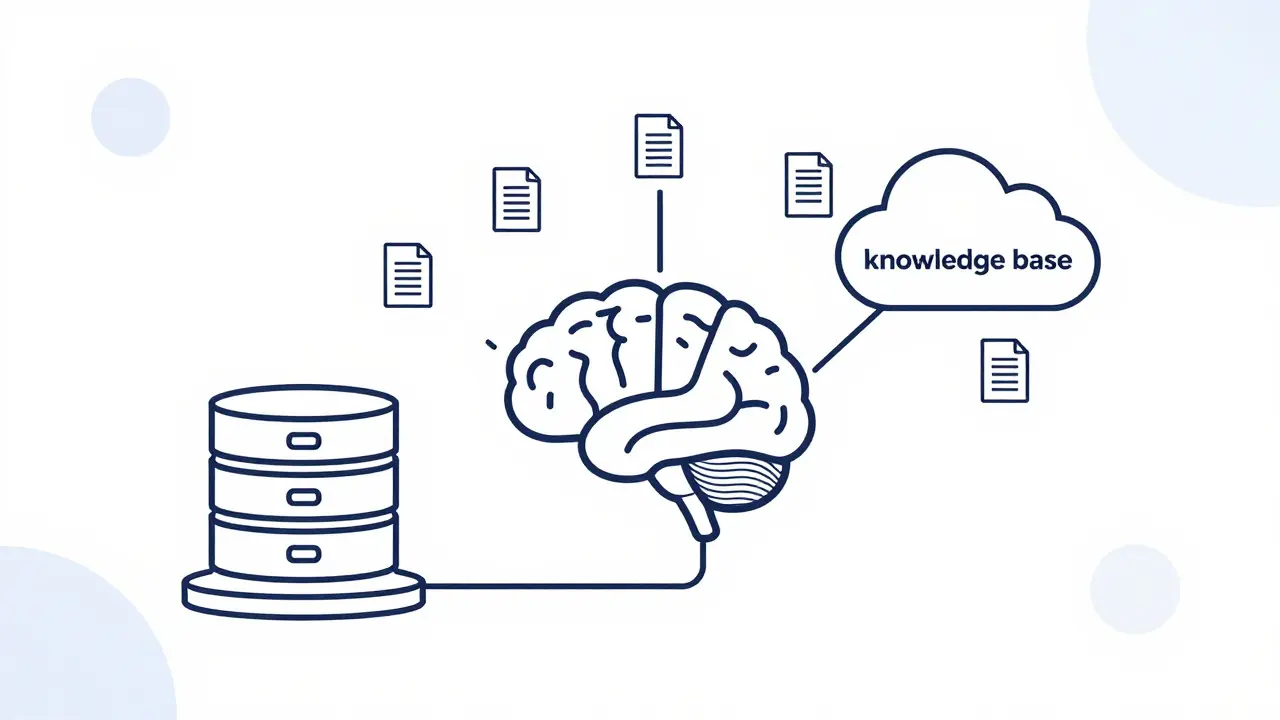
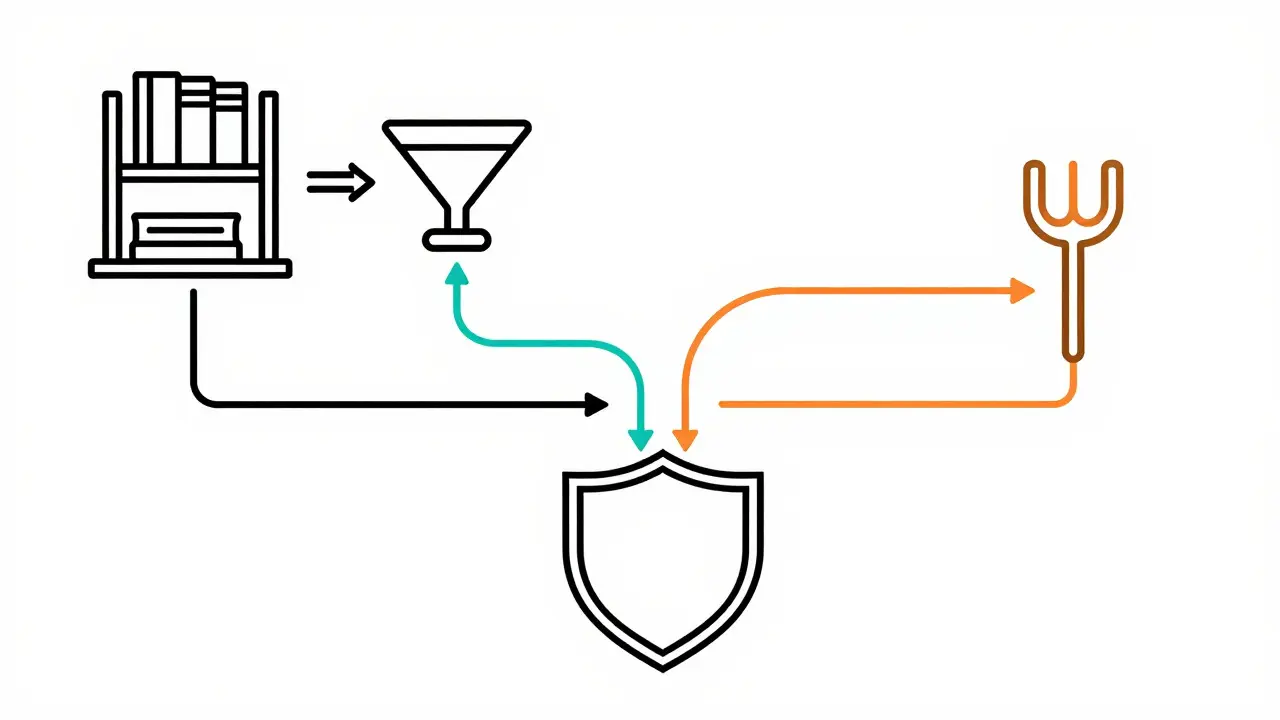
Think of RAG as giving your AI a library card instead of forcing it to memorize every book in the library. When a user asks a question, the system doesn't just rely on what the model learned during its initial training phase. Instead, it performs a semantic search across your external knowledge base-think PDFs, databases, or web pages-to find the most relevant snippets. These snippets are then injected into the prompt before the model generates an answer.
This process, known as contextual priming, ensures the model sees the latest data right before it speaks. If you add a new product manual to your database today, the AI can reference it tomorrow without any code changes or model updates. This separation of storage and computation is what makes RAG so agile. It turns the model into a reasoning engine rather than a memory bank. For industries like finance or news, where data freshness is critical, this architecture is a game-changer because it decouples the cost of updating knowledge from the cost of running the model.
The Reality of Retraining and Fine-Tuning
On the other side of the fence, we have retraining and fine-tuning. Retraining involves building the model from scratch or continuing pre-training on a massive dataset that includes new information. Fine-tuning takes an existing model and adjusts its parameters using a smaller, domain-specific dataset. Both methods bake the new knowledge directly into the model's neural weights.
While this sounds efficient for static tasks, it comes with heavy baggage. First, it’s computationally expensive. You need significant GPU power and time to process new data. Second, there’s the issue of catastrophic forgetting. When you train a model on new data, it can inadvertently overwrite old patterns. Imagine teaching a student new math formulas while accidentally erasing their understanding of basic arithmetic. In LLMs, this means a model updated with 2026 legal cases might start hallucinating on 2024 precedents if not carefully managed. Furthermore, preparing high-quality labeled datasets for fine-tuning is a labor-intensive process that requires human expertise to ensure accuracy.
Cost and Speed: The Operational Difference
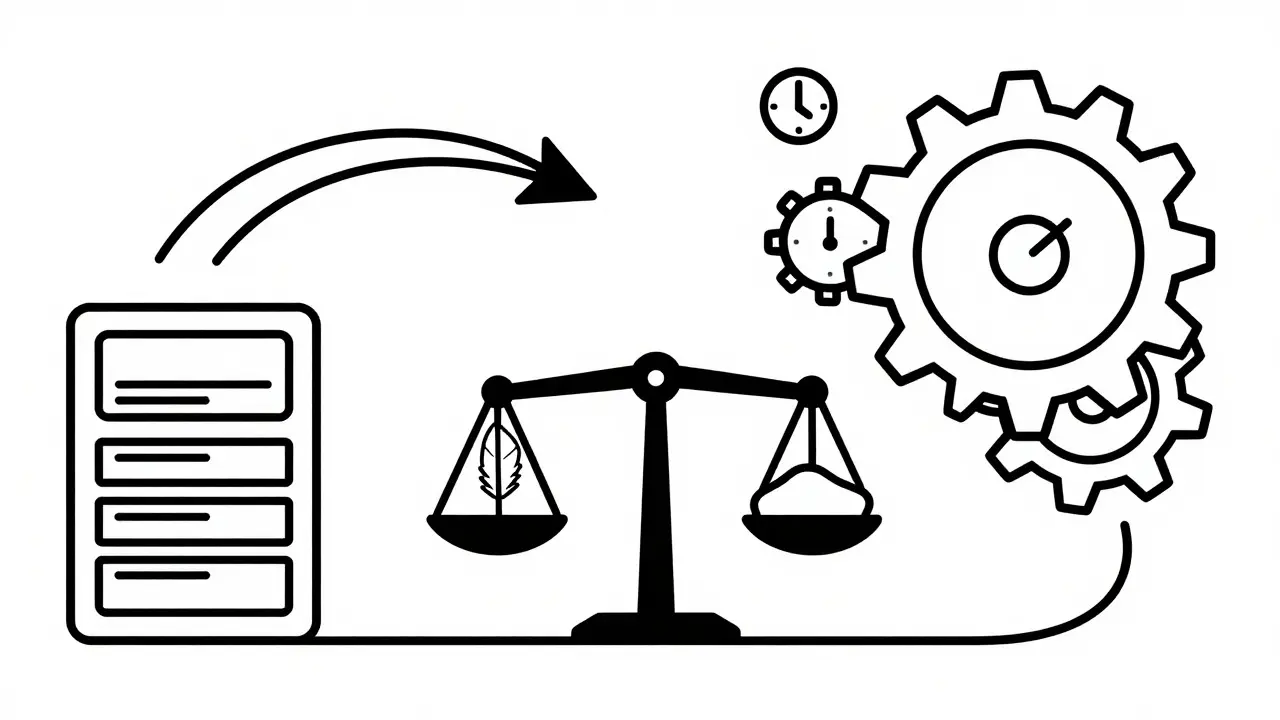
Let’s talk numbers, because they drive business decisions. Integrating external information via RAG can reduce operational costs by up to 20 percent per token compared to continually fine-tuning a traditional LLM. Why such a huge difference? Because you aren’t paying for the compute resources to retrain the model every time a fact changes. You’re only paying for the retrieval step and the inference step.
Speed matters too. Setting up a RAG pipeline can take days or weeks, depending on the complexity of your data ingestion. In contrast, fine-tuning a large model can take weeks just for the training cycle, plus more time for evaluation and deployment. If your data changes weekly, retraining every week is practically impossible for most teams. RAG allows you to update your vector database overnight, and the next morning, your AI knows about the changes. This agility is hard to match with weight-based updates.
Factuality Control and Reliability
One of the biggest pain points with LLMs is hallucination-the tendency to make up facts. Factuality control is crucial for enterprise adoption. Research published in 2023 demonstrated that RAG consistently outperforms unsupervised fine-tuning across diverse knowledge-intensive tasks. The study found that using RAG with a base model was consistently better than relying solely on fine-tuning. While fine-tuning can help the model learn specific patterns, it struggles to absorb new factual information reliably unless exposed to numerous variations of the same fact during training.
RAG provides a clear audit trail. If the AI gives a wrong answer, you can trace it back to the specific document retrieved. Did the source document contain the error, or did the model misinterpret it? With fine-tuned models, the knowledge is hidden inside the weights. Debugging why a model thinks something is true is much harder when that truth is encoded in billions of floating-point numbers. For compliance-heavy industries, this transparency is a major advantage. Data stays external, making it easier to audit and manage according to regulatory requirements.
| Feature | RAG | Retraining / Fine-Tuning |
|---|---|---|
| Knowledge Location | External Database | Model Weights |
| Update Speed | Real-time (minutes/hours) | Slow (days/weeks) |
| Compute Cost | Low (inference + retrieval) | High (training + inference) |
| Catastrophic Forgetting Risk | Low | High |
| Best For | Dynamic data, FAQs, Compliance | Static styles, Specialized logic |
| Data Auditability | High (traceable sources) | Low (opaque weights) |
When Should You Actually Retrain?
Does this mean RAG is always the winner? Not quite. There are scenarios where embedding knowledge into the model makes sense. If you need to change the model’s behavior, tone, or output format, fine-tuning is the right tool. For example, if you want your medical AI to always cite sources in a specific APA format or to use concise, jargon-free language for patients, fine-tuning helps embed those stylistic preferences deeply.
Also, if your task is highly specialized and static-like diagnosing a specific type of equipment failure based on established manuals that rarely change-fine-tuning a smaller, lighter model can be more cost-effective than running a large general-purpose LLM with RAG. In these cases, the overhead of retrieval isn’t worth it. But for anything involving changing facts, news, or evolving regulations, RAG remains the superior choice for maintaining accuracy.
The Hybrid Approach: Best of Both Worlds
In practice, the most robust AI systems don’t choose one or the other. They combine them. A common strategy is to start with a strong base LLM and use RAG to ground responses in real-time data. Then, you selectively fine-tune the model to optimize for specific tasks or to handle complex reasoning patterns that RAG alone might miss. This hybrid methodology leverages the strengths of each approach. RAG handles the "what" (facts and current events), while fine-tuning handles the "how" (style, structure, and specific logic).
For instance, a legal tech company might use RAG to pull the latest case law and statutes, ensuring the AI cites current regulations. Simultaneously, they might fine-tune the model to understand legal argumentation structures, improving the quality of the generated briefs. This setup minimizes the risk of hallucinations while maximizing the utility of the model’s reasoning capabilities. It’s a pragmatic approach that acknowledges the limitations of both pure RAG and pure retraining.
Implementation Tips for Success
If you’re leaning towards RAG, focus on the quality of your chunking and embedding strategy. Poorly structured data leads to poor retrieval, which leads to bad answers. Use semantic search engines that can handle nuanced queries. Also, consider implementing a reranking step to filter out irrelevant chunks before they hit the LLM. This small addition can significantly boost factuality.
For those considering fine-tuning, be cautious about dataset size. Too little data leads to overfitting; too much can cause catastrophic forgetting. Monitor your model’s performance on a holdout set of old questions after each training run to catch regressions early. And remember, no matter which path you take, human-in-the-loop validation is essential for high-stakes applications.
Is RAG always cheaper than retraining?
Generally, yes, for dynamic knowledge updates. RAG avoids the high computational costs of repeated training cycles. However, if your data volume is extremely small and static, the infrastructure cost of maintaining a vector database might outweigh the benefits of avoiding a single fine-tuning run. But for frequent updates, RAG is significantly more economical.
Can RAG replace all fine-tuning needs?
No. RAG is excellent for injecting facts and context, but it doesn't inherently change how a model reasons or formats its output. If you need to alter the model's behavioral patterns, tone, or specific logical frameworks, fine-tuning is still necessary. They serve different purposes: RAG for knowledge, fine-tuning for behavior.
What is catastrophic forgetting in LLMs?
Catastrophic forgetting occurs when a model trained on new data loses some of its previously acquired knowledge. In fine-tuning, this can happen if the new dataset doesn't represent the full scope of the model's original training distribution. RAG mitigates this by keeping old and new knowledge in separate, accessible repositories rather than merging them into the model's weights.
How does RAG improve factuality control?
RAG improves factuality by grounding the model's response in retrieved, verifiable sources. Since the model is prompted with specific documents, it is less likely to invent information. Additionally, because the source documents are external, developers can easily verify if the retrieved content was correct, making debugging and auditing much simpler than inspecting opaque model weights.
Which industries benefit most from RAG?
Industries with rapidly changing data benefit the most. This includes financial services (market data, regulations), news media (current events), healthcare (new research papers), and customer support (product updates). Any sector where being up-to-date is a competitive advantage will see significant value in RAG architectures.
 Artificial Intelligence