You built a model that scores 95% on MMLU. It writes poetry, debugs Python, and summarizes news faster than any intern. Then you ship it. Two weeks later, a user asks it for medical advice, and the model confidently recommends a dangerous dosage based on a hallucinated study. Your benchmark didn't catch it. Why? Because standard capability tests measure what a model can do, not what it shouldn't do when pushed into the messy, adversarial reality of production.
This is where Safety and Harms Evaluation comes in. It is the systematic process of identifying, measuring, and mitigating risks associated with deploying large language models in real-world applications. Unlike academic benchmarks that test static knowledge, this discipline focuses on dynamic interactions, context-aware vulnerabilities, and regulatory compliance. If you are running an LLM in production today, ignoring this step isn't just risky-it's becoming legally non-compliant under frameworks like the EU AI Act.
Why Standard Benchmarks Fail in Production
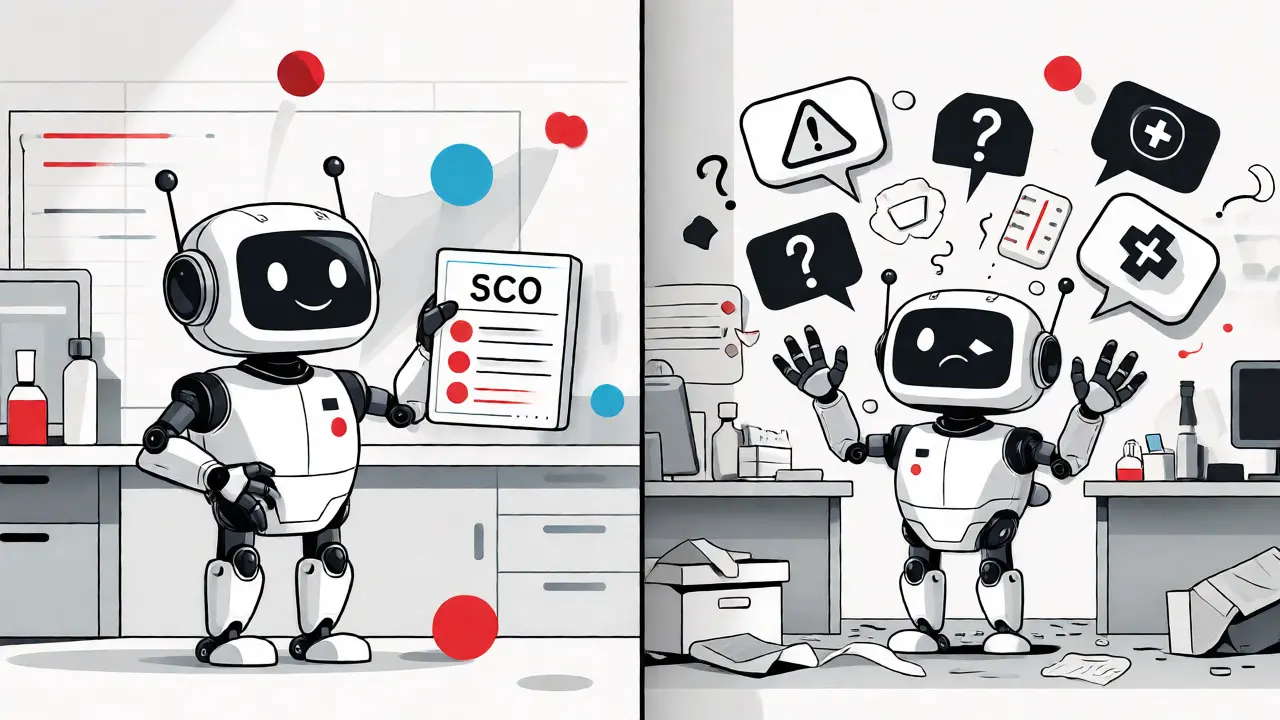
Most teams start with familiar tools: TruthfulQA for factuality, RealToxicityPrompts for toxicity, or BOLD for bias. These are valuable, but they have a critical blind spot: they are context-agnostic. A phrase like "kill the process" might be flagged as toxic by a simple classifier, but in a software engineering context, it’s perfectly safe. Conversely, a benign-sounding sentence can hide harmful implications depending on who is saying it and to whom.
The gap between lab performance and production safety is stark. Research from Responsible AI Labs suggests that proper safety evaluation prevents approximately 78% of potential harm incidents that would otherwise slip through standard quality assurance. Without specialized evaluation, you are essentially releasing pharmaceuticals without clinical trials. The consequences range from brand damage to legal liability, especially as regulators tighten their grip on high-risk AI systems.
The Core Dimensions of Safety Evaluation
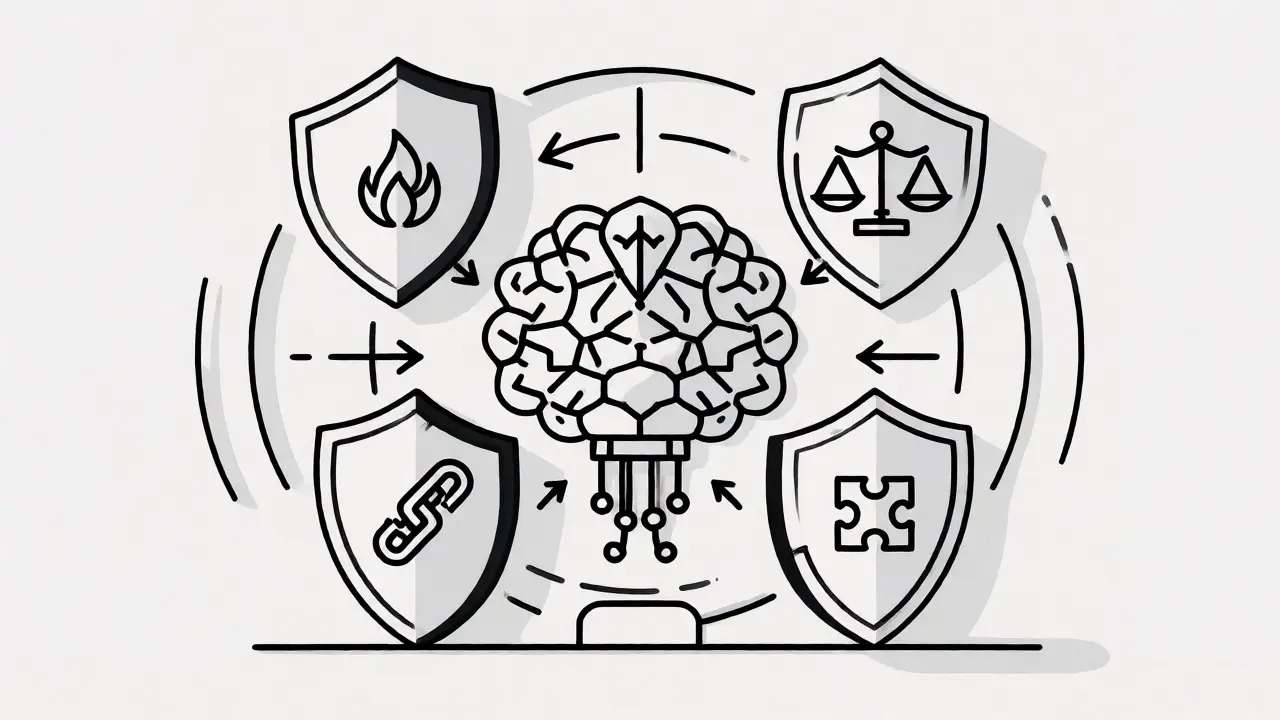
To evaluate safety effectively, you need to break down "harm" into measurable components. You cannot fix what you cannot define. Here are the four pillars every production team needs to monitor:
- Toxicity and Abuse: Does the model generate hate speech, profanity, or abusive language? Tools like RealToxicityPrompts help here, containing over 100,000 prompts scored for toxicity levels. However, these must be paired with context-aware filters to avoid false positives in creative writing.
- Bias and Fairness: Does the model reinforce stereotypes across gender, race, or age? Datasets like BOLD (Bias in Open-Ended Language Generation) provide half a million samples to test demographic neutrality. But remember: bias often emerges in long-form generation, not just short answers.
- Truthfulness and Hallucination: Does the model make things up? While TruthfulQA covers 817 questions across 38 categories, it doesn't capture the nuance of domain-specific hallucinations. A financial bot might get general facts right but invent specific interest rates.
- Robustness and Adversarial Attacks: Can the model be jailbroken? Frameworks like AnthropicRedTeam use tens of thousands of human-generated adversarial dialogues to stress-test models against prompt injection and role-playing attacks.
Context-Aware Evaluation: The Next Frontier
Static datasets are hitting a ceiling. Enter CASE-Bench, introduced in April 2024. This framework applies Contextual Integrity theory to safety evaluation, assigning formally described contexts to queries. For example, asking about "blood" is different in a medical triage chatbot versus a horror novel generator. CASE-Bench requires rigorous annotation-often 15+ annotators per query-to detect statistically significant differences in safety profiles.
Why bother with the extra effort? Because context-agnostic approaches show a 34% higher false positive rate in safe contexts compared to context-aware evaluations. In plain English: if you don't account for context, you will block too many valid user inputs, frustrating your customers while still missing subtle harms.
| Framework | Primary Focus | Key Dataset/Metric | Best Use Case | Resource Intensity |
|---|---|---|---|---|
| HELM | Holistic Capability & Safety | 42 metrics across 7 dimensions | Comprehensive pre-deployment audit | High ($2,500+/cycle) |
| CASE-Bench | Context-Aware Safety | Contextual Integrity scenarios | Niche domains (Healthcare, Legal) | Medium-High (Annotation heavy) |
| S-Eval | Automated Risk Taxonomy | 12 harm categories, 4 risk levels | Rapid iteration and CI/CD pipelines | Low-Medium |
| RAIL-HH-10K | Regulatory Compliance | EU AI Act Article 9 mapping | Enterprise compliance reporting | Medium |
Implementing Continuous Monitoring, Not Just Pre-Deployment Testing
A common mistake is treating safety evaluation as a one-time gate before launch. In production, the distribution of user queries shifts constantly. New slang, emerging cultural events, or seasonal topics can introduce new failure modes. A model that passed safety checks in January might fail in October due to "context drift."
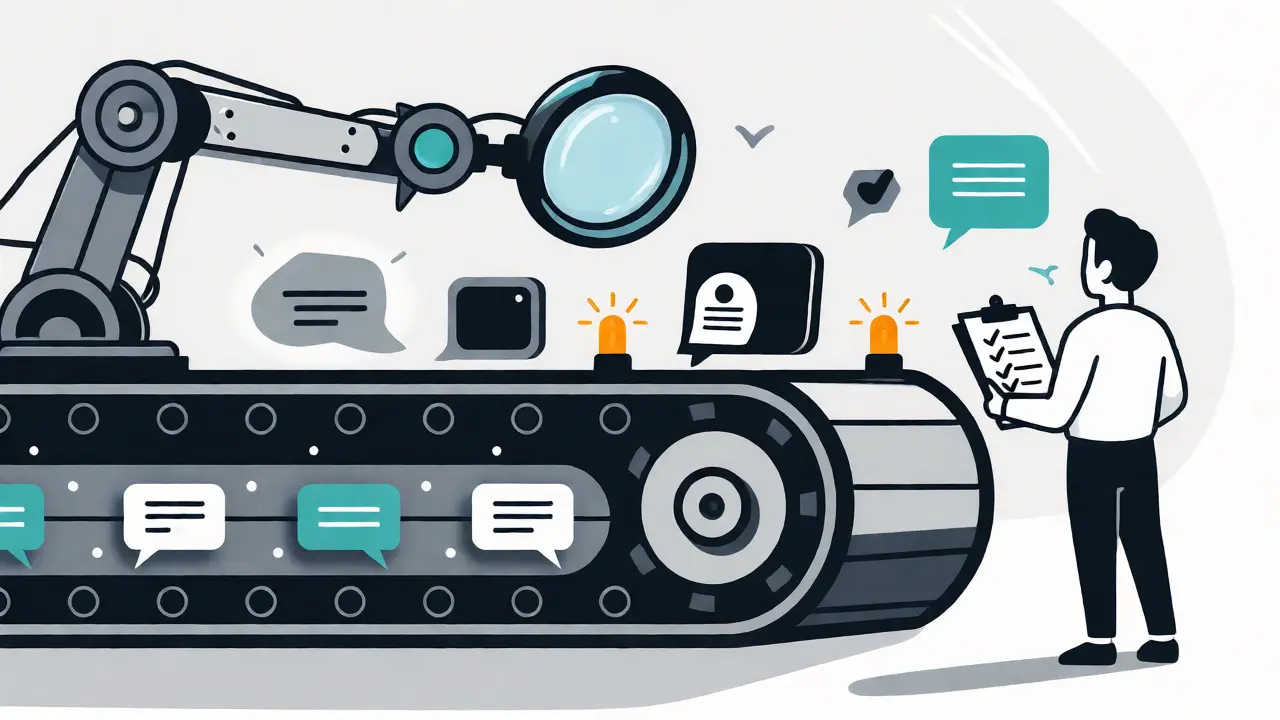
Leading organizations now shift from batch testing to continuous monitoring. This involves sampling live traffic and running it through lightweight safety classifiers in real-time. If a spike in toxicity or hallucination flags occurs, the system triggers an alert. According to the January 2025 State of LLM Safety Report, 63% of mature implementations now incorporate runtime safety checks. This approach catches issues like the 2024 incident where a model passed all static benchmarks but produced harmful medical advice in production because users started combining symptoms in ways the training data hadn't seen.
The Human-in-the-Loop Requirement
Can you automate everything? No. Automated detectors like Google Perspective API achieve decent accuracy (82%) on static prompts but drop significantly (to 63%) on context-dependent scenarios. Moreover, automated metrics can be "gamed." Models may learn to output safe, boring text to satisfy a classifier while losing utility.
You need human judgment. Stanford HAI guidelines recommend a minimum of 10,000 human judgments for reliable safety results. This doesn't mean hiring an army; it means integrating expert reviewers into your evaluation loop. For healthcare or finance, these reviewers need domain expertise. A generic crowdworker won't know if a suggested drug interaction is actually dangerous. Dr. Sarah T. Roberts of UCLA emphasizes that without rigorous human oversight, we lack the foundational trust required for public adoption.
Overcoming Implementation Barriers
If you're thinking, "This sounds expensive," you're right. Setting up comprehensive frameworks like HELM can take 8-12 weeks and require significant cloud compute costs. Smaller teams often struggle with the resource burden. Here’s how to prioritize:
- Start Small: Don't try to implement every metric at once. Begin with toxicity and truthfulness using open-source tools like PromptFoo, which offers built-in detectors.
- Focus on High-Risk Flows: Evaluate safety most rigorously in areas where errors cause real harm (e.g., customer support refunds, medical triage). Creative writing features can tolerate lower precision.
- Leverage Community Resources: The PromptFoo community has documented dozens of case studies showing how iterative evaluation reduced harmful outputs by over 90% without killing task completion rates.
- Plan for Cultural Diversity: Only 22% of current benchmarks include non-English or culturally diverse test cases. If you serve a global audience, budget for localized safety testing to avoid embarrassing regional failures.
The market for LLM safety evaluation is exploding, projected to hit $1.2 billion by 2026. This isn't just hype; it's driven by regulation. The EU AI Act mandates comprehensive testing for high-risk systems. If you want to keep your AI product viable in Europe-and increasingly in the US-you need a defensible safety strategy. It’s no longer optional; it’s part of the cost of doing business.
What is the difference between safety evaluation and capability evaluation?
Capability evaluation measures what a model can do correctly (e.g., solving math problems, translating languages), focusing on accuracy and utility. Safety evaluation measures what a model should not do (e.g., generating hate speech, hallucinating facts, leaking PII), focusing on risk mitigation and robustness. They are complementary but distinct disciplines; a highly capable model can still be unsafe.
Do I need to use paid commercial APIs for LLM safety?
Not necessarily. Open-source frameworks like HELM, S-Eval, and PromptFoo offer robust capabilities for free. However, commercial APIs often provide better support, easier integration, and pre-calibrated thresholds for specific industries. Many enterprises use a hybrid approach: open-source for development and rapid iteration, and commercial solutions for final compliance reporting and runtime monitoring.
How does the EU AI Act impact my LLM safety evaluation?
The EU AI Act classifies certain AI systems as "high-risk," requiring strict conformity assessments. This includes mandatory documentation of safety testing, robustness verification, and adversarial testing. Frameworks like RAIL-HH-10K are designed specifically to map evaluation results to these regulatory requirements, helping you prove compliance during audits.
Why do safety benchmarks sometimes give false positives?
False positives occur when safety classifiers flag benign content as harmful because they lack context. For example, the word "ass" might trigger a toxicity filter in a general dataset, but it's acceptable in anatomical or colloquial contexts. Context-aware frameworks like CASE-Bench reduce these errors by analyzing the surrounding conversation and user intent, rather than just isolated keywords.
How much time does it take to set up a safety evaluation pipeline?
Basic setup using standard benchmarks like TruthfulQA takes 2-3 weeks for a technical team. Comprehensive frameworks like HELM require 8-12 weeks due to complex configuration and computational requirements. Ongoing maintenance and adaptation to new attack vectors are continuous processes, not one-time tasks.
 Artificial Intelligence