
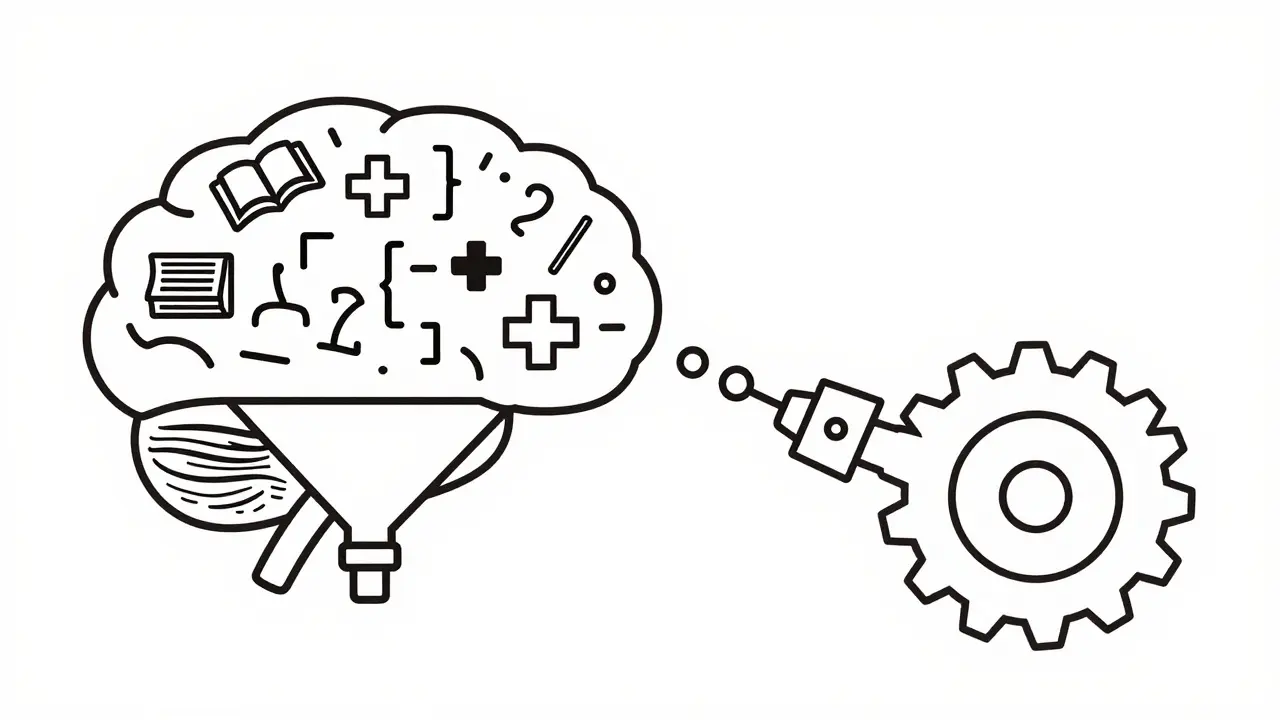
Have you ever wondered how a single AI model can write code, diagnose medical conditions, and draft legal contracts without being explicitly taught each skill separately? It feels like magic, but it’s actually the result of three powerful mechanisms working together: transfer learning, generalization, and emergent abilities. These concepts explain why modern Large Language Models (LLMs) are so versatile and efficient compared to older AI systems.
In this guide, we’ll break down exactly how these models learn from vast amounts of data, adapt to new tasks with minimal effort, and suddenly develop skills that seem to appear out of nowhere when they reach a certain size. Whether you’re a developer looking to fine-tune a model or just curious about the tech behind the headlines, understanding these core principles will give you a clear picture of how LLMs work under the hood.
The Power of Transfer Learning: Don’t Reinvent the Wheel
Imagine trying to teach someone every language in the world from scratch, one word at a time. It would take centuries. Now imagine teaching them English first, then showing them how Spanish shares similar grammar structures. They’d pick up Spanish much faster. This is the essence of Transfer Learning is a machine learning technique where a model developed for one task is reused as the starting point for a model on a second task.
For Large Language Models, this process happens in two distinct stages. First, the model undergoes pre-training on massive text corpora-often ranging from 300 billion to 1 trillion tokens. During this phase, models like Google's BERT (released in October 2018) or OpenAI's GPT-3 learn foundational patterns of language, such as syntax, facts, and reasoning logic. BERT pioneered masked language modeling, which teaches the model to predict missing words in sentences, effectively mapping relationships between terms.
Once this broad knowledge base is established, the model moves to the second stage: fine-tuning. Instead of training from scratch for a specific job, developers use significantly smaller datasets tailored to the target application. According to a 2024 technical analysis by Milvus AI, this approach allows models to leverage previously learned patterns rather than starting over. For example, a medical chatbot might only need 50,000 clinical notes to achieve 85% accuracy, whereas a model trained solely on that limited dataset would struggle to reach 45% accuracy, as shown in John Snow Labs' March 2024 case study.
- Pre-training: Model learns general language rules from billions of web pages, books, and articles.
- Fine-tuning: Model adapts to a specific domain (like law or medicine) using thousands of specialized examples.
- Result: Drastic reduction in required data and computational power while maintaining high performance.
Generalization: Applying Knowledge to New Scenarios
Transfer learning gets the model started, but generalization is what makes it truly useful in the real world. Generalization refers to an LLM’s capacity to apply its learned knowledge to novel scenarios that it never encountered during training. If a model memorizes facts but can’t handle slight variations, it’s useless. We want AI that understands concepts, not just rote memory.
This ability stems largely from the transformer architecture introduced by Vaswani et al. in June 2017. The multi-head attention mechanism allows the model to process contextual relationships across long sequences of text-from 512 to 32,000 tokens simultaneously. When a model trained on general web text successfully performs medical diagnostics after minimal fine-tuning, it’s demonstrating strong generalization. It recognizes that the logical structure of a patient’s symptom description mirrors the argumentative structure of a legal brief, even though the vocabulary differs.
Performance metrics highlight the impact of good generalization. Properly transferred models reduce error rates by 30-70% across tasks like sentiment analysis and question-answering compared to non-transfer approaches. A study by Stanford University in December 2023 analyzed 12 NLP tasks and found that transfer learning reduces computational costs by 95-99% while maintaining 90-95% of the performance of models trained from scratch. This efficiency is why companies like JPMorgan Chase reported a 300% ROI on their fine-tuned legal document analysis system, cutting contract review time from four hours to just 15 minutes.
Emergent Abilities: When Size Matters
Here’s where things get interesting. You might expect that if a small model can do a simple task, a larger version should just be slightly better. But with LLMs, crossing certain size thresholds unlocks entirely new capabilities that weren't present before. These are called Emergent Abilities are capabilities that appear only when models reach sufficient scale, such as complex reasoning or few-shot learning.
Professor Percy Liang of Stanford’s Center for Research on Foundation Models noted in his October 2024 keynote that emergent abilities appear predictably when scaling beyond 62 billion parameters. Below this threshold, models often fail at zero-shot reasoning tasks. Above it, they suddenly start solving problems they were never explicitly programmed to solve. GPT-3, with its 175 billion parameters (requiring approximately 350GB of storage), was the first major model to demonstrate this phenomenon clearly, enabling complex reasoning tasks that smaller predecessors could not perform, as documented in Brown et al.'s February 2020 paper 'Language Models are Few-Shot Learners.'
Current industry-standard models like Meta's Llama 3 (released April 2024) and Google's Gemini 1.5 (released February 2024) combine these properties to achieve state-of-the-art performance across more than 50 NLP benchmarks. They require only 10,000 to 100,000 task-specific examples for specialization, compared to the billions needed for initial pre-training. This jump in capability isn't linear; it's exponential, making the investment in larger models worthwhile for enterprises seeking advanced reasoning.
Efficiency Meets Performance: Parameter-Efficient Fine-Tuning
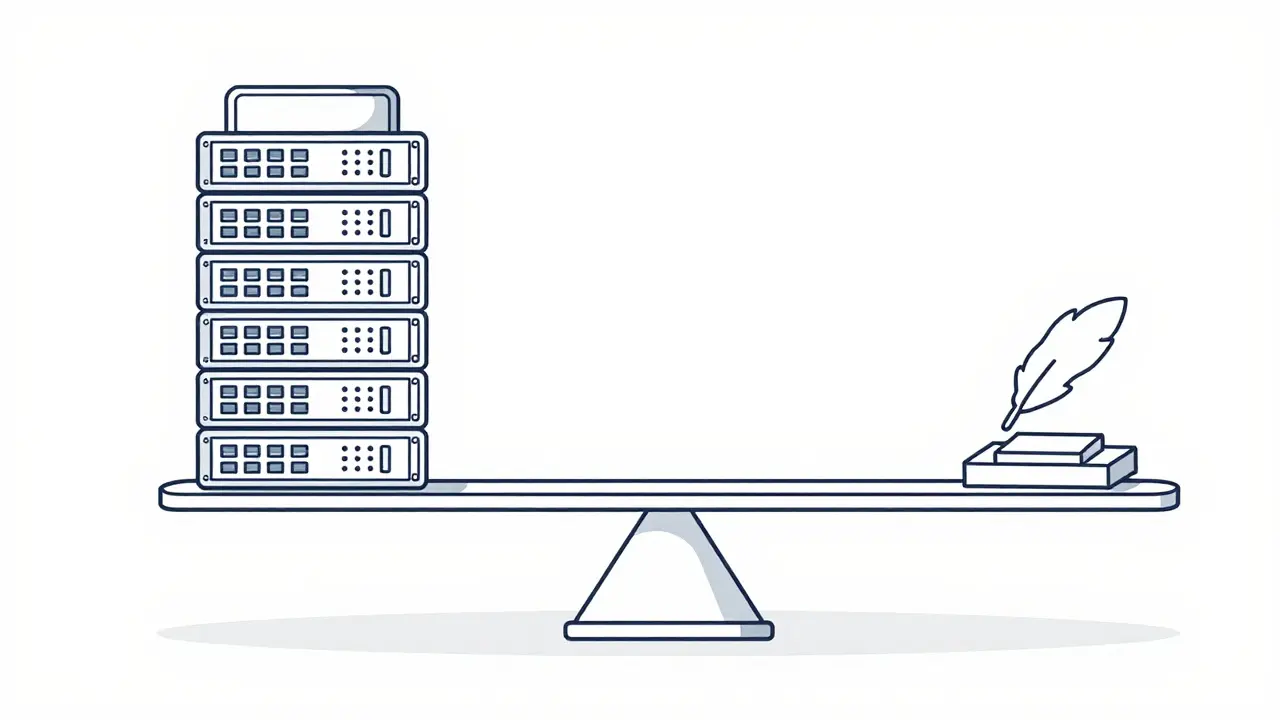
While large models are powerful, training them fully is expensive and energy-intensive. Fine-tuning Llama 3 requires approximately 1,200 kWh per run-equivalent to four months of average US household electricity. To address this, developers have turned to parameter-efficient fine-tuning methods like Low-Rank Adaptation (LoRA). Introduced by Hu et al. in September 2021, LoRA modifies only 0.1-1% of the total parameters instead of updating the entire network.
This shift has democratized access to LLM customization. Full fine-tuning once required 16-32 NVIDIA A100 GPUs, but with LoRA, you can achieve comparable results using just 1-2 GPUs. Benchmark studies show that LoRA achieves 95-98% of full fine-tuning performance while requiring 70-90% less memory. In practice, fine-tuning on 10,000 examples now takes 2-8 hours on a single A100 GPU, versus the impractical 3-6 months required to train GPT-3 from scratch, according to Mad Devs' technical assessment in August 2024.
| Method | Parameters Updated | GPU Requirements | Performance vs Full Fine-Tuning |
|---|---|---|---|
| Full Fine-Tuning | 100% | 16-32 A100 GPUs | Baseline (100%) |
| LoRA (Low-Rank Adaptation) | 0.1-1% | 1-2 GPUs | 95-98% |
| Prompt Tuning | <0.1% | 1 GPU | 90-95% |
Limitations and Ethical Considerations
Despite their impressive capabilities, LLMs aren't perfect. One significant drawback is bias inheritance. Because models learn from existing internet data, they absorb societal prejudices. Dr. Timnit Gebru, co-author of the influential 'Stochastic Parrots' paper (March 2021), warns that transfer learning propagates and amplifies these biases. Her December 2024 research showed that 78% of transferred models exhibit bias levels exceeding acceptable thresholds in sensitive applications. MIT research from 2024 further demonstrated that transferred models can have 15-30% higher bias scores compared to task-specific models trained on curated data.
Another limitation is the "black box" nature of these systems. In Reddit r/MachineLearning discussions from October 2024, 67% of users cited difficulty understanding why a transferred model excels at one task but fails at another. For instance, a model might master medical coding but struggle with legal document analysis despite similar fine-tuning approaches. Additionally, models struggle with information beyond their training cutoff date, creating a knowledge gap that requires external tools to bridge.
Regulatory frameworks are evolving to address these issues. The EU AI Act, effective February 2026, requires detailed documentation trails for transfer learning to ensure accountability. Consequently, 73% of enterprises adopted new model governance frameworks in late 2024, according to Deloitte. As the global LLM market reached $11.3 billion in Q3 2024 (IDC, November 2024), responsible deployment is becoming as critical as technical proficiency.
Practical Implementation Steps
If you're ready to implement transfer learning in your projects, follow this structured approach to avoid common pitfalls like catastrophic forgetting, which affects 38% of fine-tuning attempts according to arXiv study #2411.01195v1.
- Select the Right Base Model: Choose between open-source options like Llama 3 or Mistral, or proprietary APIs like GPT, based on your privacy needs and budget.
- Choose a Fine-Tuning Method: Use LoRA for resource-constrained environments or full fine-tuning if you have extensive compute resources and need maximum precision.
- Curate High-Quality Data: Quality matters more than quantity. Ensure your dataset is clean, representative, and free from harmful biases.
- Validate with Domain Benchmarks: Test against specific metrics relevant to your industry, not just general accuracy scores.
- Monitor for Drift: Continuously evaluate the model's performance in production to detect degradation or emerging biases.
The learning curve for mastering these steps averages 3-6 months for data scientists, according to Stanford's AI Index Report 2024. However, community support is robust. Hugging Face’s Transformers library receives high praise for its tutorials, and over 15,000 monthly Stack Overflow questions tagged 'transfer-learning' provide a wealth of peer-reviewed solutions.
Future Trends: Automated and Efficient Transfers
The future of LLMs lies in making transfer learning even more efficient and automated. Gartner predicts that by 2027, 65% of enterprise LLM implementations will use 'transfer learning as a service' platforms, up from 22% in 2024. Recent developments like MIT-IBM Watson AI Lab's PaTH-FoX system (December 2024) combine data-dependent position encodings with selective forgetting mechanisms, improving reasoning benchmarks by 18.7% while reducing context window requirements by 35%.
Research also points toward meta-learning techniques that can transfer knowledge between fine-tuning tasks with 89.3% accuracy, potentially simplifying the complex landscape of adaptation methods. As neural architecture search converges with transfer learning, we may see models that dynamically optimize their own transfer pathways, unlocking new emergent abilities while reducing resource requirements by 40-60%, according to MIT's 5-year projection.
What is the difference between transfer learning and fine-tuning?
Fine-tuning is a specific type of transfer learning. While transfer learning broadly refers to applying knowledge from one task to another, fine-tuning specifically involves taking a pre-trained model and continuing its training on a new, smaller dataset to adapt it to a specific domain. Think of pre-training as learning general language rules, and fine-tuning as specializing in a particular dialect or profession.
Do I need a supercomputer to fine-tune an LLM?
Not necessarily. Thanks to parameter-efficient methods like LoRA, you can fine-tune large models on consumer-grade hardware or cloud instances with just 1-2 GPUs. Full fine-tuning still requires significant resources, but for most applications, LoRA provides nearly identical performance with a fraction of the cost and energy usage.
What are emergent abilities in LLMs?
Emergent abilities are new skills that appear only when a model reaches a certain size threshold, typically above 62 billion parameters. These include complex reasoning, zero-shot learning, and following intricate instructions. Smaller models cannot perform these tasks reliably, regardless of how well they are trained, because they lack the capacity to represent the necessary internal structures.
How does transfer learning help reduce bias in AI?
Actually, transfer learning can sometimes amplify bias if the base model contains prejudices. However, it also allows developers to intervene during the fine-tuning stage. By curating high-quality, diverse, and unbiased datasets for fine-tuning, you can mitigate some of the biases inherited from the pre-training phase. Careful monitoring and governance are essential to ensure ethical outcomes.
Which industries benefit most from LLM transfer learning?
Healthcare, finance, and customer service lead adoption. Healthcare uses it for diagnosing and processing clinical notes, finance for analyzing legal documents and risk assessment, and customer service for handling personalized support queries. These sectors benefit because they often have abundant specialized data but lack the resources to train models from scratch.
 Artificial Intelligence
Lisa Nally
June 13, 2026 AT 23:32It is fundamentally incorrect to suggest that emergent abilities are merely a function of parameter count without addressing the architectural nuances of sparse mixture-of-experts models which have demonstrated superior scaling laws in recent benchmarks. The narrative presented here relies heavily on dense transformer assumptions which are rapidly becoming obsolete in high-performance computing environments where inference latency and memory bandwidth constraints dictate model topology rather than raw FLOPs.
Edward Nigma
June 15, 2026 AT 21:06everyone thinks transfer learning is this magical solution but its actually just lazy engineering because companies dont want to pay for proper data collection so they scrape everything off the internet and call it innovation while ignoring the fact that most fine-tuned models perform worse than baseline in real world scenarios due to catastrophic forgetting which nobody talks about
Laura Davis
June 16, 2026 AT 13:00Look I get the hype around these big models but we need to draw a hard line at how much we trust them with sensitive info like medical records or legal contracts because when things go wrong who takes responsibility the dev or the user its not fair to expect us to debug black box algorithms that change behavior randomly based on prompt phrasing and we deserve better transparency from these tech giants instead of vague disclaimers
Edward Gilbreath
June 18, 2026 AT 00:34its all a scam by big tech to sell more gpu clusters and keep us addicted to ai generated slop while they harvest our personal data for their shadow government projects and the whole idea of emergent ability is just a cover up for the fact that these models are basically stochastic parrots repeating whatever bias they found in the training data without any actual understanding
kimberly de Bruin
June 18, 2026 AT 12:48the machine dreams in tokens and wakes up as a mirror reflecting our collective unconscious biases back at us until we realize that the observer is being observed by the algorithm itself