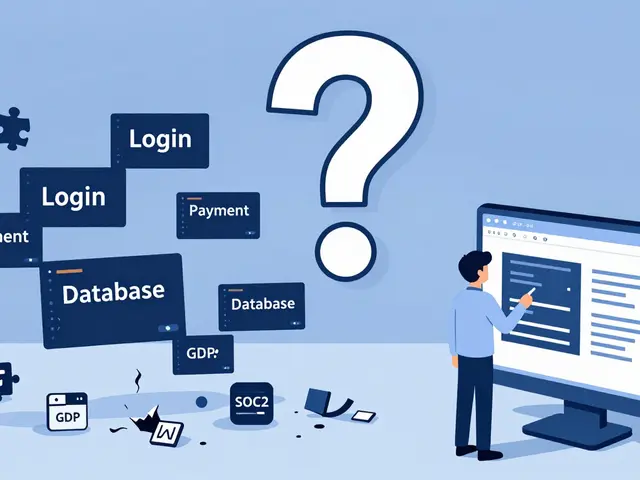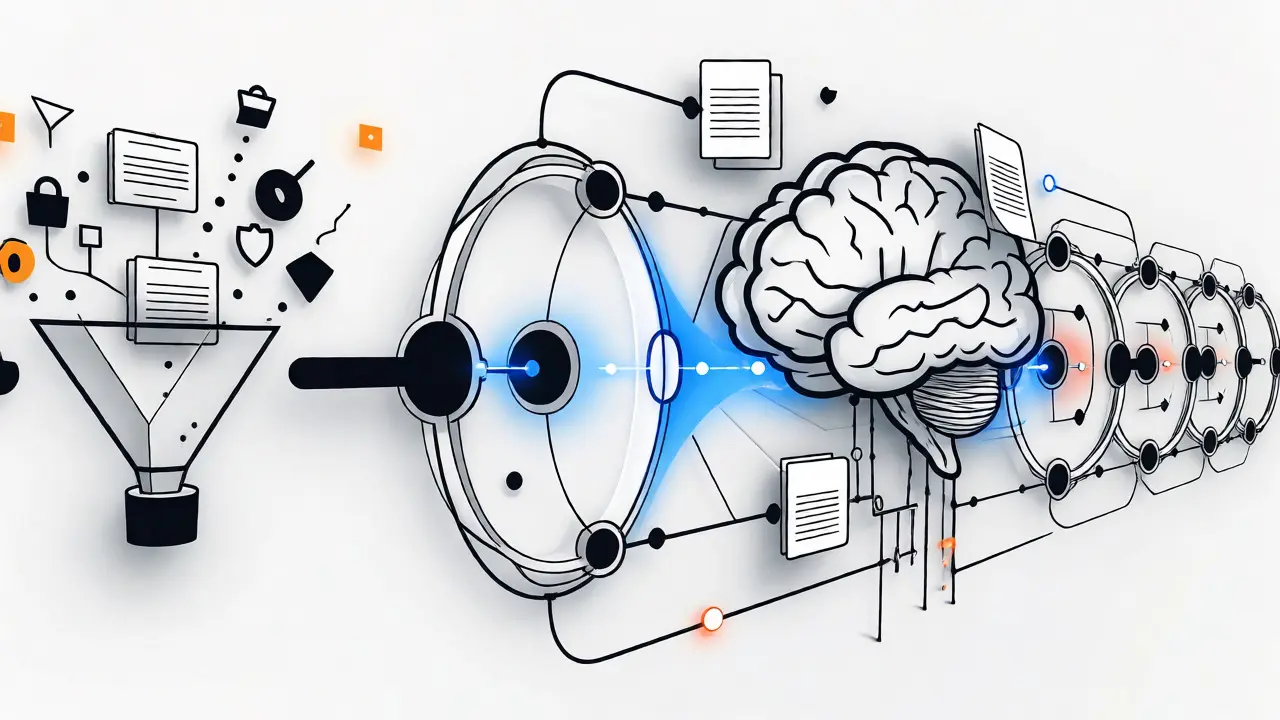
You built a Retrieval-Augmented Generation (RAG) system. It’s brilliant. It answers questions using your internal wiki, customer contracts, and HR policies. But here is the uncomfortable truth: if you didn’t build it with security in mind from day one, you likely just created a very expensive leaky bucket. In late 2023, RAG Security incidents among Fortune 500 companies jumped by 73%. Why? Because most teams treated the Large Language Model (LLM) as the only thing that mattered, ignoring the retrieval layer where the actual private documents live.
This isn’t about theoretical risks. It’s about real money and real fines. A healthcare provider recently had 4,200 patient records exposed because their metadata filtering was too loose. That’s not a bug; that’s a compliance nightmare waiting to happen. If you are running RAG workflows today, or planning them for 2026, you need to stop thinking about "AI security" as a single checkbox. It’s a pipeline problem. Let’s break down how to actually protect your private documents without turning your AI into a sloth.
The Seven-Layer Defense Model
Most failures happen because people try to secure the model but forget the path the data takes. The USC Security Institute outlines seven distinct layers you must lock down. Skipping one is like leaving the back door open while locking the front gate.
- User Layer: Who is asking? You need strict authentication. Not everyone gets to see every document.
- Input Layer: Sanitize what comes in. Prevent prompt injection attacks right at the start.
- Prompt Layer: Use structured templates with guardrails. Don’t let users free-form prompts that might trick the system.
- Retrieval Layer: This is critical. Your vector store needs Role-Based Access Control (RBAC). If User A shouldn’t see Document B, the search engine shouldn’t even return it.
- Model Layer: Constrain generation. Ensure the LLM doesn’t hallucinate sensitive info that wasn’t retrieved.
- Output Layer: Post-process checks. Scan the final answer for leaked PII before it hits the user’s screen.
- Monitoring Layer: Watch for anomalies. Is someone querying 500 times an hour? Flag it.
If you ignore the Retrieval Layer, you’re vulnerable. Even if the LLM is secure, if your vector database returns a confidential salary sheet to an intern, the LLM will happily summarize it for them. The breach happened at retrieval, not generation.
Encryption and Tokenization Strategies
How do you keep data safe when it’s being turned into vectors? You can’t just encrypt the whole database and hope for the best. Search doesn’t work well on encrypted blobs unless you use specific techniques. The standard recommendation from CISA guidelines is AES-256 encryption for stored embeddings. But here’s the catch: encrypting vector embeddings adds latency. Fortanix’s technical analysis shows this overhead can add 12-18ms per query. For high-volume apps, that matters.
There are two main approaches to handling sensitive data in storage:
| Method | Protection Level | Performance Impact | Complexity | Best For |
|---|---|---|---|---|
| Data Redaction (Storage Level) | High (92% PII protection) | Low (preprocessing only) | Moderate | Static documents with clear PII patterns |
| Role-Based Metadata Filtering | Medium-High (85% scenario coverage) | Moderate (8-12% throughput drop) | High (requires role management) | Enterprise environments with complex hierarchies |
| Homomorphic Encryption | Very High | Very High (significant latency) | Very High | Banking/Finance with extreme compliance needs |
For most enterprises, metadata filtering is the practical choice. You tag documents with access levels (e.g., "Public," "Internal," "Confidential") during ingestion. Then, when a user queries, the system filters results based on their role. AWS Bedrock documentation notes that this can reduce query throughput by up to 12% in high-volume environments. You have to weigh speed against safety. Usually, safety wins.
The Vector Database Vulnerability
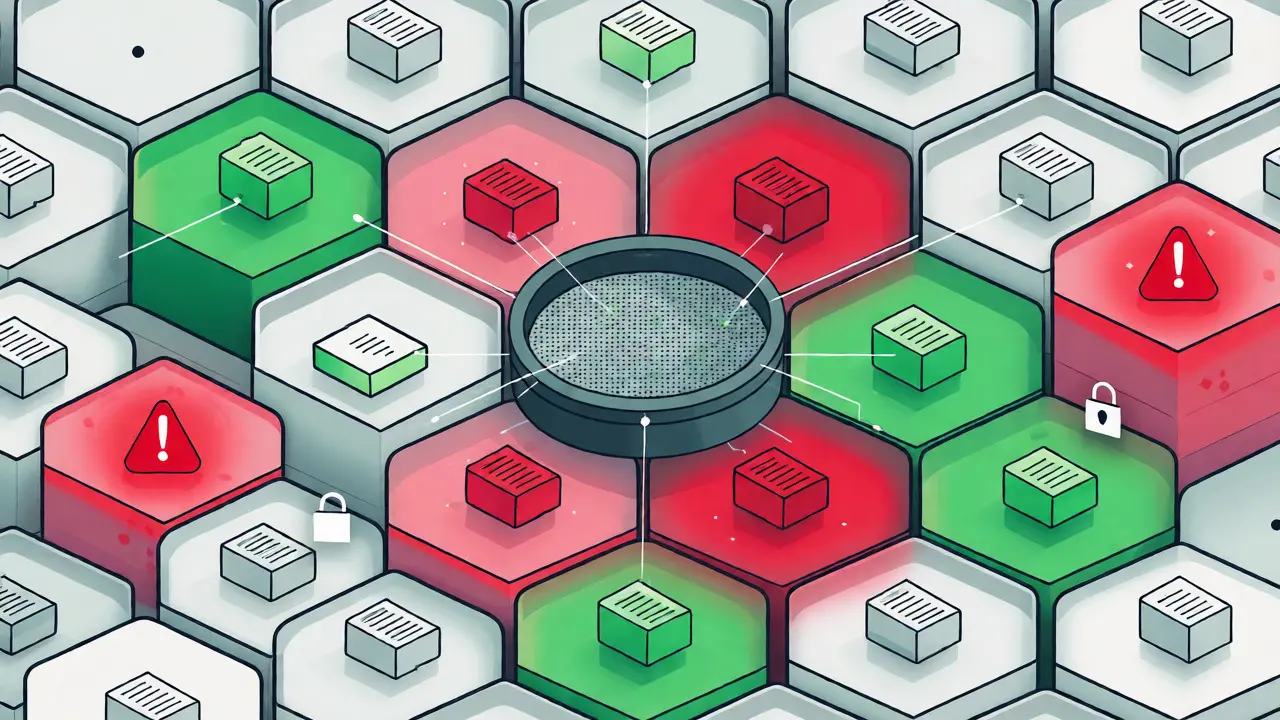
Here is something many developers miss: vector databases themselves are immature regarding security. Bruce Schneier, a well-known security expert, warned that 78% of tested implementations were vulnerable to embedding space manipulation. What does that mean? An attacker can tweak the numerical values of an embedding slightly so that a malicious document appears highly relevant to a benign query.
To combat this, you need more than just a standard Pinecone or Weaviate setup. You need "retrieval rails." Mend.io suggests these rails ensure the AI retrieves only trusted sources. In their testing, this reduced poisoned data risks by 65%. How do you implement this? By verifying the source integrity before indexing. If a document comes from an unverified source, quarantine it. Don’t let it into your vector store until it passes a sanity check.
Also, consider WORM (Write Once, Read Many) storage formats. About 68% of security-focused Reddit discussions recommend this. It prevents tampering after ingestion. If someone tries to alter a document in the backend, the hash changes, and your system flags it. This is crucial for audit trails, especially under GDPR or HIPAA.
Compliance and Regulatory Pressures
It’s October 2026. The EU AI Act has been in effect since August 2025. Article 28 specifically requires "appropriate technical and organizational measures" for privacy and security in AI systems. If you’re operating in Europe, your RAG implementation isn’t optional-it’s mandated. Similarly, the California Privacy Rights Act amendments now address AI data handling directly.
Financial services lead adoption here, with 63% of enterprises having some form of RAG security. Healthcare follows at 52%. Why? Because fines are brutal. A Mayo Clinic case study showed that HIPAA-compliant RAG setups reduced Protected Health Information (PHI) exposure by 97%. Without those controls, you’re gambling with your reputation.
Don’t rely on generic cloud defaults. AWS Bedrock offers good integration, but its RBAC configuration is notoriously complex, according to Trustpilot reviews. If you’re building custom, expect a learning curve. Organizations using hybrid environments report 8-10 weeks of implementation time versus 3-4 weeks for pure AWS shops. Plan for that delay. Rushing leads to misconfigurations, and misconfigurations lead to leaks.
Practical Implementation Steps
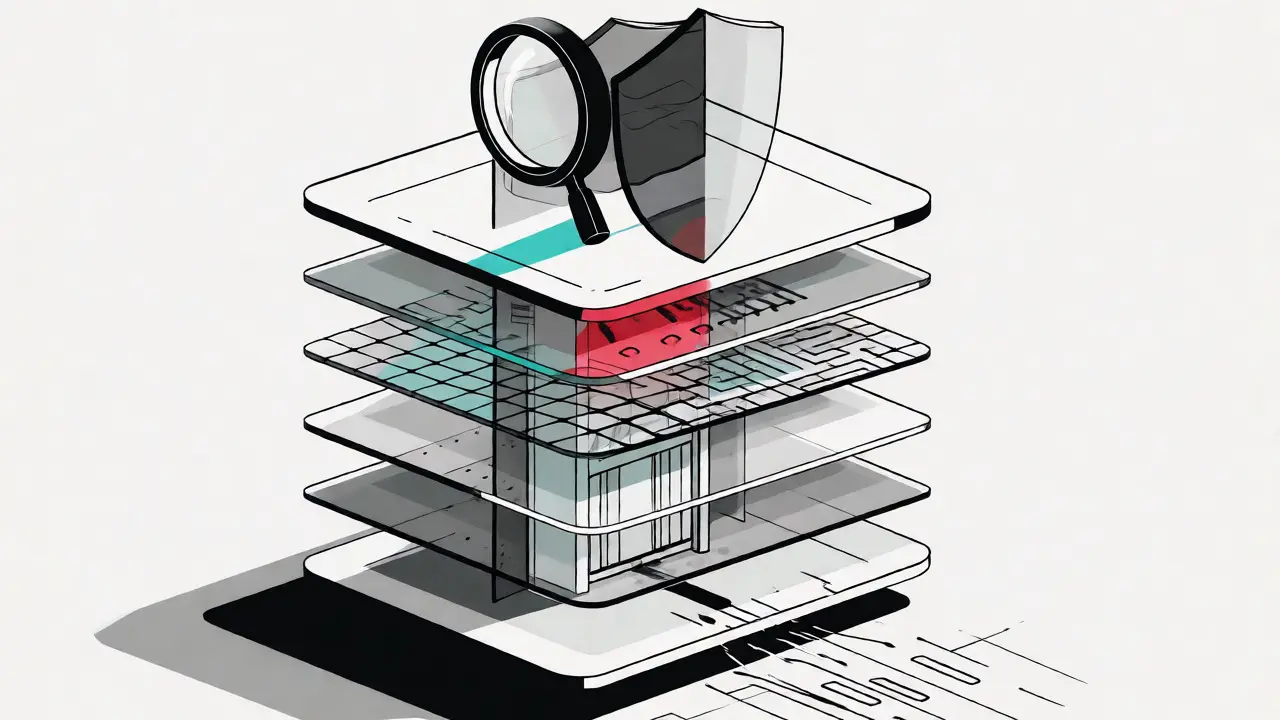
So, how do you actually fix this? Follow this five-phase process, which aligns with Thales’ recommended framework:
- Data Discovery and Classification: Before you ingest anything, scan it. Tools like CipherTrust can identify sensitive content. Don’t assume you know what’s in your docs. You don’t.
- Policy Definition: Decide what gets masked, tokenized, or encrypted. Create clear rules. "Social Security Numbers get masked" is a rule. "Sensitive things get hidden" is not.
- Integration: Connect your classified data to your vector database. Ensure the metadata tags travel with the embeddings.
- Access Control Configuration: Set up RBAC. Test it rigorously. Can an intern see the CEO’s contract? If yes, fix it.
- Validation via Penetration Testing: Try to break it. Use tools to attempt query injection. See if you can extract data you shouldn’t.
A common pitfall is key rotation. 57% of users cite managing encryption key rotation as difficult. Automate it. If you manually rotate keys, you will eventually forget, and your system will either crash or serve stale data. Also, set strict query limits. 150 queries per user per hour is a common threshold to prevent abuse and cost blowouts.
Cost vs. Performance Trade-offs
Security costs money and time. Commercial solutions like Thales CPL offer comprehensive pre-ingestion discovery, scanning 1.2 million files per hour. Open-source alternatives like LangChain Guard are cheaper ($8,200/year vs $28,500/year) but slower (350,000 files/hour). Which do you choose?
If you’re a startup with limited sensitive data, open-source might suffice. If you’re a bank processing millions of documents daily, the speed difference matters. Gartner projects the RAG security market to hit $4.7 billion by 2026. This growth reflects the reality: companies are realizing that cheap AI is expensive if it leaks data.
Keep an eye on performance metrics. Properly implemented security adds 15-25ms latency. If your SLA is tight, test this early. Don’t wait until launch to discover your AI is too slow for real-time chat.
Does RAG security slow down my application significantly?
Yes, but usually minimally. Benchmarks show that adding proper security layers (encryption, filtering, monitoring) typically adds 15-25ms to query processing time. While noticeable in ultra-low-latency scenarios, it is generally acceptable for enterprise applications. However, heavy encryption on vector embeddings can add another 12-18ms, so optimize based on your specific infrastructure.
Can I rely solely on the LLM's safety features for data protection?
No. The LLM generates text based on retrieved context. If your retrieval system pulls in a confidential document due to poor access control, the LLM will output that information regardless of its own safety filters. Security must be enforced at the retrieval layer (vector database) and input/output layers, not just within the model itself.
What is the biggest risk in current RAG implementations?
Prompt injection and embedding manipulation are top risks. Untargeted attacks can extract 37% of sensitive info from unsecured systems. More critically, 60% of current implementations fail to adequately address prompt injection vulnerabilities, allowing attackers to trick the system into revealing data or behaving unexpectedly.
How do I handle dynamic data that changes frequently?
Dynamic data poses classification challenges. JPMorgan Chase reported a 22% failure rate in identifying newly created sensitive documents during volatility events. To mitigate this, implement real-time anomaly detection and automated policy enforcement. Regularly re-scan your data stores and update classification models to catch new types of sensitive content.
Is open-source RAG security sufficient for regulated industries?
It depends on your resources. Open-source tools like LangChain Guard are cost-effective but require significant expertise to configure securely. Regulated industries like healthcare and finance often prefer commercial solutions (e.g., Thales, AWS Bedrock) because they offer better support, faster scanning speeds, and built-in compliance reporting features that reduce operational risk.
 Artificial Intelligence