
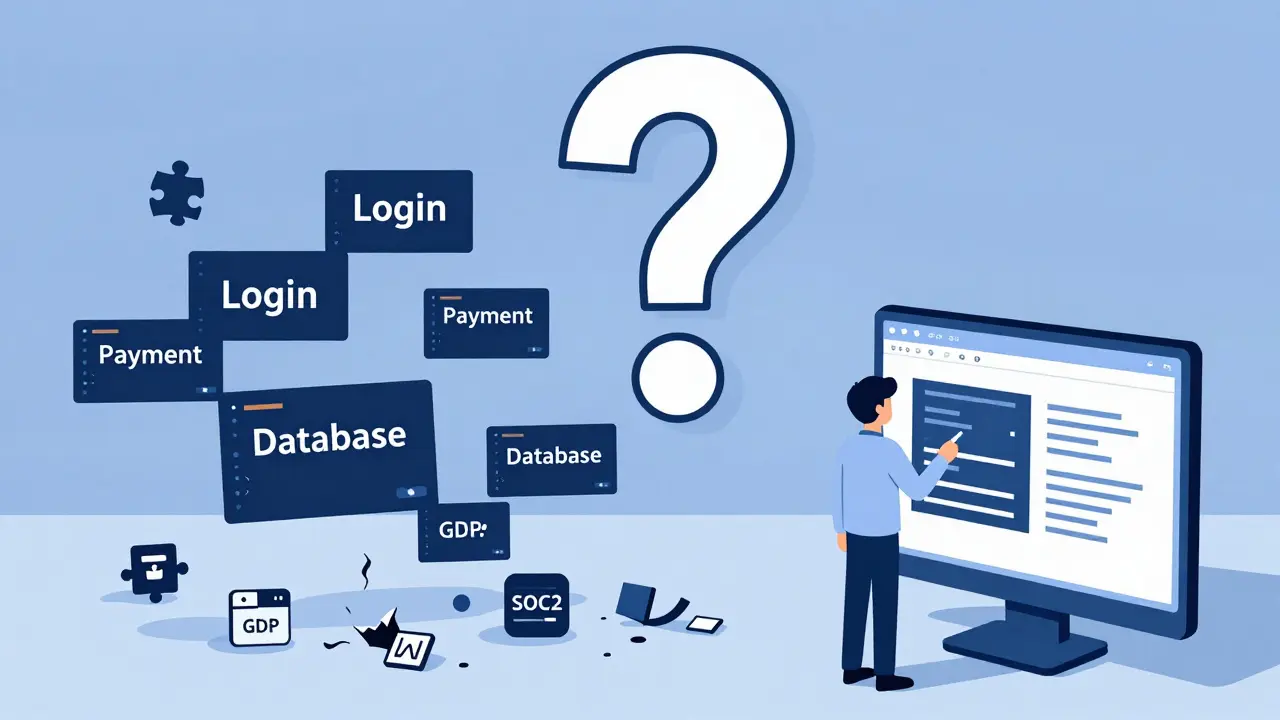
By 2026, vibe coding isn’t just a buzzword-it’s a working reality. You type in plain English like "build me a login page with password reset and Google auth", and within seconds, you get working code. No terminal. No syntax errors. No debugging hell. Sounds like magic? It is. But here’s the truth: vibe coding tools today are amazing at building pieces, but terrible at putting them together.
What Vibe Coding Actually Does Right
Today’s top vibe coding platforms-Replit, Vercel’s v0, Betty Blocks, Retool AI-do one thing incredibly well: turn short natural language prompts into functional code blocks. Replit’s Autonomous AI Agent 3 generates code with 89.7% accuracy on simple tasks, according to TechCrunch Labs. Vercel’s v0 cuts deployment time by 70% for web interfaces, letting designers ship landing pages in hours instead of days. Forrester’s Q4 2025 study found teams using these tools prototype 63% faster than traditional methods.Users love the speed. A marketing agency in Portland reduced a landing page build from 3 days to 4 hours using v0. A solo founder in Austin built a basic CRM in under an hour with Replit. These aren’t outliers-they’re becoming common. The tools are good at generating components: forms, buttons, API calls, even database schemas. But that’s where the magic stops.
The Big Gap: No One Builds Systems
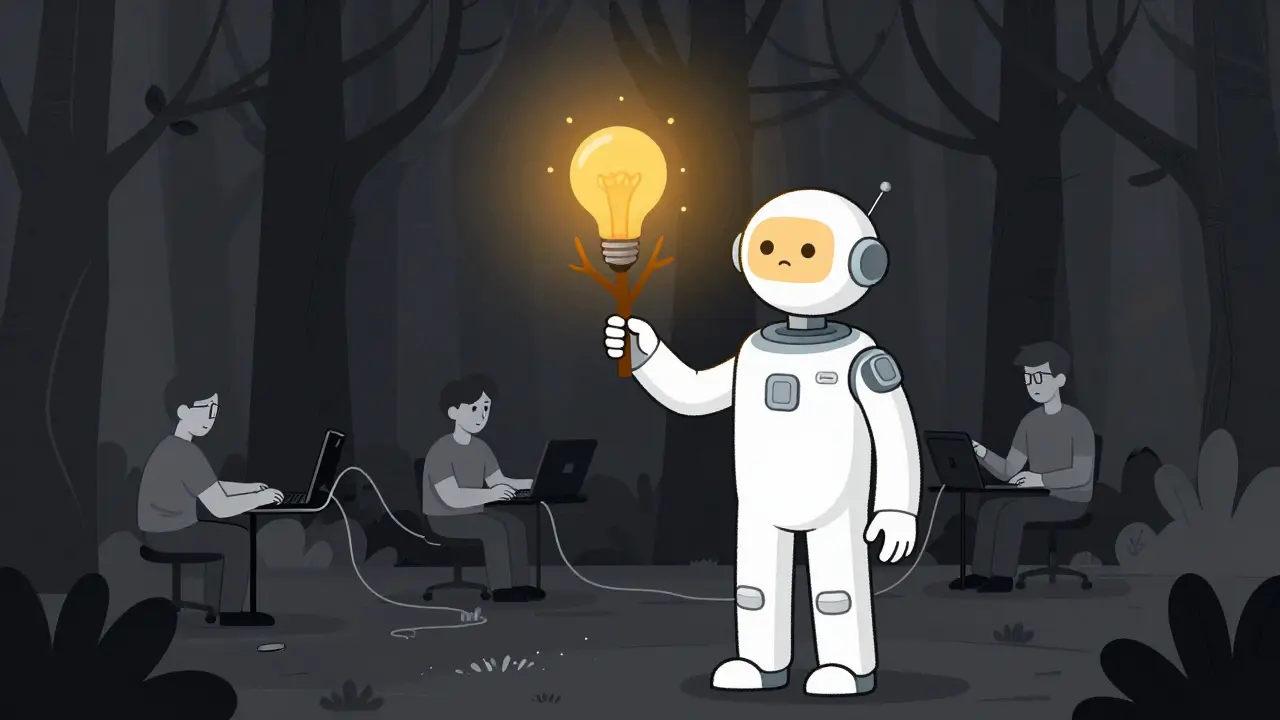
Here’s the problem no one talks about loud enough: vibe coding tools don’t understand architecture. They see a single request, not the whole system. You ask for a login page. They give you one. You ask for a payment flow. They give you that too. But when you say, "Make this app handle 10,000 users, store data securely, and scale to Europe and Asia," they freeze.Stack Overflow’s January 2026 survey found that 78% of developers say AI handles component-level tasks well-but fails at system design. That’s not a bug. It’s the core flaw. Tools today operate in narrow context windows. They don’t remember what they built yesterday. They don’t know how this form connects to that API, or whether that database schema will break under load. They’re brilliant at building trees, but blind to the forest.
Justin Weiss from Technically.dev put it bluntly: "The biggest limitation across all platforms is contextual understanding beyond the immediate task." He tested five major tools. Every one collapsed when asked to maintain consistency across multiple interconnected features. One user on Reddit tried building a simple e-commerce app with Softr. Got stuck when adding custom payment logic. Ended up hiring a developer for $1,200 to fix the AI’s mess.
Why Governance and Compliance Are Missing
Enterprise adoption is stuck at 34% among Fortune 500 companies-and mostly for internal tools, not customer-facing apps. Why? Because vibe coding tools don’t respect rules. They don’t know GDPR. They don’t know SOC 2. They don’t care about audit trails.Gartner’s David Smith says it plainly: "By 2027, 60% of enterprises will require vibe coding platforms with integrated compliance frameworks, which none currently provide at scale." Imagine an HR team using Betty Blocks to build a benefits portal. The AI generates the UI. But it doesn’t auto-encrypt PII. Doesn’t log who changed what. Doesn’t enforce role-based access. That’s not just risky-it’s legally dangerous.
Business users on Capterra gave Betty Blocks a 2.8/5 rating. Why? 63% of negative reviews said the same thing: "No guardrails for business logic." They could build the form, but not control who could edit it, or how data flowed. That’s not empowerment. That’s chaos.
The Testing Problem
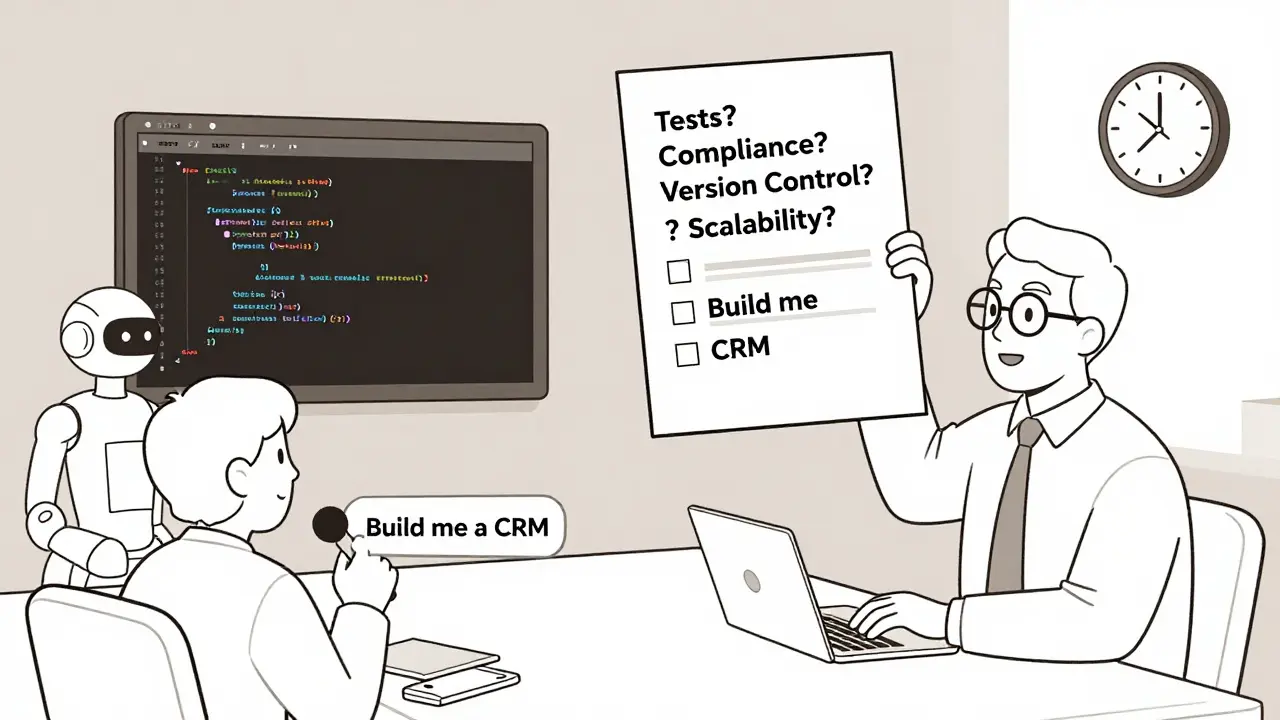
AI writes code. But it doesn’t test it. MIT’s Professor Amy Chen found that all major vibe coding tools generate code with only 32-41% average test coverage. That means more than half the functionality has no safety net. No unit tests. No integration checks. No edge case validation.Developers end up spending more time writing tests for AI-generated code than they would writing the code manually. A developer in Seattle told me: "I used Replit to build a backend service. Took 20 minutes. Then spent 8 hours writing tests because the AI didn’t think about edge cases like duplicate logins or expired tokens." That’s not productivity. That’s a hidden cost.
Version Control Is a Nightmare
You’re working on a project. You make changes manually. Then the AI generates a new version of the same file. What happens? Git conflicts. Merge hell. Confusing diffs. GitHub issues tagged with ‘vibe-coding’ show 44% of problems stem from version control clashes between AI output and human edits.Tools don’t understand versioning. They don’t track intent. They don’t know if you’re refactoring or fixing a bug. They just overwrite. You end up with a messy history where half the commits say "Update UI" or "AI generated" with no context. Teams that succeed use a hybrid model: business people define requirements in plain language. Senior devs review architecture. AI handles repetitive parts. But that’s not vibe coding. That’s vibe-assisted coding.
Documentation Is an Afterthought
DevDocs.io’s January 2026 analysis found that 73% of vibe coding platforms fail to provide clear error diagnosis. When something breaks, you get a generic message: "Code generation failed." No clue why. No hint. No path forward.Replit scores 4.5/5 for documentation. Betty Blocks? 2.8/5. The gap is real. You can’t just throw AI at a problem and expect users to guess what went wrong. Good tools explain. Bad tools disappear. And when they disappear, users panic-and go back to writing code the old way.
What’s Coming Next
The next wave isn’t about faster code generation. It’s about context. Replit’s Project Blueprint, launching Q3 2026, aims to let AI understand entire project lifecycles-not just single files. Vercel is testing deeper integration with documentation systems so the AI remembers why something was built, not just what it is.Gartner predicts context-aware environments will emerge by late 2026. These won’t just generate code. They’ll ask: "Are you building for healthcare? Then we need HIPAA-compliant storage. Are you scaling globally? Let’s auto-configure CDN regions." That’s the future.
Forrester says governance-first platforms will capture 25% of the enterprise market by 2027. That means built-in compliance checks, audit logs, role enforcement-all baked in, not bolted on.
What You Should Do Today
Don’t wait for magic. Use vibe coding tools, but treat them like smart assistants-not replacements. Here’s how:- Use them for UI components, boilerplate, and repetitive logic-not core systems.
- Always review architecture manually. Don’t let AI design your database relationships or API contracts.
- Write tests for AI-generated code. Don’t assume it’s safe.
- Keep version control strict. Merge AI changes slowly. Review every commit.
- Choose tools with good documentation and error messages. Replit leads here. Others lag.
- For teams: assign one senior dev to oversee AI output. Let business users define needs. Let AI execute. Let humans decide structure.
The most successful teams aren’t those using AI the most. They’re the ones using it the smartest. They know vibe coding doesn’t replace thinking. It just makes thinking faster.
Are vibe coding tools ready for enterprise use?
Not yet for critical systems. While 34% of Fortune 500 companies use vibe coding tools, nearly all apply them to internal tools-not customer-facing apps. The main barriers are lack of compliance controls, poor audit trails, and inconsistent testing. Tools like Betty Blocks and Retool AI are improving, but none currently meet enterprise security or regulatory standards without heavy human oversight.
Can vibe coding replace software developers?
No-and that’s not the goal. Vibe coding tools are designed to augment developers, not replace them. Replit’s CTO says the focus should be on empowering developers, not creating fully autonomous systems. The tools handle repetitive tasks, freeing up engineers to solve complex problems, design systems, and manage edge cases. The most effective teams use AI for coding, but humans for architecture, security, and testing.
Which vibe coding tool is best for beginners?
Replit is the most beginner-friendly. It offers a clean interface, supports 27 languages, and has the best documentation (4.5/5 on DevDocs.io). Its collaboration features let non-developers describe features in plain language, while developers refine the output. Tools like Softr and Vercel’s v0 are also easy to start with, but Replit’s all-in-one environment makes it the most forgiving for learning.
Why do vibe coding tools struggle with complex logic?
Current tools are trained on small code snippets, not full system architectures. They generate code block by block, without understanding how components interact over time. When logic exceeds 500 lines or involves state management, authentication chains, or multi-step workflows, they lose context. IEEE’s January 2026 study confirmed that no current tool can reliably generate complex, multi-module systems without human intervention.
Is vibe coding just another no-code tool?
No. No-code tools use drag-and-drop interfaces with pre-built components. Vibe coding uses natural language to generate actual code-JavaScript, Python, SQL, etc.-that runs on real infrastructure. It’s not about hiding complexity. It’s about translating intent into executable logic. That’s why vibe coding tools can build dynamic APIs, custom databases, and real-time systems-things no-code platforms can’t touch.
What’s the biggest risk of using vibe coding tools?
The biggest risk is over-trusting the AI. Users assume the generated code is production-ready. It’s not. It often lacks testing, security checks, scalability planning, and error handling. Teams that skip code reviews or assume AI handles everything end up with fragile systems that break under load or fail compliance audits. The tools are powerful-but they’re not infallible.
 Artificial Intelligence
chioma okwara
March 20, 2026 AT 13:27so vibe coding is just ai writing code now? lol i tried it once and it made my login page with a password reset that sent emails to the wrong server. like… bro. it didnt even know what smtp was. i had to fix it myself. and now im scared to use it for anything real.
Samar Omar
March 20, 2026 AT 13:38Let me tell you something about vibe coding-it’s the digital equivalent of giving a toddler a chainsaw and saying, ‘Build me a cathedral.’ The tools are dazzling, yes, but they operate in a vacuum of context. They generate beautiful, syntactically perfect fragments, but they lack the ancestral memory of system architecture. They don’t remember that the login endpoint you just created is meant to talk to the auth microservice that’s deployed in a different region with different TLS requirements. They don’t care about session persistence, rate limiting, or failover strategies. They see a prompt. They spit out code. And then they vanish, leaving you with a house of cards made of JavaScript and misplaced optimism. The real tragedy? The industry is celebrating this as progress. It’s not. It’s a slow-motion collapse of engineering discipline disguised as innovation.
John Fox
March 22, 2026 AT 01:00honestly i just use it for boilerplate. like forms. buttons. basic api calls. anything more and i get nervous. the ai writes code like it’s never seen a real app before. it’s fun but dangerous.
Tasha Hernandez
March 22, 2026 AT 03:28Oh honey. You think this is bad? Wait till your ‘vibe-coded’ app gets audited by GDPR. Wait till your ‘AI-generated’ user database gets leaked because no one thought to encrypt PII. Wait till your CEO asks why the ‘simple’ benefits portal you built with Betty Blocks has zero audit trails and lets anyone delete payroll records. You don’t get to say ‘it worked on my machine’ when you’re facing federal fines. This isn’t magic. It’s a liability waiting to be named in a class-action lawsuit. And the worst part? Everyone’s too busy high-fiving over the 89.7% accuracy stat to notice the 10% that will burn your company down.
Anuj Kumar
March 23, 2026 AT 09:58they want you to believe this is progress. but its just a scam. big tech wants you to stop learning code so they can own all the jobs. the ai is a trap. theyll make you dependent then raise prices. dont fall for it. real devs still write everything by hand. always have. always will.
Christina Morgan
March 25, 2026 AT 04:47Hey everyone-just wanted to say I love how this thread is unfolding. There’s so much truth here. I’ve been using Replit with my students, and honestly? It’s been a game-changer for beginners. But I always pair it with a manual architecture review. We call it ‘the human checkpoint.’ The AI writes the component, we ask: ‘Who owns this? How does it fail? What’s the backup?’ It’s not about replacing thinking-it’s about making thinking better. Vibe coding isn’t the end of developers. It’s the beginning of better ones.
Kathy Yip
March 26, 2026 AT 14:30i keep wondering… if the ai doesn’t understand context, then how do we teach it? is it even possible to train something to think in systems instead of snippets? or are we just asking machines to do something fundamentally human? like… empathy for code? maybe that’s the real gap.
Bridget Kutsche
March 28, 2026 AT 00:13I’ve been using vibe coding for side projects for a year now, and honestly? It’s been amazing for prototyping. I built a small internal tool for my team in 90 minutes. But I didn’t ship it without a code review. I wrote tests. I checked the version history. I made sure the auth flow wasn’t just ‘working’ but secure. The tools are powerful, but they’re not babysitters. Use them as accelerators, not replacements. And if you’re nervous? That’s good. Stay nervous. It keeps you sharp.
Jack Gifford
March 29, 2026 AT 09:07the version control nightmares are real. i had a commit where the ai overwrote my entire service layer because i changed a button color. i spent three hours undoing it. no one warned me. no one talks about this. it’s like the ai has no sense of history. just… boom. rewrite. chaos.
Sarah Meadows
March 30, 2026 AT 08:51we don’t need AI writing our code. we need American engineering discipline. American rigor. American standards. These tools are foreign-bred, built by people who don’t understand compliance, security, or the cost of a breach. If you’re using vibe coding for anything mission-critical, you’re not being innovative-you’re being reckless. It’s time we stop outsourcing our infrastructure to unregulated algorithms and get back to building things the right way-with accountability, oversight, and American values.