Imagine trying to teach a computer to understand sarcasm, legal jargon, or medical notes from scratch. You'd need millions of labeled examples and a supercomputer that runs for weeks. Now imagine you could take a model that already "read" the entire internet and just tweak it slightly to handle your specific task. That is Transfer Learning in Natural Language Processing. It is the secret sauce behind every modern chatbot and search engine. Before this approach, building an NLP system was like teaching someone a new language by forcing them to memorize every word before they could speak a sentence. Today, we hand them a dictionary and a grammar book, and let them learn through context.
The Shift from Scratch to Smart
For decades, NLP researchers were stuck in a bottleneck. To build a sentiment analysis tool, you trained one model. To build a question-answering bot, you trained another. Each model started with random weights and had to learn basic language structure-like what a noun is or how sentences work-all over again. This was inefficient and data-hungry. The breakthrough came when developers realized that language knowledge is universal. If a model learns to predict the next word in a Wikipedia article, it also learns grammar, syntax, and some facts about the world. That knowledge transfers.
This concept isn't new in vision tasks, but applying it to text required a specific architectural leap. Enter the Transformer. Unlike previous recurrent neural networks (RNNs) that processed text sequentially, Transformers look at all words in a sentence simultaneously. This parallel processing allowed models to train on massive datasets much faster. Once you have a fast way to process text, you can feed it billions of tokens. And once you have a model that has seen billions of tokens, you have a general-purpose language engine ready for transfer.
How Pretraining Actually Works
Pretraining is the heavy lifting phase. Think of it as the model's college education. During this stage, the model reads vast amounts of unstructured text-books, websites, code repositories, and news articles. It doesn't know what a "cat" is yet, but it learns patterns. The most common method here is Masked Language Modeling (MLM). The system hides random words in a sentence and asks the model to guess them based on the surrounding context.
| Strategy | Description | Best For |
|---|---|---|
| Masked Language Modeling | Hides tokens and predicts them using bidirectional context. | Understanding tasks (classification, extraction) |
| Next Sentence Prediction | Determines if two sentences follow each other logically. | Cohesion and discourse understanding |
| Causal Language Modeling | Predicts the next token in a sequence (autoregressive). | Generation tasks (chatbots, writing) |
By solving these puzzles millions of times, the model builds a rich internal representation of language. It learns that "bank" likely refers to money if near "deposit," but to a river if near "water." This contextual understanding is the asset you transfer later. You aren't transferring raw data; you are transferring learned relationships between concepts.
The Model Evolution: From BERT to GPT
You can't talk about transfer learning without mentioning BERT (Bidirectional Encoder Representations from Transformers). Released by Google in 2018, BERT changed everything because it read text in both directions. Previous models only looked left-to-right. BERT looked at the whole sentence at once, giving it superior context awareness. It dominated benchmarks for natural language inference and question answering almost overnight.
Then came OpenAI's GPT series. While BERT excelled at understanding, GPT focused on generation. GPT-3, with its 175 billion parameters, showed that scale unlocks emergent abilities. You didn't even need to fine-tune it heavily; you could just prompt it. This sparked the current era of Large Language Models (LLMs). Other notable architectures include T5, which treats every NLP problem as a text-to-text translation task, and ALBERT, which optimized BERT by sharing parameters across layers to make it lighter and faster.
Fine-Tuning: Adapting the Generalist
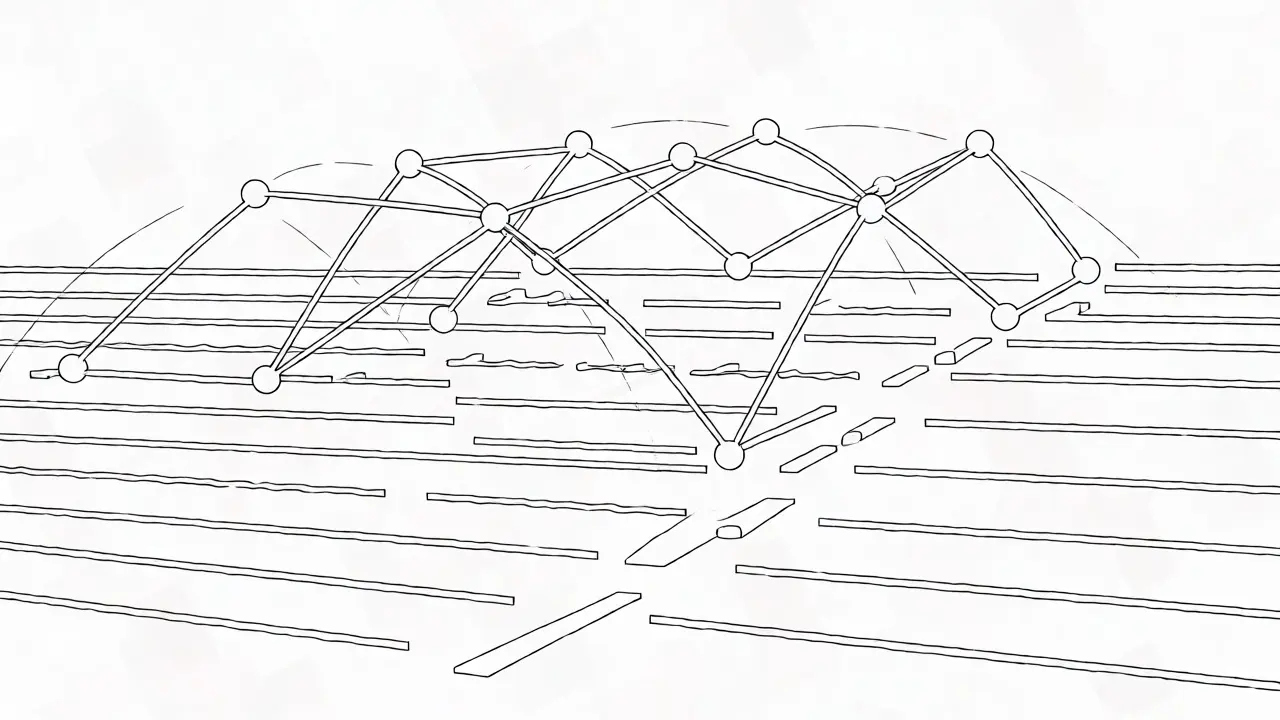
Once you have a pretrained model, you enter the fine-tuning phase. This is where you tailor the generalist to your specific job. Technically, this often involves replacing the final output layer of the neural network. If the pretrained model outputs probabilities for thousands of vocabulary words, you might swap that out for a layer that outputs just two classes: "Positive" and "Negative" for sentiment analysis.
You then train this new setup on a smaller, labeled dataset specific to your domain. Because the lower layers of the network already understand grammar and syntax, you don't need to retrain them from scratch. In fact, many practitioners "freeze" these early layers, keeping their weights constant while only updating the upper layers. This saves massive amounts of compute time. A task that used to take days now takes hours. Even better, you can do this with significantly less labeled data. Instead of needing 100,000 examples, you might get great results with just 1,000.
Why This Matters for Real-World Applications
The practical impact of transfer learning is democratization. Startups no longer need million-dollar GPU clusters to compete with tech giants. They can download a base model like Llama 3 or Mistral and adapt it to customer support tickets or legal contracts. This accessibility has exploded the number of NLP applications.
- Customer Support: Classifying incoming emails into categories like "Billing," "Technical," or "Sales" with high accuracy.
- Healthcare: Extracting patient symptoms from doctor's notes, a task requiring nuanced medical vocabulary.
- Finance: Analyzing earnings calls for sentiment shifts that might affect stock prices.
- Legal Tech: Summarizing lengthy contracts to highlight key clauses.
Each of these fields benefits from the same underlying mechanism: leveraging broad linguistic knowledge to solve narrow problems. The model doesn't need to learn English from zero; it just needs to learn the specific quirks of legal phrasing or medical shorthand.
Challenges and Pitfalls
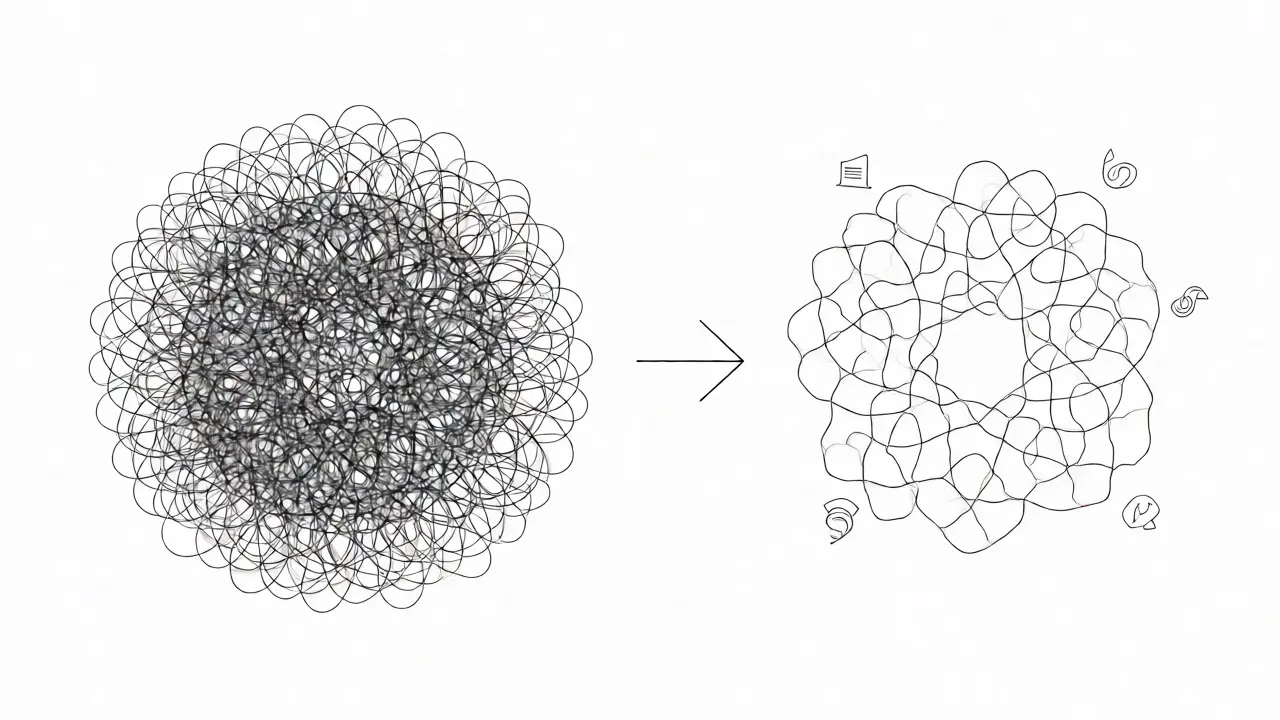
It's not all smooth sailing. Transfer learning brings its own set of headaches. One major issue is domain mismatch. If you fine-tune a model pretrained on web text for scientific papers, the performance might drop because the vocabulary and style differ significantly. Another risk is catastrophic forgetting. If you fine-tune too aggressively, the model might lose its general language abilities in favor of the new task, becoming rigid and unable to handle unexpected inputs.
Data quality is another critical factor. Garbage in, garbage out applies doubly here. If your fine-tuning data contains biases present in the original pretraining corpus, those biases will persist and potentially amplify. Ethical considerations also loom large. Who owns the data used for pretraining? Is the model fair across different dialects and demographics? These questions require careful auditing during the adaptation phase.
The Future of Adaptation
We are moving beyond simple fine-tuning. New techniques like Low-Rank Adaptation (LoRA) allow us to update only a tiny fraction of the model's parameters, making adaptation incredibly efficient. Prompt engineering has also reduced the need for fine-tuning altogether for many use cases. By crafting the right input instructions, users can steer a frozen model to perform complex tasks without changing its weights.
As models grow larger, the cost of full fine-tuning becomes prohibitive for many. We are seeing a shift toward retrieval-augmented generation (RAG), where the model retrieves relevant documents at runtime rather than relying solely on its parametric memory. This hybrid approach combines the broad knowledge of transfer learning with the precision of external databases. The core principle remains: leverage what the machine already knows, and guide it gently toward what you need it to do.
What is the difference between pretraining and fine-tuning?
Pretraining is the initial training phase where a model learns general language patterns from massive, unlabeled datasets. Fine-tuning is the subsequent phase where the pretrained model is further trained on a smaller, labeled dataset to specialize in a specific task, such as sentiment analysis or translation.
Do I always need to fine-tune a large language model?
No. Many modern LLMs can perform well with just prompt engineering (zero-shot or few-shot learning). Fine-tuning is best reserved for tasks requiring highly specific formatting, consistent tone, or deep domain expertise that prompting alone cannot achieve reliably.
How much data is needed for fine-tuning?
Compared to training from scratch, fine-tuning requires significantly less data. Depending on the complexity of the task, you might see good results with anywhere from 100 to 10,000 high-quality, labeled examples. Quality often matters more than quantity.
What is catastrophic forgetting in transfer learning?
Catastrophic forgetting occurs when a model loses previously learned information during fine-tuning. If the model focuses too heavily on the new task, it may degrade in its ability to perform general language tasks. Techniques like freezing layers or using regularization help mitigate this.
Which models are best for transfer learning?
Popular choices include BERT for classification tasks, RoBERTa for improved robustness, T5 for text-to-text tasks, and Llama or Mistral for open-source generative capabilities. The best choice depends on whether you need understanding (encoder-only) or generation (decoder-only) capabilities.
 Artificial Intelligence