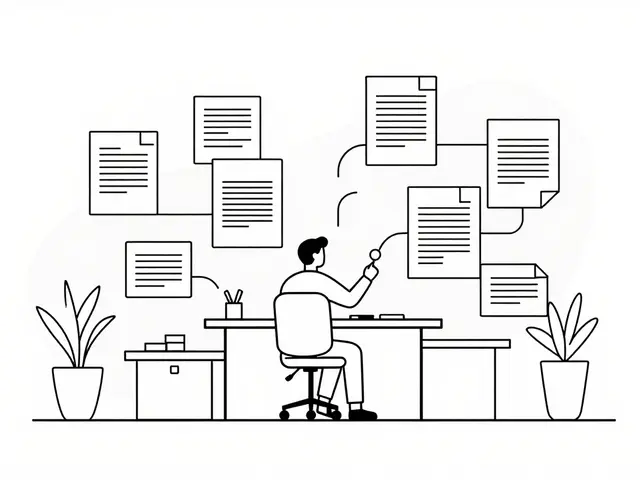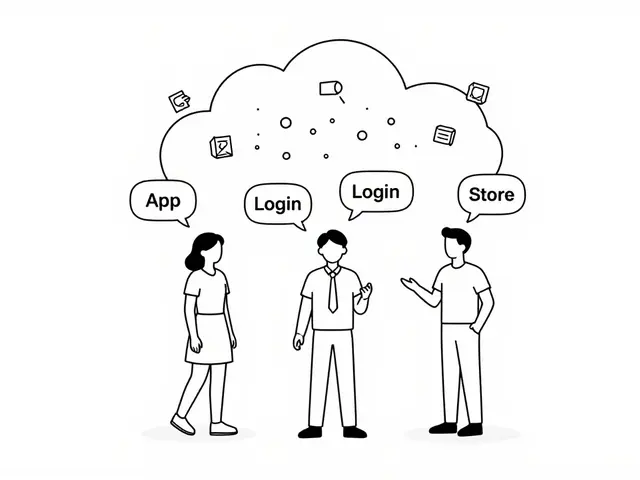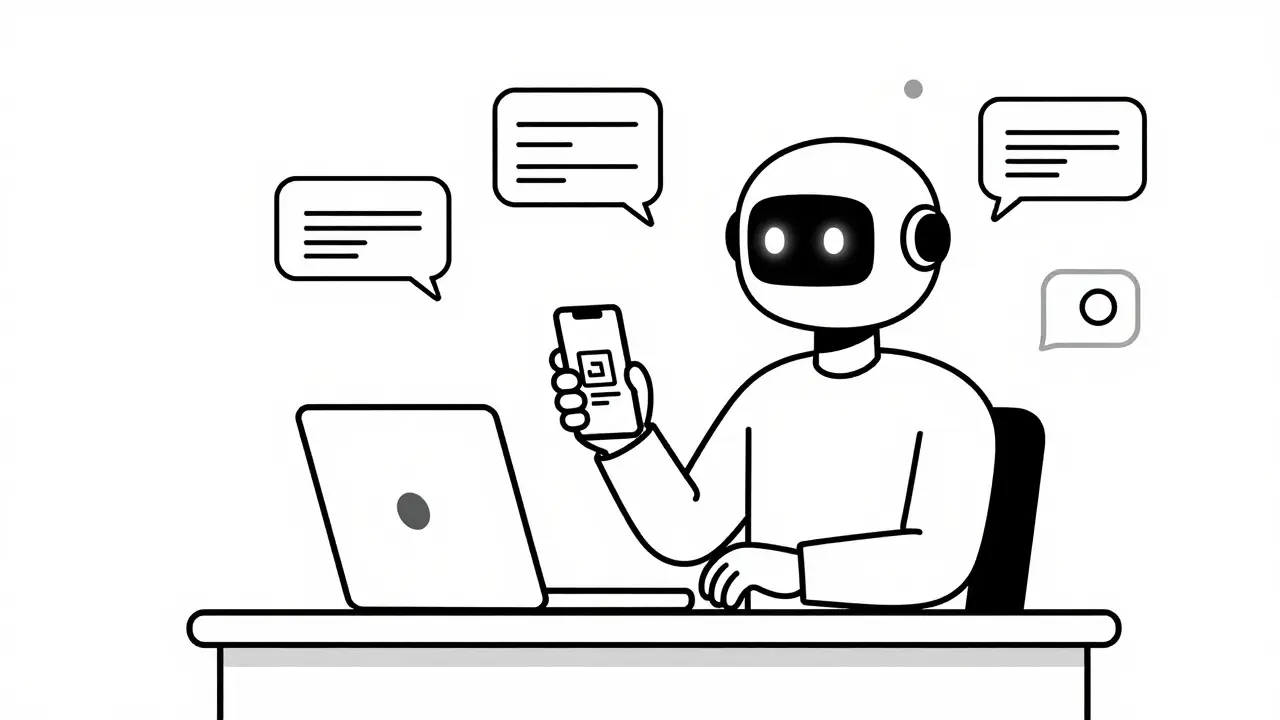
Imagine showing your stakeholders a clickable, fully functional prototype of your new feature by lunchtime. No waiting weeks for engineering to spin up a branch. No static Figma screens that don’t quite capture the user flow. This isn’t science fiction anymore. It’s vibe coding, a prompt-driven development methodology where product managers use natural language and generative AI to build functional application prototypes without writing traditional code. By July 2026, this workflow has shifted from a novelty to a core competency for modern product teams.
The days when product managers (PMs) had to rely solely on wireframes or hand off vague requirements to developers are fading. With large language models (LLMs) like GPT-4 and Claude 3 reaching maturity, you can now describe what you want in plain English, and watch it materialize into working software. But there’s a catch. If you treat vibe coding like magic, you’ll end up with messy code and frustrated engineers. If you treat it like a strategic tool, you’ll validate ideas faster than ever before.
What Is Vibe Coding and Why Does It Matter?
Vibe coding emerged around 2023-2024 as AI models became capable enough to interpret natural language intent and convert it into executable code. The term itself is informal, but the impact is serious. According to research published in Communications of the ACM in March 2024, vibe coding fundamentally changes how PMs discover insights and strategize. Instead of waiting for engineering cycles, you iterate through conversation.
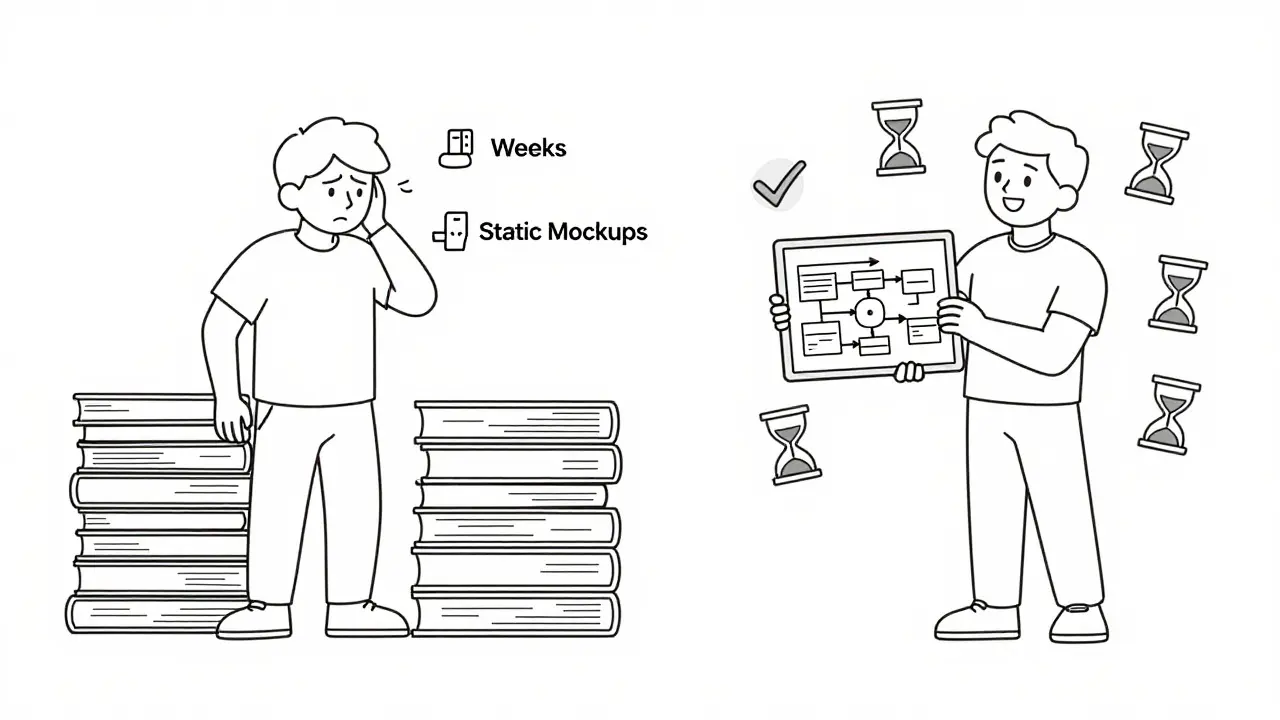
Think of it this way. In traditional workflows, you write a spec, design a mockup, wait for a developer to build it, test it, find a flaw, and repeat. That cycle takes weeks. With vibe coding, the cycle shrinks to hours. You describe a button, the AI builds it. You say “make it red,” it turns red. You say “connect it to a database,” it sets up the backend logic. McKinsey reports that generative AI approaches like this can increase productivity by 40% and reduce time-to-market by 5%. For a PM, that means more validated hypotheses per quarter.
But let’s be clear about what vibe coding is not. It is not replacing software engineers. It is not producing production-ready enterprise systems overnight. It is a rapid prototyping engine. Its superpower is speed and iteration. Its weakness is complexity and compliance. Understanding this boundary is the first step to using it effectively.
The Core Workflow: Prompt, Prototype, Refine
You can’t just open an AI tool and type “build me an app.” That’s how you get generic, broken junk. Successful vibe coding follows a structured loop described by Google Cloud as “prompt-prototype-refine.” Here is how top-performing PMs actually do it.
- Define the Problem Statement: Start with clarity. Who is the user? What is their need? What is the benefit? Write down two leading indicators and one activation metric. If you can’t define success, the AI can’t help you achieve it.
- Gather UX Inspiration: Before prompting, look at competitors or platforms like Dribbble. Know the visual style you want. AI tools work best when you give them context, not blank slates.
- Draft the PRD with Acceptance Criteria: Use an LLM like Claude or GPT to draft a Product Requirements Document (PRD). Structure it with Given-When-Then scenarios. This forces you to think through edge cases before the code is written.
- Step-by-Step Prompting: Don’t dump the whole PRD at once. Break it down. “Build the login screen.” Then, “Add validation for invalid emails.” Then, “Connect to Firebase auth.” Small steps prevent hallucination.
- Troubleshoot Iteratively: When things break-and they will-check the system console first. Add debugging logs. Take screenshots of the error. Paste the error message back to the AI. Explain the user flow in detail. The AI needs context to fix its own mistakes.
Platforms like Lovable an AI-first platform enabling cross-functional collaboration and template-based remixing for vibe coding and Wisary a specialized platform focusing on specification alignment and technical dependency mapping for product managers have built interfaces around this exact workflow. Wisary, for instance, records technical dependencies to ensure your prototype aligns with your spec, reducing misalignment by 68% according to their 2024 case studies.
Functional Prototypes vs. Static Mockups
The biggest advantage of vibe coding over tools like Figma or Adobe XD is interactivity. A Figma file shows you what something looks like. A vibe-coded prototype shows you how it works. You can click buttons, submit forms, and see data change. This allows for actual user behavior testing rather than just visual validation.
Consider a checkout flow improvement. In Figma, you might miss a friction point in the payment processing step because it’s just a static image. In a vibe-coded prototype, you can simulate the API call. You can see if the loading state feels right. You can test if the error messages are clear. GetProductPeople analyzed 150 PM workflows in September 2024 and found that vibe coding reduced initial prototype creation time from 2-4 weeks to just 2-4 hours. That speed enables you to run three times as many experiments with the same resources.
| Feature | Traditional (Figma/XD + Dev) | Vibe Coding (AI-Assisted) |
|---|---|---|
| Output Type | Static images or slow dev builds | Interactive, functional web apps |
| Time to First Prototype | 2-4 weeks | 2-4 hours |
| User Testing Capability | Visual feedback only | Behavioral and flow testing |
| Skill Requirement | Design skills or dev coordination | Prompt engineering and product sense |
| Production Readiness | High (if built by devs) | Low (requires engineering review) |
The Hidden Risks: Technical Debt and False Confidence
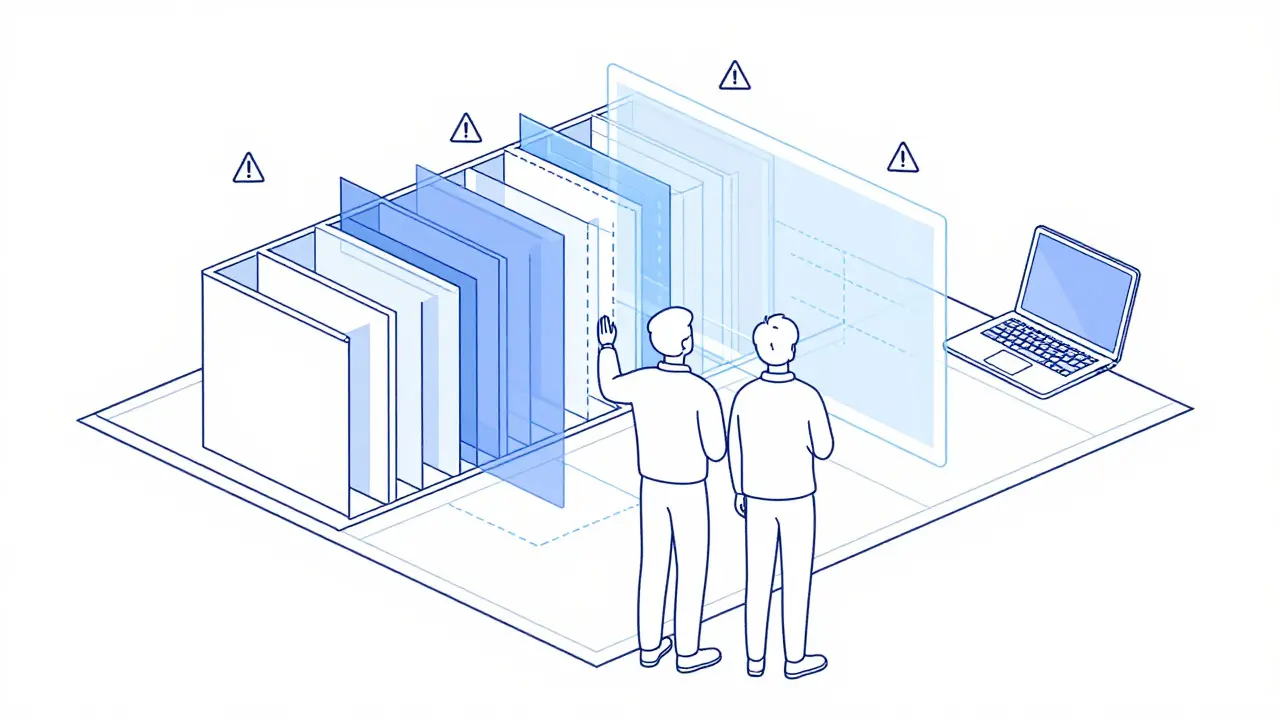
Here is where most PMs stumble. They fall in love with their prototype. It works! It looks great! Let’s ship it. Stop. Vibe coding creates significant technical debt if prototypes transition directly to production without proper engineering review.
Martin Fowler, Chief Scientist at ThoughtWorks, warned in June 2024 that the real risk isn’t the quality of the AI-generated code itself, but the false confidence it creates. Product teams mistake a working prototype for a production-ready solution. Andrej Karpathy, former Director of AI at Tesla, publicly acknowledged debugging challenges with AI-generated code, noting he often resorts to pasting error messages back to the AI or making random tweaks. That’s not scalable.
Furthermore, vibe coding performs poorly with undefined requirements. If you don’t know what you want, the AI will guess-and it will guess confidently. It also struggles with complex enterprise systems requiring strict compliance. A healthtech startup PM shared a nightmare story on Reddit in September 2024: they spent three weeks refining an AI-generated prototype, only to discover during engineering handoff that HIPAA compliance requirements made the architecture fundamentally unworkable. The prototype was beautiful, but legally dead on arrival.
To mitigate this, the Association for Product Management Professionals (APMP) published guidelines in August 2024 recommending strict “prototype-to-production” transition protocols. These require complete code review and architecture assessment before any AI-generated code touches the main branch. Treat your vibe-coded output as a high-fidelity spec, not the final product.
Industry Adoption and Guardrails
By mid-2024, adoption was accelerating rapidly. Gartner reported that 62% of Fortune 500 product organizations had formal vibe coding guidelines, up from 18% in early 2024. However, adoption varies wildly by industry. Fintech companies restrict vibe coding to internal tools due to compliance concerns (87% restriction rate). E-commerce companies embrace it for customer-facing prototype testing (73% adoption rate).
Supernova.io released a guide in November 2024 outlining four critical guardrails for building trust in these workflows:
- Rigorously define “done” criteria: What does success look like for this prototype?
- Champion dedicated review time: Schedule sessions with engineers to critique the AI’s architecture.
- Insist on shared design foundations: Ensure the prototype uses your company’s existing UI components.
- Proactively audit prototypes: Check for security vulnerabilities and performance bottlenecks early.
Andrew Ng, founder of DeepLearning.AI, called vibe coding the “democratization of prototyping,” allowing PMs to validate hypotheses at the speed of thought. He’s right, but only if you respect the boundaries. GitHub’s 2024 Octoverse Report showed that AI-generated code requires 3.2x more maintenance effort than human-written code in complex systems. Use vibe coding for exploration, not execution.
Tools of the Trade in 2026
The landscape has matured since 2024. You’re no longer just typing into a raw chat window. Specialized platforms have emerged.
- Lovable: Rated 4.3/5 on G2 Crowd with 187 reviews. Known for cross-functional collaboration and “remixing” templates. Best for teams that need to maintain brand consistency while moving fast.
- Wisary: Focuses on specification alignment. Its automatic technical dependency mapping reduces specification gaps by 42%. Ideal for PMs who need to bridge the gap between vision and engineering reality.
- Firebase Studio: Google’s offering, updated in late 2024 with “blueprint approval” functionality. Forces PMs to validate architectural decisions before generation. Great for teams already in the Google Cloud ecosystem.
No single player dominates yet. Choose based on your team’s stack and compliance needs. If you’re in fintech, stick to internal tools and use Wisary for spec alignment. If you’re in e-commerce, Lovable’s speed and template library might suit you better.
Next Steps for Your Team
If you want to start vibe coding tomorrow, don’t boil the ocean. Pick one low-risk feature. An internal dashboard widget. A simple landing page variant. Something that won’t break if it fails. Follow the prompt-prototype-refine loop. Invite an engineer to review the code after you’re done. Ask them: “Is this architecture sane? What would you change?” Their feedback will teach you more than any tutorial.
Remember, vibe coding is a lever, not a replacement. It amplifies your product sense. It doesn’t replace your judgment. Use it to kill bad ideas quickly and champion good ones with evidence. That’s how you stay ahead in 2026.
Can product managers really build apps without knowing code?
Yes, for prototypes. Vibe coding allows PMs to create functional, interactive web applications using natural language prompts. However, these outputs are typically meant for validation and demonstration, not direct production deployment without engineering review.
What is the difference between vibe coding and no-code tools?
Traditional no-code tools require manual configuration of blocks and logic. Vibe coding uses generative AI to interpret high-level intent and generate the underlying code structure automatically. It’s less about dragging and dropping, and more about conversational direction and refinement.
Is vibe coding safe for enterprise environments?
It depends on the data and compliance requirements. For internal tools and non-sensitive prototypes, yes. For systems handling PII or financial data, caution is advised. Always use platforms with robust security features and ensure all generated code undergoes strict engineering and security audits before integration.
How do I avoid technical debt with AI-generated prototypes?
Treat the prototype as a disposable asset for validation, not a foundation for production. If you must move forward, perform a full architectural review. Rewrite critical paths manually if necessary. Never assume AI-generated code is optimized or secure by default.
Which AI models are best for vibe coding?
As of 2026, GPT-4, Claude 3, and Gemini 1.5 are the leading models integrated into vibe coding platforms. Choice often depends on the specific platform you use (e.g., Lovable, Wisary) rather than direct access to the model. Look for platforms that offer multimodal input (text, voice, image) for richer context.
Does vibe coding replace software engineers?
No. It shifts their role from initial construction to review, optimization, and scaling. Engineers spend less time building basic UIs and more time solving complex architectural problems, ensuring security, and maintaining code quality. It’s a collaboration enhancer, not a job eliminator.
 Artificial Intelligence