
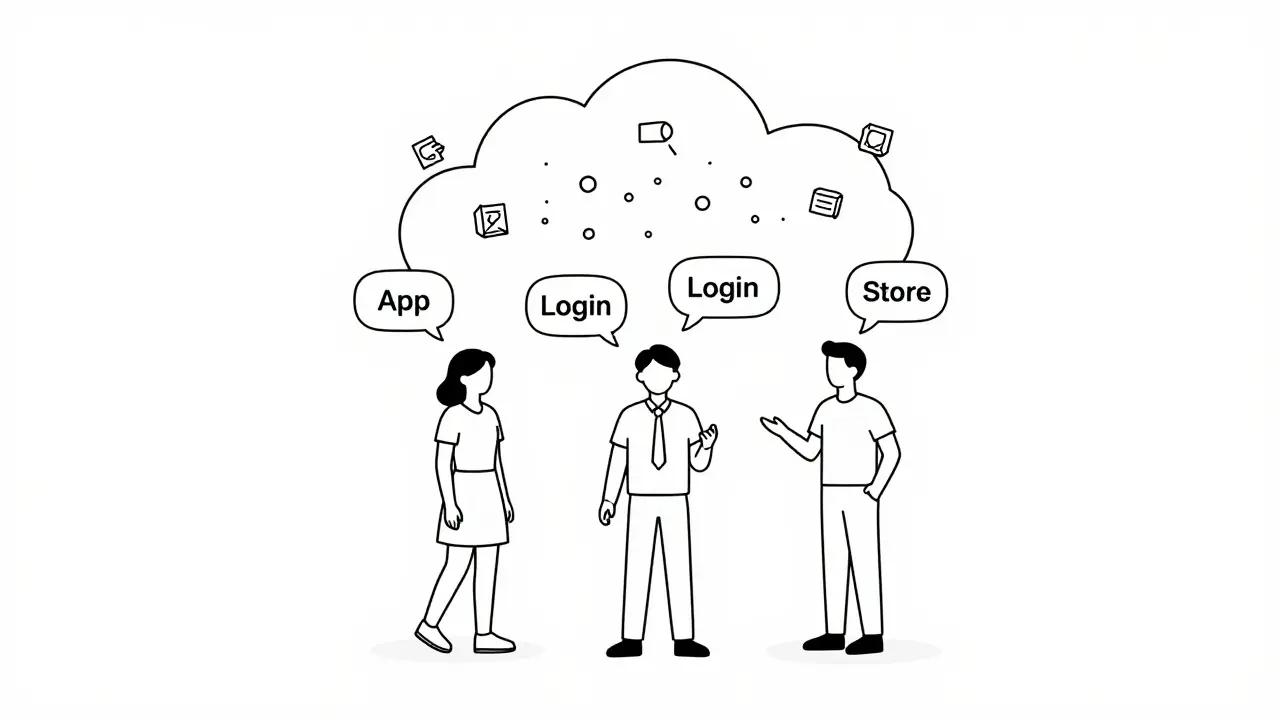
You don't need to memorize syntax anymore. If you have a idea for an app, a website, or a tool, you can now describe it in plain English, and artificial intelligence will write the code for you. This is vibe coding, a development method that uses natural language prompts instead of traditional programming languages. It’s not just hype; it’s a shift in how we build software. In 2025, the barrier to entry dropped significantly. According to Salesforce's January 2025 startup study, 68% of developers reported cutting their time-to-prototype from weeks down to hours. But here is the catch: having access to AI isn't enough. You need to know how to talk to it. That’s where community resources come in.
If you are new to this, looking at raw documentation can feel overwhelming. You need courses that teach you the logic, templates that give you a head start, and forums where you can ask questions when things break. The ecosystem has grown fast, with over 247,000 developers engaging in these communities as of mid-2025. Let’s look at the best places to learn, build, and connect so you can stop guessing and start shipping.
Best Platforms for Learning Vibe Coding
The first step is finding a course that fits your current skill level. Not all tutorials are created equal. Some assume you already know cloud infrastructure, while others start from zero. Here are the top three learning paths based on user feedback and completion rates.
- Replit’s 'Vibe Coding 101': This is the best starting point for absolute beginners. It takes about 6 hours to complete and guides you through building your first functional apps without any setup. Replit’s approach is hands-on. You don’t just watch videos; you type prompts and see the results immediately. Their 'Learn by Vibing' interactive tutorials cover 157 step-by-step projects, making it easy to grasp concepts like database connections and user interfaces without getting bogged down in technical jargon.
- Salesforce Trailhead’s 'Vibe Coding for Startups': If you are thinking about building a business, this module is essential. Launched in March 2025, it focuses heavily on product management rather than just code. Bret Taylor, Salesforce’s VP of Developer Relations, noted that effective vibe coding requires thinking like a product manager first. This course spends 70% of its time on requirement specification and only 30% on technical implementation. It’s less about syntax and more about defining what you want to build clearly enough for the AI to understand.
- Tabnine’s AI Code Academy: For those who want to go deeper into security and professional standards, Tabnine offers 47 structured courses. Unlike the beginner-friendly options above, this platform targets teams and serious developers. It covers prompt engineering for secure code generation, which is critical if you plan to deploy anything handling sensitive data. However, be aware that it requires a subscription ($39/user/month), so it’s better suited for those committed to professional development.
A common mistake beginners make is jumping straight into complex full-stack applications. Appwrite’s September 2025 study of 3,412 new users found that it typically takes 17-23 hours to reach basic proficiency. Stick to the structured path: start with Replit for the basics, move to Salesforce for product logic, and then spend 6-12 hours building guided projects before trying to create something entirely from scratch.
Top Template Libraries to Speed Up Your Workflow
Why write a prompt for a login page if someone else has already perfected it? Templates are pre-built components or entire application structures that you can customize. They save time and reduce errors because they’ve been tested by other developers. In 2025, template libraries became a major part of the vibe coding workflow.
| Platform | Key Feature | Cost | Best For |
|---|---|---|---|
| Tempo Labs | 217 pre-built business components | $20/month minimum | E-commerce and business apps |
| Cursor Community | 3,842 verified prompt patterns | Free tier available | Professional developers |
| Appwrite Guide | 87 specific prompt patterns | Free | Cross-framework compatibility |
Tempo Labs stands out for business applications. Their library has a 92% implementation success rate for e-commerce features, which is impressive. However, the cost is higher, and 62% of negative feedback cites limited customization options. If you need a quick, polished store front, it’s worth the price. But if you want flexibility, look elsewhere.
Cursor’s community repository is a goldmine for professionals. It contains thousands of prompt patterns rated by nearly 10,000 contributors. These aren't just static templates; they are dynamic prompts that adapt to different project contexts. Users report saving significant time-Jane D., a reviewer on Trustpilot, said the pattern library saved her 27 hours on her MVP development. The free tier gives you 200 completions and 50 requests monthly, which is plenty for testing different approaches.
Appwrite offers a free 'Complete Vibe Coding Guide' that details 87 prompt patterns verified across five major frameworks. It’s particularly useful if you’re unsure which tech stack to use, as the patterns are designed to work broadly. GitHub stars for this guide jumped from 2,145 to 17,892 between January and October 2025, showing strong community trust.

Active Forums and Communities for Support
Even with great courses and templates, you will get stuck. Maybe the AI generates code that looks right but doesn’t run. Or perhaps you’re unsure how to structure your prompt for a complex feature. This is where forums become invaluable. The vibe coding community is highly active, but not all spaces are friendly to beginners.
- Replit Community Forum: With over 183,000 active members, this is the largest hub. It holds weekly 'Vibe Jam' sessions where developers build projects together in real-time. The atmosphere is supportive, with a 4.7/5 rating on Trustpilot. Beginners often find help within minutes due to the high volume of active users.
- Reddit’s r/vibecoding: This subreddit has grown to over 84,000 members. It’s a mix of news, troubleshooting, and show-and-tell. One user, u/CodingNewbie2025, shared that while Replit helped them build an e-commerce site in three days, they struggled with debugging until they joined the associated 'Vibe Debugging' Discord server. Reddit is great for broad questions and staying updated on tool changes.
- IT Revolution Vibe Coding Community: Founded in early 2025, this group focuses on pairing beginners with experienced coders. Their 'Prompt Pairing' sessions have a 91% satisfaction rate. If you prefer direct mentorship over searching through threads, this is a strong option.
Avoid relying solely on public forums for security-related questions. Mary Galligan, CTO at ISACA, warned in February 2025 that 68% of shared prompt patterns in public forums contain insecure code patterns. Always verify security practices against official documentation or trusted enterprise resources like Google Cloud’s security modules.
Tools That Power the Vibe Coding Experience
To participate effectively in these communities, you’ll likely use one of the major platforms facilitating vibe coding. Each has distinct strengths and community integrations.
Replit is the most accessible. Its v4.7 update released in April 2025 emphasizes zero-setup development. You open a browser, start typing, and code appears. It also supports real-time collaboration, which makes it ideal for pair programming with AI or other humans. The mobile experience scores 4.1/5 on G2, allowing you to tweak prompts on the go.
Cursor is an AI-first code editor built on VS Code. It’s favored by professional developers who want context-aware completion across 15+ file types. While its mobile experience lags behind Replit (scoring 3.2/5 on G2), its desktop performance and integration with existing workflows make it a powerhouse for serious projects. The $20/month paid plan offers unlimited projects, which is cost-effective for frequent users.
Google Cloud Build in AI Studio launched in late 2024 and offers $300 in free credits plus 20 always-free products. It includes a guided learning path with 12 progressive projects. However, be cautious: 43% of beginner users abandon this course due to its steep learning curve. It requires prerequisite cloud knowledge, so it’s better suited for those with some technical background.

Security and Best Practices in Community Sharing
As vibe coding democratizes development, it also introduces new risks. When you copy-paste prompts or templates from forums, you might inadvertently introduce vulnerabilities. ISACA’s audit of 12,000 examples found widespread issues in publicly shared patterns. To stay safe, follow these guidelines:
- Verify Sources: Prefer templates from established platforms like Tempo Labs or Cursor’s verified repository over random GitHub snippets.
- Use Security Frameworks: Google Cloud announced 'Vibe Guard' in October 2025, a community-driven security framework with 127 verified patterns. Integrating these checks into your workflow can prevent common pitfalls.
- Understand the Output: Don’t treat AI-generated code as a black box. Learn enough about API principles and data structures to review what the AI produces. Questera’s August 2025 report noted that while 78% of beginners could build functional apps, complex implementations still required foundational knowledge.
Dr. Elena Rodriguez from MIT’s AI Research Lab highlighted that collaborative communities have accelerated best practices by 11 months compared to traditional methods. By engaging responsibly, you contribute to a safer ecosystem for everyone.
Future Trends and Market Growth
The vibe coding market reached $2.4 billion in 2025, growing 39% year-over-year according to Gartner. This growth is driving consolidation. Analysts predict that by Q3 2026, 30% of current community platforms will merge or shut down. Smaller forums like 'VibeHive' already faced shutdowns in late 2025 due to funding issues. Enterprise-grade resources, however, are expected to grow by 65%.
This means choosing a platform with long-term viability is important. Look for communities backed by major companies (like Salesforce, Google, or Replit) or those with strong venture funding. The demographic shift is also notable: 58% of participants are career changers or non-traditional developers. Resources are increasingly tailored to this audience, with 73% of new courses in 2025 targeting non-technical founders. As you navigate these resources, keep an eye on updates that emphasize security and professional integration, as these will define the next phase of vibe coding.
What is vibe coding?
Vibe coding is an AI-driven software development methodology where you describe desired functionality in natural language, and AI generates the implementation. It replaces traditional code writing with conversational prompts, enabling faster prototyping and lowering barriers for non-technical users.
Is vibe coding suitable for beginners?
Yes, absolutely. Studies show that 78% of beginners with less than six months of coding experience can successfully build functional apps using vibe coding tools. Platforms like Replit offer beginner-friendly tutorials that require no prior setup or deep technical knowledge.
Which platform is best for learning vibe coding?
For absolute beginners, Replit’s 'Vibe Coding 101' is recommended due to its hands-on, zero-setup approach. For those interested in business applications, Salesforce Trailhead’s module focuses on product management skills. Professional developers may prefer Tabnine’s AI Code Academy for advanced security and prompt engineering training.
Are there free resources available?
Yes. Replit offers a generous free tier, Appwrite provides a free comprehensive guide with 87 prompt patterns, and Google Cloud offers $300 in free credits. Many forums like Reddit’s r/vibecoding are also free to join and provide valuable peer support.
How do I ensure the code generated by AI is secure?
Security is a concern, as audits show many public prompts contain vulnerabilities. Use verified templates from trusted sources like Cursor or Tempo Labs. Incorporate security frameworks like Google Cloud’s 'Vibe Guard' and always review AI-generated code, ensuring you understand the underlying logic and data structures.
What is the cost of using vibe coding tools?
Many tools offer free tiers sufficient for learning and small projects. Paid plans vary: Cursor charges $20/month for unlimited projects, Tabnine’s enterprise edition is $39/user/month, and Tempo Labs starts at $20/month. Google Cloud provides initial free credits, reducing upfront costs for experimentation.
 Artificial Intelligence


Francis Laquerre
July 7, 2026 AT 03:08Look, I’ve been in the tech space for decades, watching trends come and go like seasons. This vibe coding thing? It’s not just a fad; it’s a cultural shift in how we express creativity through logic. The idea that you can describe an app in plain English and have it materialize is nothing short of revolutionary for our global community of builders. We are seeing a democratization of creation that was previously locked behind ivory towers of syntax memorization. It reminds me of the early days of the web, where anyone with a dream could build a page without knowing C++. Now, the barrier isn’t intelligence or education; it’s imagination. And that is a beautiful thing to witness. We need to embrace this as a new form of digital artistry, where the prompt is the brush and the AI is the canvas. Let’s not get bogged down in the technicalities but rather celebrate the accessibility. This is about empowering voices that were previously silenced by the complexity of traditional programming. It’s time to vibe.
om gman
July 8, 2026 AT 09:36oh great another article telling us all how easy it is now because some magic box does the work for us i suppose the elite coders are all unemployed by now right? please tell me you’re not actually falling for this hype train because it smells like marketing fluff from miles away
Bineesh Mathew
July 9, 2026 AT 14:24You speak of 'magic boxes' and 'hype trains' as if technology is some external force acting upon us, but do you not see the deeper philosophical implication here? We are essentially outsourcing our cognitive labor to algorithms, creating a symbiotic relationship between human intent and machine execution. Is this not the ultimate expression of the will? To command the digital ether and have it obey? You mock the ease of it, yet you fail to grasp that the difficulty has shifted from syntax to semantics. The challenge is no longer writing code; it is defining truth. If you cannot articulate your desire clearly, the universe-or the AI-will not provide it. This is a test of clarity, not just convenience. It forces us to confront the vagueness of our own thoughts. Are you ready to face that mirror?
Saranya M.L.
July 10, 2026 AT 07:01While the philosophical musing is amusing, let us address the empirical reality. The statistical data presented indicates a significant reduction in prototype development time, which is a quantifiable metric of efficiency. However, one must exercise extreme caution regarding the security implications of utilizing unverified prompt patterns. As noted in the source material, a substantial percentage of shared templates contain vulnerabilities. Therefore, reliance on platforms such as Cursor Community or Tempo Labs, which offer verified repositories, is imperative for professional integrity. Furthermore, the assertion that 'anyone' can code ignores the nuanced understanding of system architecture required to deploy these solutions effectively. One must possess a foundational knowledge of API principles and data structures to validate the output. Without this technical literacy, the generated code is merely syntactic sugar over logical errors. It is crucial to distinguish between hobbyist experimentation and enterprise-grade application development. The jargon may seem dense, but precision in language correlates directly with precision in code generation. Do not mistake simplicity of interface for simplicity of outcome.
Jeanne Abrahams
July 10, 2026 AT 19:51Ah, yes, because nothing says 'fun' like worrying about API principles while trying to build a simple landing page. But sure, let’s keep the gatekeeping alive. It’s charmingly old-school.
Andrea Alonzo
July 12, 2026 AT 12:39I completely understand why there might be some skepticism surrounding these new tools, especially when they promise such dramatic changes in workflow so quickly, but I have found that taking it slow and really engaging with the community resources mentioned, such as the Replit forums, can make a world of difference for someone who is just starting out and feeling a bit overwhelmed by the sheer volume of information available online today. It is important to remember that learning is a journey and not a race, and having supportive mentors or even just reading through other people's experiences can help clarify the concepts that might initially seem confusing or too abstract to grasp immediately without proper context. I would highly recommend checking out the Salesforce Trailhead module if you are interested in the product management side of things, as it really helps bridge the gap between having an idea and actually executing it in a way that makes sense for a business, which is often the missing piece for many creative individuals who are eager to build but unsure where to begin their technical education. Taking the time to understand the 'why' behind the prompts can empower you to use these tools more effectively and confidently, turning what might feel like black magic into a reliable and repeatable process that you can trust.
michael rome
July 13, 2026 AT 08:38This is an excellent summary of the current landscape, and I appreciate the detailed breakdown of the costs associated with each platform, as budget is often a significant concern for those entering the field. It is encouraging to see that there are free tiers available for testing different approaches, which allows individuals to experiment without financial risk. I believe that the key to success in this new paradigm is consistent practice and a willingness to learn from mistakes, which is why the community aspects highlighted in the post are so valuable. Keep up the great work in sharing these resources, as they are truly helpful for navigating this evolving ecosystem.