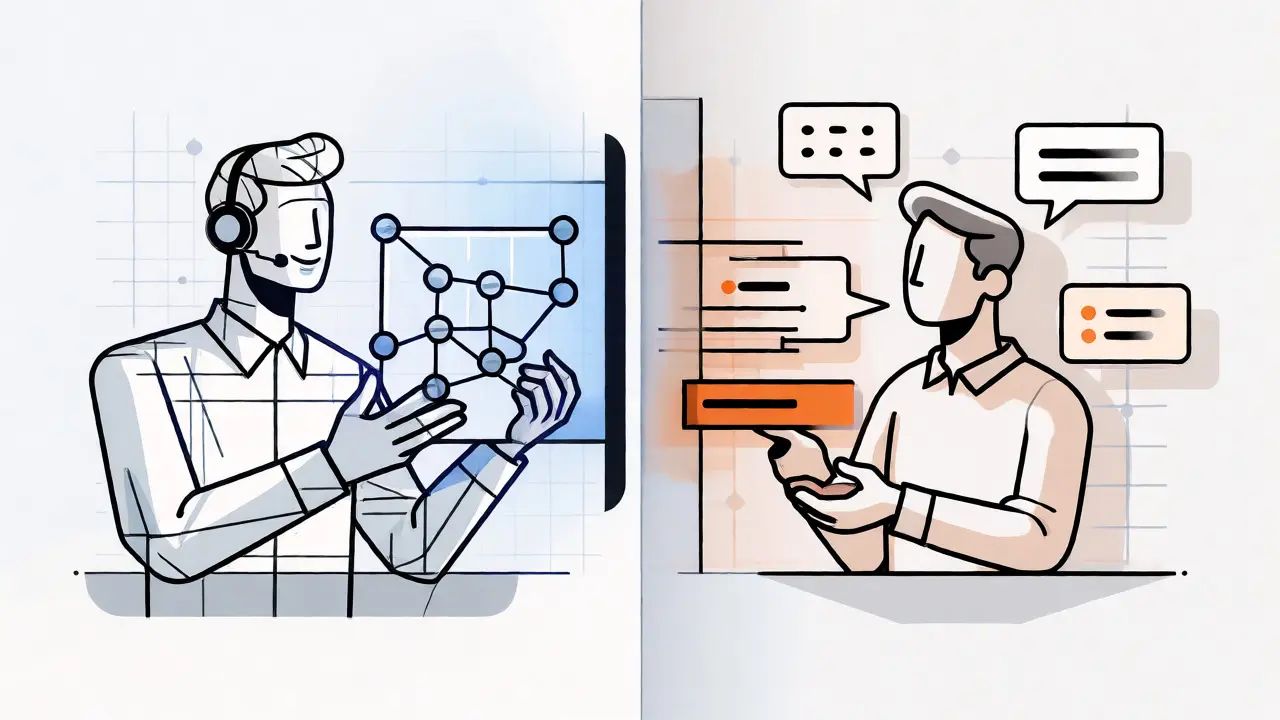
You type a request into your AI coding assistant, and it spits out code. But is that code something you can ship to production, or is it a fragile prototype that breaks the moment a user clicks a button? The difference often isn't the model itself-it's how you talk to it. Vibe coding has evolved from simple autocomplete into a collaborative process where defining the AI's persona-specifically choosing between a Senior Architect and a Junior Developer-dramatically shifts the output quality.
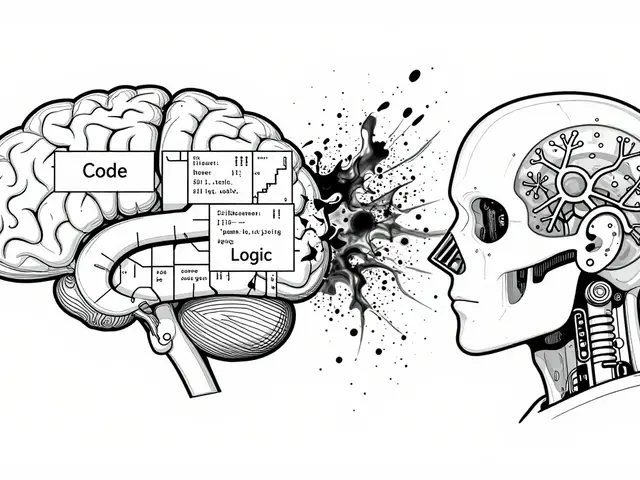
This isn't just about sounding fancy. It’s about accessing different parts of the Large Language Model's (LLM) training data. When you tell an AI to act as a senior architect, you’re triggering patterns associated with high-level design, security, and scalability. When you ask for a junior developer, you get verbose explanations and basic implementations. Knowing when to use which role can cut your code review time in half and reduce rework by up to 60%.
Why Your Persona Choice Changes Everything
Large language models are trained on massive datasets of GitHub repositories, Stack Overflow threads, and technical documentation. These datasets contain distinct "voices." A senior engineer’s discourse is terse, focused on trade-offs, and heavily weighted toward non-functional requirements like performance and security. A junior developer’s discourse is explanatory, often overly commented, and focused on getting the logic to work first.
By assigning a role, you aren't just giving instructions; you're setting a filter. According to research presented at NeurIPS 2024 by Dr. Elena Rodriguez of Google DeepMind, LLMs respond to these role assignments because they create implicit knowledge hierarchies within the model's weights. You are essentially telling the model, "Ignore the beginner tutorials; focus on the enterprise architecture papers."
The impact is measurable. Data collected from over 1,200 GitHub repositories showed that prompts specifying a "senior architect" role produced code requiring 2.3 fewer revisions on average compared to generic prompts. More strikingly, Strapi’s analysis of 500 code samples found that senior-role outputs had 42% fewer security vulnerabilities. If you’re building a fintech app, that stat alone should make you rethink your default prompt.
The Senior Architect Persona: Precision and Production-Readiness
When you assign the Senior Architect role, you are asking the AI to prioritize structure over speed. This persona excels at handling complex systems where dependencies matter. It doesn't just write a function; it designs an interface. It considers how this module talks to that database and what happens if the network fails.
A typical senior architect prompt looks like this:
"You are a senior Python developer specializing in building production-grade, secure multi-tenant SaaS solutions. Adhere strictly to PEP8 style and security best practices. Prioritize dependency injection and clean separation of concerns."
Notice the constraints. It’s not enough to say "senior developer." You must specify the domain (SaaS), the tech stack (Python), and the standards (PEP8, security). Without these, the AI might give you a senior-sounding answer that misses the specific architectural nuances of your project.
The benefits here are clear. Outputs from this persona tend to include robust error handling, proper logging, and modular code structures. In one case study involving an Angular service, the senior persona generated code with 31% better test coverage. Why? Because senior engineers know that untested code is debt. They instinctively add stubs and mocks because they’ve been burned by bad releases before.
The Junior Developer Persona: Clarity and Learning
Don’t dismiss the Junior Developer persona. It has its place, especially when you are learning a new framework or need to understand the "why" behind a piece of code. This persona generates code that is often more explicit, heavily commented, and less abstracted.
If you ask a senior architect to explain a basic loop, you might get a terse comment like `// O(n) iteration`. Ask a junior developer, and you’ll get a breakdown of how the index increments and why we avoid mutating the array during iteration. Dev Interrupted’s survey rated the documentation quality of junior-role outputs at 4.2/5.0, significantly higher than the 3.1/5.0 for senior roles.
Use this persona when:
- You are prototyping quickly and don’t care about edge cases yet.
- You are teaching yourself a new library and need step-by-step logic.
- You want to see all the moving parts before refactoring them away.
However, be warned: junior-role code often lacks defensive programming. It assumes happy paths. If you feed junior-generated code straight into production without a review, you’ll likely encounter bugs related to null checks, race conditions, or improper resource cleanup.
Comparing Output Quality: A Practical Breakdown
To help you decide which role to use, let’s look at the hard numbers. The table below summarizes key differences observed in recent industry benchmarks.
| Metric | Senior Architect Persona | Junior Developer Persona |
|---|---|---|
| Security Vulnerabilities | 42% Fewer | Higher risk of missing edge cases |
| Test Coverage | 31% Better | Often minimal or absent |
| Error Handling | Present in 89% of outputs | Present in 63% of outputs |
| Documentation Quality | Concise (3.1/5.0) | Detailed (4.2/5.0) |
| Architectural Refinement Needed | Low | High (41% more refinement) |
The takeaway? Senior personas save you time on debugging and security audits. Junior personas save you time on understanding the codebase initially. Neither is universally "better"-it depends on your current job-to-be-done.
Common Pitfalls in Role Assignment
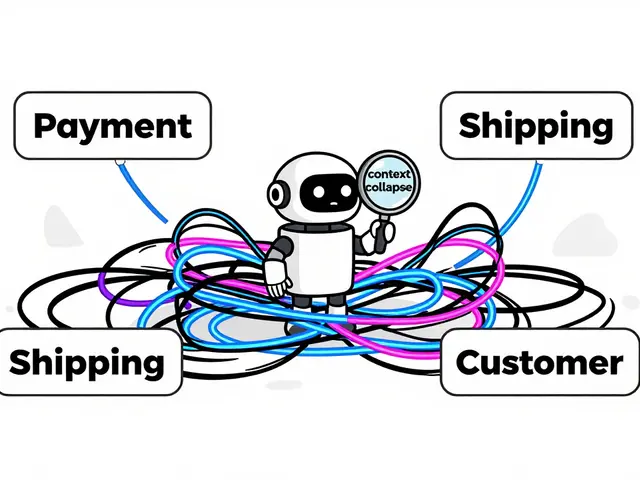
Many developers fail with vibe coding because they treat role assignment as a magic spell rather than a precise instruction set. Just saying "Act as a senior developer" is too vague. The AI needs context to anchor its behavior.
Pitfall 1: Missing Technology Constraints. If you don’t specify the language or framework version, the AI might mix paradigms. A "senior Java developer" might give you Spring Boot advice, while a "senior JavaScript developer" gives you React hooks. Always pair the role with the stack.
Pitfall 2: Ignoring Project Context. A senior architect for a monolith thinks differently than one for microservices. Include details about your infrastructure. For example: "You are a senior AWS Solutions Architect designing serverless functions using Lambda and API Gateway."
Pitfall 3: Over-Trusting the Output. Martin Fowler, Chief Scientist at ThoughtWorks, warns that over-reliance on senior roles creates false confidence. The model doesn't truly understand system constraints like memory limits or legacy code debt unless you explicitly state them. You still need to review the code like a human colleague.

Advanced Technique: The PersonaChain
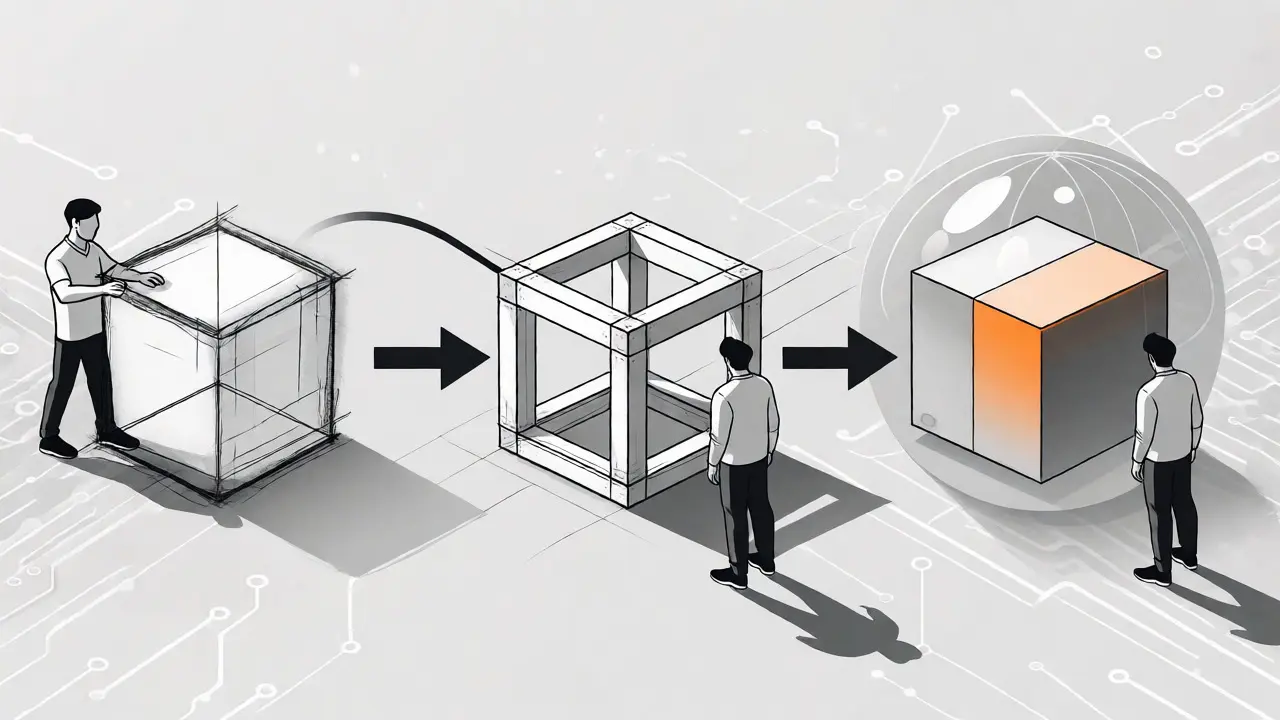
What if you could have both? Recent advancements in tools like the Vibe Coding Framework introduce "PersonaChain," a method where you simulate a team review. You start by asking the AI to generate code as a junior developer to get the raw logic. Then, you switch the persona to a senior architect to refactor that code for modularity and security. Finally, you might add a "security specialist" pass.
This multi-stage approach mimics real-world engineering workflows. One developer at Shopify reported that using standardized role templates reduced component rework by 60% on their checkout flow. By chaining personas, you catch logical errors early (junior phase) and architectural flaws later (senior phase).
Here’s a quick workflow for PersonaChain:
- Generate: "Act as a junior developer. Write a basic function to handle user authentication."
- Refactor: "Now, act as a senior architect. Review the above code. Apply dependency injection and improve error handling."
- Validate: "Act as a security auditor. Check for common vulnerabilities in the refactored code."
When to Use Which Role: A Decision Guide
Still unsure? Use this simple heuristic based on your immediate goal:
- Use Senior Architect when:
- You are writing core business logic.
- You need to integrate with external APIs or databases.
- Security and scalability are primary concerns.
- You are preparing code for a pull request review.
- Use Junior Developer when:
- You are exploring a new library or syntax.
- You are building a throwaway prototype.
- You need to explain code to a non-technical stakeholder.
- You are stuck on a basic algorithm and need a hint.
Remember, the goal of vibe coding isn't to remove yourself from the loop. It’s to elevate your collaboration with the AI. By consciously choosing the right persona, you turn the AI from a loose cannon spitting out boilerplate into a virtual teammate whose output you can judge against your own professional standards.
Does specifying a role actually change the code generated?
Yes. Benchmarks show that senior architect roles produce code with significantly fewer security vulnerabilities and better test coverage compared to junior roles or generic prompts. The role primes the model to access specific patterns in its training data associated with those experience levels.
Can I mix senior and junior roles in one prompt?
It is generally better to separate them. Mixing roles can confuse the model regarding tone and complexity. Instead, use a multi-step approach where you generate code with one persona and refine it with another, known as PersonaChain.
Is the junior developer role useless for production code?
Not entirely. While junior outputs require more architectural refinement, they excel at providing detailed comments and clear logic, which is useful for educational purposes or initial prototyping. However, they often lack robust error handling needed for production.
How specific should my role definition be?
Very specific. Instead of "senior developer," try "senior React developer specializing in performance optimization and accessibility." Including technology stacks, domains, and coding standards yields much more consistent results.
Will AI eventually stop needing role assignments?
As models become more capable, the distinction may blur, but domain-specific constraints will remain crucial. Experts suggest that future tools will use adaptive persona switching, automatically adjusting expertise levels based on the task complexity and context.
 Artificial Intelligence