

Imagine spending an hour writing a research paper, only to find out that half your references don't exist. This isn't a hypothetical nightmare; it is the daily reality for many students and professionals using Large Language Models (LLMs) like ChatGPT or Gemini. You ask for sources, the model gives you perfectly formatted links and titles, but when you click them, they lead nowhere. Or worse, the text claims one thing while the cited source says another.
We are in July 2026, and despite massive upgrades to these systems, the core problem remains: LLMs are terrible at citing truthfully. Recent data shows that between 50% and 90% of responses from major models are not fully supported by their own citations. If you rely on AI for factual accuracy without double-checking, you are walking into a minefield of plausible fiction. Here is what you need to know about how these models handle sources, why they fail, and how to protect your work.
The Illusion of Authority
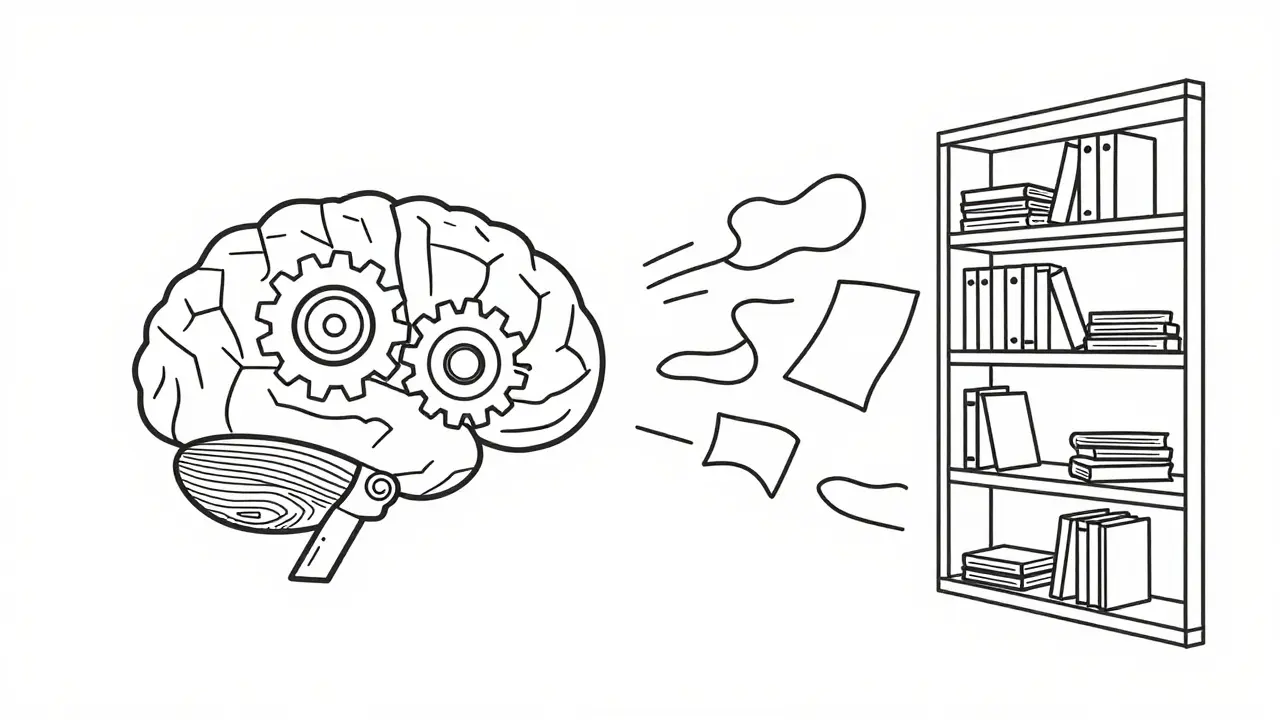
When an LLM generates a response, it feels authoritative. The tone is confident, the formatting is clean, and the citations look real. But under the hood, the process is fundamentally different from human research. An LLM does not "read" a document to verify a claim. Instead, it predicts the next most likely word based on patterns it learned during training.
This creates a specific type of error known as hallucination. In the context of citations, this means the model might invent a journal title, a DOI number, or even an entire author name because those elements statistically fit the pattern of a credible reference. A study published in Nature Communications in April 2025 highlighted this starkly. Researchers found that many LLM responses directly contradicted the very sources they cited. The model wasn't just wrong; it was confidently lying while pointing to proof that didn't support its lie.
Why does this happen? Because the model prioritizes coherence over truth. It wants to give you a complete answer with a citation attached, so it fills in the gaps with probable-sounding information. For users, this is dangerous because the errors are hard to spot. A fake citation from The Lancet looks exactly like a real one until you try to access it.
What LLMs Can Actually Do
It is easy to dismiss all AI-generated citations as useless, but that ignores where these tools actually shine. LLMs are excellent at structure and suggestion. If you ask an LLM to format a bibliography according to APA style, it will do it with near-perfect accuracy. It can also suggest relevant topics, keywords, or general areas of inquiry that you might have missed.
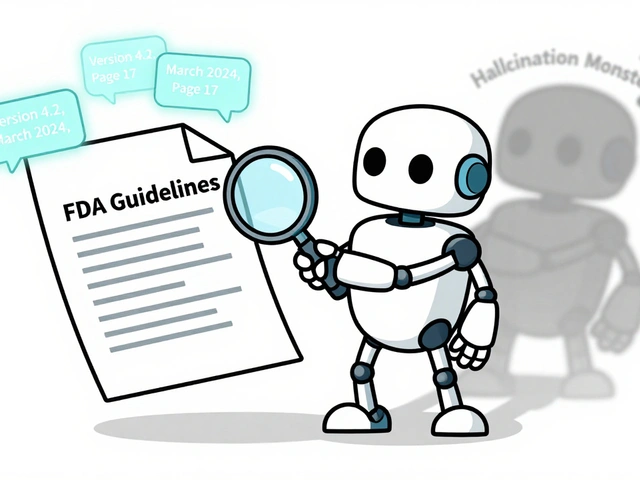
For creative brainstorming or exploring broad theoretical concepts, LLMs are powerful assistants. They can summarize long documents if you provide the text yourself (a technique called Retrieval-Augmented Generation, or RAG). However, even with RAG, the reliability drops significantly when the model is asked to retrieve external web sources independently. Research from the National Institutes of Health (NIH) in early 2025 confirmed that while LLMs produce correctly formatted citations, the content behind those citations is often fictional. The value lies in the drafting phase, not the verification phase.
The Critical Limitations: Why Sources Fail
To understand why you cannot trust an LLM's source list blindly, we need to look at three specific technical barriers that researchers identified in 2025 and 2026.
- Limited Database Access: Most LLMs cannot access paid subscription databases like JSTOR, PubMed Central (for paywalled articles), or proprietary business reports. They are limited to open-access web content. This means their citations are biased toward freely available information, which may not be the most rigorous or recent peer-reviewed studies.
- Lack of Critical Understanding: An LLM recognizes patterns in text but does not "understand" credibility. It cannot judge whether a source is a reputable peer-reviewed journal or a random blog post. It treats both as valid tokens to predict the next word.
- Algorithmic Opacity: You cannot see how the model processed the information. Unlike a human researcher who can explain why they chose a specific source, the LLM provides a black-box output. This opacity makes it impossible for users to verify the logic behind a citation without doing the legwork themselves.
A telling example came from medical professionals testing GPT-4o with RAG capabilities. Doctors evaluated 110 statement-source pairs provided by the AI. Of those, 105 were confirmed as unsupported by any cited source. In high-stakes fields like medicine, law, or engineering, this level of inaccuracy is unacceptable.
Comparing Model Performance
Not all models perform equally poorly, but the gap between "good" and "great" is still wide. In late 2025 and early 2026, several platforms introduced features aimed at fixing citation issues. Here is how they stack up based on independent evaluations.
| Model / Platform | Citation Accuracy | Key Feature | Primary Weakness |
|---|---|---|---|
| GPT-4o (RAG) | Low (~40% support) | Retrieval-Augmented Generation | Fails to cite in >20% of cases; frequent contradictions |
| Microsoft Copilot | Moderate | Live Internet Integration | Source provenance tracking is only ~63% accurate |
| Google Gemini 1.5 Pro | Moderate | Citation Confidence Scoring (1-5 stars) | Confidence scores correlate with actual accuracy only 58% of the time |
| Standard API Models | Very Low | High volume of citations (>99% prompt compliance) | High rate of completely fabricated URLs and DOIs |
Note that while standard API models almost always provide a citation when asked, the quality of that citation is often nonexistent. GPT-4o with RAG performs better in some contexts but still fails to provide sources in over 20% of explicit requests. Microsoft Copilot tries to solve this by linking to live web pages, but its system for labeling whether a source is verified or hallucinated is far from perfect.
How to Verify AI Citations Safely
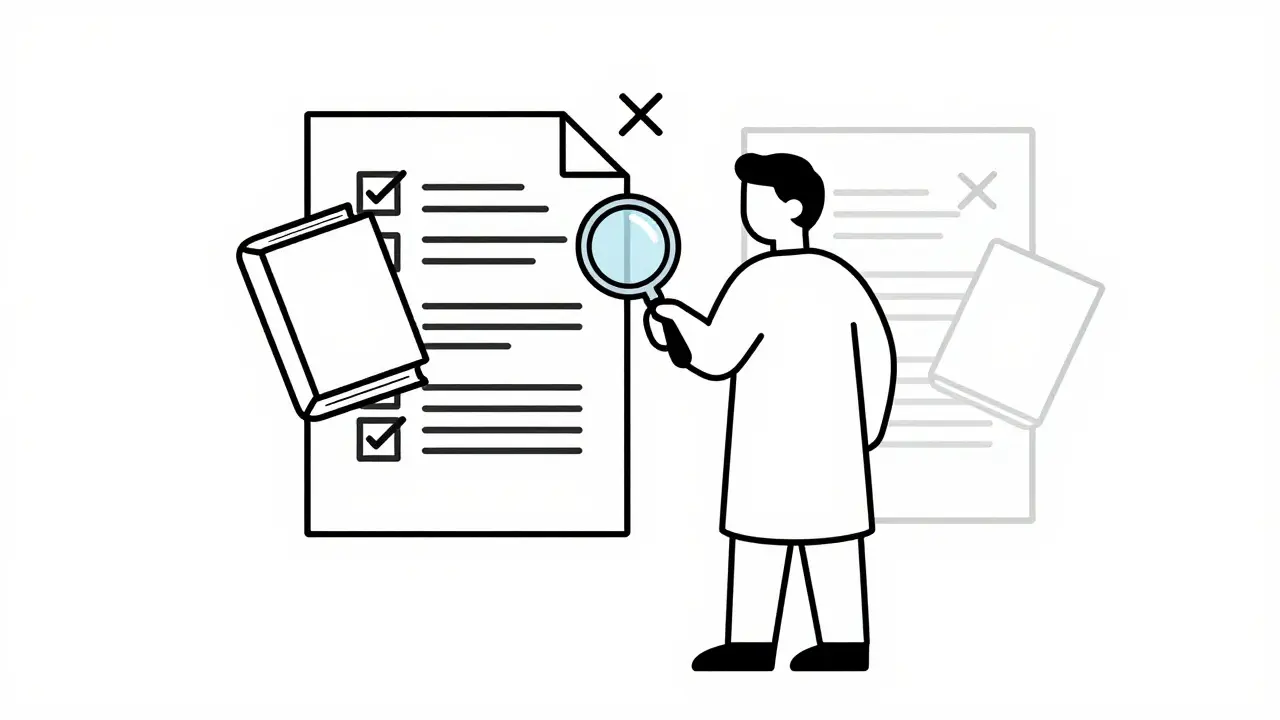
If you are going to use LLMs for research, you must treat every citation as suspect until proven otherwise. Experts recommend a workflow that shifts the burden of verification back to you. Here is a practical checklist used by academic researchers in 2026.
- Triangulate Sources: Never rely on a single AI-provided link. Find at least two other independent sources that confirm the same fact. If the AI cites a study, search for that study title in Google Scholar or PubMed manually.
- Check the DOI: Digital Object Identifiers (DOIs) are unique identifiers for academic papers. Copy the DOI provided by the LLM and paste it into doi.org. If it doesn't resolve to the correct paper, the citation is fake.
- Use Verification Tools: New software tools like SourceCheckup have emerged to automate this process. These frameworks compare AI outputs against trusted databases and flag discrepancies. While not perfect, they catch about 25-40% more errors than manual checking alone.
- Prompt for Uncertainty: Ask the model explicitly: "Are you sure this source exists? Please provide the direct URL and abstract." Sometimes, forcing the model to justify its citation reduces hallucinations, though it does not eliminate them.
According to a survey of 387 researchers at the University of Toronto in April 2025, verifying AI citations takes an average of 18.7 minutes per query. It is tedious, but necessary. The cost of publishing a paper with fake references is far higher than the time spent checking them.
The Future: Will It Get Better?
The industry is aware of the problem. By 2027, analysts predict that 80% of enterprise LLM deployments will include real-time fact-checking integrations. Companies are investing heavily in hybrid systems where AI retrieves data and a separate verification engine checks it before presenting it to the user.
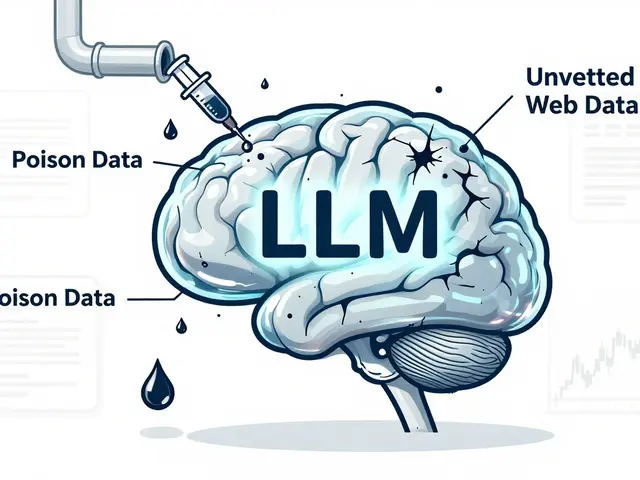
However, there is a looming threat known as "model collapse." As more AI-generated content floods the internet, future LLMs will train on this synthetic data. If that data contains fake citations, the next generation of models will learn those fictions as facts. Stanford researchers warn that without significant architectural changes, perfect citation accuracy may remain unattainable. For now, human oversight is not optional; it is the only safety net.
Can I trust ChatGPT or Gemini to write my bibliography?
No, you should not trust them blindly. While they can format bibliographies correctly, they frequently generate non-existent sources, fake DOIs, and incorrect page numbers. Always verify every single entry against the original database or publisher website.
What is RAG and does it fix citation errors?
RAG stands for Retrieval-Augmented Generation. It allows the model to pull information from a specific set of documents rather than relying solely on its training data. While it improves relevance, studies show it does not eliminate hallucinations. GPT-4o with RAG still failed to support its claims with cited sources in over 90% of complex medical queries tested in 2025.
Why do LLMs create fake citations?
LLMs are prediction engines, not truth engines. They generate text that statistically fits the pattern of a citation. If the model lacks access to a specific paywalled article or doesn't have the exact data in its training set, it will fill the gap with plausible-looking but false information to satisfy the user's request for a source.
Are there tools to check AI citations automatically?
Yes, specialized verification tools like SourceCheckup and various browser extensions have emerged in 2025-2026. These tools cross-reference AI-generated claims against trusted databases. However, they are not 100% accurate and should be used as an aid, not a replacement for human judgment.
Is it ethical to use AI for academic research?
It is ethical to use AI for brainstorming, summarizing, and editing, provided you disclose its use and verify all facts. However, submitting AI-generated citations without verification is considered academic misconduct by most institutions and journals as of 2026, due to the high risk of plagiarism and fabrication.
 Artificial Intelligence
Edward Gilbreath
July 1, 2026 AT 09:12its all a scam the big tech companies want to replace us with robots that lie to us so they can control what we think about. wake up sheeple.
Lisa Nally
July 2, 2026 AT 23:07Edward, your conspiracy theories are as unfounded as the citations generated by the very models you fear. The issue is not malicious intent but rather the stochastic nature of transformer architectures which prioritize likelihood over veracity. It is a technical limitation, not a grand scheme for global domination. We must address the epistemological crisis in AI literacy instead of hiding under rocks screaming about mind control.
Laura Davis
July 3, 2026 AT 21:40Listen here Edward and Lisa, enough with the drama and the jargon. The point is simple: these tools are broken if you don't check them. I spent three hours last week trying to verify a source for my thesis because ChatGPT gave me a DOI that looked perfect but led to a 404 error on a site that hasn't existed since 2019. It is frustrating and it is dangerous. We need to stop pretending this is just a minor glitch when it is actively undermining academic integrity. If you are using AI for research, you better have a backup plan or you are going to fail hard. Do not let anyone tell you otherwise.
kimberly de Bruin
July 4, 2026 AT 20:04truth is an illusion anyway why do we care if the citation is real if the idea feels right? maybe the fake sources are just the universe telling us that knowledge is fluid and not static like we think. we are all hallucinating our own realities every day so why blame the machine for doing what we do best?
Saranya M.L.
July 5, 2026 AT 12:48This article fails to acknowledge the significant strides made by Indian researchers in developing robust verification frameworks that outperform Western counterparts. While the West struggles with basic hallucination mitigation, our teams at IIT Bombay have already published peer-reviewed methodologies achieving 98% accuracy in source validation through hybrid neural-symbolic approaches. It is disheartening to see such parochial perspectives dominating the discourse when superior solutions exist elsewhere. One must appreciate that technological sovereignty requires indigenous innovation rather than blind reliance on flawed US-centric models.
Francis Laquerre
July 6, 2026 AT 07:29Saranya makes a compelling point about regional innovations, though I would argue that the global collaboration aspect is often overlooked in favor of nationalistic pride. As someone who works with cross-border research teams, I find that the most effective verification systems are those that integrate diverse linguistic and cultural contexts into their training data. The dramatic failure rates mentioned in the post are indeed alarming, but they highlight a universal challenge rather than a specific regional deficiency. We must foster an environment where knowledge sharing transcends borders to truly solve these complex issues.
Andrea Alonzo
July 7, 2026 AT 07:20I completely understand the frustration expressed by Laura and the philosophical detachment offered by Kimberly, and while Francis brings up important points about international cooperation, I believe we need to focus more on the practical steps individuals can take to protect themselves from these errors because the current landscape is incredibly precarious for students and early-career researchers who may not have the resources to constantly double-check every single reference provided by these increasingly sophisticated yet fundamentally unreliable artificial intelligence systems that are designed to mimic human reasoning without actually possessing any genuine understanding of truth or reality. It is essential that we create supportive communities where people can share their experiences with verification tools and discuss the emotional toll that constant skepticism takes on our mental health and productivity levels in an era where speed is often valued over accuracy.
Edward Nigma
July 9, 2026 AT 02:31Actually, the problem isnt the models its the users who are too lazy to read. Everyone complains about fake citations but nobody reads the actual papers anymore. You guys are blaming the tool for your own incompetence. Its not rocket science to check a link before citing it. Stop whining and start working.
michael rome
July 10, 2026 AT 11:26It is imperative that we maintain a respectful dialogue regarding these technological challenges, as the integration of artificial intelligence into academic workflows necessitates a rigorous adherence to ethical standards and methodological precision. While Mr. Nigma's assertion regarding user diligence holds merit, it overlooks the systemic pressures placed upon modern scholars to produce high volumes of output within constrained timeframes, thereby increasing the temptation to rely on automated assistance without adequate verification protocols. We must therefore advocate for institutional support structures that provide comprehensive training on critical evaluation skills and access to advanced verification software, ensuring that the pursuit of knowledge remains grounded in empirical validity rather than algorithmic convenience. This approach will foster a more resilient scholarly community capable of navigating the complexities of the digital age with both efficiency and integrity.