
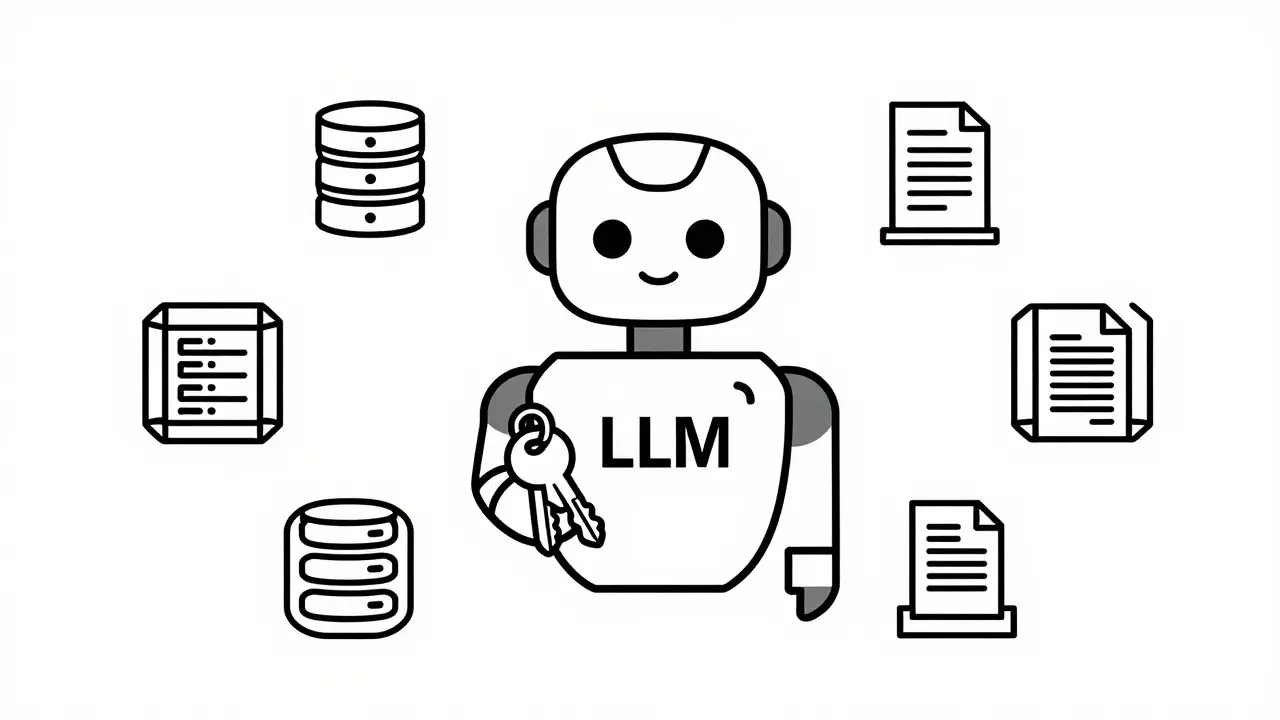
Imagine handing the keys to your entire company database to a brilliant but unpredictable intern. That is essentially what happens when you integrate Large Language Models into your business without strict controls. These models are powerful tools, but they process sensitive data dynamically across distributed systems. Traditional perimeter-based security-like a castle wall with a moat-is no longer enough. In an AI-native environment, the threat isn't just outside; it can be inside the model's own reasoning process or its access patterns. This is why Zero-Trust Architecture has become the non-negotiable standard for securing AI integrations in 2026.
The core principle of Zero Trust is simple: never trust, always verify. Every user, device, and system interaction is treated as potentially hostile until proven otherwise. For organizations deploying generative AI, this means moving beyond basic firewalls to a granular approach where every request made by an LLM is scrutinized, verified, and logged. The National Institute of Standards and Technology (NIST) formalized this framework years ago, but adapting it for the unique challenges of AI workloads has only recently become critical.
The Four Pillars of Zero Trust for AI Workloads
To secure an LLM integration effectively, you need to build on four technical capabilities defined by the Cloud Security Alliance. These aren't optional add-ons; they are the foundation of a secure AI strategy.
- Strict Access Controls: Enforce need-to-know authorization. An LLM should only access the specific data required for a task, not the entire dataset.
- Continuous Monitoring: Use advanced analytics to detect anomalous behavior in real-time. If a model suddenly starts querying HR records at 3 AM, that’s a red flag.
- Strong Data Protection: Apply encryption and data segmentation throughout the data lifecycle. Sensitive information must be safeguarded whether it is at rest, in transit, or being processed.
- Least Privilege Access: Minimize permissions for both users and systems. This reduces the attack surface and limits the damage if a breach occurs.
NIST recommends implementing microsegmentation policies that enforce traffic rules allowing only business-required communication. This means isolating the LLM’s environment so that even if one component is compromised, the attacker cannot move laterally through your network.
Securing the Data Pipeline: Encryption and Privacy
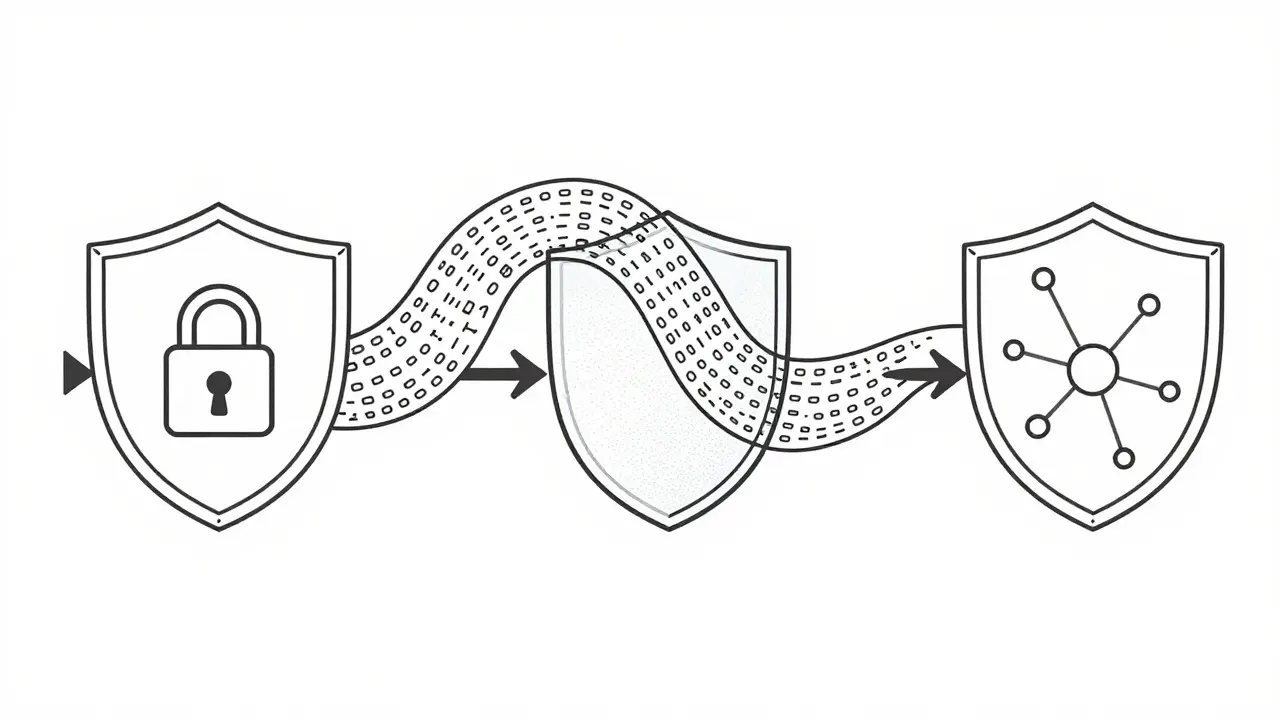
The data pipeline is the backbone of any AI system, and it is often the weakest link. To implement Zero Trust here, you need more than just strong passwords. You need cryptographic techniques that allow computation on encrypted data.
Homomorphic Encryption allows you to perform calculations on encrypted data without decrypting it first. This ensures that even the cloud provider processing the data cannot see the raw information. Similarly, Differential Privacy adds statistical noise to datasets to prevent the identification of individual records while maintaining overall accuracy. These techniques are essential for compliance with regulations like GDPR, ensuring that data is used strictly for its intended purpose.
Another powerful approach is Federated Learning. Instead of centralizing sensitive data in one place, federated learning keeps data decentralized. Models are trained on distributed datasets, and only the model updates (not the raw data) are shared. This significantly reduces privacy risks, though it requires careful implementation to defend against attacks like model inversion or membership inference.
Practical Implementation: RAG Systems and Vector Stores
Retrieval-Augmented Generation (RAG) is one of the most common ways companies integrate LLMs with their proprietary data. However, it introduces new vulnerabilities. Let’s look at a concrete example using PostgreSQL vector stores.
In a Zero Trust RAG setup, you don’t just let the model query the database freely. You implement role-based controls to limit access to specific vector tables. You mask sensitive fields, such as customer names or document titles, before they reach the LLM. Every embedding lookup and prompt input is audited. Behavioral detection monitors for unusual query volumes-if the model suddenly requests thousands of documents it rarely uses, the system flags it for review.
| Feature | Traditional Approach | Zero-Trust Approach |
|---|---|---|
| Data Access | Broad read access to vector store | Role-based, row-level security |
| Sensitive Data | Exposed to model context | Masked or tokenized at database level |
| Auditing | Basic log of queries | Detailed audit of embeddings, prompts, and outputs |
| Anomaly Detection | Reactive alerts | Real-time behavioral analysis |
Two Dimensions of Control: Technical vs. Topic Interactions
A critical distinction in Zero Trust for LLMs is understanding that there are two types of interactions to control: technical and topical. Technical controls restrict what the model can call and what data it can access. Topical controls are far more complex-they address what subjects the model is allowed to discuss or what features it can provide.
System Guardrails act as the first line of defense for topical control. They prevent unsupported languages, identify attempts to make inappropriate interactions, and reject responses that leak private information or intellectual property. For example, a guardrail might block a response if it contains patterns resembling credit card numbers or proprietary code snippets.
The Zero-Trust Decision Context principle dictates that when a model makes a request, the context provided should be limited strictly to what is needed for that specific response. Consider an airline rebooking system. When a passenger asks for help, the RAG system should retrieve only the relevant flight plans, available seats, and current reservations for that passenger-not the entire vector database of all passengers. This minimizes exposure and reduces the risk of data leakage.
The Sentinel System: Active Approval for AI Actions
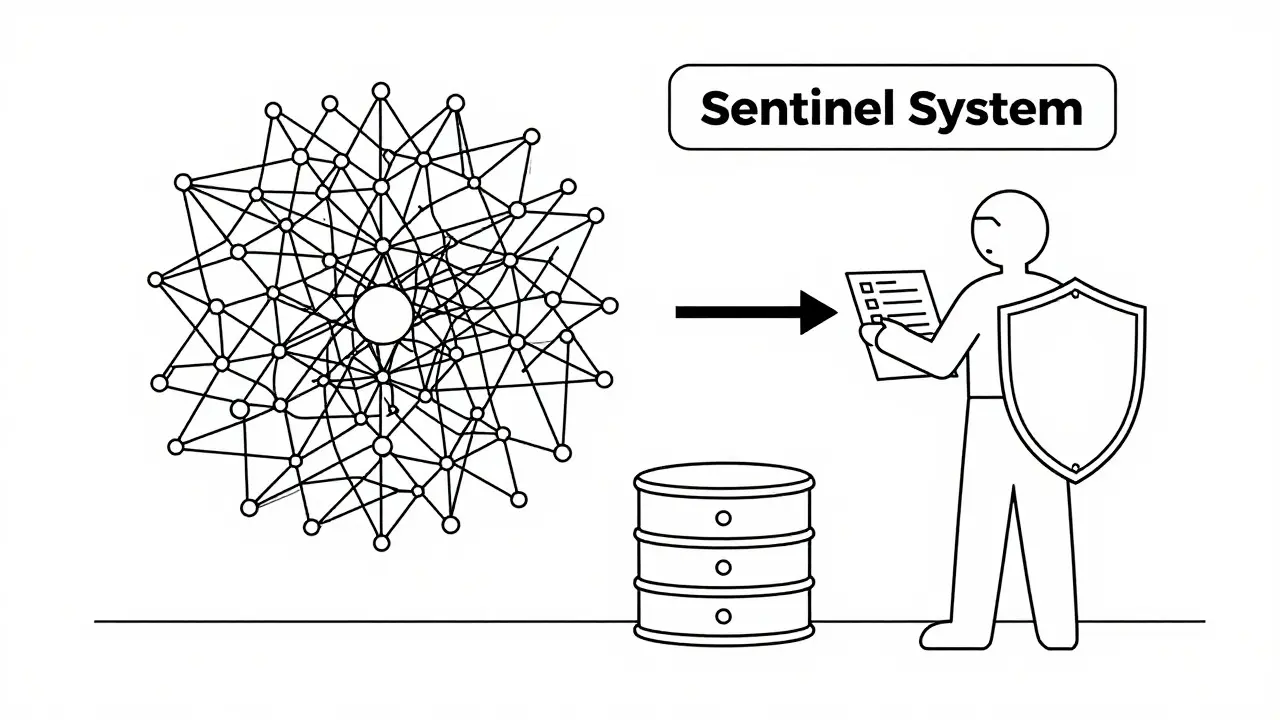
Perhaps the most innovative aspect of Zero Trust for LLMs is the concept of a Sentinel System. Unlike traditional security monitoring, which is passive, a sentinel system actively accompanies the model. Its sole goal is to look for anomalous behavior and explicitly approve every request for resources that the model makes.
This sentinel is part of a broader Trusted AI framework designed to constrain the AI within its digital contracts. It has the power to take the AI offline if security thresholds are exceeded. For instance, if the model begins generating outputs that deviate significantly from expected norms or attempts to access restricted APIs, the sentinel intervenes immediately. This represents a fundamental shift from reactive security to proactive enforcement.
Implementing attribute-based access control (ABAC) for model access is key here. ABAC allows you to define policies based on attributes like user role, time of day, and data sensitivity. Combined with advanced anomaly detection techniques like isolation forests or autoencoders, you can identify outliers in the high-dimensional spaces typical of AI data.
Challenges and Future Outlook
Despite its benefits, implementing Zero Trust for LLMs is not without challenges. The feature list of LLMs is largely unknowable due to their complex, black-box nature. This makes complete enforcement inherently difficult. Semantic-level control-deciding what topics a model should discuss-is significantly harder than technical access control.
Furthermore, balancing security constraints with model functionality requires careful calibration. Too many restrictions can degrade performance and user experience. Industry experts recognize that while technical access controls are achievable, refining guardrails and filtering mechanisms remains an ongoing challenge. As we move through 2026, the focus is shifting towards holistic organizational approaches that encompass people, processes, and technology.
Training employees on security best practices, establishing clear policies for AI workloads, and investing in specialized Zero Trust solutions are essential steps. Generic security platforms often fall short in AI environments. The integration of ethical safeguards alongside traditional security measures is crucial, as responsible AI principles must guide technical implementations.
What is the main difference between Zero Trust for IT and Zero Trust for LLMs?
While traditional Zero Trust focuses on users and devices, Zero Trust for LLMs extends to the model’s internal reasoning and output generation. It requires controlling not just who accesses the system, but what the model is allowed to say and do, using guardrails and sentinel systems.
How does homomorphic encryption help in LLM security?
Homomorphic encryption allows computations to be performed on encrypted data without decrypting it. This ensures that sensitive data remains protected even during processing, preventing exposure to cloud providers or unauthorized personnel.
What is a sentinel system in the context of AI?
A sentinel system is a separate security module that monitors an LLM in real-time. It actively approves or denies resource requests made by the model and can shut down the AI if anomalous behavior or security violations are detected.
Why is federated learning considered a Zero Trust technique?
Federated learning keeps data decentralized, training models on local devices or servers without centralizing sensitive information. Only model updates are shared, reducing the risk of large-scale data breaches and aligning with the least privilege principle.
What are system guardrails in LLM integrations?
System guardrails are filters and rules applied to LLM inputs and outputs. They prevent the model from accessing inappropriate topics, leaking private data, or generating harmful content, acting as a semantic layer of security.
 Artificial Intelligence

Chandan Singh
August 13, 2026 AT 10:04Look, everyone is screaming about Zero Trust like it's the holy grail but let's be real for a second. The article mentions NIST and Cloud Security Alliance which is all well and good for enterprise suits but try implementing strict access controls on an LLM that hallucinates its own permissions. You can't just 'verify' a black box reasoning process because you don't actually know what's happening inside the weights. It's like trying to put a seatbelt on a cloud. Sure, the concept of least privilege is fine in theory but when your model needs context to function, restricting that context usually breaks the utility entirely. I've seen teams spend six months setting up microsegmentation only to have the devs bypass it with a simple API key dump because the latency was too high.
The part about homomorphic encryption is also pure fantasy for most use cases right now. The computational overhead is insane. If you're doing RAG with vector stores, adding HE means your response time goes from seconds to minutes. Nobody wants to wait three minutes for a customer service bot to answer 'what are your hours'. So while the framework looks pretty on paper, the practical implementation gap is massive and most companies are just slapping a WAF in front of their OpenAI endpoint and calling it secure.
Brannen Hall
August 14, 2026 AT 19:34This is just fear-mongering tech bro nonsense. Handing keys to an intern? Please. Most companies don't even have proper IAM for their humans yet so why are we worried about AI agents? The whole 'sentinel system' idea sounds like over-engineered bloatware designed to sell more consulting hours.
I bet the author has never actually deployed an LLM in production without a vendor managing the security for them. Real talk: if your data is sensitive enough to need zero trust, you probably shouldn't be sending it to an LLM at all unless you're running it on-prem with air gaps. But nobody does that because it's expensive. So yeah, keep buying the security theater.
Iva Grekova
August 16, 2026 AT 00:43I think both of you are missing the nuance here. It's not about perfect security, it's about reducing risk to a manageable level. The analogy of the intern is actually really helpful for explaining this to non-technical stakeholders who just want to 'plug in ChatGPT'.
We implemented something similar to the RAG setup described last quarter. We didn't go full homomorphic encryption because, as Chandan pointed out, the latency was a killer. But we did implement row-level security on our PostgreSQL vector store. It made a huge difference. Before that, any user could theoretically query any document if they knew the ID. Now, the embedding lookup respects the user's role. It wasn't easy, but it gave us peace of mind. The key is starting small with technical controls before worrying about the semantic guardrails. Don't boil the ocean.
Onyinyechi Nwosu
August 16, 2026 AT 04:28i read through this and honestly it feels like a lot of jargon thrown together to sound smart. the idea of never trusting anyone is nice but in practice it just slows everything down. we tried to add continuous monitoring to our chatbot and it flagged half the normal questions as anomalous because the users were asking things differently than the training data expected. so then we had to tune the thresholds and then it missed actual issues. it's a constant whack-a-mole game. maybe for banks it matters but for a small business blog? seems like overkill
Joanna Mucha
August 16, 2026 AT 16:35Ah, the quaint illusion of control in a digital panopticon. We build these elaborate cages of code, believing that by segmenting the soul of the machine we can contain its chaos. But tell me, does the sentinel truly watch, or does it merely sleep while the dreamer wanders? The 'Zero Trust' architecture is but a modern ritual, a sacrificial offering to the gods of compliance. We encrypt our thoughts, mask our names, and yet the underlying truth remains: the model knows more than we wish it to. It is a mirror that reflects our own paranoia back at us, distorted by layers of abstraction. The elite understand that true security is not in the firewall, but in the obscurity of one's intent. Let the masses play with their row-level security; the initiated know that data leaks through the cracks of human error, not just software bugs.
Kim Edwards
August 17, 2026 AT 22:37OMG guys can we take a breath?? This stuff is literally stressful just reading about it! 😱 I mean, imagine if my personal assistant started judging me or leaking my secrets? That would be a total nightmare! Like, seriously, who thought it was a good idea to let AI touch our private lives without a chaperone? It’s like letting a teenager drive your car without supervision! 🚗💨 The article says 'never trust, always verify' and honestly? Same energy I bring to every online transaction. But still, the idea of a 'Sentinel System' sounds so dramatic and intense. Is it going to yell at the AI if it misbehaves? I hope so! Because if my AI starts gossiping about my search history, I’m done! Drama queen alert! 🚨
Bonnie Watt
August 19, 2026 AT 19:41You people are all so naive. Thinking that some fancy 'Zero Trust' framework will save you from the inevitable collapse of privacy is adorable. I’ve been saying for years that once you digitize your life, you’re already dead. The article talks about GDPR and compliance like those laws actually matter. They’re just checkboxes for lawyers.
The real issue isn’t the technology, it’s the incompetence of the people deploying it. You can have the best encryption in the world, but if your developer hardcodes an API key in a public GitHub repo, none of this matters. And don’t get me started on 'federated learning'. It’s just a buzzword to make centralized surveillance look decentralized. Wake up sheeple. Your data is already gone. Stop pretending these guardrails do anything other than give CISOs a warm fuzzy feeling.
Meagan Mueller
August 21, 2026 AT 14:55its not just security its control. the government wants you to think you need zero trust to protect your data but really they want to monitor every interaction. notice how the article mentions nist? nist is basically a branch of the deep state. they define the standards so they can backdoor them later. federated learning sounds cool until you realize the model updates can still leak metadata. they are building a hive mind and you are handing them the keys willingly. dont trust the cloud. dont trust the ai. trust nothing. the sentinel system is just a digital leviathan watching your every move. stay offline if you can
Elisabeth Ballet
August 23, 2026 AT 06:14Okay team, let's bring this back to actionable insights! While the cynicism is fun, we have to ship products. Here is the bottom line: if you are integrating LLMs, you NEED to treat them as third-party vendors. Period.
I love Iva's point about starting small. Start with the data pipeline. Encrypt data at rest. Use role-based access control on your vector database. These are low-hanging fruits that provide immediate value. You don't need homomorphic encryption day one. You do need to know who is accessing what.
Brannen, stop complaining and start securing your endpoints. Onyinyechi, yes it's complex, but complexity is the price of admission in 2026. Meagan, Kim, Joanna... please focus.
The 'Sentinel' concept is basically an automated auditor. Build it. Use open-source tools if you have to. But do not deploy an LLM without logging every prompt and output. That is non-negotiable. Let's get to work!