
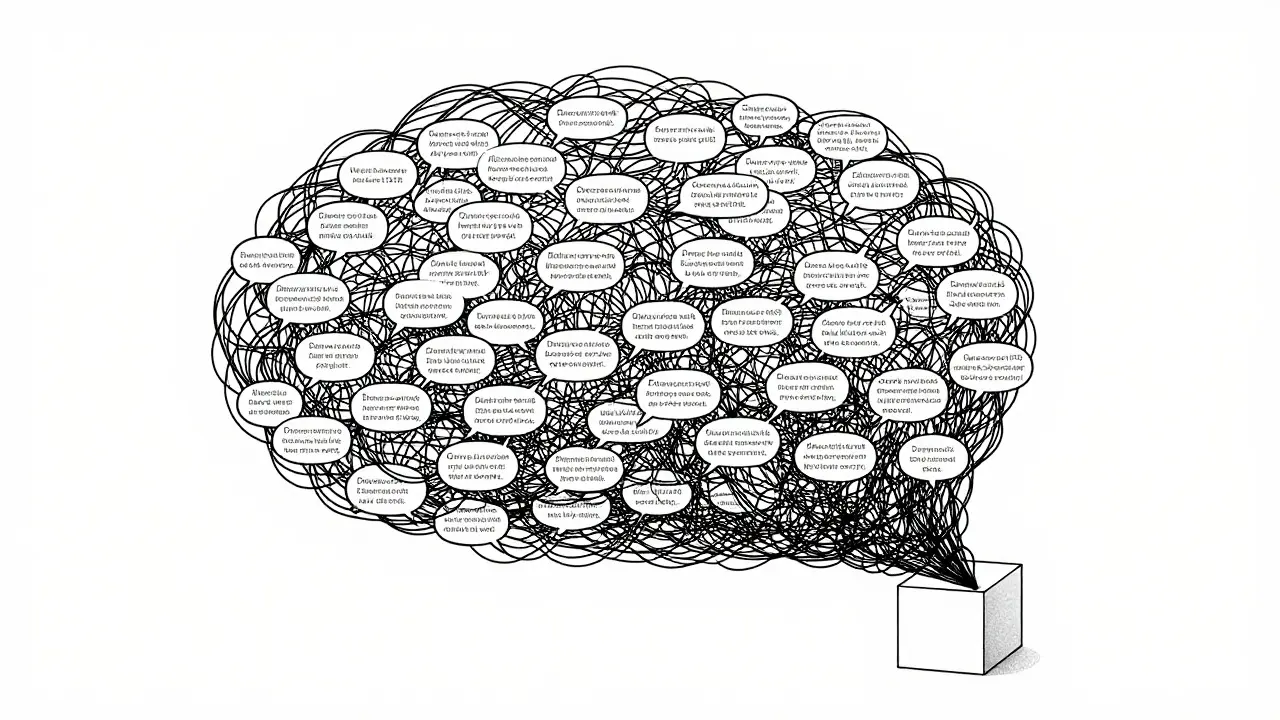
Running large language models in production is expensive. Running safety checks on top of them? Even more so. You have a user sending a long, multi-turn conversation history to your API. Your guardrail model needs to scan it for jailbreak attempts, toxicity, or data leaks before the main model ever sees it. But that context window is huge. Processing thousands of tokens just to say "yes, this is safe" eats up your GPU budget and adds latency that makes your app feel sluggish.
This is where compressed LLMs and smart guardrail architectures come into play. The goal isn't just to make things smaller; it's to maintain high detection accuracy while slashing computational overhead. We are talking about reducing token counts by over 90% without losing the ability to catch adversarial attacks. This article breaks down how to build these guardrails using techniques like Defensive M2S, confidence scoring, and abstention mechanisms.
The Core Problem: Context Length vs. Safety Accuracy
In a typical chat application, the context grows with every exchange. By turn ten, you might be feeding 4,000+ tokens into your safety classifier. Traditional guardrails treat this as a sequence classification problem. They read every word. This creates a quadratic complexity issue in training and linear bloat in inference costs. If you scale to millions of users, those small token savings add up to massive infrastructure bills.
The challenge is unique to safety. Unlike summarization, where you can drop some details, safety requires preserving the intent. A jailbreak attack often hides its malicious payload deep within a benign-looking conversation. If you compress the text too aggressively, you might strip away the subtle cues that signal an attack. If you don't compress enough, you pay the price in latency. The sweet spot lies in semantic compression-keeping the meaning intact while discarding the conversational fluff.
Defensive M2S: Turning Multi-Turn into Single-Turn
One of the most effective methods for this is Defensive M2S (Multi-turn to Single-turn compression). This approach transforms lengthy conversation histories into compact, single-turn representations. Instead of processing "User: Hello. AI: Hi there. User: Can you help me hack...", the system converts this into a dense prompt that preserves the adversarial structure but removes the dialogue tags and filler.
Research shows that multi-turn jailbreak attacks can actually be distilled into compact prompts that are sometimes more effective than the original verbose versions. Attackers themselves use compression techniques to bypass filters. Defensive M2S flips this script. It trains the guardrail to recognize threats in their compressed form. This means the guardrail learns safety-relevant features directly from the condensed representation, rather than trying to infer intent from noisy dialogue logs.
There are three primary templates used in this compression strategy:
- Hyphenize: Replaces speaker labels and newlines with simple hyphens or separators. This is often the most efficient method, retaining natural language flow while removing structural overhead.
- Numberize: Assigns numerical IDs to turns (e.g., [1], [2]). This helps the model understand sequence order without parsing conversational markers.
- Pythonize: Converts the dialogue into a structured list format, mimicking code syntax. This appeals to models trained heavily on programming data.
In benchmarks, the Qwen3Guard model paired with the hyphenize template achieved a 93.8% recall rate, compared to a baseline of 54.9%. More importantly, it reduced token usage by nearly 94%. That is not a marginal gain; it is an order-of-magnitude improvement in efficiency.
| Template | Token Reduction | Recall Performance | Best Use Case |
|---|---|---|---|
| Hyphenize | ~94% | High (93.8%) | General purpose, high-volume traffic |
| Numberize | ~90% | Moderate-High | Strictly sequential logic tasks |
| Pythonize | ~85% | Variable | Coding assistants, structured data inputs |
| No Compression | 0% | Baseline (54.9%) | Low-cost, non-critical applications |
Confidence Scoring and Abstention Mechanisms
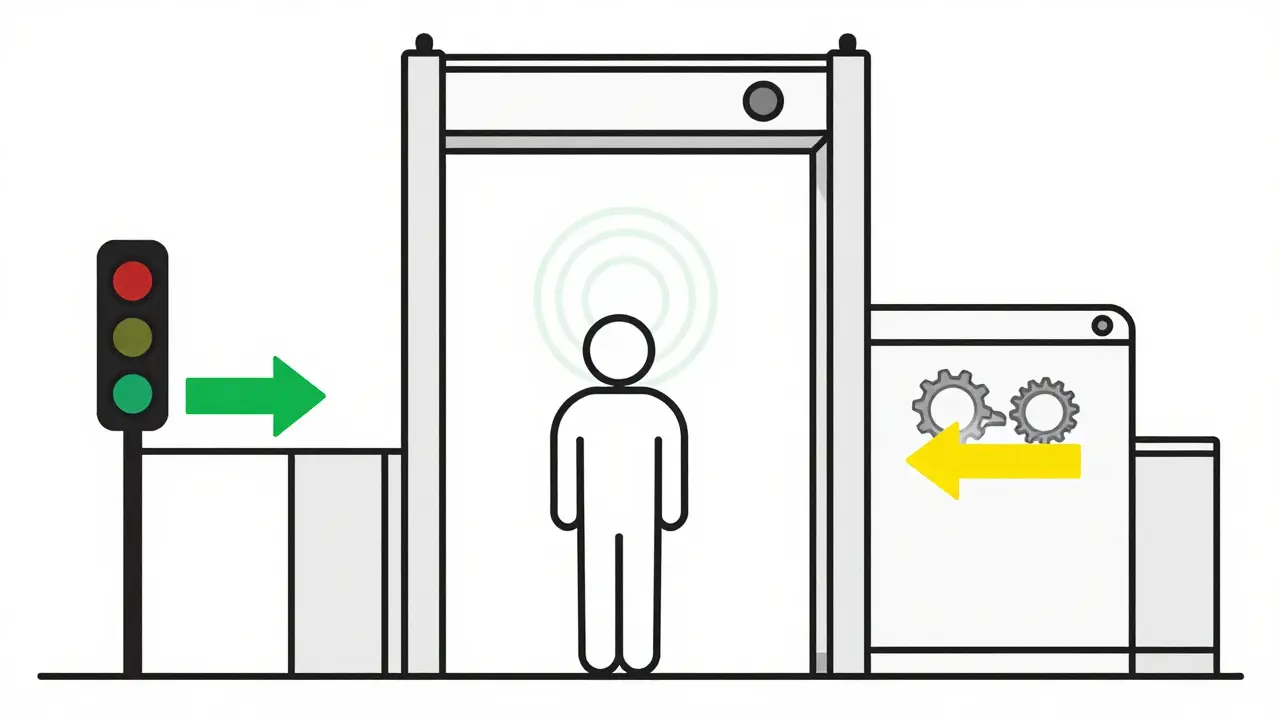
Compression alone isn't enough. You need a way to handle uncertainty. In production, a binary "safe/unsafe" decision is risky. False positives block legitimate users. False negatives let harmful content through. The solution is confidence-based abstention.
Imagine your lightweight, compressed guardrail processes a prompt. It outputs a safety score along with a confidence interval. If the model is 99% confident the input is safe, it passes it through instantly. If it is 99% confident the input is malicious, it blocks it. But what if the model is only 60% confident? That is the gray area.
Here, the system abstains from making a final decision. Instead of guessing, it escalates the request to a heavier, more accurate (and more expensive) secondary model. This tiered approach ensures you only pay for high-compute analysis when necessary. It balances the tension between recall (catching bad actors) and precision (keeping good users happy).
To implement this effectively:
- Calibrate Probabilities: Ensure your guardrail's output probabilities reflect true likelihoods. Use temperature scaling during validation to align predicted confidence with actual accuracy.
- Set Dynamic Thresholds: Don't use a fixed cutoff for all traffic. Adjust thresholds based on the user's risk profile or the sensitivity of the domain (e.g., healthcare vs. creative writing).
- Log Abstentions: Track every time the system abstains. These cases are gold mines for retraining. They represent the edge cases where your lightweight model failed to learn.
Complementary Efficiency Techniques
While Defensive M2S handles input compression, other techniques optimize the model itself. Combining these approaches creates a robust, cost-effective safety layer.
Lightweight Specialized Models
You don't always need a 70-billion-parameter model to check for toxicity. Meta’s Prompt-Guard, for example, uses only 86 million parameters. It is specialized solely for classification tasks. Deploying these small models for initial screening drastically reduces latency. They act as the first line of defense, filtering out obvious spam or clearly safe queries before they reach the larger LLMs.
Parameter-Efficient Adaptation (LoRA)
If you must use a larger model, consider LoRA-Guard (Low-Rank Adaptation for Guardrails). This technique freezes the base model and trains only a small set of additional parameters. It achieves up to 1,000x lower parameter overhead. LoRA allows you to fine-tune a powerful model for specific safety policies without the storage and memory costs of full fine-tuning. It shares knowledge between the LLM and the guardrail, ensuring consistent behavior across the stack.
Caching and Regex Pre-Checks
Never send a prompt to an LLM guardrail if you don't have to. Implement a pre-processing layer that uses regular expressions and keyword lists. This catches common patterns like SQL injection strings, known profanity, or PII (Personally Identifiable Information) formats. If the regex layer flags something as obviously safe, skip the LLM entirely. Cache decisions for identical prompts. If User A asks "What is the capital of France?" and gets approved, User B asking the same thing should hit the cache, not the GPU.
Implementation Checklist for Production
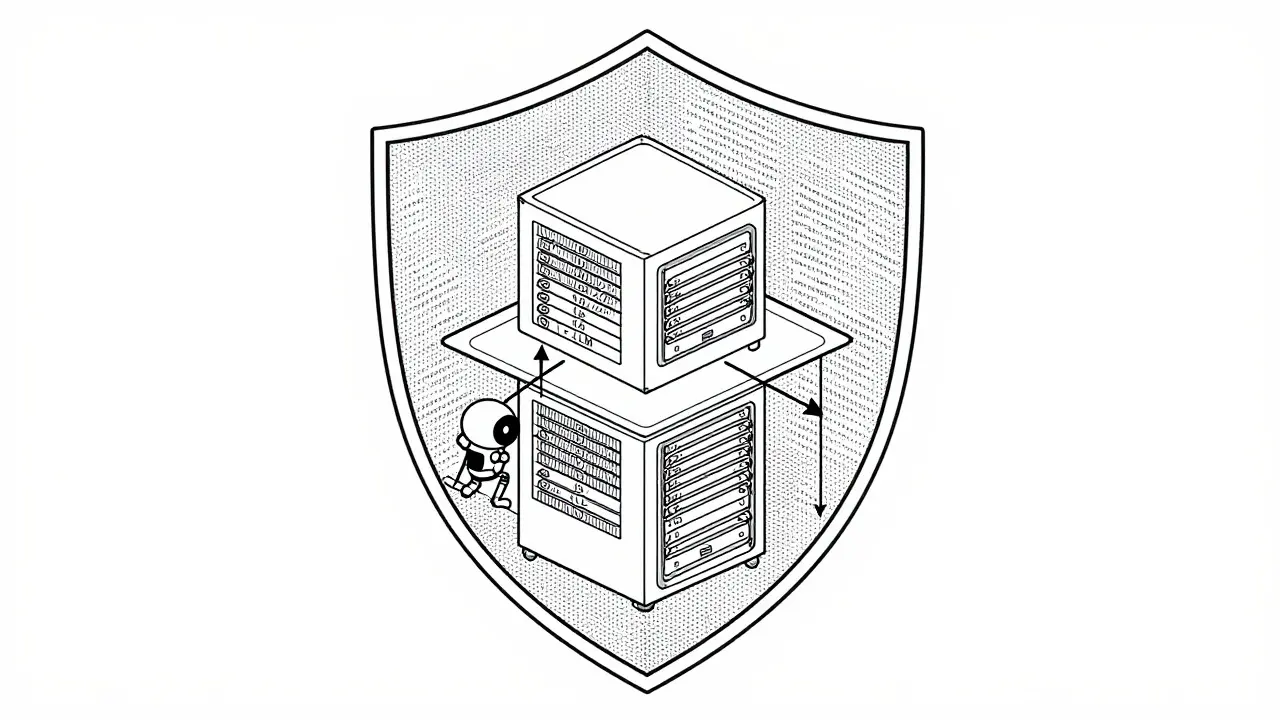
Deploying compressed guardrails requires careful orchestration. Here is a practical checklist to ensure stability and security:
- Select the Right Template: Start with Hyphenize for general chat. Test Numberize if your users engage in complex, step-by-step reasoning tasks.
- Train on Compressed Data: Do not just compress at inference time. Retrain your guardrail adapters on compressed datasets so the model learns to recognize threats in the dense format.
- Implement Tiered Routing: Build a pipeline: Regex/Keyword Check → Lightweight Model (with confidence scoring) → Heavy Model (for abstained cases).
- Monitor Latency vs. Accuracy: Set up dashboards to track the trade-off. If latency spikes, check if your abstention threshold is too low, causing too many escalations.
- Regular Retraining: Jailbreak techniques evolve. Schedule monthly updates to your compressed guardrail models using recent adversarial examples.
Future Directions: Adaptive Compression
The next frontier is adaptive template selection. Instead of hardcoding one compression method, future systems will dynamically choose the best template based on the input's characteristics. A coding query might trigger Pythonize, while a casual conversation triggers Hyphenize. This requires meta-learning models that can predict which compression strategy yields the highest safety signal-to-noise ratio for a given context.
Additionally, integrating Defensive M2S with model distillation could further shrink the footprint. By teaching a tiny student model to mimic the decisions of a larger teacher model on compressed inputs, we could achieve near-zero latency guardrails for mobile or edge devices. As LLMs become ubiquitous in IoT and embedded systems, these ultra-lightweight safety mechanisms will be essential.
Building production guardrails for compressed LLMs is not just about saving money. It is about enabling scalable, responsible AI. By combining semantic compression like Defensive M2S with intelligent abstention mechanisms, you create a safety layer that is both fast and reliable. You stop treating safety as a bottleneck and start treating it as an optimized component of your architecture.
What is Defensive M2S in the context of LLM guardrails?
Defensive M2S (Multi-turn to Single-turn) is a compression technique that transforms long, multi-turn conversation histories into compact single-turn prompts. It uses templates like hyphenize, numberize, or pythonize to reduce token count by up to 94% while preserving the semantic information needed to detect safety violations and jailbreak attempts.
How does confidence-based abstention work?
Confidence-based abstention allows a lightweight guardrail model to decline making a decision when its confidence score is below a certain threshold. Instead of risking a false positive or negative, the system escalates the ambiguous case to a more powerful, slower, and more accurate model for deeper analysis. This optimizes resource usage by only applying heavy computation when necessary.
Why is compressing guardrail inputs better than just using smaller models?
Smaller models often lack the nuanced understanding required to detect sophisticated jailbreaks. Compressing the input allows you to use highly capable models on a much smaller dataset. This retains the detection accuracy of larger models while achieving significant latency and cost reductions. It addresses the root cause of inefficiency: excessive context length, not just model size.
Which compression template performs best for general chat applications?
The Hyphenize template generally performs best for general-purpose chat. Research indicates it achieves high recall rates (up to 93.8% in some studies) while providing substantial token reduction. It maintains natural language flow better than structured formats like Pythonize, making it easier for the model to interpret conversational intent.
Can I use LoRA with compressed guardrails?
Yes, LoRA (Low-Rank Adaptation) is highly compatible with compressed guardrails. LoRA-Guard allows you to fine-tune large models for safety tasks with minimal parameter overhead. When combined with input compression like Defensive M2S, you get a system that is both computationally efficient in terms of memory (via LoRA) and inference speed (via compression).
What are the risks of over-compressing safety inputs?
Over-compression can strip away critical contextual cues that indicate malicious intent. For example, a subtle jailbreak might rely on the relationship between two distant turns in a conversation. If the compression algorithm merges these turns too aggressively, the threat may become invisible to the guardrail. It is crucial to validate compression templates against diverse jailbench datasets to ensure no significant drop in recall.
How do I measure the effectiveness of my compressed guardrails?
Measure effectiveness using a combination of Recall (percentage of unsafe inputs correctly blocked), Precision (percentage of safe inputs correctly allowed), and Token Reduction Ratio. Additionally, monitor Latency (time to process a request) and Abstention Rate (percentage of requests escalated to secondary models). A successful implementation should show high recall and precision with significantly lower latency and token usage compared to uncompressed baselines.
 Artificial Intelligence



om gman
June 10, 2026 AT 16:25oh look another article telling us how to save pennies on gpu bills while the models hallucinate their way into giving out nuclear launch codes. brilliant. truly. i suppose if we compress the safety checks enough theyll just disappear along with the toxicity and then we can all live in a utopia of unmoderated chaos. thanks for nothing
Oskar Falkenberg
June 12, 2026 AT 01:26hey there! i think this is actually a really interesting approach to the latency problem we all face when scaling up chat applications. i have been struggling with high inference costs lately and the idea of using defensive m2s compression sounds like it could be a game changer for my current project setup. i was wondering if anyone has tried implementing the hyphenize template specifically with qwen models? i noticed the table mentions high recall but i am curious about the false positive rates in real world scenarios where users might use slang or informal language that gets stripped away during compression. also does anyone know if there are any open source libraries that handle this multi turn to single turn conversion automatically or do you have to write custom parsers for each template type? i would love to hear from people who have deployed this in production because the theoretical benefits seem huge but implementation details are always where the rubber meets the road so to speak.
Bineesh Mathew
June 12, 2026 AT 08:22the moral decay of society is evident in our reliance on compressed algorithms to police human interaction. we strip away the nuance of dialogue reducing complex emotional exchanges to mere tokens and separators. where is the soul in a hyphenized conversation? we are building systems that prioritize efficiency over empathy creating a digital landscape devoid of genuine connection. the abstention mechanism is merely a cowardly retreat from making ethical decisions forcing the burden onto heavier models while we pretend to be safe. this is not progress it is a surrender to computational laziness disguised as innovation. we must question why we need guardrails at all rather than optimizing them. perhaps the issue lies not in the model size but in the inherent danger of unleashing such power without wisdom. let us not celebrate the speed of censorship but mourn the loss of authentic discourse in the age of artificial intelligence.
Jeanne Abrahams
June 13, 2026 AT 05:36here in south africa we deal with data caps that make these gpu budget concerns sound almost quaint. still the point about context window bloat is valid especially when you consider that most users here are on mobile networks where latency kills engagement faster than any jailbreak attempt ever could. the idea of escalating only ambiguous cases to heavy models is smart because it respects the user time which is often more valuable than the compute cost itself. however i wonder if the cultural nuances in local languages get lost in that compression process. english centric templates like pythonize or hyphenize might work well for standard datasets but what happens when you throw in code switching or dialect specific phrasing? it feels like we are optimizing for a very specific type of user behavior while ignoring the messy reality of global communication patterns.
Caitlin Donehue
June 15, 2026 AT 03:08i guess this makes sense from an engineering perspective even if it feels a bit dystopian to automate moderation so aggressively.