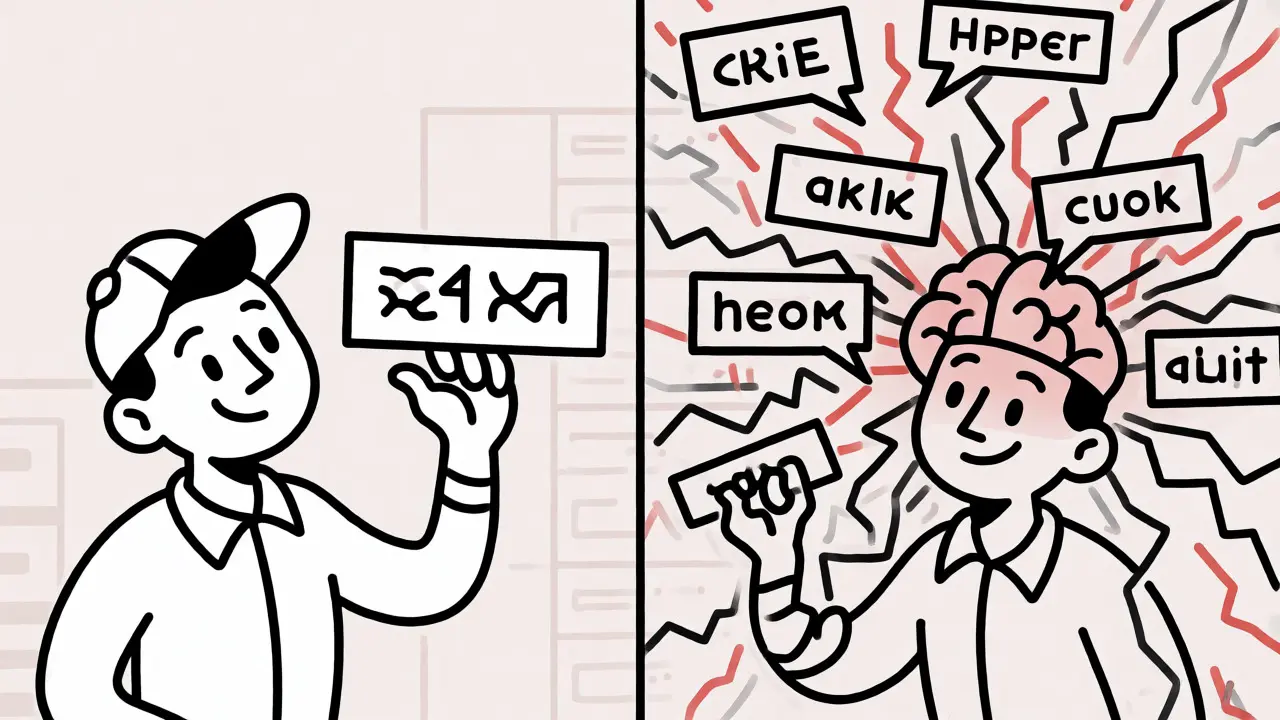
You tweak a prompt. The output looks better. You ship it. Three days later, support tickets spike because the model started hallucinating on edge cases you forgot to test. Sound familiar? This is the trap of "vibes checking"-relying on intuition rather than data when optimizing Generative AI systems that rely on large language models (LLMs) to produce text, code, or other content based on natural language instructions.
As organizations move from pilot projects to production systems serving millions of users, intuition breaks down. You need rigor. You need A/B Testing Prompts a controlled experimentation methodology comparing two or more prompt variants fed to LLMs to identify which version produces superior outputs according to predefined success metrics. It’s not just about making the AI sound nicer; it’s about systematically proving that your changes improve key performance indicators like accuracy, latency, cost, or conversion rates.
Why Intuition Fails at Scale
Prompt engineering feels like art until you try to scale it. A single prompt change might improve clarity for one user segment while degrading performance for another. Without controlled experiments, you’re guessing. HubSpot research highlights this gap: 55% of users identified experimenting with different prompts as the most effective way to implement generative AI, yet many teams still lack structured frameworks to do so.
The core problem is attribution. When performance shifts, was it the new GPT-4o the latest multimodal model from OpenAI capable of processing text and images? Was it the temperature setting? Or did the prompt structure finally click? A/B testing isolates variables. It transforms subjective quality assessments into objective data points, allowing you to distinguish between noise and genuine improvement.
The Four Variables You Can Test
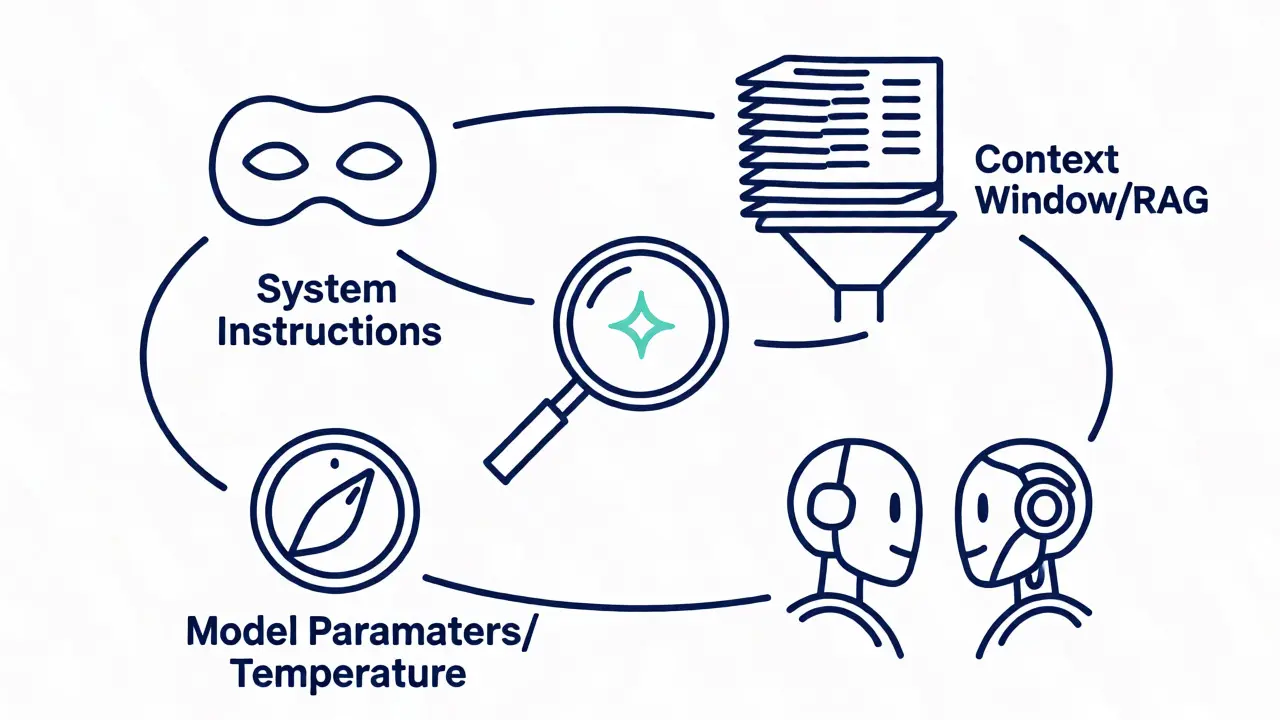
To run meaningful experiments, you need to know what you’re changing. Most prompt optimization falls into four buckets:
- System Instructions: The core persona and behavioral constraints. Does telling the model to be "concise" actually reduce token usage without losing accuracy?
- Context Window: Data injected via Retrieval-Augmented Generation (RAG) a technique that retrieves relevant documents from an external knowledge base and injects them into the prompt to ground the model's response. How does adding three versus five retrieved chunks affect factuality?
- Model Parameters: Hyperparameters like Temperature a parameter controlling the randomness of the model's output, where lower values make responses more deterministic and higher values increase creativity, top-p, and frequency penalty. These control creativity versus consistency.
- Model Architecture: Comparing different LLMs entirely, such as switching from Claude 3.5 Sonnet an advanced LLM from Anthropic known for strong reasoning capabilities to GPT-4o, or testing quantized versions of open-source models like Llama 3 Meta's open-weight large language model series.
Tools like Maxim’s Playground++ allow engineers to version these variables directly from a UI, enabling rapid iteration without code deployments. But having the tool isn’t enough; you need a workflow.
Building a Scalable Experimentation Framework
Platforms like Braintrust have codified the process into four distinct stages. Adopting this structure prevents regressions and ensures documentation.
- Playground: Run side-by-side comparisons of prompt variants. Track quality scores, latency, cost, and token usage automatically. This is where you iterate quickly.
- Experiment: Snapshot winning variants as immutable records. This creates a historical trail, crucial for auditing why certain decisions were made months ago.
- CI/CD Integration: Use experiments as quality gates. Before deploying a new prompt to production, it must pass automated tests against a golden dataset. If the new variant fails, the pipeline stops.
- Production Monitoring: Ship with evidence. Continue monitoring real-world performance to catch drift over time.
This framework addresses three critical needs: iterating safely, comparing models objectively, and evaluating changes against consistent test datasets. It turns prompt engineering from a solo craft into a team sport with shared standards.
Multivariate Testing: Model vs. Prompt
Sometimes, you don’t just want to test the prompt; you want to know if a better model matters more than a better prompt. PostHog’s tutorial demonstrates multivariate testing by creating three variants simultaneously:
| Variant | Model | Prompt Strategy | Goal Metric |
|---|---|---|---|
| Control | gpt-3.5-turbo | "Generate a recipe using these ingredients" | User Feedback (+1/-1) |
| Model Change | GPT-4o | Same as Control | User Feedback (+1/-1) |
| Prompt Change | gpt-3.5-turbo | "Generate a healthy high-protein recipe..." | User Feedback (+1/-1) |
In this scenario, researchers captured user feedback as the goal metric. Clicking "Yes" assigned a value of +1; "No" assigned -1. This quantitative approach reveals whether upgrading to GPT-4o yields a better return on investment than simply refining the prompt instruction. Often, the cheaper model with a better prompt wins on cost-efficiency.
Evaluation Metrics: Beyond Vibes
What counts as "better"? SEOJuice’s framework for search engine optimization contexts offers a concrete example. Their KPIs include organic clicks, impressions in Google’s AI Overviews, and citations within ChatGPT answers. For general applications, you need a mix of subjective and objective metrics.
Subjective Metrics: Human panels rating relevance, tone, and helpfulness. While valuable, scaling human review is expensive and slow.
Objective Metrics: Factuality scores, length, latency, and cost per token. To bridge the gap, practitioners increasingly use the LLM-as-a-Judge a pattern where a separate LLM evaluates the output of another LLM against specific criteria, enabling automated scoring at scale. An evaluator model scores outputs for coherence, accuracy, or adherence to instructions. However, beware of pitfalls like length bias, where judges prefer longer answers regardless of quality, or data contamination, where test examples leak into training sets.

Risk Mitigation and Staged Rollouts
Deploying a new prompt to all users at once is risky. A/B testing enables staged rollouts. Start with 5% of traffic using the experimental variant. Monitor error rates, user satisfaction, and downstream business metrics. If the variant performs well, gradually increase traffic to 20%, then 50%, then 100%. This approach mitigates the risk of catastrophic failures affecting your entire user base.
Randomization is key here. Assign users randomly to control or experimental groups to avoid selection bias. If you only show the new prompt to power users, their higher tolerance for complexity might skew results, masking issues for casual users.
The Iteration Mindset
First iterations rarely produce optimal results. Treat prompt optimization as an empirical science. Build upon what worked, discard what failed, and refine progressively. Document every experiment. Why did Variant B fail? Was it too verbose? Did it miss context? These insights inform future prompts.
Organizations that treat A/B testing as part of a continuous improvement pipeline-not a one-off task-see compounding benefits. They build libraries of winning patterns, establish baseline expectations, and reduce deployment anxiety. As generative AI becomes embedded in core products, the ability to measure and validate changes separates successful implementations from costly experiments.
What is the difference between A/B testing prompts and traditional software A/B testing?
Traditional software A/B testing compares discrete UI or feature changes. Prompt A/B testing compares natural language inputs to non-deterministic models. Outputs vary even with identical prompts due to model randomness, requiring larger sample sizes and robust statistical methods to isolate signal from noise.
How do I evaluate prompt performance without manual review?
Use the LLM-as-a-Judge pattern. Deploy a separate, often stronger, LLM to score outputs against specific criteria like factuality, relevance, or tone. Automate this process within your CI/CD pipeline to enable rapid, scalable evaluation without human bottlenecks.
Can I test multiple variables at once?
Yes, through multivariate testing. You can simultaneously test different models, prompts, and parameters. However, ensure your sample size is sufficient to detect effects across combinations. Start with simple A/B tests before moving to complex multivariate setups to maintain statistical validity.
What are common pitfalls in prompt A/B testing?
Key pitfalls include length bias (judges preferring longer outputs), data contamination (test data leaking into training), and selection bias (non-random user assignment). Additionally, relying solely on benchmark scores instead of real-world user metrics can lead to poor production performance.
Which tools support prompt A/B testing?
Specialized platforms like Braintrust, Maxim, and PostHog offer dedicated features for prompt versioning, experimentation, and evaluation. Many LLM API providers also include basic logging and comparison tools, but dedicated platforms provide deeper analytics and CI/CD integration.
 Artificial Intelligence