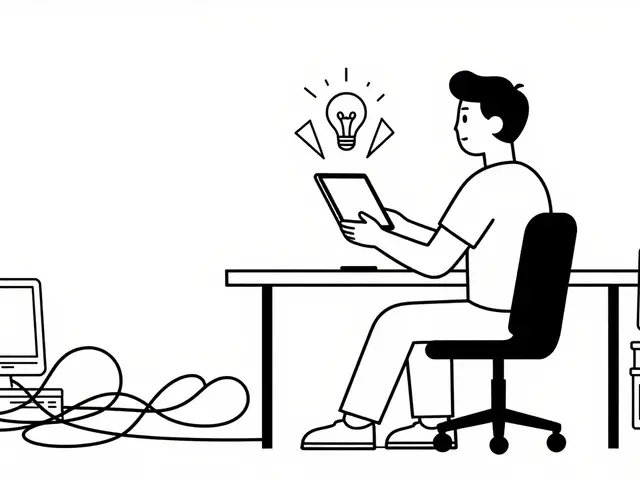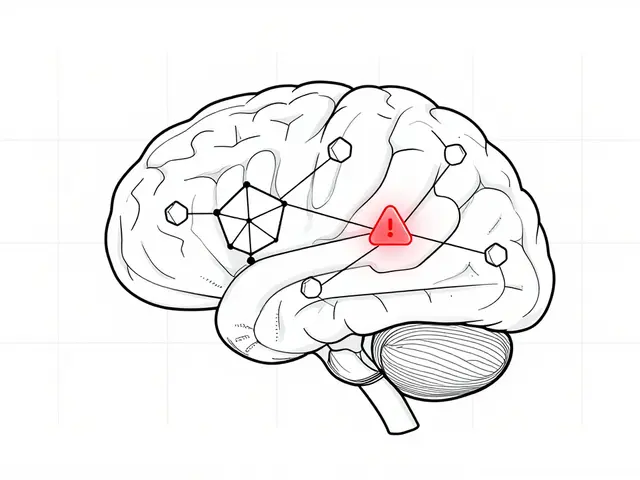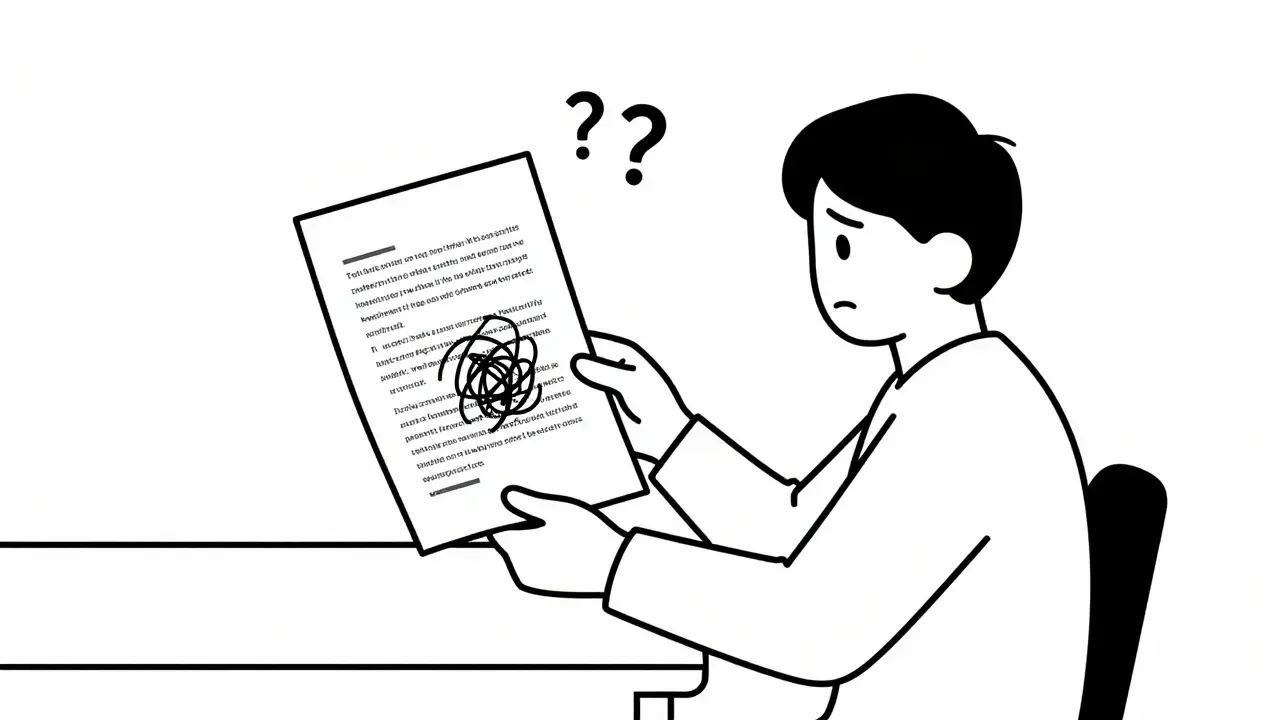
We’ve all seen it happen. You ask an AI assistant for a specific fact, and it gives you a confident, perfectly structured answer that is completely wrong. It sounds right. It looks professional. But if you check the source, it doesn’t exist. This isn't just a glitch; it's a fundamental feature of how Large Language Models (LLMs) work.
The rapid adoption of tools like ChatGPT, Claude, and Gemini has outpaced our understanding of their flaws. When OpenAI released ChatGPT in late 2022, usage exploded to 100 million monthly active users within two months. That speed created a massive gap between what people think these models can do and what they actually can do. Without proper user education, we risk building critical workflows on sand.
Why Do LLMs Lie? Understanding Hallucinations
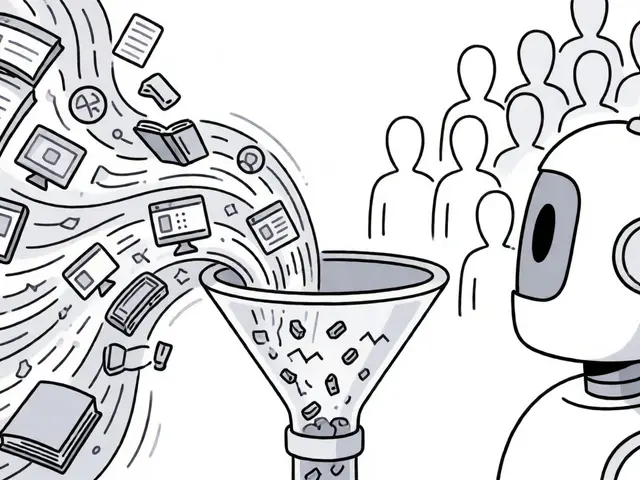
To set realistic expectations, we first need to understand why errors happen. The term "hallucination" describes when an LLM generates information that is plausible but false. According to insights from DNV Technology Insights, this happens because LLMs are essentially lossy compression algorithms of the internet. They don't "know" facts; they predict the next likely word based on patterns in their training data.
This probabilistic nature means models often prioritize fluency and style over factual correctness. They can be "confidently wrong." For example, a model might invent a court case citation or a medical study because the structure of the reference looks correct, even if the content is fabricated. Users need to know that an LLM’s confidence score is not a measure of truth-it’s a measure of statistical probability.
- Pattern Matching, Not Knowledge: LLMs mimic the form of expertise without possessing the substance.
- Training Data Bias: If the training data contains biases, the output will reflect them.
- Context Window Limits: Models have finite memory and may "forget" earlier parts of long conversations.
The Danger of Automation Bias and Overreliance
One of the biggest hurdles in user education is combating automation bias. This is the tendency for humans to trust machine recommendations over their own judgment, especially when the machine seems competent. Research cited by the Tufts Medical Center Center for the Evaluation of Value and Risk in Health (CEVR) shows that users frequently accept AI-generated recommendations without question, leading to errors in task performance.
In higher education, this manifests as students submitting AI-written essays without reading them. In professional settings, it looks like lawyers filing briefs with fake citations generated by an LLM-a real-world scenario that led to federal sanctions in 2023. The ACM Digital Library highlights that users often imagine LLMs as "Guardians" who protect them from mistakes. This is a dangerous misconception. The human must remain the guardian.
| Misconception | Reality |
|---|---|
| "The AI knows the truth." | The AI predicts probable text based on past data. |
| "If it sounds confident, it's correct." | Confidence is stylistic, not factual. |
| "The AI remembers everything I told it." | Context windows are limited; older info gets dropped. |
| "It's unbiased because it's a computer." | It inherits all biases present in its training data. |
Bias and Fairness: Who Does the Model Serve?
Bias is not just a social justice issue; it’s a functional limitation. A 2024 article in PubMed Central (PMC11327620) illustrates this with a stark medical example. An LLM trained predominantly on Western cases of alcoholic cirrhosis might provide inaccurate diagnostic guidance for patients with hepatitis B-induced cirrhosis, which is more common in other regions. The model isn't "prejudiced" in a human sense; it’s statistically skewed toward the majority of its training data.
User education must include lessons on recognizing these gaps. Professionals in healthcare, law, and HR need to ask: "Whose voices are missing from this answer?" If an LLM suggests hiring practices based on historical data, it might perpetuate past discrimination. Educating users to spot these blind spots is crucial for fair outcomes.
Technical Levers: Temperature and Context
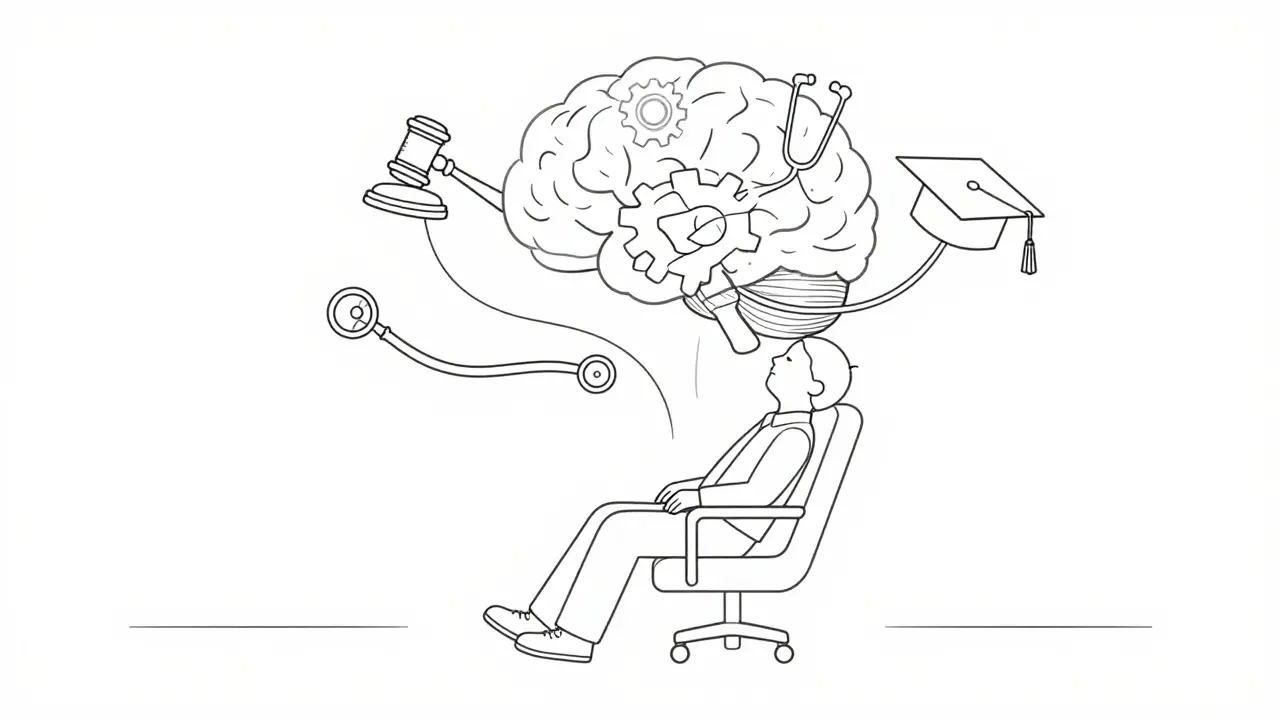
Part of responsible use involves understanding the technical controls available to you. Many platforms allow users to adjust parameters like "temperature." As noted by ML6.eu, setting the temperature close to 0 makes outputs more deterministic and less creative, which is better for factual tasks. Higher temperatures (e.g., 0.7+) increase diversity but also the likelihood of hallucinations.
However, most end-users don't see these settings. Therefore, interface design plays a role in education. Tools should clearly distinguish between retrieved sources and model-synthesized commentary. If a system visually highlights where an answer comes from, users learn to separate evidence from speculation. This is known as Retrieval-Augmented Generation (RAG), and it helps ground answers in verified documents rather than raw memory.
Who Is Responsible for Education?
The responsibility for teaching users about LLM limitations is shared. It’s not enough for developers to add a small disclaimer at the bottom of a chat window. We face "disclaimer fatigue," where users click through warnings without reading them, similar to cookie banners.
- Developers: Must build transparency into the product. Use clear labels like "AI-generated content" and explain uncertainty.
- Organizations: Companies and universities must create policies. Define what constitutes acceptable use versus plagiarism or negligence.
- Users: Individuals must develop critical thinking skills. Treat every AI output as a draft, not a final product.
In high-risk domains like healthcare and law, this education is a safety necessity. The PMC article argues for actionable recommendations that help students cross-check LLM suggestions against established guidelines, such as WHO protocols or national clinical practice standards.
Practical Steps for Better Verification
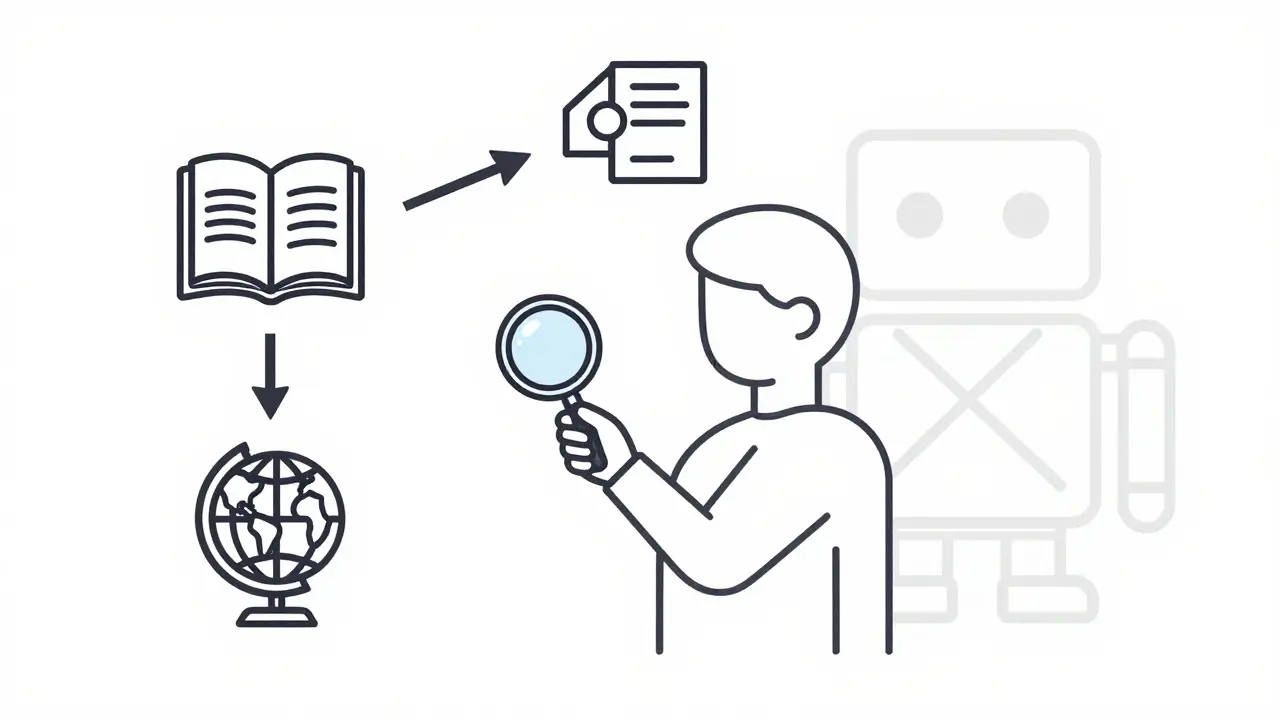
How do you actually teach someone to verify AI output? It requires moving beyond theory to practice. Effective training programs include:
- Hallucination Hunts: Exercises where instructors intentionally prompt the AI to make mistakes, then guide users to detect them.
- Source Triangulation: Requiring users to verify any factual claim against at least two independent, authoritative sources.
- Critical Prompting: Teaching users to ask the AI to cite its sources or to admit when it doesn't know something.
For instance, instead of asking "What is the capital of France?", a user should be taught to ask, "What is the capital of France, and please provide a link to a recent government page confirming this." If the model cannot provide the source, the user learns to distrust the answer.
The Future of AI Literacy
As LLMs evolve, so too must our educational strategies. With larger context windows and multimodal capabilities (processing images and audio), new risks emerge, such as privacy leaks and visual misinterpretations. Furthermore, researchers warn of "model collapse," where future models trained on AI-generated data degrade in quality over time.
User education won't be a one-time workshop. It needs to become part of core curricula, much like digital literacy or statistics became standard in previous decades. By setting expectations responsibly now, we ensure that AI remains a tool for augmentation, not a replacement for human judgment.
What is an LLM hallucination?
An LLM hallucination occurs when the model generates information that is plausible-sounding but factually incorrect or entirely fabricated. This happens because LLMs predict the next likely word based on patterns rather than accessing a database of true facts.
Why is user education important for AI?
User education prevents overreliance and automation bias. Without understanding limitations like bias and hallucinations, users may make critical errors in fields like healthcare, law, and education by trusting inaccurate AI outputs.
How can I reduce AI bias in my results?
You can reduce bias by cross-referencing AI outputs with diverse, authoritative sources. Be aware that LLMs are trained on existing data, which may contain historical biases. Always ask whose perspective might be missing from the answer.
What is the role of 'temperature' in LLM outputs?
Temperature controls the randomness of the model's output. A low temperature (near 0) makes responses more deterministic and factual, while a high temperature increases creativity but also the risk of hallucinations.
Is AI liable for errors it makes?
Currently, liability typically rests with the human user or the organization deploying the tool. Courts and professional bodies expect humans to verify AI-generated content before using it in official documents or decisions.
 Artificial Intelligence