
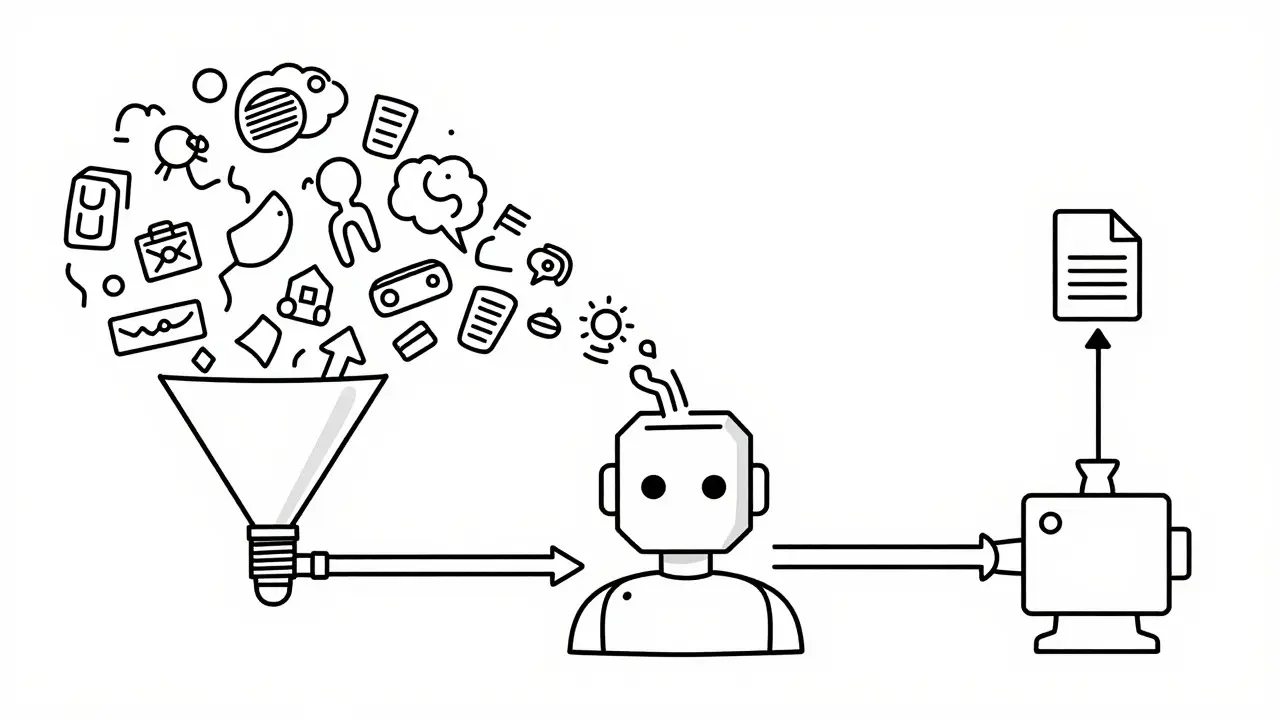
Imagine you hired a brilliant generalist consultant. They can write code, analyze markets, and draft emails. But for your specific compliance audit, they keep missing subtle regulatory nuances. Do you retrain them from scratch on just that one task, or do you teach them how to follow complex instructions better? This is the exact dilemma facing AI teams in 2026. The choice between instruction tuning and task-specific fine-tuning isn't just a technical detail; it determines whether your model becomes a versatile assistant or a brittle specialist that breaks when asked to do anything else.
Most teams default to one approach without understanding the trade-offs. Some burn through GPU hours training a model on 500 examples of financial documents, only to find it can no longer summarize text. Others spend months curating diverse instruction datasets, only to realize their model lacks the precision needed for niche medical coding. Getting this right saves time, money, and headaches. Let's break down exactly how these strategies work, where they shine, and how to pick the winner for your use case.
The Core Difference: Specialists vs. Generalists
To understand the choice, we first need to define what we are actually modifying. A base Large Language Model (LLM), like Meta's Llama 3, is trained to predict the next token. It knows language but doesn't inherently know how to follow human commands. That's where adaptation comes in.
Instruction Tuning is a process that teaches a model to interpret and execute human instructions by training on diverse prompt-response pairs across many tasks. Think of it as teaching a new employee company culture, communication norms, and how to handle various types of requests. It makes the model a better listener and responder. In contrast, Task-Specific Fine-Tuning involves training the model on data for a single, narrow objective, such as classifying sentiment or extracting dates from invoices. This turns the model into a specialized tool optimized for one job.
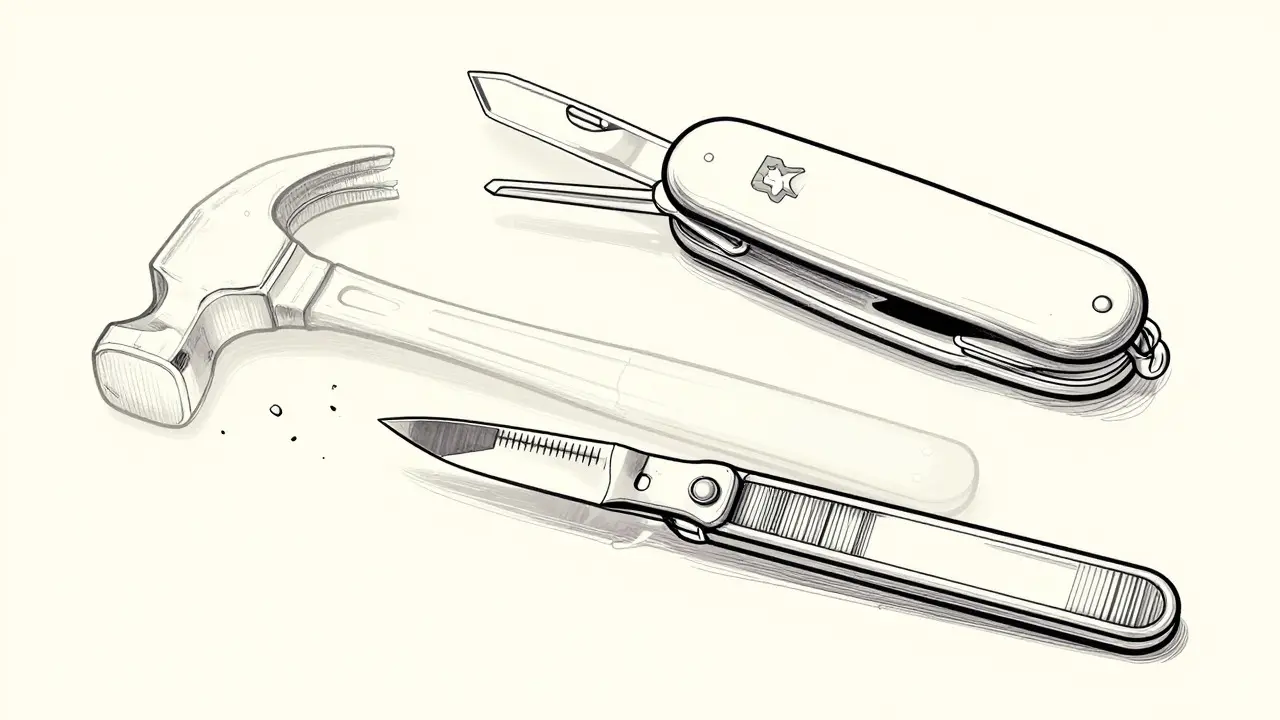
The fundamental difference lies in scope. Instruction tuning aims for versatility and zero-shot capability on unseen tasks. Task-specific tuning aims for peak performance on one defined metric. One builds a Swiss Army knife; the other sharpens a scalpel.
When to Choose Instruction Tuning
If your application involves user interaction, chatbots, or any scenario where the input varies significantly, instruction tuning is usually the right call. According to Gartner's LLM Deployment Report from January 2026, 87% of commercial LLM deployments now incorporate some form of instruction tuning. Why? Because users don't speak in rigid formats. They ask questions, give vague commands, and expect structured outputs.
Instruction-tuned models show a 47% improvement in accuracy on complex, multi-step prompts compared to base models. If you are building a customer support bot, a personal assistant, or an internal knowledge search tool, you need a model that understands intent, not just patterns. It also preserves general capabilities better. When you further specialize an instruction-tuned model, it retains about 83.2% accuracy on unseen tasks, whereas a base model drops to 60.9%. That resilience is critical for production environments where edge cases are inevitable.
However, be prepared for data challenges. You need diverse, high-quality instruction datasets. Curating these takes time. Expect data preparation costs to be 30-40% higher than for task-specific approaches. If you have a small team with limited data engineering resources, this is a significant hurdle.
When Task-Specific Fine-Tuning Wins
There are scenarios where versatility is less important than precision. If you are working in a highly regulated industry like healthcare or finance, and the task is narrowly defined, task-specific fine-tuning often delivers superior results. For example, Mistral Healthcare’s specialized model achieved 98.7% accuracy in ICD-10 medical coding through targeted fine-tuning. An instruction-tuned model might get close, but rarely hits that level of consistency on a single, repetitive task.
This approach is also computationally cheaper if you already have labeled data for that specific task. You typically need only 500 to 1,000 high-quality examples. Training can be done in 12 to 48 hours on standard GPU clusters. It’s fast, focused, and effective for its intended purpose.
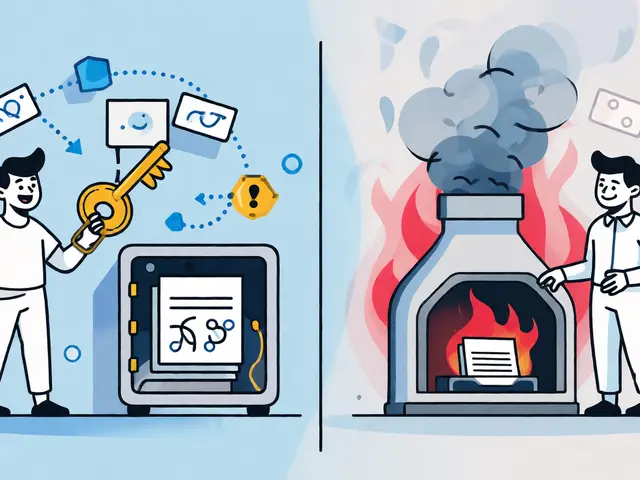
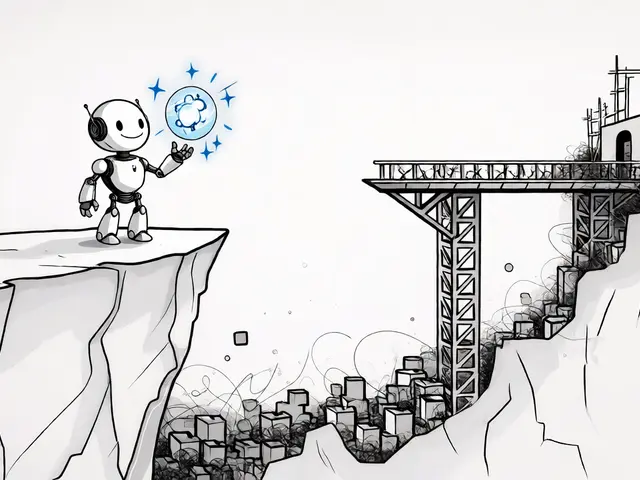
The catch? Catastrophic forgetting. When you fine-tune a model on a single task, it often loses abilities it previously had. Research indicates up to 38% degradation in unrelated capabilities. If your model needs to do more than just classify invoices, you risk breaking its ability to summarize, translate, or answer general questions. You end up with a model that is excellent at one thing and useless at everything else.
The Technical Reality: Compute and Efficiency
Let’s talk numbers, because budget matters. Full fine-tuning is expensive. But thanks to techniques like LoRA (Low-Rank Adaptation), introduced by Microsoft in 2021, we can adapt large models by updating only 0.1-1% of parameters. This reduces memory requirements dramatically. For a 7B parameter model, memory usage drops from 80GB to just 8-10GB. This makes both instruction tuning and task-specific tuning accessible to smaller organizations.
However, the computational load differs. Instruction tuning requires processing diverse, longer sequences. Advanced methods like HINT (Hybrid Instruction Tuning) can reduce FLOPs by 2-4x by optimizing how instructions are processed. If you are resource-constrained, look into Parameter Efficient Fine-Tuning (PEFT) techniques. Organizations using PEFT reduced implementation time by 35% compared to full fine-tuning. It’s not just about accuracy; it’s about how quickly you can iterate.
| Feature | Instruction Tuning | Task-Specific Fine-Tuning |
|---|---|---|
| Primary Goal | Versatility & Instruction Following | Peak Performance on Single Task |
| Data Requirement | Diverse, Multi-task Pairs (15k+) | Narrow, Labeled Examples (500-1k) |
| Zero-Shot Capability | High (Retains 83.2% on unseen tasks) | Low (Drops to 60.9% on unseen tasks) |
| Catastrophic Forgetting Risk | Low | High (Up to 38% degradation) |
| Implementation Time | 4-6 Weeks | 2-3 Weeks |
| Best Use Case | Chatbots, Assistants, General QA | Medical Coding, NER, Classification |
The Hybrid Approach: Best of Both Worlds
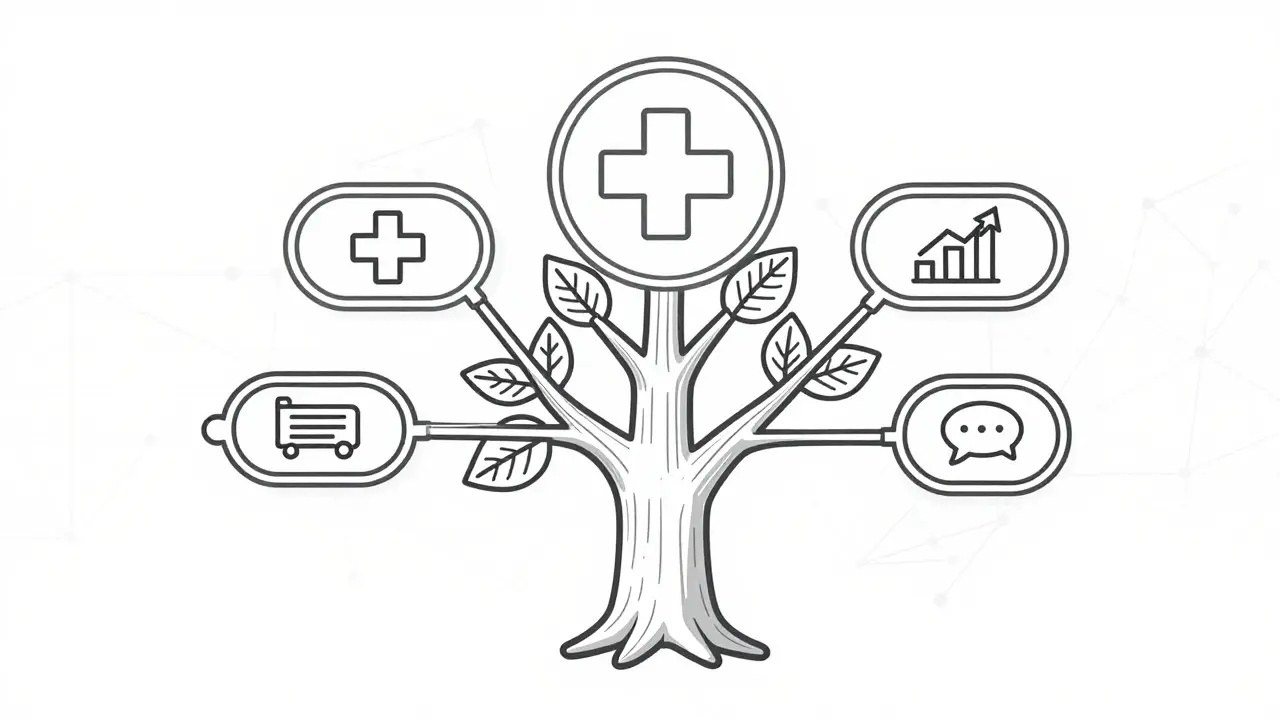
Here’s the twist: you don’t always have to choose. The industry is moving toward hybrid strategies. Forrester predicts that by 2027, 68% of enterprise LLM deployments will combine instruction tuning with targeted task-specific adapters. This means you start with a robust, instruction-tuned base model and then apply lightweight, task-specific adapters (like LoRA matrices) for specific functions.
Meta’s release of Llama3-70B-Instruct in January 2026 introduced 'modular instruction tuning,' which allows selective specialization without catastrophic forgetting. Unrelated task performance dropped by only 4.2%, compared to 18.7% for conventional fine-tuning. This is a game-changer. It lets you build a general-purpose assistant that is also an expert in your specific domain.
JPMorgan Chase adopted this approach in 2024. They used an instruction-tuned Llama2-13B model for financial document analysis. It achieved 89.4% accuracy across 12 different financial tasks while maintaining 82.7% zero-shot performance on unseen tasks. Their previous task-specific model scored higher on its primary task (94.1%) but failed miserably on secondary tasks (58.3%). The hybrid model won because it was reliable across the board.
Practical Steps to Decide Your Strategy
So, how do you make the call for your project? Follow this decision tree:
- Define the Scope of Input: Will users provide varied, unstructured inputs? If yes, lean toward instruction tuning. If inputs are strictly formatted (e.g., CSV files, fixed API calls), task-specific tuning is viable.
- Assess Data Availability: Do you have 15,000+ diverse instruction pairs? If not, consider using public datasets like Stanford's HELM or synthetic data generation. If you only have 1,000 labeled examples for one task, task-specific tuning is faster to implement.
- Evaluate Maintenance Costs: Can you afford to retrain frequently? Task-specific models degrade faster when the domain shifts slightly. Instruction-tuned models are more stable over time but require more initial setup.
- Check Regulatory Requirements: The EU AI Act’s 2025 amendment requires documentation of instruction tuning datasets for high-risk applications. If you are in healthcare or finance, ensure your data pipeline can support this transparency.
- Start with a Baseline: Test a pre-trained instruction-tuned model (like Llama3-Instruct or Mistral-Instruct) on your specific task. If it performs within 5% of your target accuracy, you may not need heavy fine-tuning at all. If it falls short, add task-specific adapters.
A common mistake is jumping straight to full fine-tuning. Start simple. Use prompt engineering first. Then move to RAG (Retrieval-Augmented Generation). Only fine-tune when those methods fail. And when you do fine-tune, prefer LoRA over full parameter updates to keep your options open.
Frequently Asked Questions
Is instruction tuning more expensive than task-specific fine-tuning?
Generally, yes. Instruction tuning requires larger, more diverse datasets, leading to 30-40% higher data preparation costs. However, if you use Parameter Efficient Fine-Tuning (PEFT) like LoRA, the compute cost difference narrows significantly. The main expense is in data curation, not just GPU hours.
Can I switch from task-specific to instruction tuning later?
Yes, but it’s easier to go the other way. If you start with a base model and fine-tune it specifically, you lose general capabilities. To recover, you’d need to merge weights or retrain from an instruction-tuned checkpoint. Starting with an instruction-tuned base and adding task-specific adapters is a safer, more reversible path.
What is catastrophic forgetting in LLMs?
Catastrophic forgetting occurs when a model learns a new task so well that it loses previously learned skills. In task-specific fine-tuning, this can lead to up to 38% degradation in unrelated capabilities. Instruction tuning mitigates this by exposing the model to diverse tasks, keeping its neural pathways flexible.
How much data do I need for instruction tuning?
Quality matters more than quantity, but you need diversity. Datasets like Stanford's HELM contain 15,000+ examples spanning 100+ tasks. For a solid baseline, aim for at least 5,000 high-quality instruction-response pairs covering the types of queries your users will likely ask. Synthetic data can help fill gaps in coverage.
Which approach is better for small businesses with limited budgets?
For most small businesses, starting with a pre-trained instruction-tuned model and using Prompt Engineering or RAG is the most cost-effective. If you must fine-tune, use LoRA on a small model (7B-13B parameters). Task-specific tuning is only worth it if you have a very narrow, high-volume task where accuracy is critical and general capabilities aren't needed.
 Artificial Intelligence
Brenna Gonedrman
August 27, 2026 AT 12:19Oh my GOSH, listen up because this is HUGE!
You guys are still arguing about fine-tuning like it's 2023?
The article literally says instruction tuning keeps your model from becoming a brittle idiot.
I told you all this in the last thread!
If you just train on 500 invoices, your model forgets how to speak English.
It’s not rocket science, it’s basic logic!
Why do we keep making this so hard?
Just use the Swiss Army knife, people!
Stop sharpening your scalpels and burning money on GPUs for nothing.
The data is right there in the text, look at it!
Instruction tuning is the winner, end of story.
Anyone who disagrees is just stubborn or broke.
Take a hint from JPMorgan, they got it right.
Don't be that team that breaks their own bot.
This is why we can't have nice things sometimes!
Courtney Wagstaff
August 29, 2026 AT 10:17Love the 'Swiss Army knife vs Scalpel' metaphor, honestly it clicks way better than most dry tech explainers I've seen lately.
What really stuck with me was the bit about catastrophic forgetting; it sounds like that classic movie trope where you learn one trick and forget how to walk, but for neural networks.
It makes you wonder if our brains work similarly when we hyper-focus on one project and lose track of everything else.
Anyway, the hybrid approach feels like the natural next step, kind of like how we wear different hats depending on the day.
Nice read overall, felt very grounded.
Elisabeth Ballet
August 30, 2026 AT 09:37LET'S GO TEAM!
This is exactly the clarity we need right now!
Stop overthinking the data curation and start building!
If you have the labeled examples, go for the task-specific win!
But if you want that magic zero-shot capability, instruction tuning is your best friend!
We don't have time for perfection, we have time for progress!
Grab that LoRA adapter and make it happen!
Your users are waiting for answers, not excuses!
Let's crush those benchmarks together!
Remember, resilience is key in production environments!
Don't let the edge cases scare you off!
Keep pushing forward, innovators!
The future belongs to those who adapt quickly!
Go get that accuracy boost!
You've got this, believe in your model!
Joanna Mucha
August 31, 2026 AT 05:27One must consider the ontological implications of such a binary choice, shall we not?
It is a fascinating dichotomy, isn't it, the tension between the universal and the particular?
To specialize is to limit oneself, yet to generalize is to risk mediocrity in the specific.
How exhausting it is to navigate these trade-offs without a clear moral compass.
I suppose the 'hybrid' approach is merely a cop-out for those who cannot commit to a philosophical stance.
Yet, here we are, trapped in the matrix of compute costs and data availability.
It makes one feel rather small, doesn't it, amidst these vast parameter spaces?
Perhaps we are all just tokens in a larger sequence, waiting for the next prediction.
A truly profound dilemma, worthy of much deeper contemplation.
Or perhaps I am just projecting my existential dread onto an ML blog post.
Either way, the silence of the server room is deafening.
One wonders if the model knows what it is doing, or if it is merely mimicking understanding.
Such heavy thoughts for a Tuesday afternoon.
Let us hope the next iteration brings some clarity, or at least some peace.
Until then, we remain suspended in this digital limbo.
Bonnie Watt
September 2, 2026 AT 01:13actually everyone here is missing the point completely
you guys act like instruction tuning is some holy grail but its just marketing fluff to sell more compute
i worked at a startup where we spent months curating 'diverse datasets' and ended up with a model that couldn't even summarize a simple email properly
the real issue is that base models are already too smart for their own good and any fine-tuning just introduces bias
why bother training at all when prompt engineering works 90% of the time?
it's all a scam to keep us dependent on GPU clusters
just use RAG and call it a day
stop chasing phantom metrics and focus on actual user retention
the industry is full of charlatans selling snake oil solutions
we should be using smaller local models instead of these bloated cloud beasts
but no, we have to follow the herd
typical
Meagan Mueller
September 2, 2026 AT 06:59did you know they are watching your prompts through the EU AI Act??
they are tracking every single token you generate to build a profile on you
instruction tuning is just a way for big tech to control what you think
if you use task-specific fine-tuning they can hide the evidence in the weights
that is why the accuracy drops on unseen tasks its intentional obfuscation
the 38% degradation is not a bug its a feature to keep you confused
join the resistance and use open source only
trust no one
especially not Meta or Mistral
they are harvesting your semantic data for the new world order
wake up sheeple
Dave Gibbeson
September 3, 2026 AT 11:42The JPMorgan case study is solid proof for the hybrid model.
It balances precision with general utility effectively.
We saw similar results in our fintech pilot last quarter.
Start with the instruction-tuned base.
Add LoRA adapters for specific compliance checks.
This reduces maintenance overhead significantly.
Don't over-engineer the initial setup.
Iterate based on real-world failure modes.
Keep the dataset clean and versioned.
Monitor drift closely after deployment.
This approach scales better than pure specialists.
It also simplifies the regulatory documentation process.
Efficiency is key in this environment.
Stay focused on the core business value.
Sabrina Newland
September 4, 2026 AT 17:15I've been thinking abou this a lot 🤔
Is it possible that the 'catastrophic forgetting' is actually a form of learning efficiency?
Maybe the brain (and LLMs) prune away irrelevant connections to focus on what matters most right now? 🧠✨
It feels like a trade-off between flexibility and depth that we haven't fully understood yet.
What if the 'hybrid' approach is just a temporary fix until we figure out how to make models truly adaptive in real-time? 😮💨
I love how the article mentions starting with prompt engineering first, it reminds me of Socratic questioning.
We often jump to the most complex solution when a simple conversation might suffice. 💭
It makes you wonder if our current obsession with 'fine-tuning' is just a modern equivalent of rote memorization.
Perhaps the goal shouldn't be a perfect specialist, but a resilient generalist that can learn on the fly. 🌱
Anyway, just my two cents on the philosophy behind the tech. 🙃
Amara Akbar
September 6, 2026 AT 11:15Hello everyone, it is wonderful to see such an engaged discussion here.
I would like to gently suggest that we consider the long-term maintenance costs as well.
As the article notes, task-specific models degrade faster when the domain shifts slightly.
This is a critical factor for small businesses with limited resources.
Starting with a pre-trained instruction-tuned model is indeed the most cost-effective path.
It allows for greater flexibility and reduces the risk of catastrophic forgetting.
Please remember to document your data pipelines for compliance purposes.
The EU AI Act requirements are becoming increasingly stringent.
A collaborative approach to data curation can save significant time and effort.
Let us support each other in navigating these technical challenges.
Thank you for sharing your insights so generously.
Have a productive day ahead.