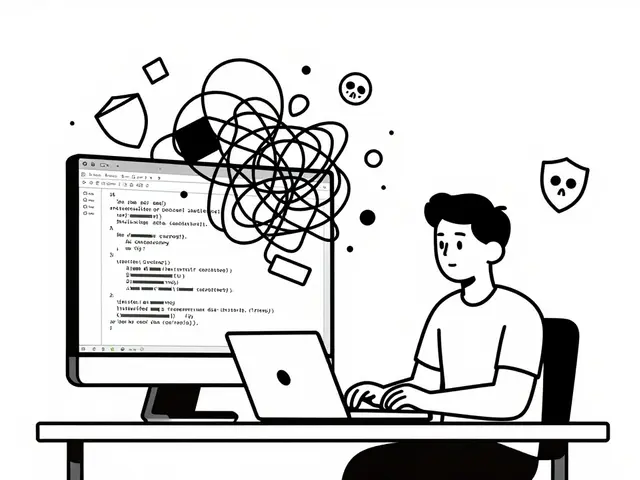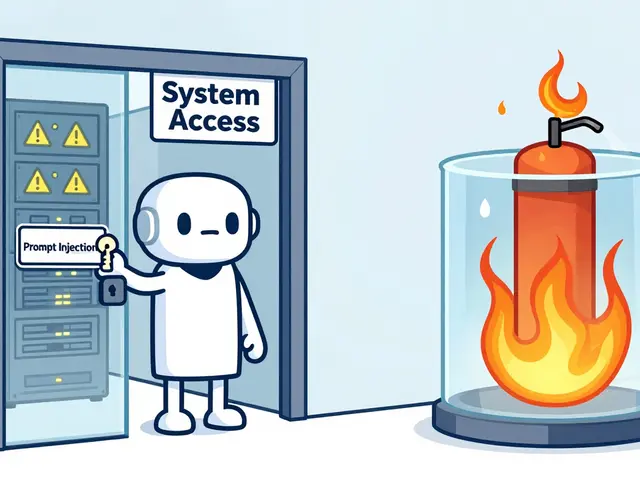
You built a cool demo. It generates marketing copy in seconds or summarizes support tickets with surprising accuracy. You showed it to leadership, got the nod, and now you are ready to scale. But here is the cold hard truth: only 14% of enterprises successfully move their generative AI proofs of concept into actual production environments. The other 86%? They stall out in what industry experts call the "valley of death." Why does this happen? Because a PoC proves that a model can do something. Production requires proving that it can do it reliably, securely, and cheaply, thousands of times a day, without breaking your existing systems.
The Illusion of Simplicity in Proof of Concept
Most teams treat a Proof of Concept (PoC) as a separate experiment from the final product. This is the first mistake. In a PoC, you control the inputs. You pick the best examples. You ignore latency spikes because no one is watching yet. You don't worry about who sees the data. But when you switch to production, the real world hits back. Unstructured user queries break your prompts. Legacy databases slow down retrieval. Security teams block API calls because they don't understand how the data flows. If you treat the PoC as just a technical demo rather than the first iteration of a production system, you are setting yourself up for failure. Dr. Andrew Ng, founder of DeepLearning.AI, argues that successful deployments treat the PoC as the initial version of the product, not a throwaway test. This mindset shift changes everything. It forces you to ask about security, cost, and integration on day one, not month six.
Why Most Generative AI Projects Stall
It isn't usually the model's fault. The technology works. The problem is organizational and operational. According to a 2023 Forrester study, organizations that view PoCs as stepping stones toward production achieve 47% higher success rates than those treating them as isolated experiments. So, what goes wrong for the rest? Three main culprits stand out.
- The Reliability Gap: Your model might hit 90% accuracy on curated test data. In production, facing messy, diverse user inputs, that number often drops to 65-78%. Without proper guardrails, hallucinations double in frequency.
- Cost Shock: Running a few requests during a demo costs pennies. Scaling to millions of tokens per month with enterprise-grade security encryption and logging can increase computational costs by 20-30% compared to the PoC environment.
- Integration Friction: Connecting an LLM to your CRM (like Salesforce) or ERP (like SAP) isn't plug-and-play. It requires robust connectors, OAuth 2.0 authentication, and careful data mapping. 59% of developers report significant challenges here.
You also face the "illusion of simplicity." Users see a chatbot interface and assume the backend is simple. They don't see the vector database updates, the prompt versioning, or the compliance checks. When things break, stakeholders blame the AI team for lack of transparency, not the complexity of the underlying architecture.
Defining Success Before You Build
If you cannot measure it, you cannot scale it. Many failed implementations lack explicit ROI evaluation mechanisms. Gartner notes that this metric is missing in 68% of failed projects. Don't just aim for "better customer service." Define specific, measurable goals. For example, "reduce average handling time by 30%" or "increase lead qualification speed by 50%."
Technical metrics matter too, but they need context. Standard NLP scores like BLEU or ROUGE are useful for translation tasks but less so for creative generation. Instead, focus on human evaluation scores. Aim for a coherence and relevance rating of at least 4.2 out of 5. For mission-critical applications, factual accuracy must exceed 95%. How do you verify this? By building an evaluation pipeline that runs continuously, not just once at launch. Use tools like Weights & Biases or MLflow to track these metrics over time. If accuracy dips below your threshold, the system should alert your team immediately.
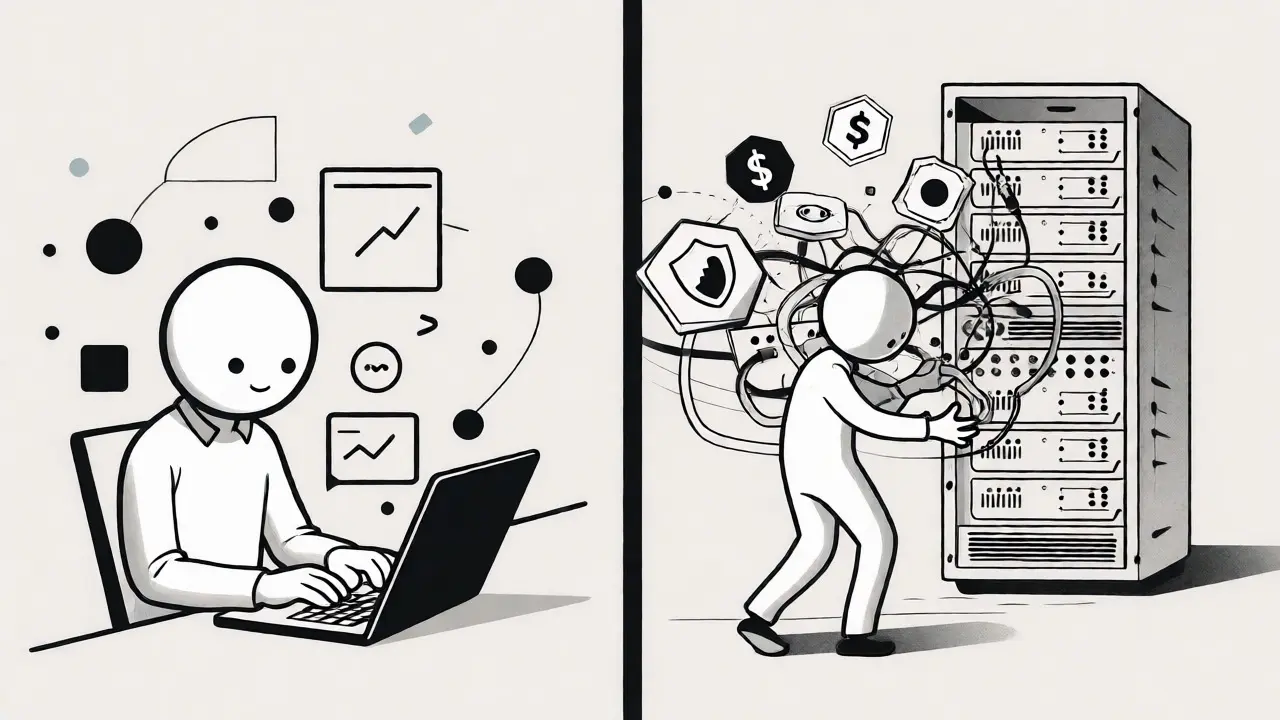
Security and Compliance Are Not Afterthoughts
You wouldn't deploy a web server without SSL. Similarly, you shouldn't deploy an LLM without enterprise-grade security protocols. This means data encryption at rest and in transit, role-based access controls (RBAC) integrated with your existing IAM systems, and comprehensive audit trails. These aren't optional; they are requirements for SOC 2 Type II compliance.
Consider the healthcare sector. One case study revealed that a healthcare chatbot PoC required 11 additional months of development solely to meet HIPAA compliance standards that were ignored during prototyping. Regulatory considerations are critical. 78% of organizations report GDPR and CCPA compliance as major factors in deployment decisions. If your model processes personal identifiable information (PII), you need automated redaction pipelines before the data even reaches the LLM. Start this work in week one of your PoC. Delayed data access approval happens in 62% of failed implementations, according to Omdia. Get your security team involved early. Their pushback is easier to manage when you are still flexible.
Infrastructure and Cost Management
Scaling isn't free. Moving from a sandbox to production requires robust infrastructure. Typical requirements include GPU instances with at least 80GB VRAM for fine-tuning, containerized environments using Docker and Kubernetes, and API gateways capable of handling 500+ requests per second with sub-500ms latency. If you rely on third-party APIs like OpenAI or Anthropic, watch your token usage closely. Unexpected latency spikes occur in 41% of deployments during peak usage. Implement caching strategies for common queries to reduce load and cost.
| Feature | Proof of Concept (PoC) | Production Environment |
|---|---|---|
| Focus | Technical feasibility & demo wow-factor | Reliability, scalability, & business value |
| Data Quality | Clean, curated, small datasets | Noisy, diverse, large-scale real-world data |
| Security | Minimal or none | Encryption, RBAC, Audit Logs, Compliance |
| Monitoring | Manual spot-checks | Automated alerts, drift detection, cost tracking |
| Cost Model | Low fixed cost (sandbox) | Variable high cost (compute + storage + API fees) |
Cloud providers offer frameworks to help. AWS's GenAI Path-to-Production Framework reduces deployment time by 32% compared to ad-hoc approaches. Microsoft Azure AI Studio shows better user satisfaction when incorporating feedback loops during the PoC phase. Leverage these tools. They provide pre-built connectors for Snowflake, BigQuery, and Salesforce, saving you weeks of custom coding.
The Human Element: Change Management
Technology alone doesn't drive adoption. 73% of organizations report significant adoption challenges due to insufficient user training and process redesign. Your employees might fear the AI will replace them or distrust its outputs. Address this head-on. Create cross-functional teams from day one, including representatives from IT, security, compliance, and the actual end-users. Design monitoring systems that track both technical performance and business outcomes. Show users how the AI assists them rather than replacing them. For instance, a marketing content generator reduced campaign creation time by 72% in one Salesforce implementation, but only after addressing hallucination issues through structured prompt engineering and knowledge base integration. Trust is earned through consistency. Ensure your model behaves predictably, and communicate clearly when it is uncertain.
Next Steps for Your Team
Ready to bridge the gap? Here is a quick checklist to avoid the valley of death:
- Define Business Metrics First: Agree on KPIs with stakeholders before writing code.
- Involve Security Early: Get sign-off on data handling and compliance requirements in week one.
- Implement Version Control: Track every prompt change and model update. Only 28% of organizations do this consistently.
- Build an Evaluation Pipeline: Automate testing for accuracy, latency, and cost.
- Plan for Integration: Map data flows to your CRM and ERP systems immediately.
Scaling generative AI is less about the magic of the model and more about the discipline of engineering. Stop treating your PoC as a science fair project. Treat it as the beta version of a product that needs to survive the harsh realities of enterprise operations. Do that, and you'll be part of the 14% who succeed.
What is the biggest difference between a Generative AI PoC and production?
The main difference is reliability and scale. A PoC demonstrates technical feasibility with controlled inputs and minimal security. Production requires handling unpredictable user inputs, enforcing strict security and compliance protocols, managing variable costs, and integrating seamlessly with existing enterprise systems like CRMs and ERPs.
Why do most Generative AI projects fail to reach production?
Common reasons include the "reliability gap" where model accuracy drops significantly with real-world data, unexpected cost increases due to security and scaling requirements, integration challenges with legacy systems, and a lack of clear ROI definitions. Additionally, many teams underestimate the change management needed for user adoption.
How long does it take to move a Generative AI PoC to production?
A structured transition typically takes 4 to 8 weeks depending on complexity. Week 1 focuses on requirements and stakeholder alignment. Weeks 2-4 involve technical setup, integration, and iterative refinement. However, complex regulatory environments like healthcare can extend this timeline significantly, sometimes by several months.
What metrics should I track for a production LLM?
Track both technical and business metrics. Technically, monitor latency (aim for <500ms), error rates, and token usage costs. For quality, use human evaluation scores for coherence and relevance (target ≥4.2/5) and factual accuracy rates (target ≥95%). Business-wise, track metrics tied to your initial ROI goals, such as time saved per task or increased conversion rates.
Do I need to fine-tune my model for production?
Not always. Many successful deployments start with Retrieval-Augmented Generation (RAG) using a foundation model and a private knowledge base. Fine-tuning is necessary if you need specific stylistic adherence or domain-specific terminology that RAG cannot handle. Note that fine-tuning requires significant computational resources, such as GPUs with 80GB+ VRAM, and adds to maintenance overhead.
 Artificial Intelligence